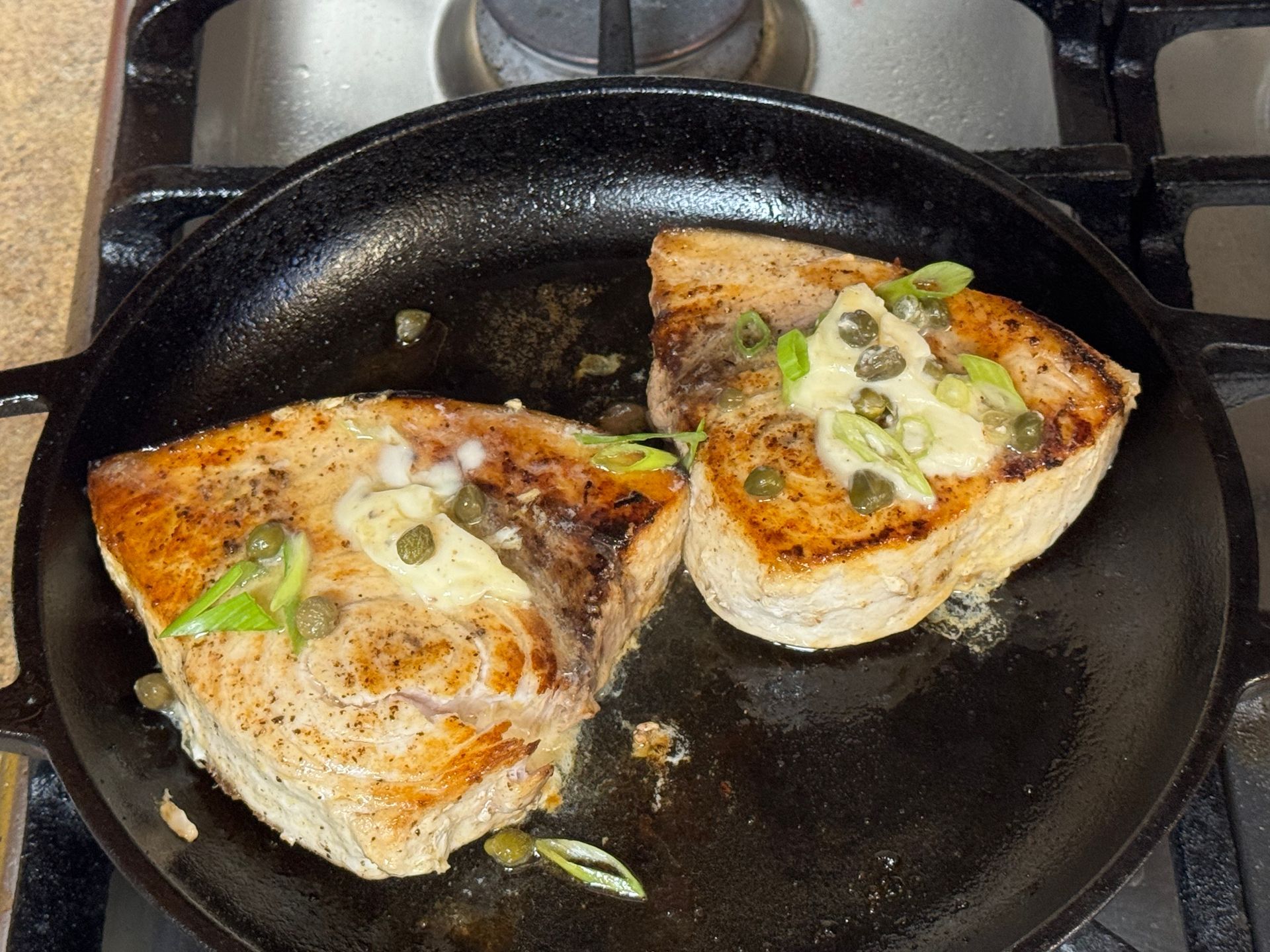
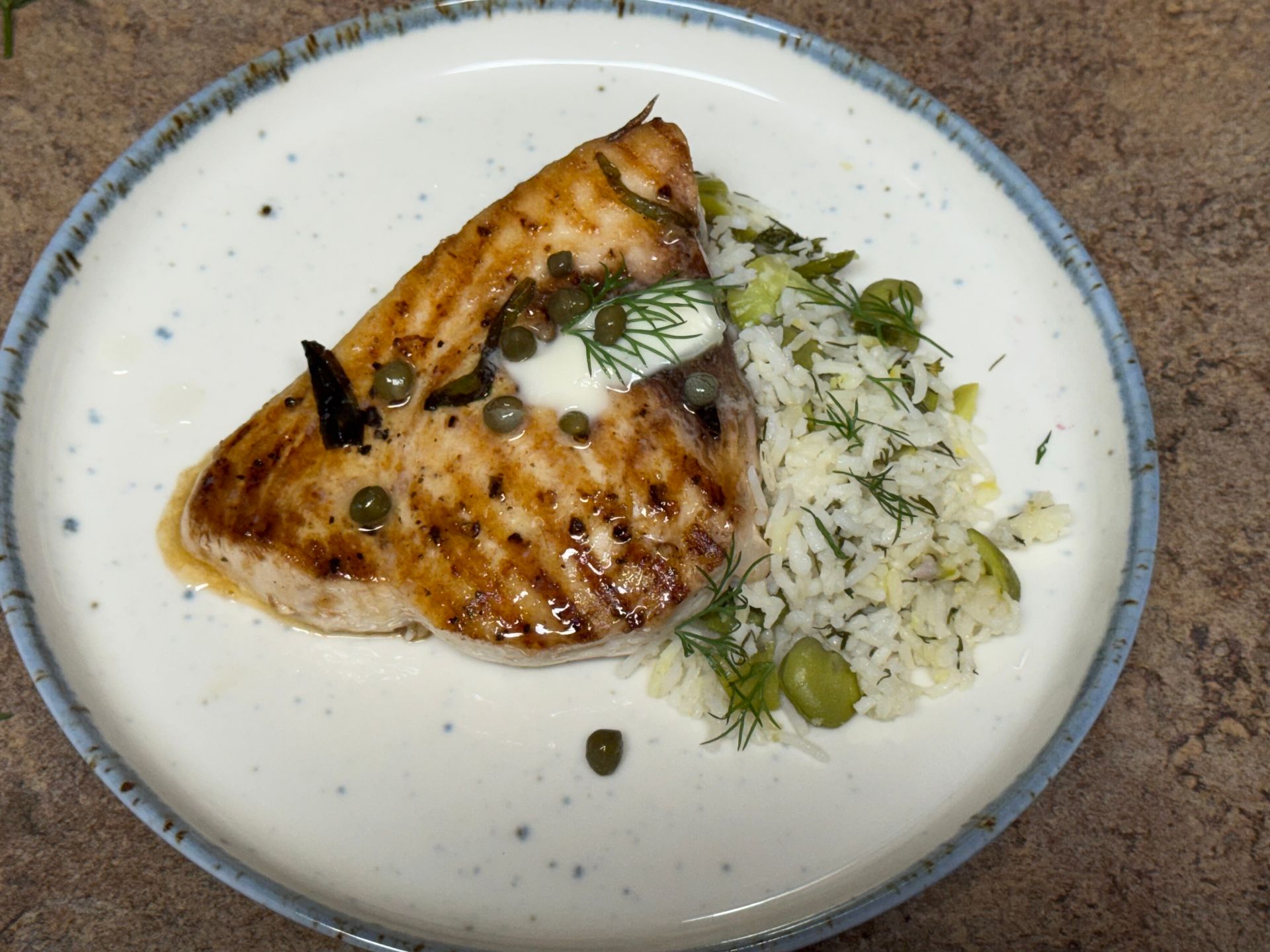
Years ago, while working as a chef in a busy continental restaurant, we featured grilled, fresh swordfish on the menu—finished with a generous spoonful of herbed compound butter and capers. It was popular and delicious.

One afternoon, a seafood purveyor stopped by with a sample of frozen swordfish steaks, fully thawed and ready for evaluation. Curious, we grilled it side by side with the “fresh” swordfish we had been serving—fish we believed to be of high quality.

The result was surprising. The frozen swordfish was superior—firmer, cleaner in flavor, and more consistent in texture. In contrast, our “fresh” fish, likely several days out of the water, lacked the same integrity.

It was a defining moment and an important reminder: in many cases, properly handled and quickly frozen seafood can offer better quality than fish labeled as fresh. For chefs, understanding sourcing and handling is just as critical as technique—especially with a product as prized as swordfish.

Cooking Swordfish

Swordfish is one of the ocean’s most distinctive and versatile fish, prized for its firm, steak-like texture and clean, mildly sweet flavor. Unlike more delicate species, swordfish holds up beautifully to high-heat cooking, making it an ideal choice for grilling. Its dense flesh develops a satisfying crust over the fire while remaining moist and meaty within—qualities that have earned it a place on menus from coastal Mediterranean kitchens to modern American grills.


Grilled meats and seafood should always be allowed to rest for a few minutes, giving the juices time to redistribute and settle back into the protein. This brief pause is also the ideal moment to introduce compound butter, placed directly on top so it slowly melts as the protein rests.

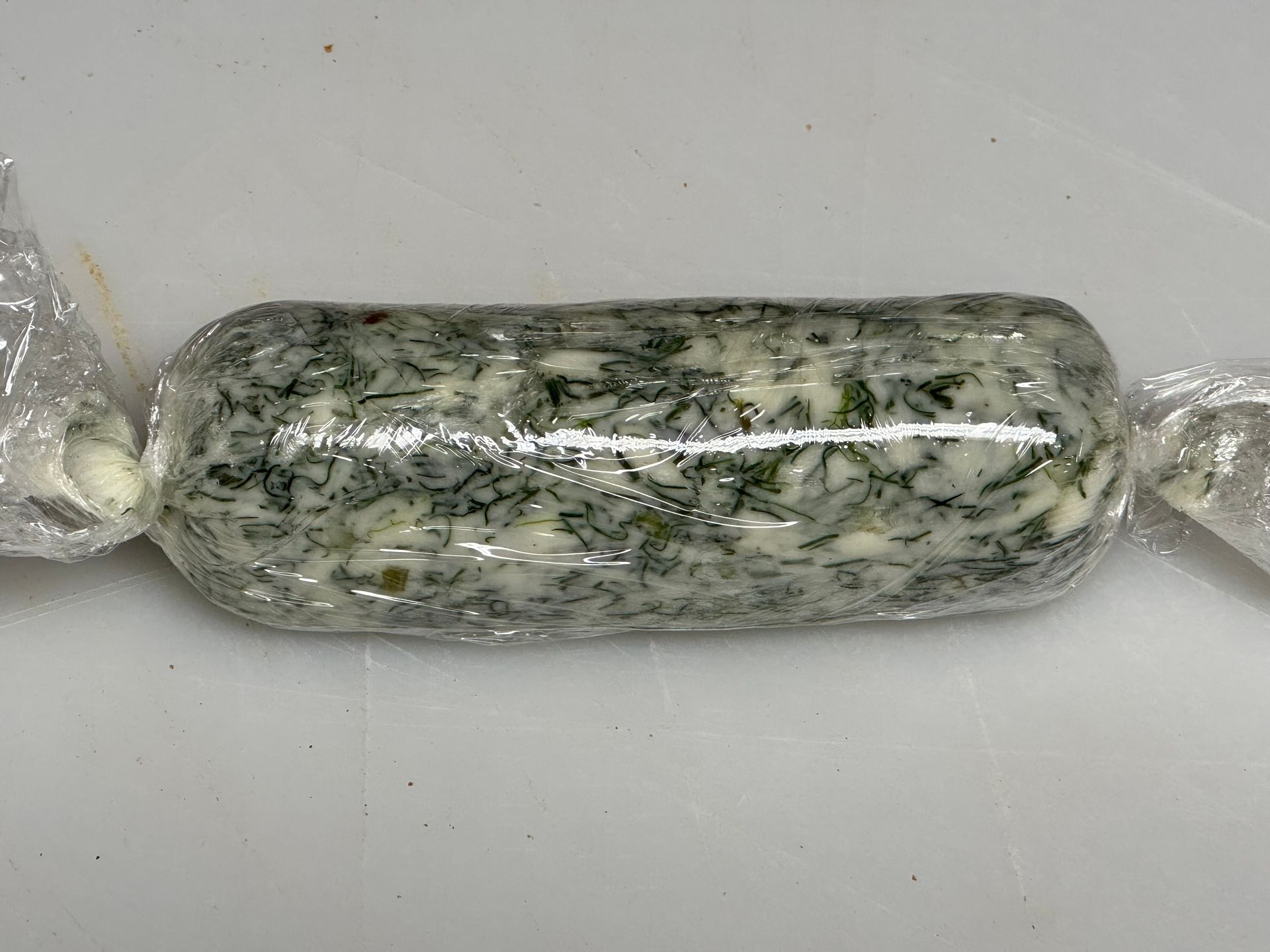
A simple finish of compound butter is one of the most effective ways to elevate grilled seafood and meats. As it melts, the butter adds moisture, richness and flavor—herbs, citrus, garlic, and spices—onto the crust.

It bridges the intensity of the grill with the natural character of the protein, creating balance without masking flavor.

Swordfish pairs especially well with bold yet balanced wines such as chardonnay and dry wines such as sauvignon blanc.

Grilling Swordfish Steaks

Prep Time: 30 min

Cooking Time: 20 min

Yield: 4 portions


Ingredients                                          

2  Tbsp       Olive Oil 

1 lb               Swordfish steaks (4 four oz steaks)

1/2 tsp        Kosher Salt                                       

t.t.                Black pepper   

1 tsp            Lime juice

1 Tbsp        Fresh Herbs (the same herb you use for the compound butter)               


Compound Butter

8 Tbsp        Butter, lightly salted

2 Tbsp       Red Bell Peppers, deseeded and minced

1 Tbsp        Jalapeno Pepper, deseeded and minced

3 Tbsp       Green Onions, sliced very thinly

2 Tbsp      Cilantro, minced (Dill, Italian Parsley or Tarragon also work well)

1 Tbsp      Lime juice

2 Tbsp     Capers

How to Prepare Swordfish

Step 1

Preheat the grill for 20 minutes.

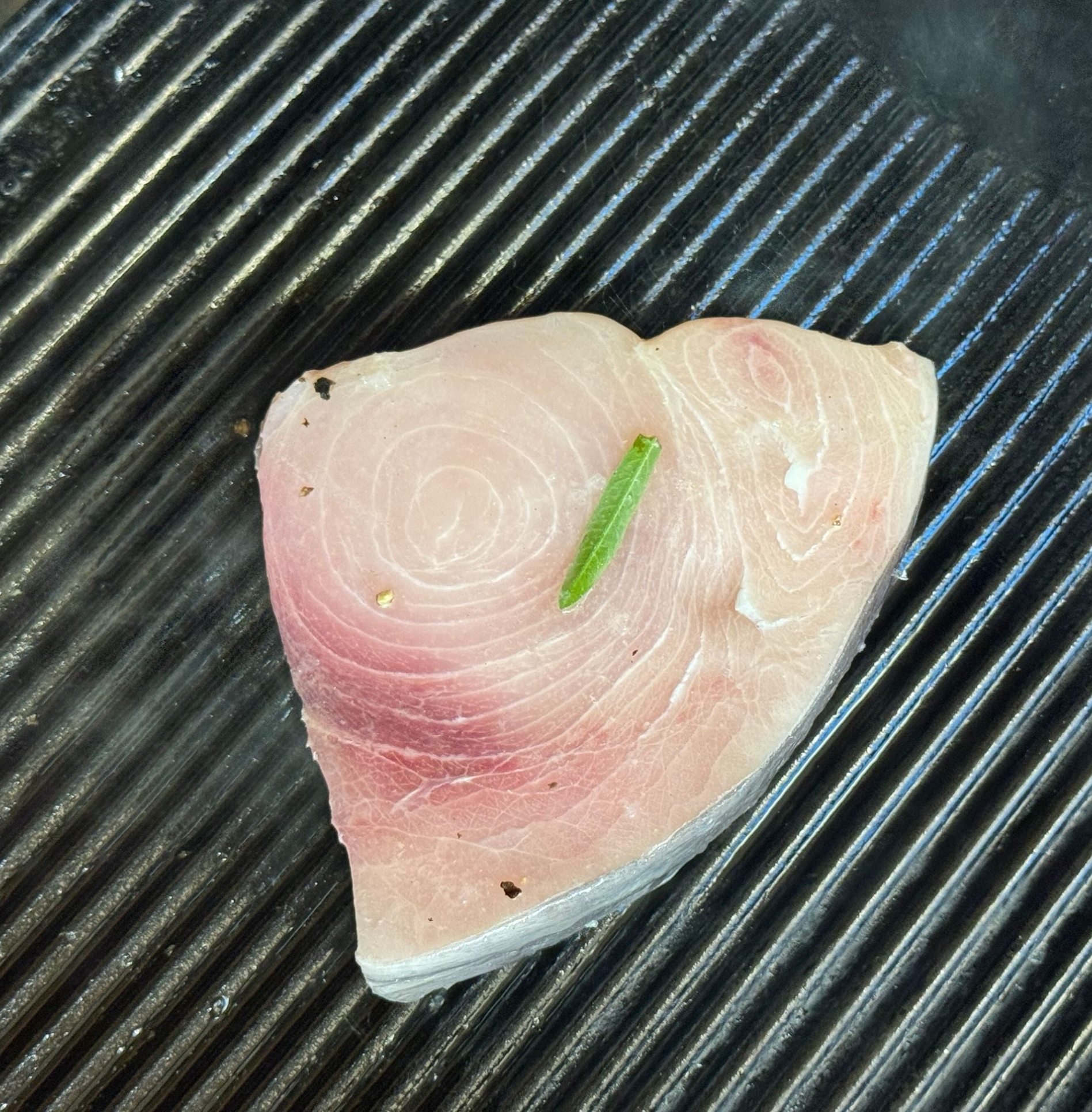
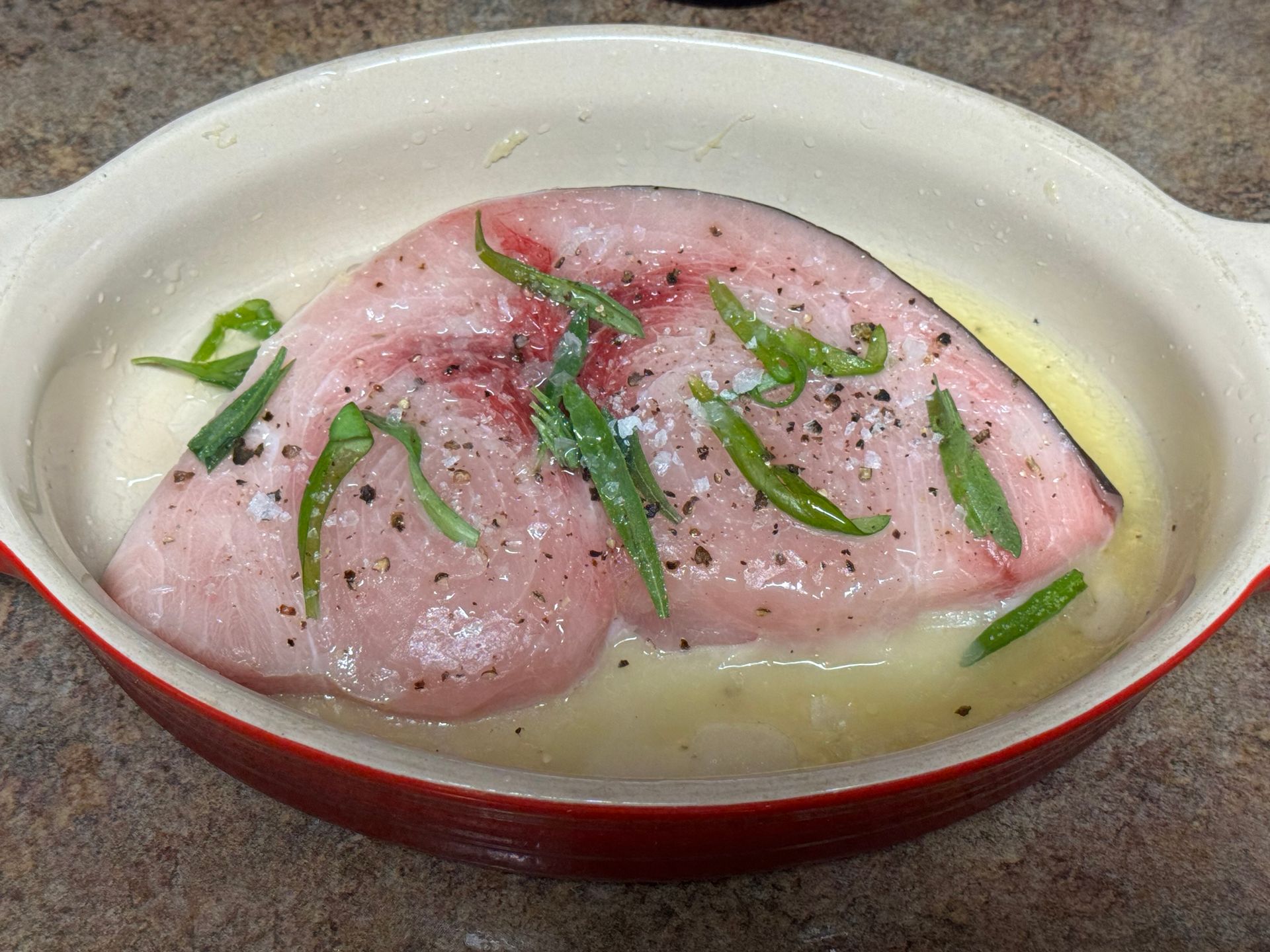
Place the swordfish steak into a dish, season with salt, pepper, lime juice and herbs; let sit at room temperature for 20 minutes. We always grill proteins at room temperature (about 60-70 F)


Step 2 Grilling the Fish

Wipe or brush the preheated grill with a small amount of oil to avoid sticking.

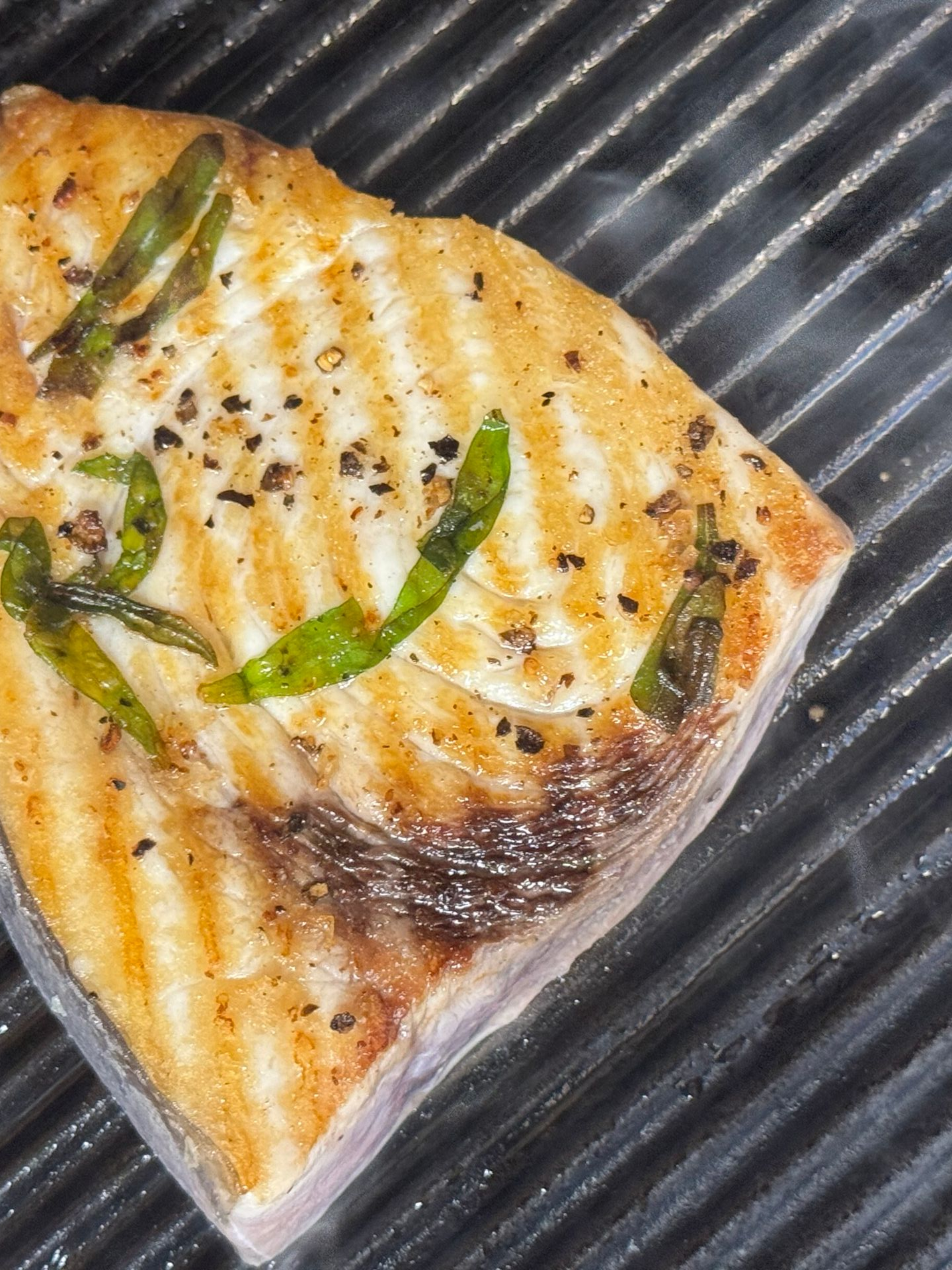
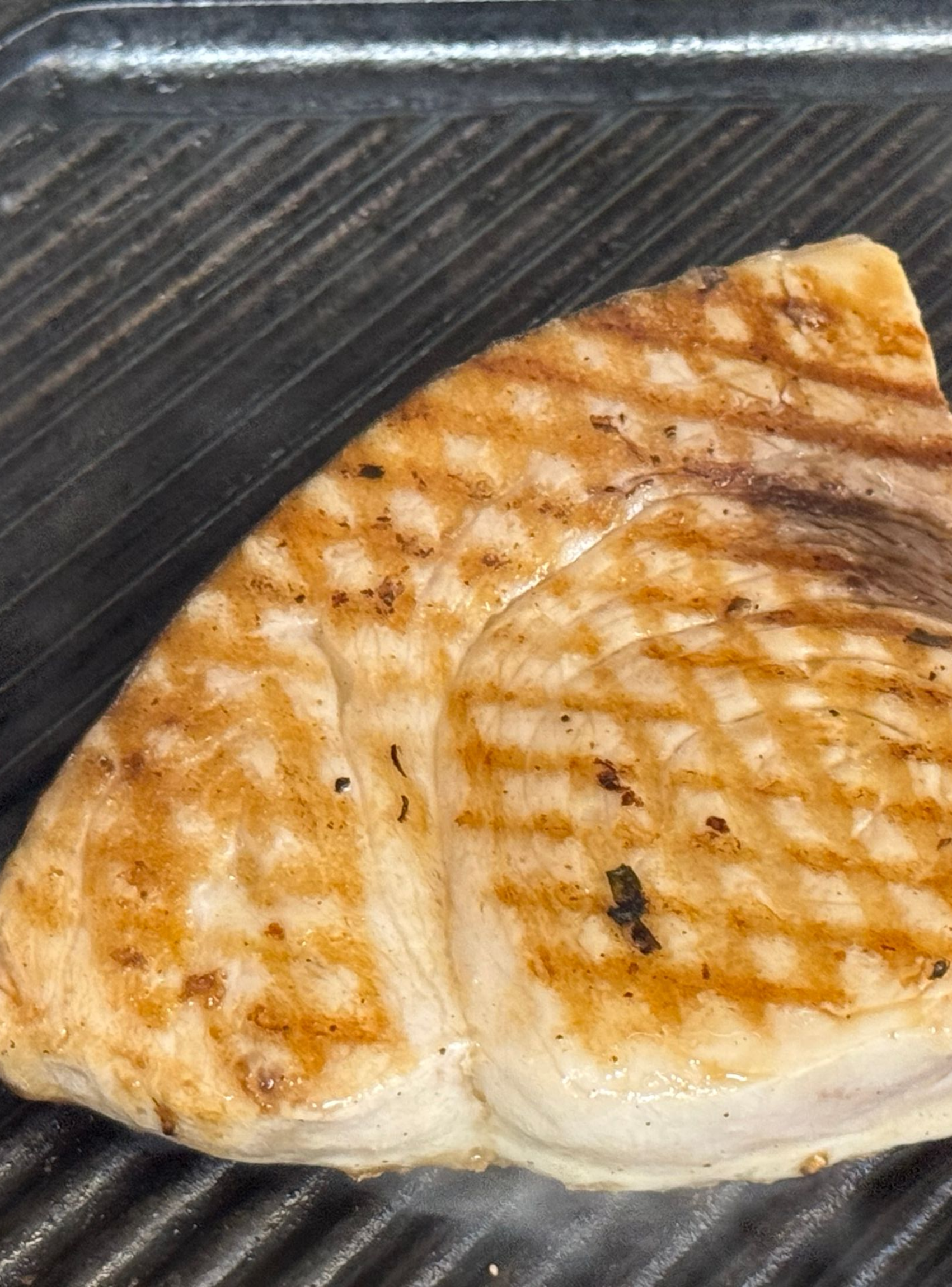
Place the seasoned fish steak on to a preheated grill (grill plate shown in this picture). Do not move, let the steak grill for 3 minutes, lift carefully with a spatula and rotate 45 degrees to obtain cross-hatch marks. Cook for 2 minutes more.


Invert the swordfish steak and cook for 3 minutes, rotate and cook for 3 additional minutes. Place onto a plate to rest, top with compound butter.
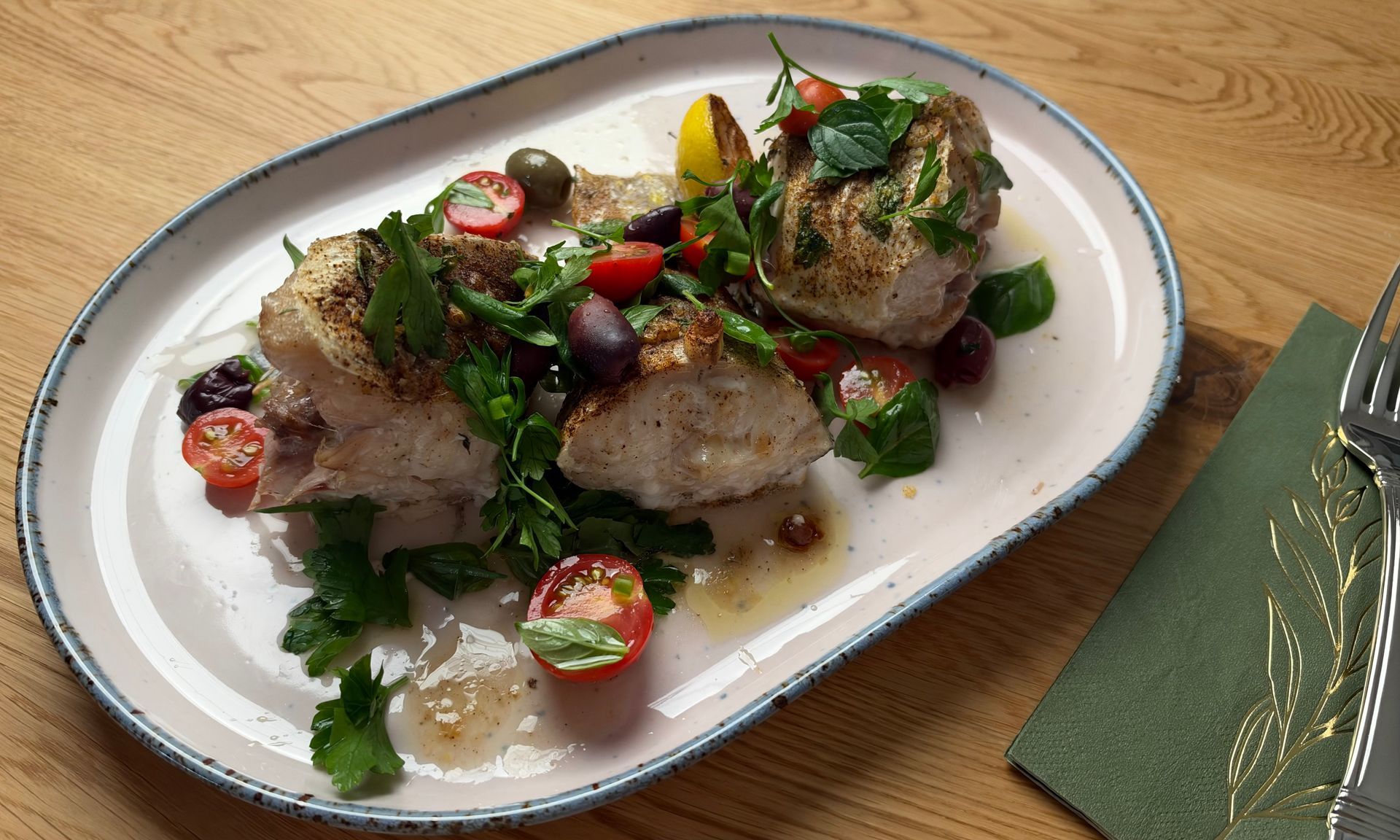
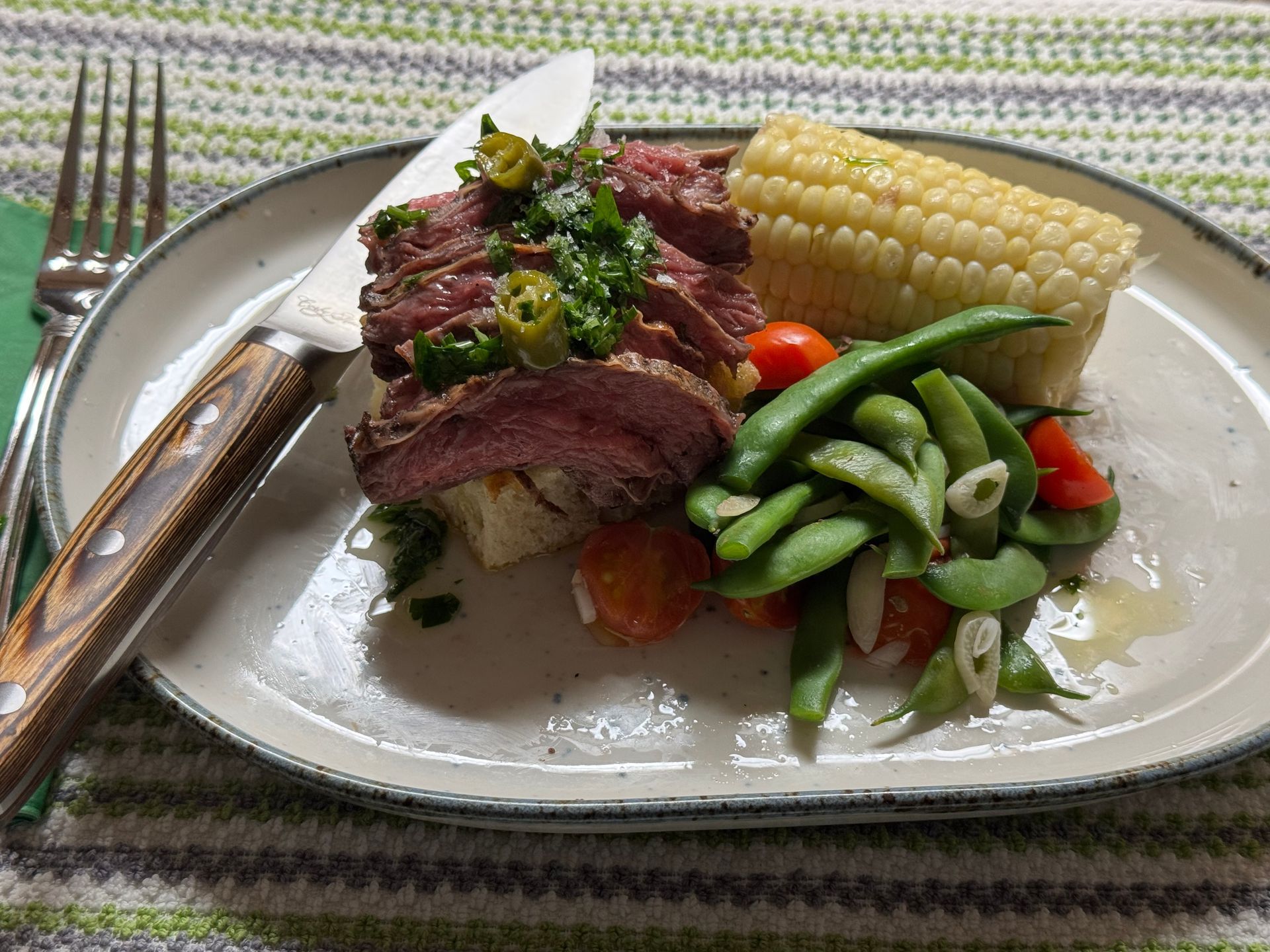
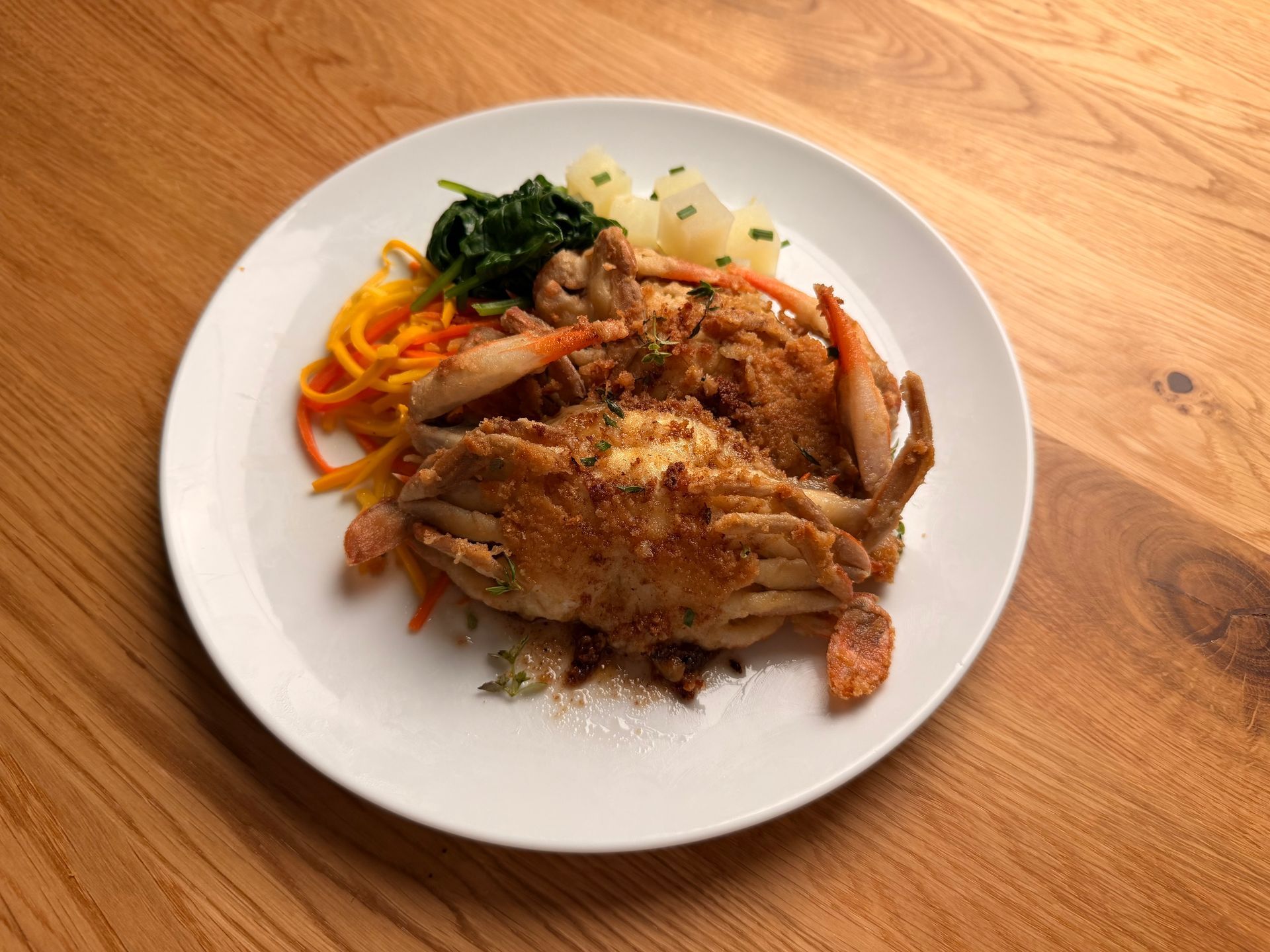
By Tom Griffiths April 7, 2026
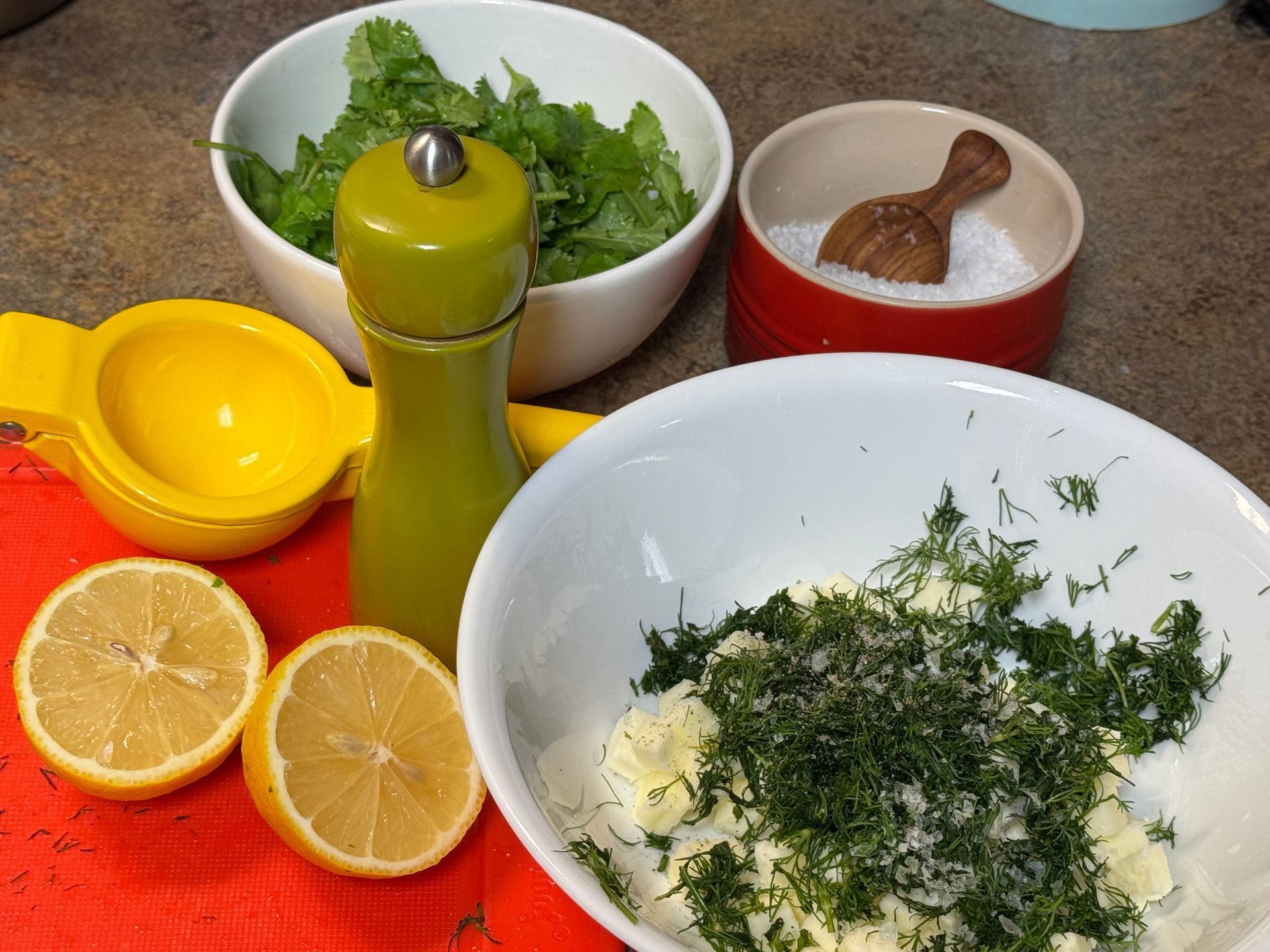
There are countless versions of Potatoes au gratin , many of them heavy with cheese. I prefer a more restrained approach—using little or no cheese—so the flavor of the potatoes remains the focus rather than being masked. Milk produces a lighter, more delicate gratin, while light or heavy cream creates a richer, more structured dish. Both are valid—it simply depends on the desired outcome. One constant, however, is nutmeg. Used sparingly, it acts as a quiet “secret weapon,” adding depth without calling attention to itself. This recipe is inspired by Xavier LeRoux, one of the finest chefs I’ve had the privilege to work with. His method includes an extra step—gently simmering the potatoes in cream before baking—which yields a noticeably superior result. The potatoes begin to release their starch into the cream early, ensuring a more uniform texture and a fully integrated dish from the first bite to the last.
By Tom Griffiths March 19, 2026
There are plenty of brownie recipes—and then there is the one that lives in memory. This is the only brownie recipe I bake, from Julia Child, whose influence reached far beyond French cuisine and into the home kitchens of passionate bakers like my mother. A devoted admirer, she baked these brownies often—usually for the dessert trolley at my restaurant. We featured a brownie freeze... brownie cubes with homemade vanilla ice cream, warm melted chocolate and freshly whipped cream-amazing! For me, this recipe is more than a classic—it’s a reflection of how great cooking is passed down: through admiration, repetition, and a deep love of craft.
By Tom Griffiths March 19, 2026
I taught garde manager for many years at the CIA and this is one of my favorite recipes from class. I actually developed this recipe with one of my students, inspired by a recipe he had learned on his externship.
By Tom Griffiths March 17, 2026
We ate Irish soda bread one day each year—and it was never store-bought. Soda bread wasn’t part of our cultural lineage, but it earned its place through something more universal: respect for tradition. My mother was not an occasional baker— growing up, her baking centered on Italian traditions: special Christmas cookies, the Vigna family birthday cake, and beautifully braided Easter breads that reflected heritage. Later, like many serious home bakers of her generation, she was influenced by Julia Child . That influence expanded her repertoire into classic European pastry—Paris-Brest, pound cakes, even German chocolate cake. The iconic cross cut into the top of the loaf is often said to “let the fairies out,” though in professional kitchens we recognize its functional role: allowing heat to penetrate and the loaf to expand evenly during baking.
By Tom Griffiths February 26, 2026
Authentic Guacamole, Hospitality, and the Responsibility of Feeding People
By Tom Griffiths January 16, 2026
I recently volunteered to prepare vegetable paella for a church Bible group potluck. I was very excited to develop a delicious, new paella recipe and spent time preparing fresh vegetable stock with flavors of the Mediterranean. I always prepare vegetable and fish stocks fresh, as I intend to use them. I’m not a fan of bases or frozen stocks but I sometimes add a small amount of quality base to my stocks.  A vegetable stock with mirepoix, cabbage, mushrooms makes sense in certain applications, for certain recipes—but why would we use a mushroom or cabbage-forward stock in a paella? It doesn’t make culinary sense. Paella is a Mediterranean dish originating in the Valencia region of Spain as a humble meal cooked on an open fire. I’ve enjoyed wonderful paella meals in Valencia prepared with water-not stock, prepared with rabbit, snails and local beans. While traveling through Spain this spring I researched and sampled many styles of paella… no mushrooms, no carrots, no celery and no cabbage.
By Tom Griffiths January 16, 2026
I still remember cooking breakfast burritos with my son Daniel, for volunteer workers at church events—simple, hearty, and made to fuel a long day of service. The workers were always so appreciative. Years later, I served a crowd favorite, nicknamed “The Bacon-ator,” a breakfast superstar inspired by the over-the-top spirit of fast-food indulgence. We had a popular food booth at the local country fair, where we cooked hundreds of breakfast burritos each day-stuffed with Mexican cheeses, extra bacon, fluffy scrambled eggs, and fresh salsa—nothing pre-made, nothing rushed. Every burrito was warm, fresh, and full of flavor. When food is made with love, even the most straightforward breakfast is memorable.
By Tom Griffiths January 15, 2026
Chefs often share a bond that transcends politics, religion, and borders. While working in Saudi Arabia with a diverse group of chefs, I experienced this firsthand on my final day. To mark the occasion, they prepared special dishes representing their home countries—a generous feast rooted in tradition and pride. At the center of the table was a beautiful tray of stuffed peppers, zucchini, cabbages, squash, and other vegetables, each prepared with care and respect. As we shared the meal, the chefs beamed with pride, and the room filled with a sense of genuine camaraderie. It was a powerful reminder that food remains one of the most universal languages we have.
By Tom Griffiths January 15, 2026
I remember a chef teaching me to carefully slice the center seeds from a zucchini and then prepare beautiful dices for a ratatouilli. The seeds and center area get soft and mushy before the outer 'meaty' section of the squash cooks.
By Tom Griffiths January 15, 2026
Lobster macaroni and cheese is my all time favorite version of Mac and Cheese... I make it by preparing a classic lobster sauce, (flambé and all) and blending it with Béchamel sauce, macaroni and sweet, tender chunks of freshly poached lobster. Macaroni and cheese with pancetta