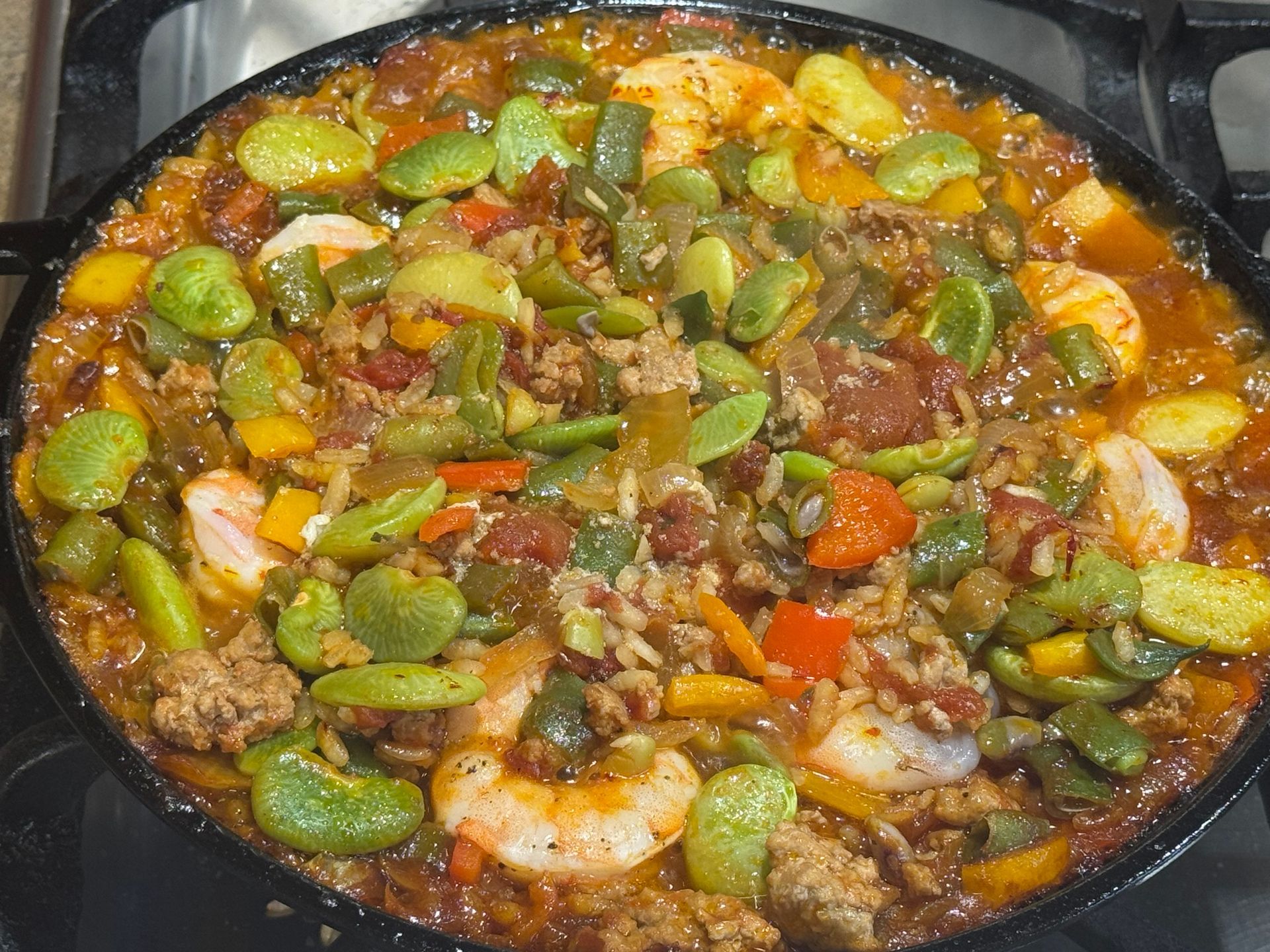
I recently volunteered to prepare vegetable paella for a church Bible group potluck. I was very excited to develop a delicious, new paella recipe and spent time preparing fresh vegetable stock with flavors of the Mediterranean. I always prepare vegetable and fish stocks fresh, as I intend to use them. I’m not a fan of bases or frozen stocks but I sometimes add a small amount of quality base to my stocks.
A vegetable stock with mirepoix, cabbage, mushrooms makes sense in certain applications, for certain recipes—but why would we use a mushroom or cabbage-forward stock in a paella? It doesn’t make culinary sense. Paella is a Mediterranean dish originating in the Valencia region of Spain as a humble meal cooked on an open fire. I’ve enjoyed wonderful paella meals in Valencia prepared with water-not stock, prepared with rabbit, snails and local beans. While traveling through Spain this spring I researched and sampled many styles of paella… no mushrooms, no carrots, no celery and no cabbage.
Vegetable Stock
As a former instructor at the Culinary Institute of America and a Certified Master Chef, I am a firm believer—and unapologetic stickler—for proper culinary technique. Technique is the foundation of learning, consistency, and flavor clarity. Which is why I was genuinely horrified reading some of the so-called “delicious vegetable stock” recipes circulating online. Many are muddy, aggressively flavored or short cuts, and fundamentally disconnected from the dishes they’re meant to support.
Classic vegetable stock formulations are rooted in Western European and French traditions: carrots, celery, onion or leek, garlic, tomato, cabbage, mushrooms, bay leaf, peppercorns, thyme. These ingredients are quality ingredients, sometimes vegetable trim but still quality ingredients. There are important ratios so that one ingredient doesn’t overpower the other ingredients-it is a recipe for delicious stock-not a garbage can stock.
The vegetables need to be cut to the appropriate size for quick simmering and vegetable stock is not boiled. Vegetable stock is cooked briefly, 45 to 60 minutes works well. When these simple cooking instructions are not respected the result is bitter or old tasting vegetable stock. This becomes bitter or old tasting food for the customers.
Stocks require a formula for standardization and yield!
Vegetable Stock (basic European style)
Prep Time: 20 min
Cooking Time: 45 minutes
Yield: 1 qt
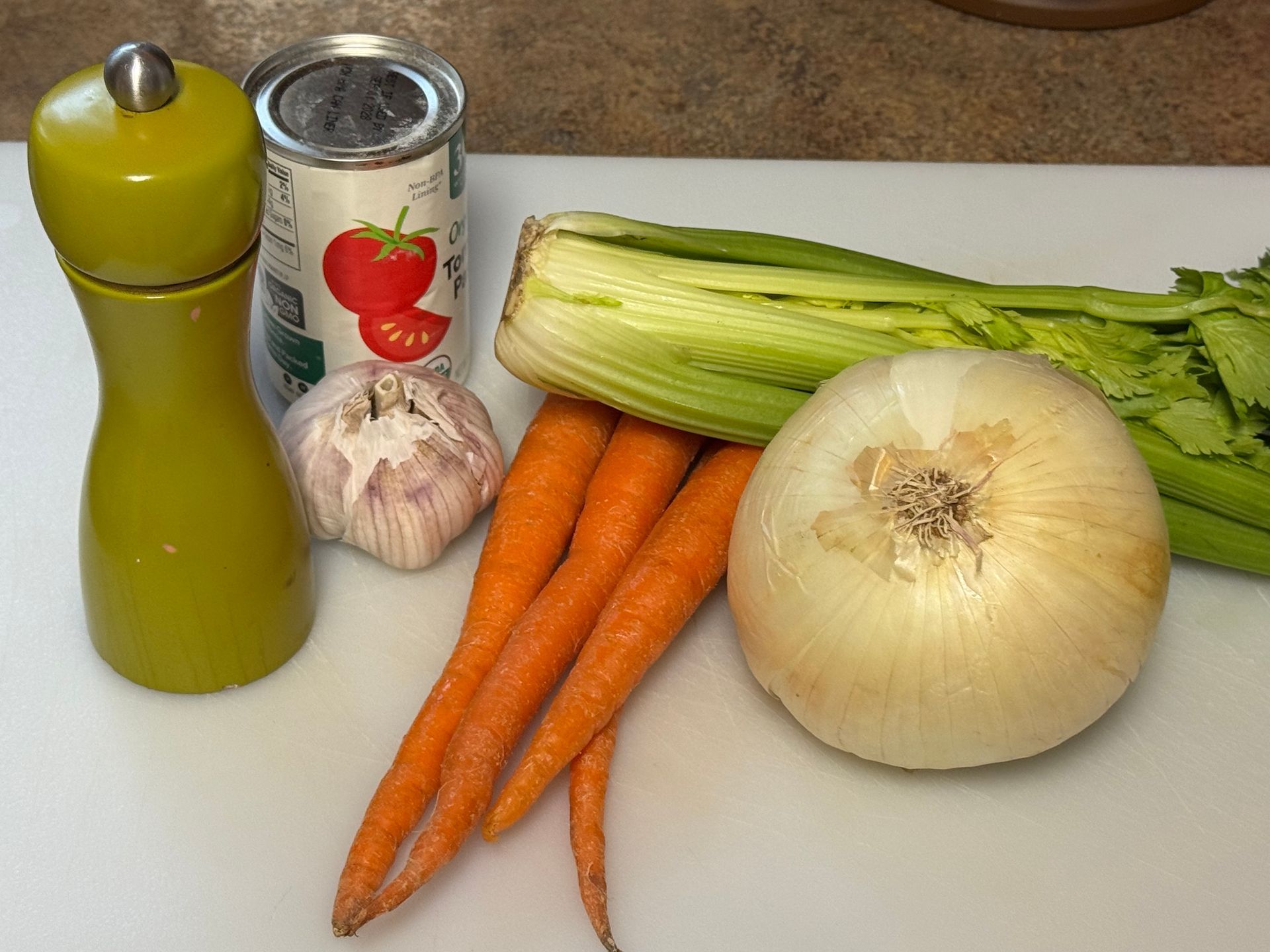
Ingredients
1 Tbsp Olive oil
1 Cup Spanish Onion, peeled and small dice
1/2 Cup Carrots, peeled and small dice
1/2 Cup Celery stalks, rinsed and small dice
2 ea Garlic cloves, whole
1 Tbsp. Tomato paste
1 ea Sachet d' epices (1 bay leaf, 5 peppercorns, 1 thyme spring)
1 1/2 qt Cold water
tt Kosher Salt
How to Prepare Vegetable Stock
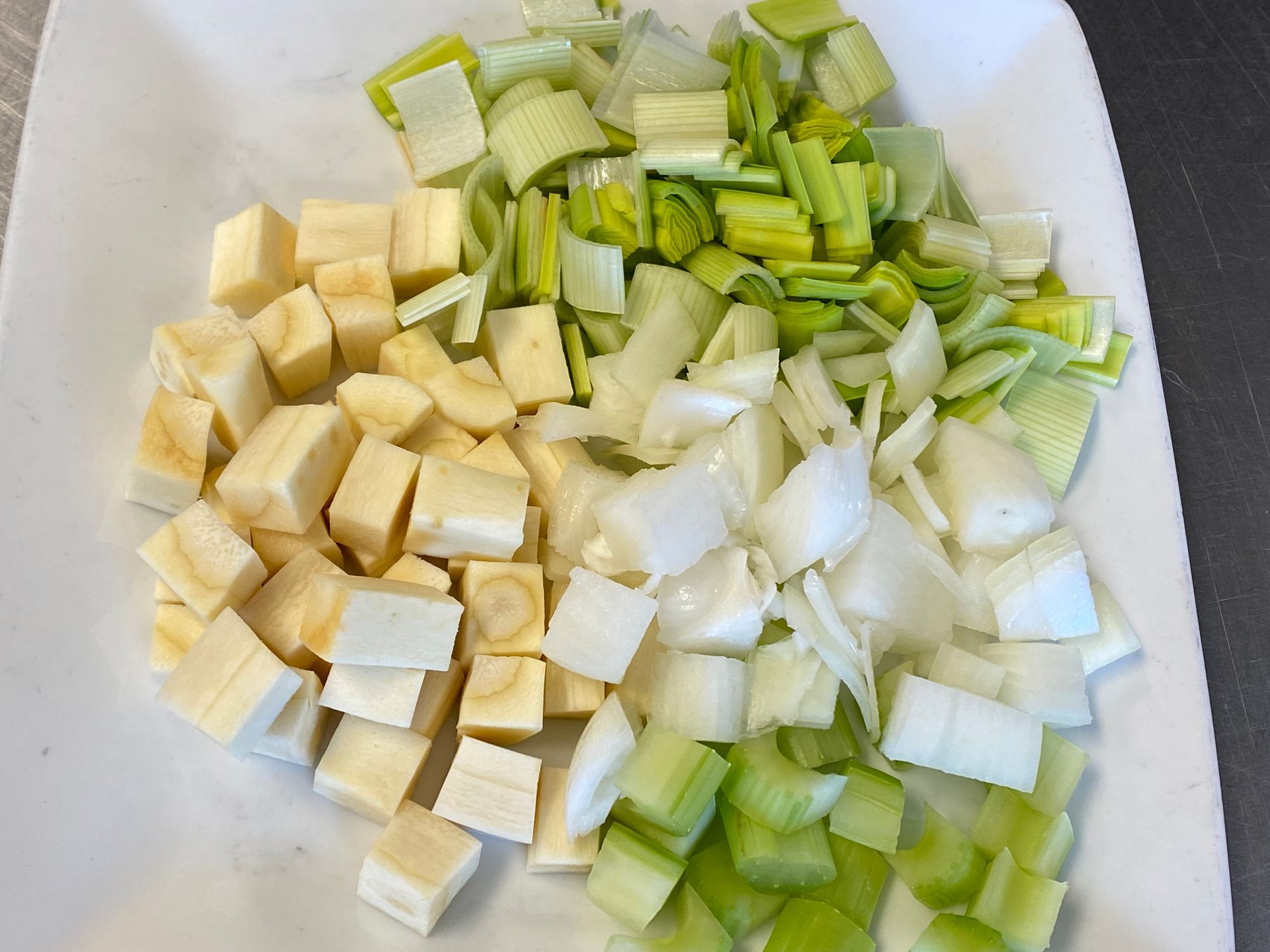
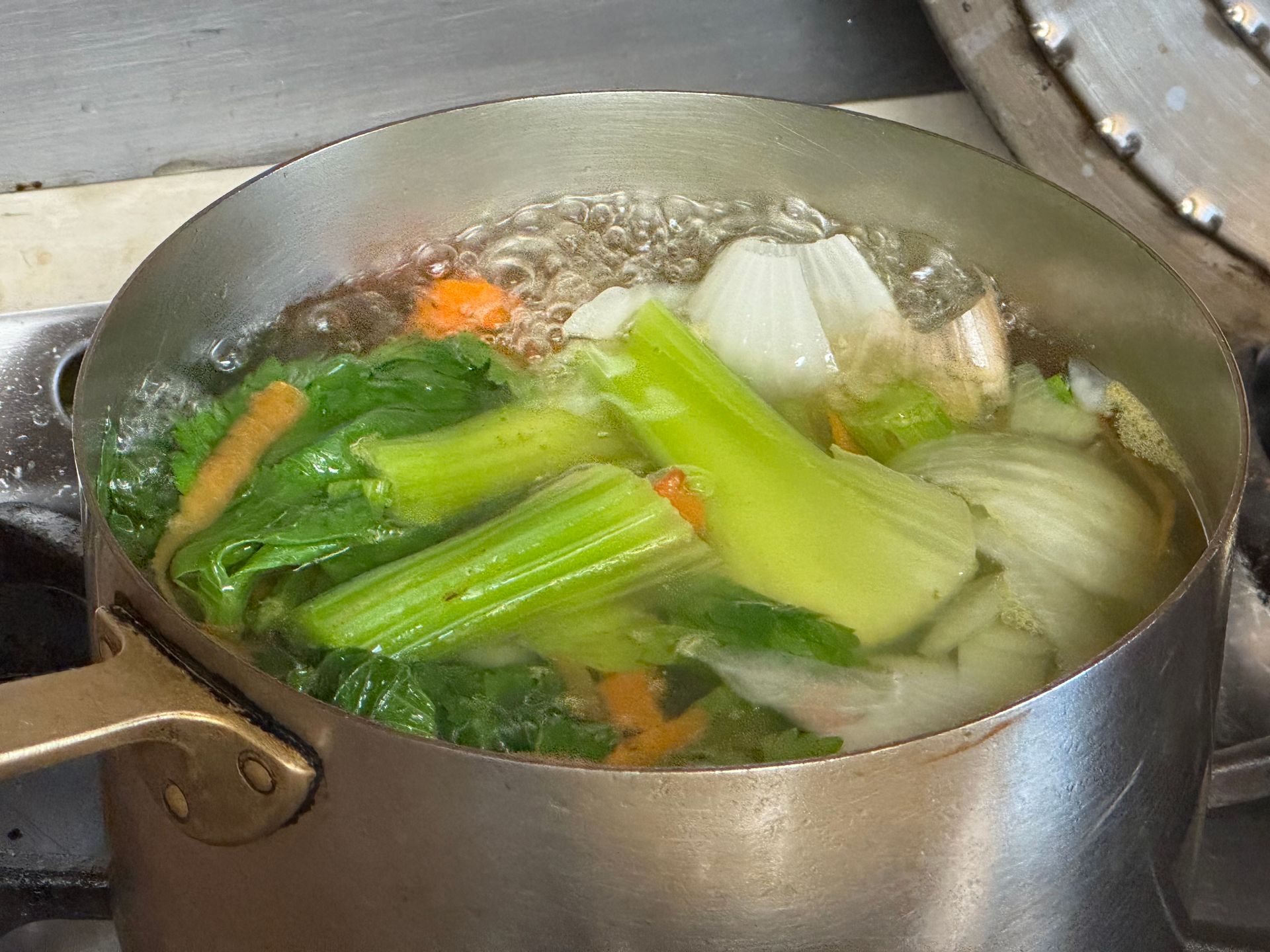
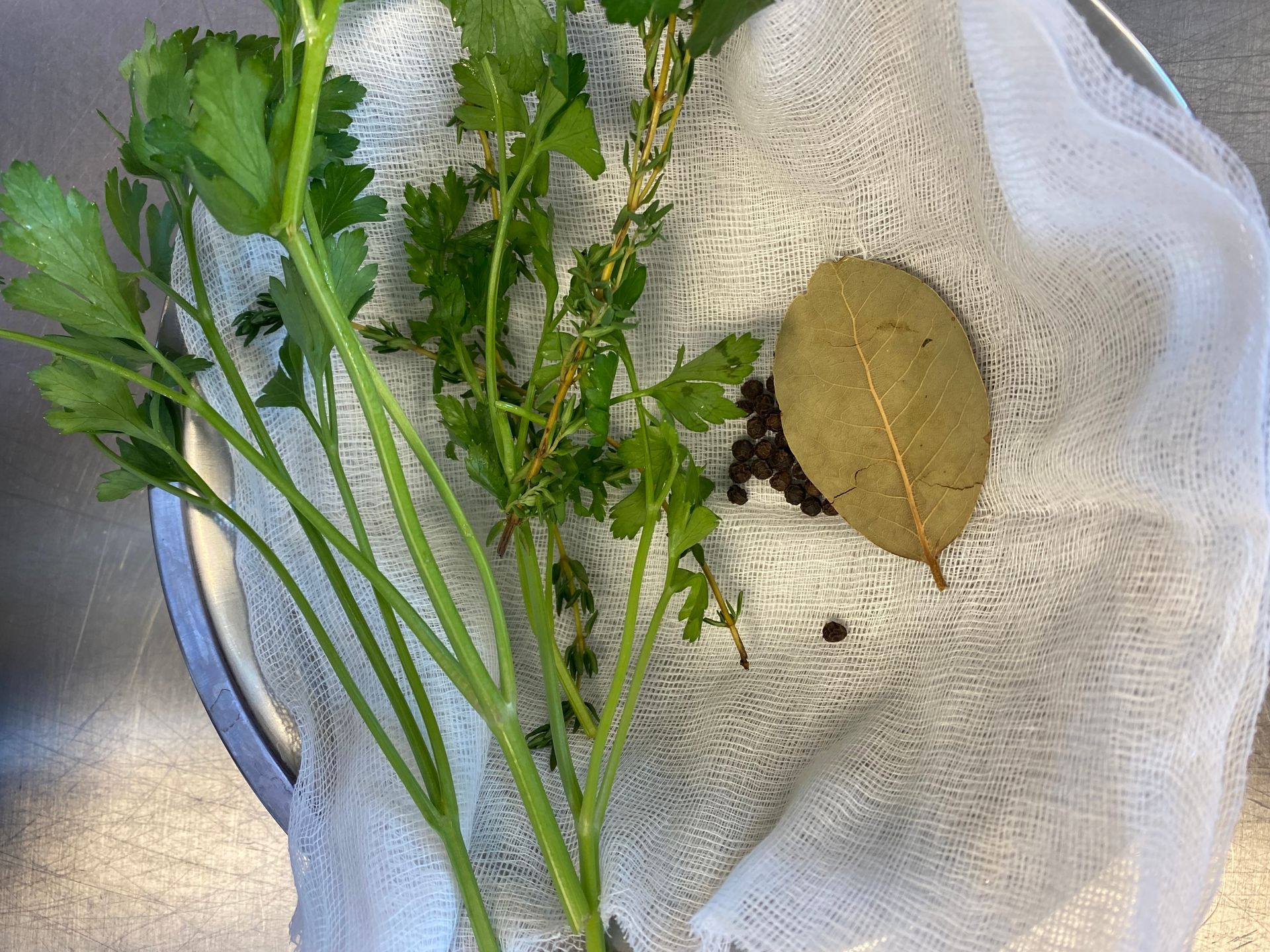
Step 1
Add oil to a small stock pot, add the mirepoix and tomato paste and stir with a wooden spoon for 4 minutes-this is called 'sweetening the pot'.
There will be more flavor than simply boiling vegetables.
Traditional mirepoix (50% onion/ 25% carrot/ 25% celery)
White mirepoix (50% onion/ leek whites 25% parnsip/ 25% celery)
I use white mirepoix instead of the classic carrot-based mirepoix to add flavor and aroma to dishes without discoloring them, keeping stocks, sauces, and soups clear.
Beta- carotene is the orange pigment in carrots which adds the orange hue to stocks with carrots.
Step 2
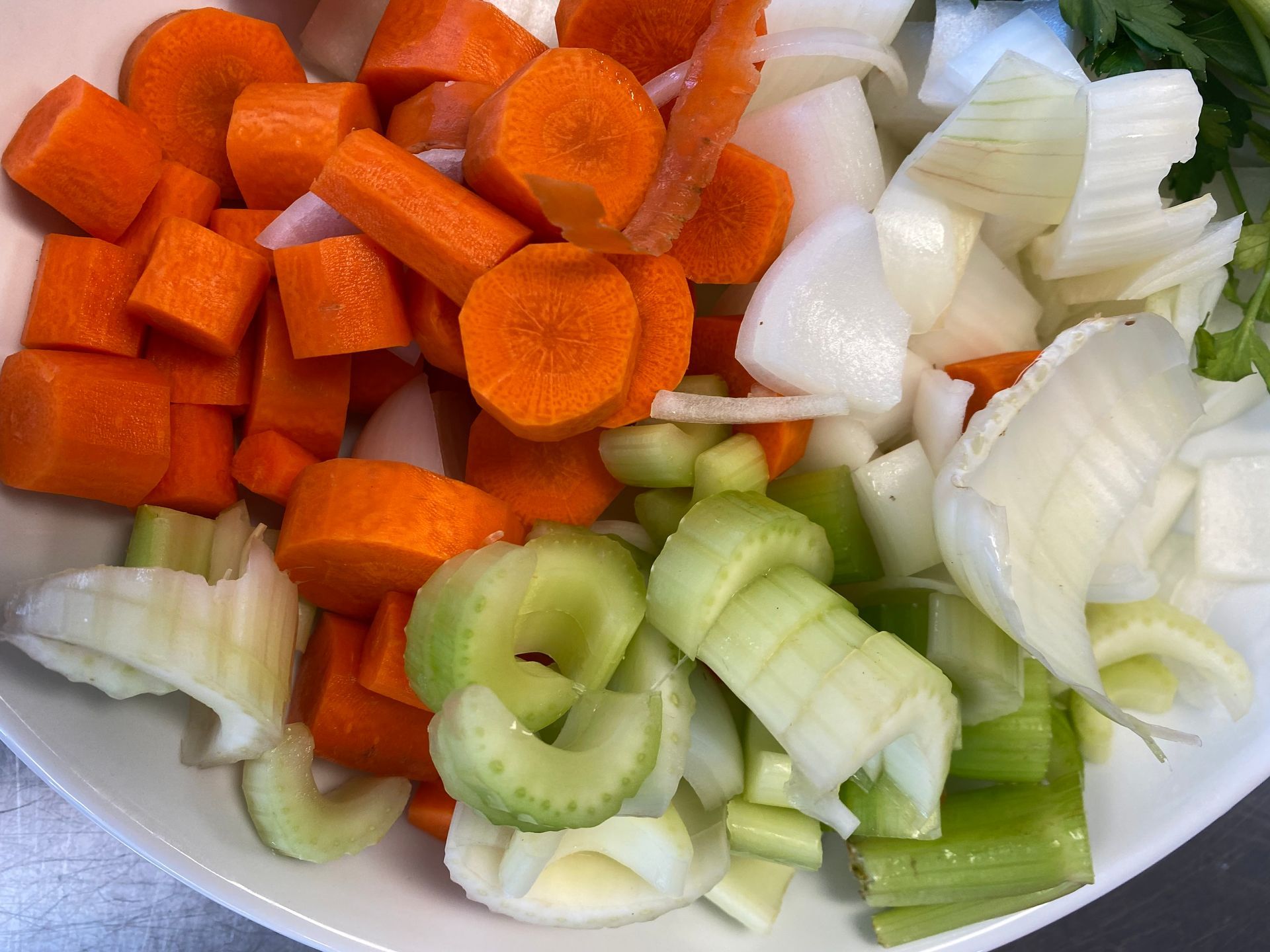
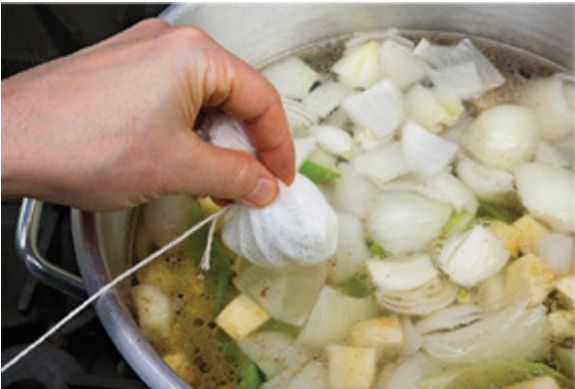
Add water to the sweated vegetables-if you wish to simmer longer than 45 minutes, leave the carrots, celery and onions larger as shown in this picture.
Add the sachet d' epices and simmer for 45 mintutes.
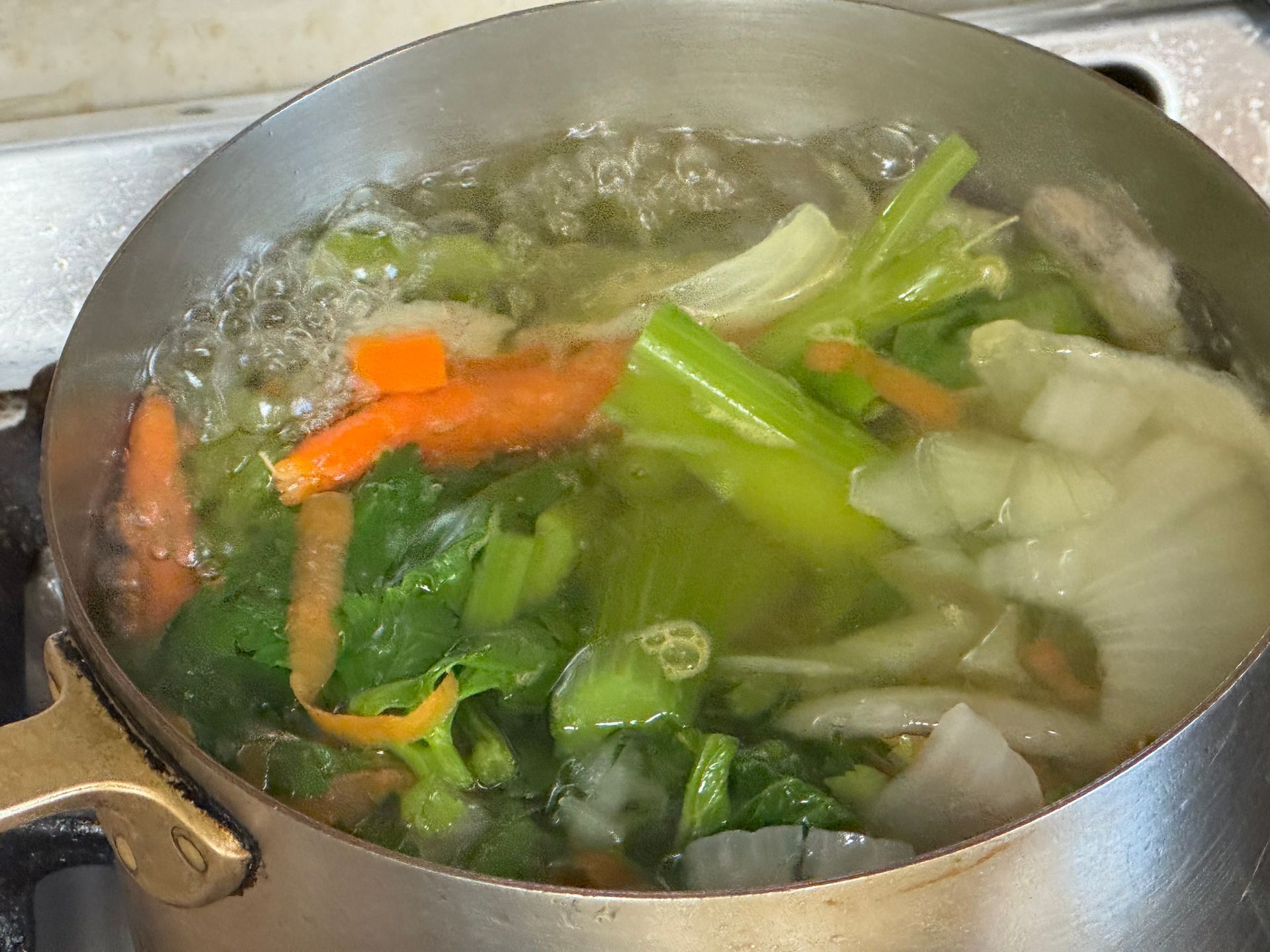
Step 3
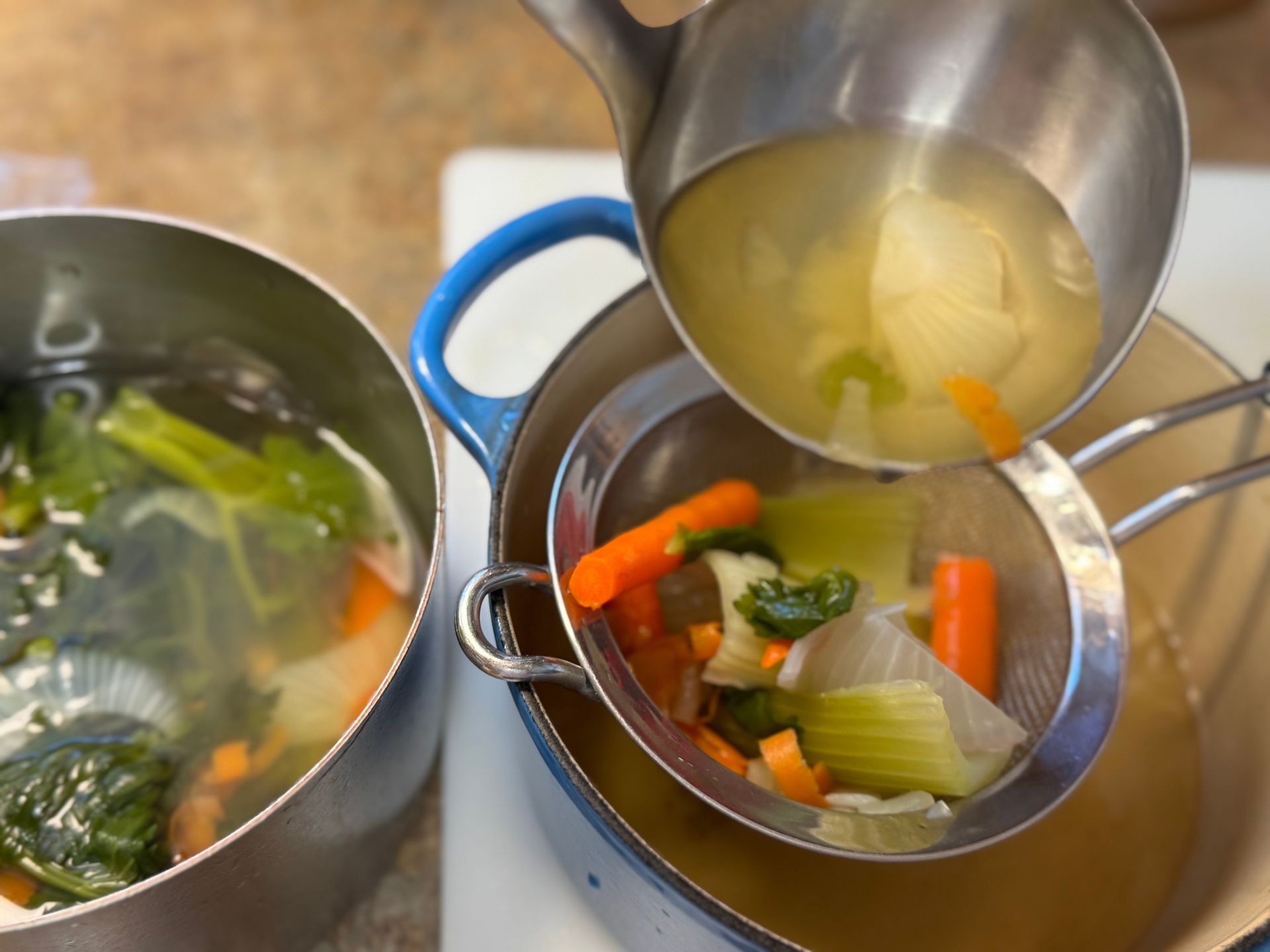
When the vegetables begin to sink, it's a good indicator that the stock is done-the vegetables will begin to become bitter if you continue to cook for too much longer.
Take out the sachet d' epices and discard.
Step 3
To strain the stock, simply ladle the liquid and vegetables through a sieve or colander and use the vegetable stock for your recipe.
.When I leave the vegetables as larger cuts, I enjoy eating them-plenty of flavor and very soft-great with a little salt.