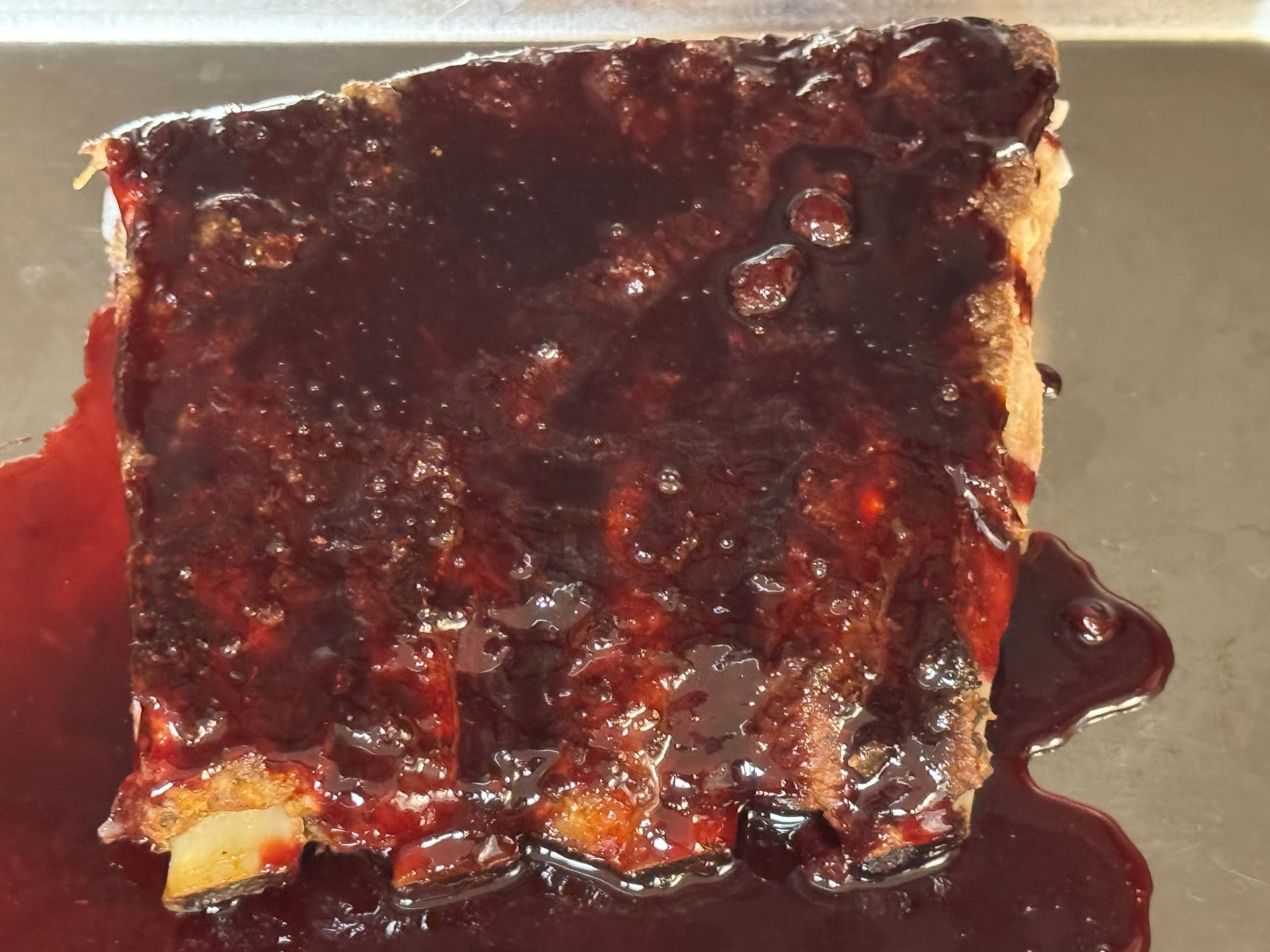
Oranges are fantastic in Baking & Pastry. I developed a delicious dessert for the CMC exam (Healthy Cooking) challenge featuring Orange Creamsicle Sorbet with Roasted, Candied Pineapple and Fruit Strudel... with plenty of guidance from the amazing CIA Pastry Instructors!
Types of Oranges:
There are several distinct varieties of oranges, each with unique characteristics and flavors. The most common type is the Navel orange, recognized for its seedless, sweet flesh and thick, easy-to-peel skin. Valencia oranges are another popular variety, primarily known for their juiciness and are often used for making orange juice. Other notable types include Blood oranges, which have a deep red interior and a distinct berry-like flavor, and Cara Cara oranges, characterized by their pinkish-red flesh and sweet taste. Additionally, Seville oranges, known for their bitterness, are mainly used in making marmalade and flavoring liqueurs.
Oranges 101
Oranges and Citrus Fruits: Oranges, one of the most popular citrus fruits worldwide, are cultivated in various regions, including the United States, Brazil, Spain, and China. They are celebrated not only for their sweet and tangy flavor but also for their versatility. Many types of oranges are eaten fresh or juiced and also used as an ingredient in a range of culinary applications.
Bitter oranges are often used for sauces and condiments such as marmalade—a delicious spread made from the fruit's pulp, juice, and zest. In my travels in Spain and Asia, bitter oranges grew on the streets and were enjoyed as a jam on toast, cocktails and baked goods.
Additionally, the zest and juice from oranges are frequently used to enhance salad dressings, marinades, and desserts, highlighting their ability to elevate flavors in both savory and sweet dishes.
Oranges are a nutrient-rich fruit that provides numerous health benefits. They are an excellent source of vitamin C, which supports the immune system and promotes skin health. In addition to vitamin C, oranges contain dietary fiber, which aids in digestive health, and various antioxidants that help combat oxidative stress in the body. Due to their low calorie content and high hydration level, oranges contribute to overall wellness while satisfying sweet cravings.

Prep Time: 6 min
Cooking Time:
Yield: 1 Cup
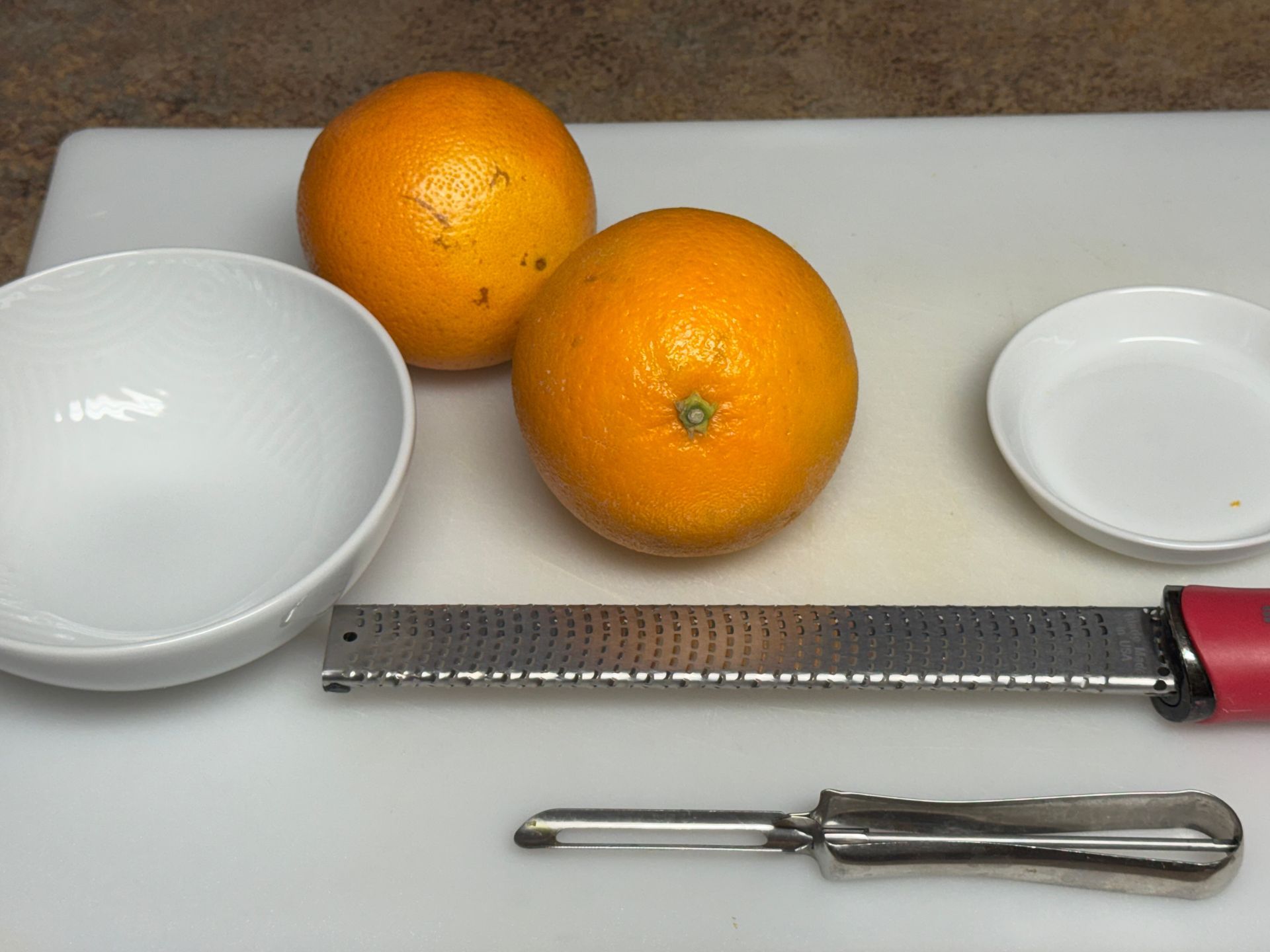
3 ea Oranges, rinsed and dried
How to zest and peel an Orange.
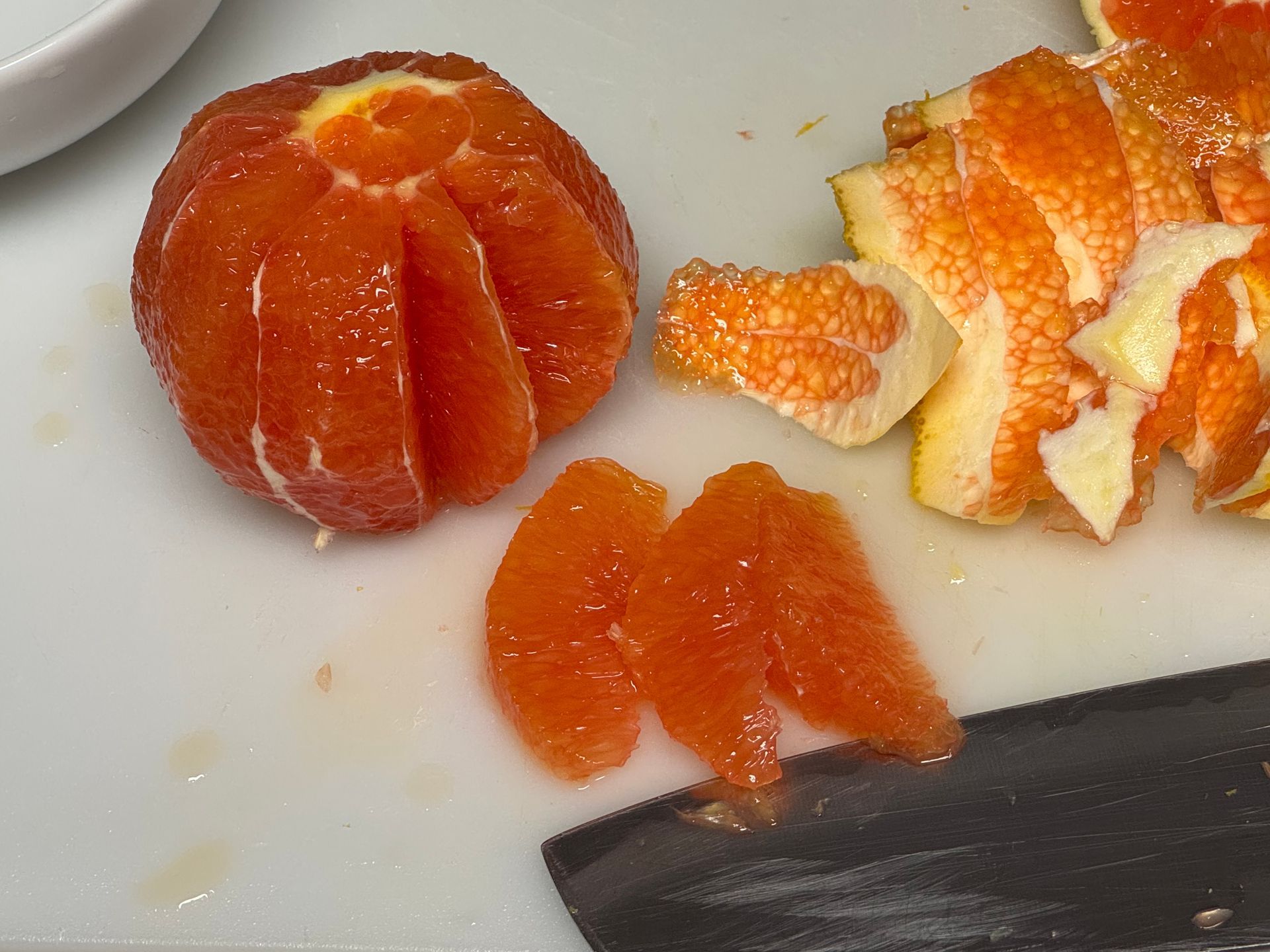

Oranges
It makes sense to zest an orange, peel it and cut out supremes and finally, squeeze the orange juice out-great utilization!
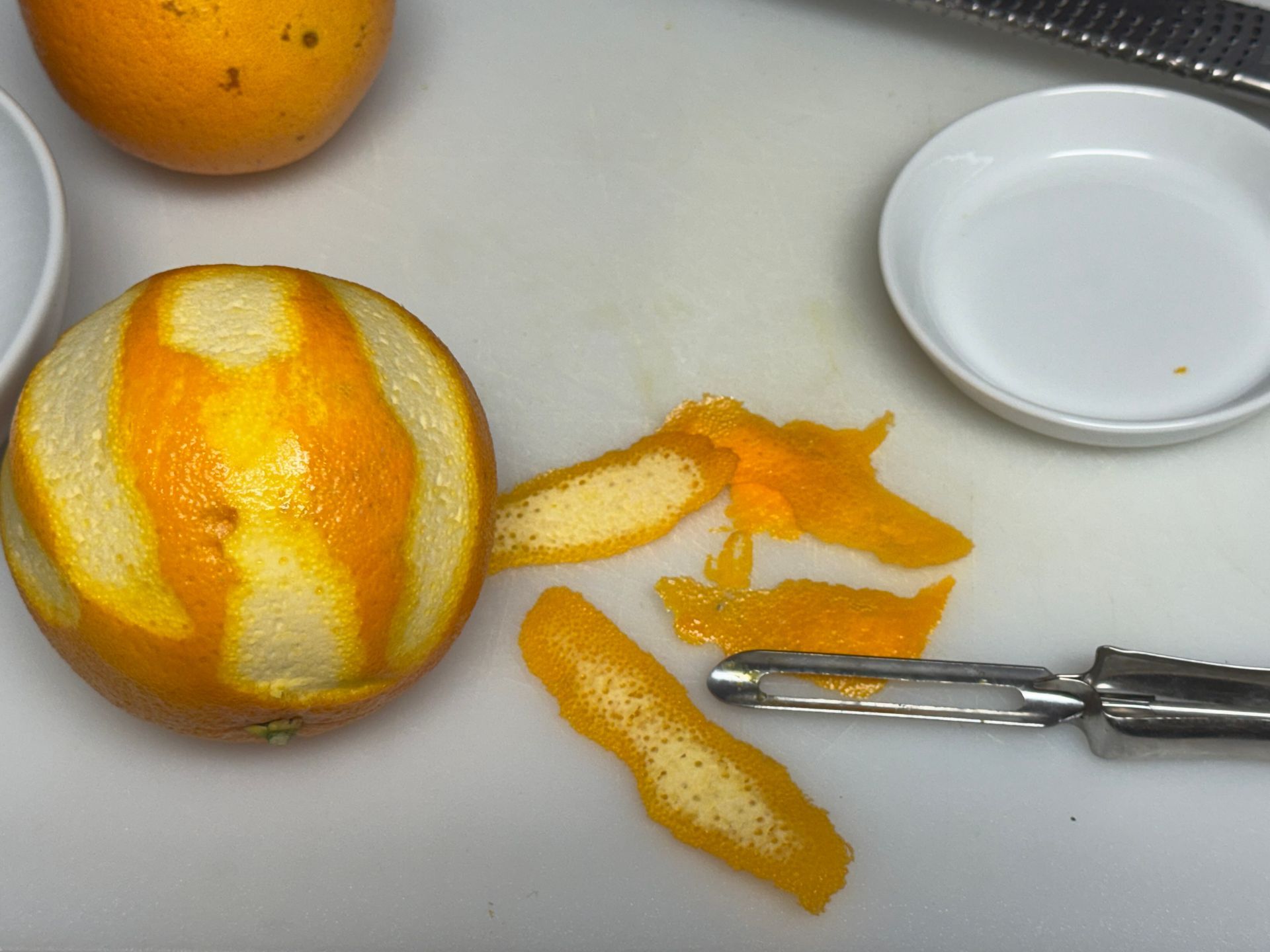
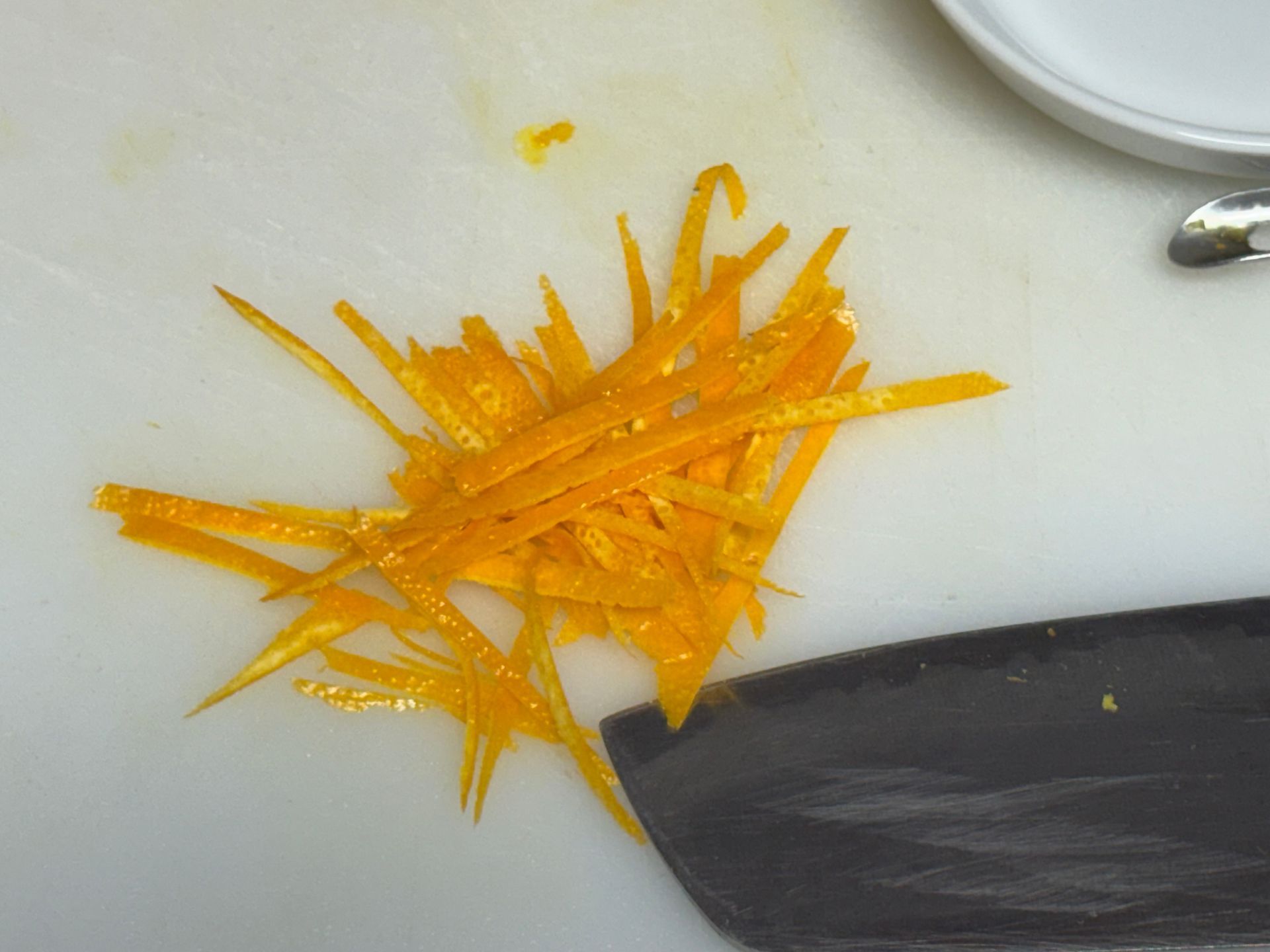
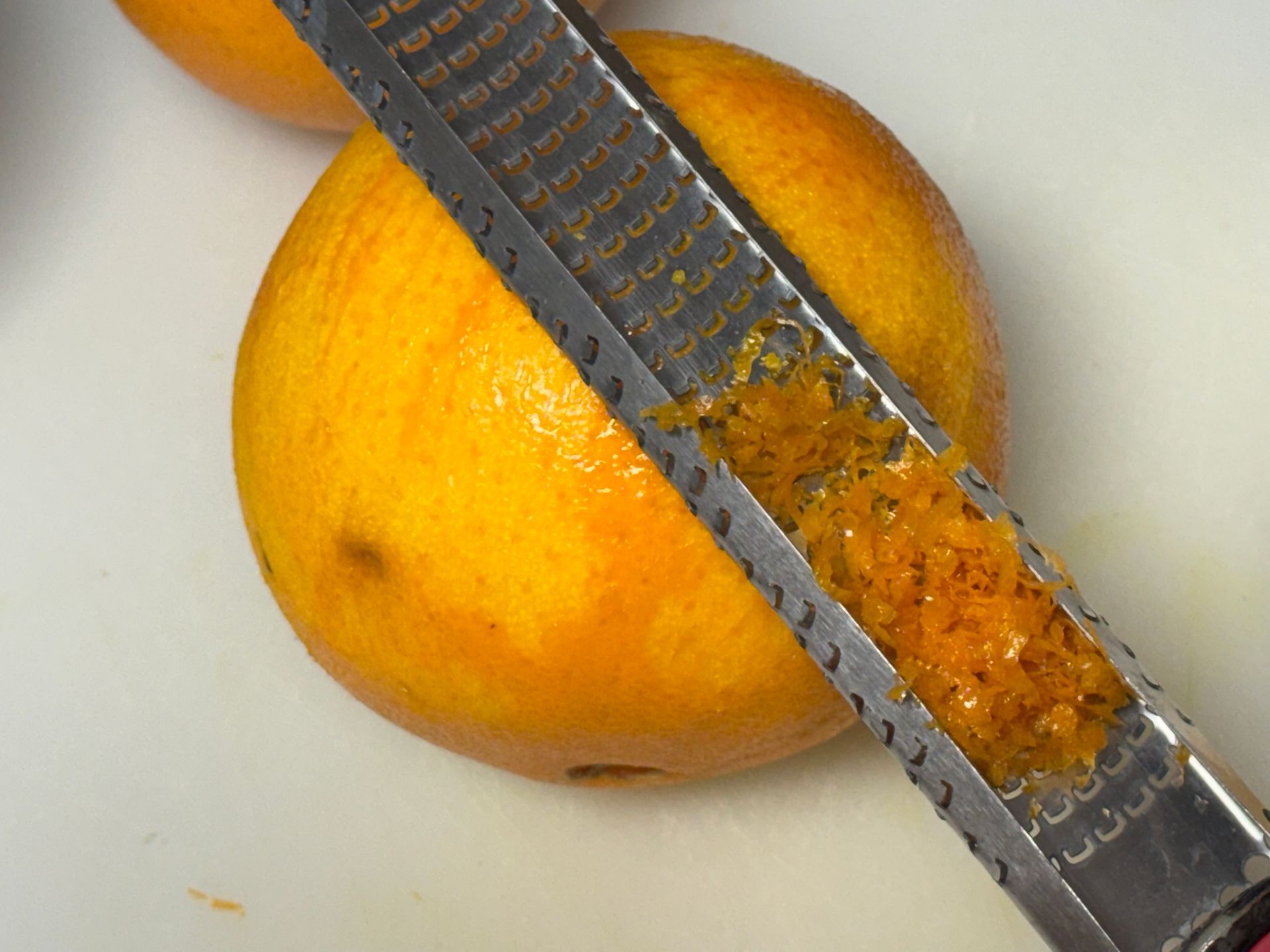
Step 1 Zesting
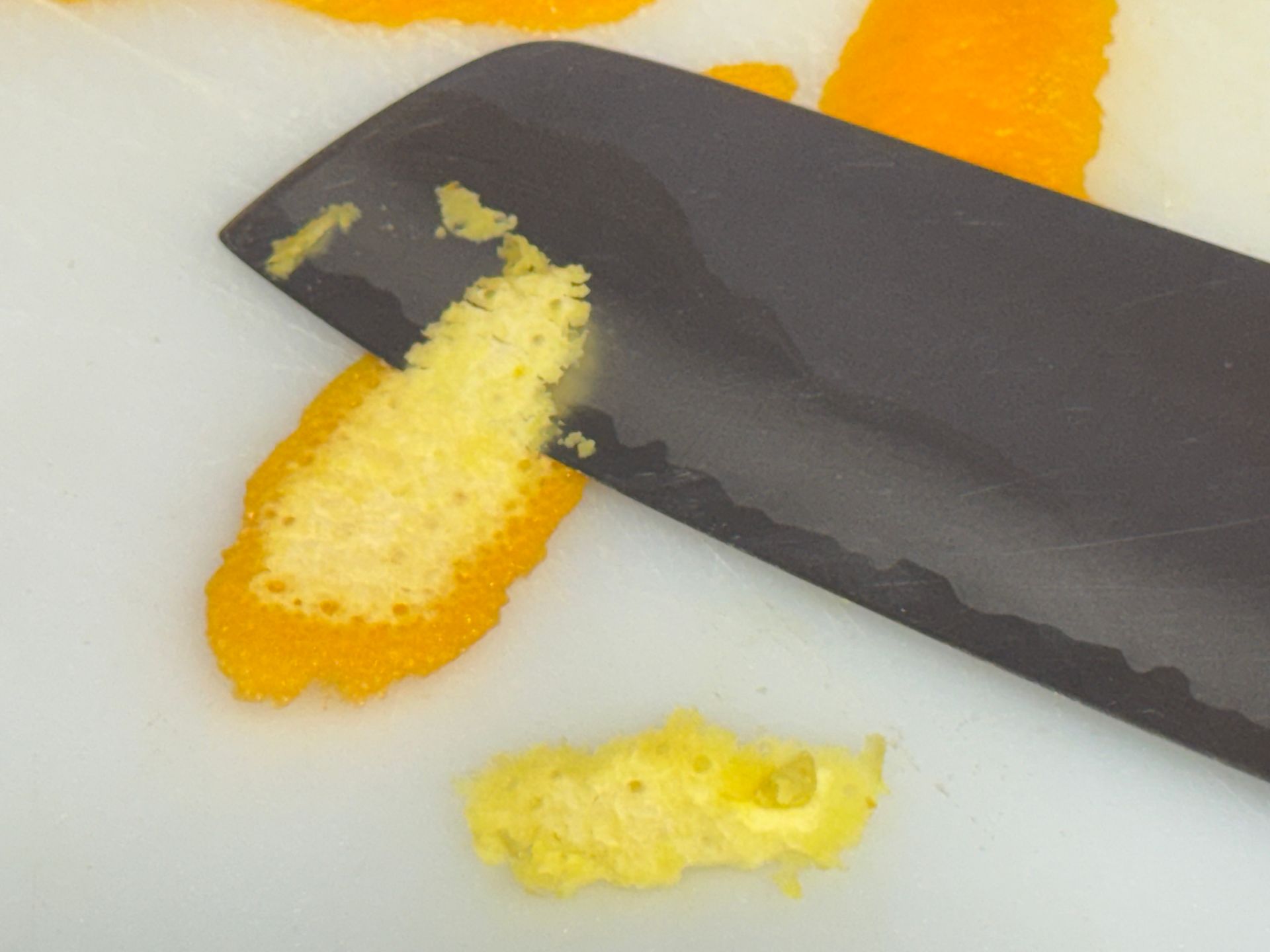
To zest an orange, peel with a vegetable peeler, then slice off the bitter, white pith with a sharp, chef's knife.
or
Use a zester-you get a much thinner, finer zest. It's a matter of preference.
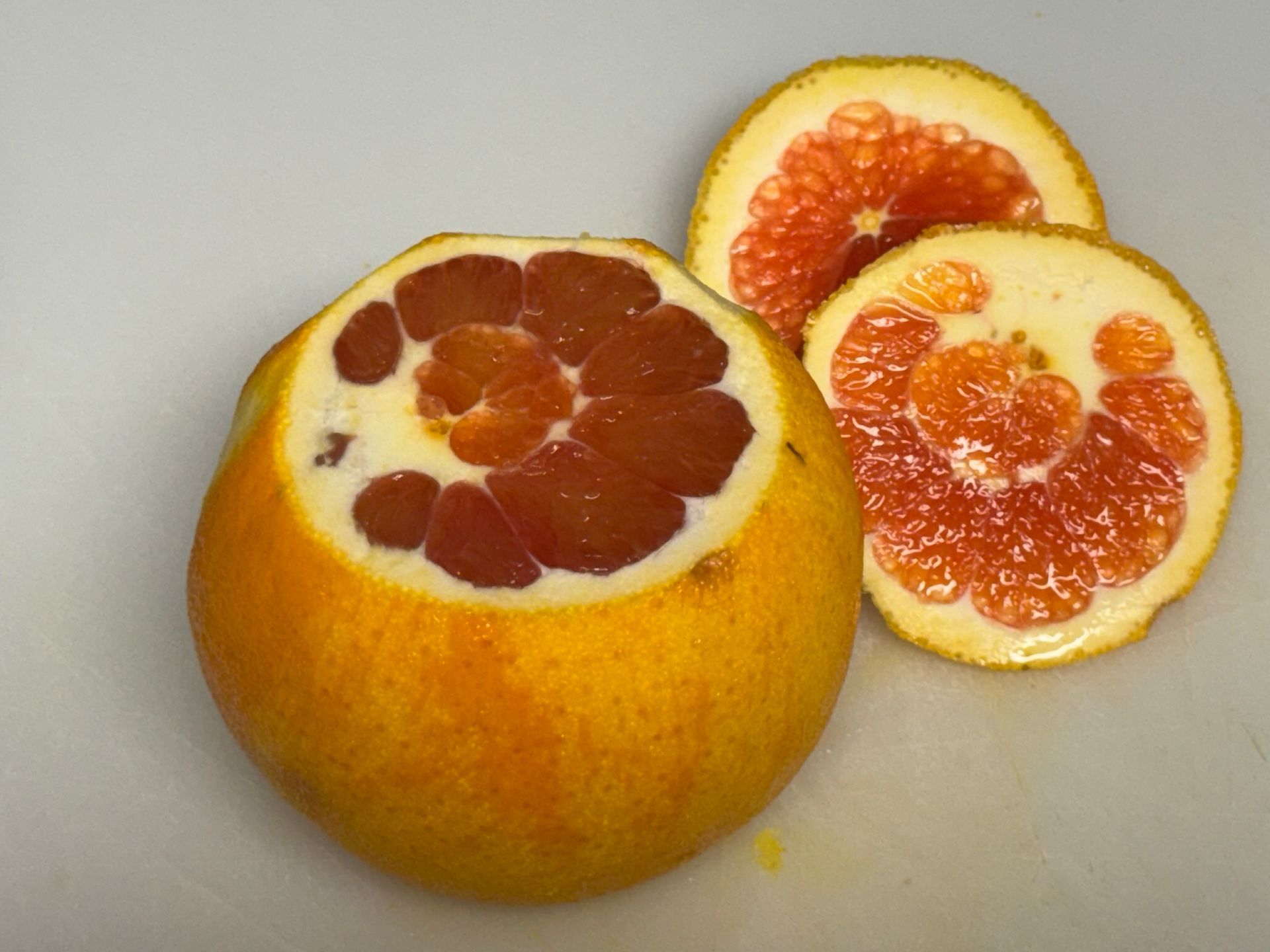
Step 2 After zesting, peeling an Orange
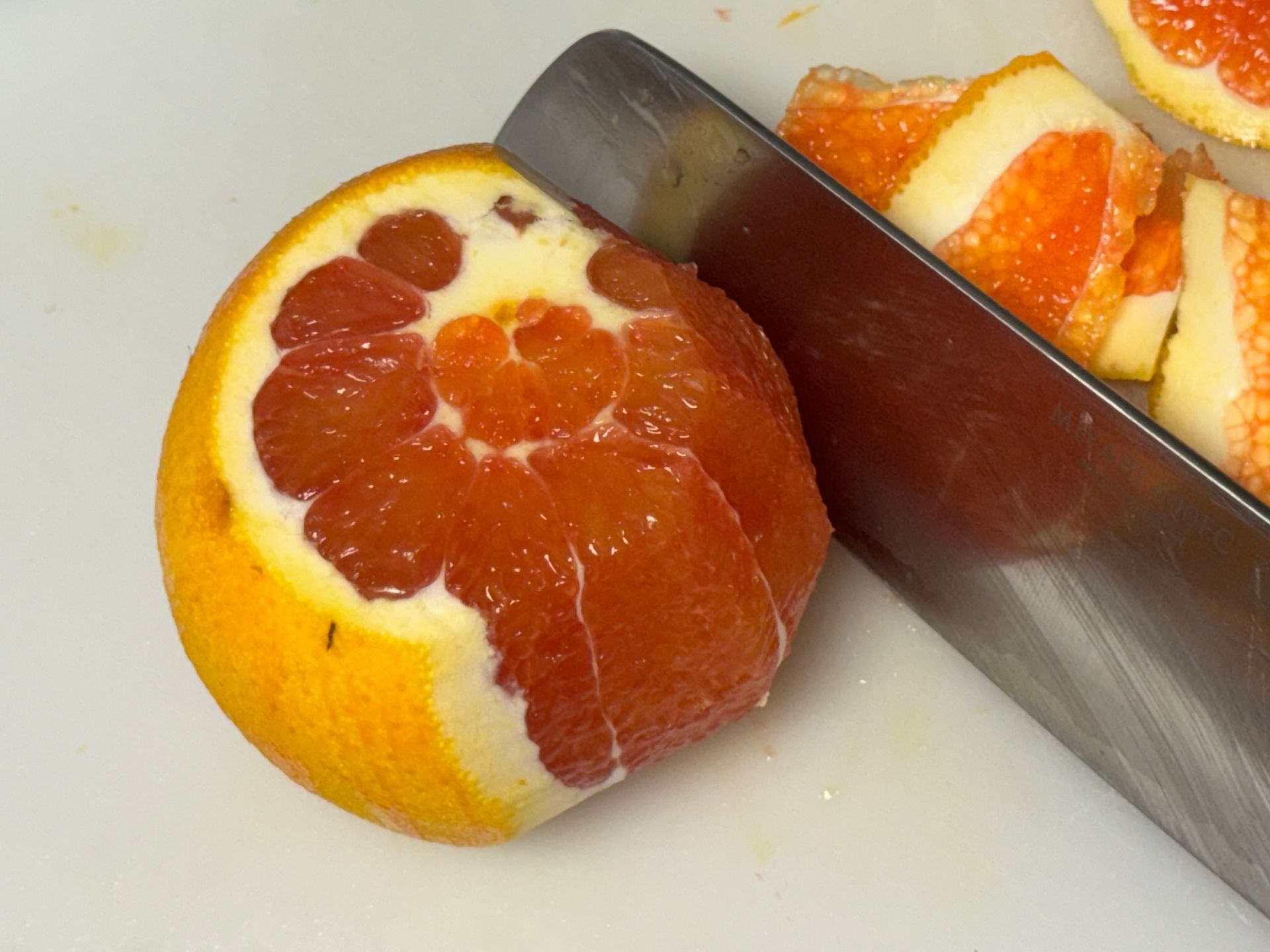
Slice the top and then the bottom of the orange; place the orange on one of the flat sides (top or bottom) and carefully slice from top to bottom, on a curved arch, slicing the skin and pith away but leaving the orange interior.
Then hold the peeled orange in your hand and slice out each supreme/segment by carefully cutting into the side of the orange in a V cut. You cut out the orange supremes between the white, orange membranes and the supremes fall out. Place into a bowl and reserve. Step 3 Juicing the Orange
Step 3 Juicing the Orange
Lastly, place the remaining membrane into a juicer and squeeze out the juice. I usually squeeze out the juice in the orange peels also.