
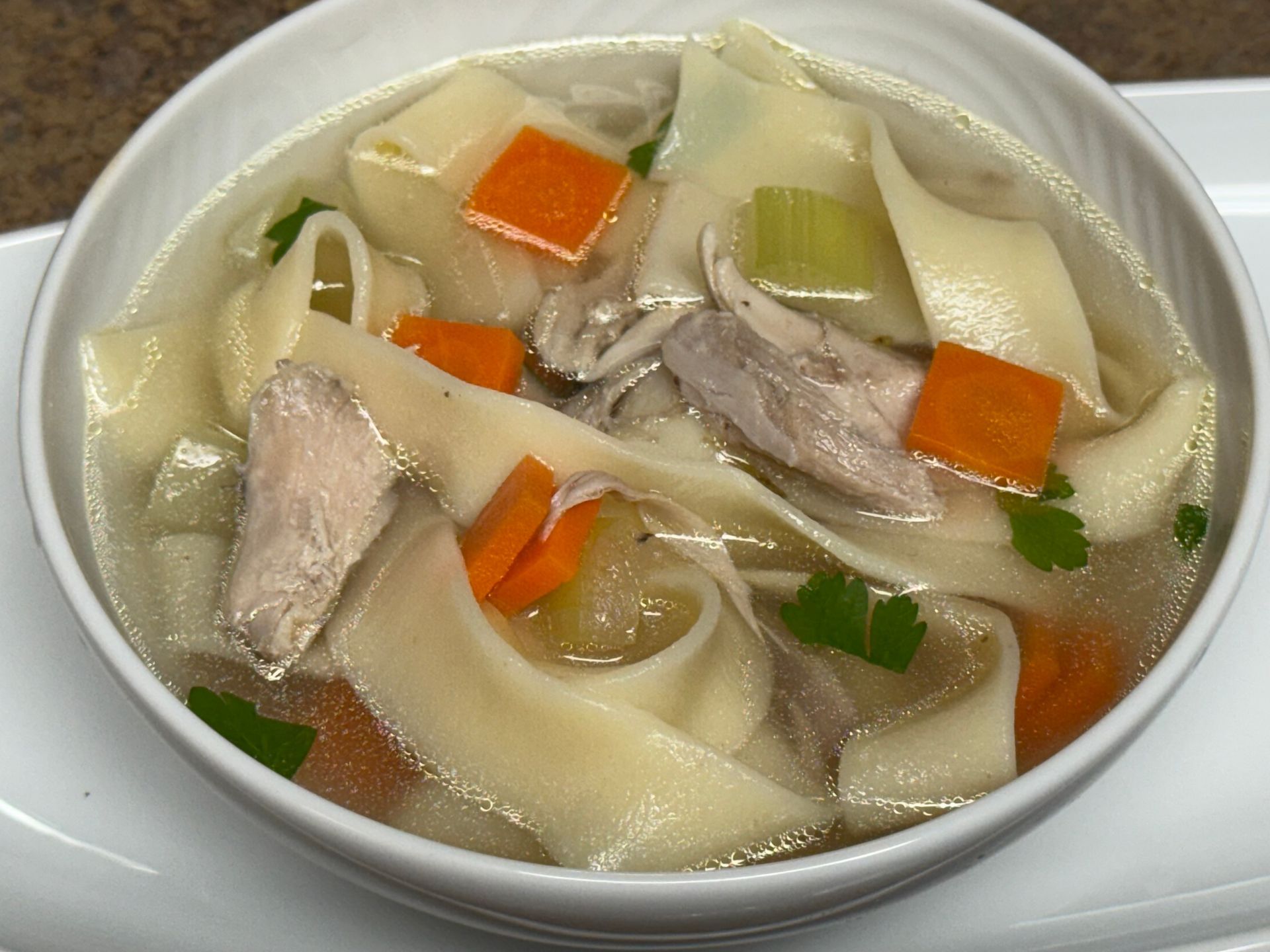
As a Certified Master Chef, I’ve spent years refining my craft—studying broths and consommés, and even spending days in Italy learning to make a deeply flavorful brodo with an exceptional Italian chef.
For me, chicken noodle soup represents the perfect one-pot meal: nourishing, balanced, and simply delicious. It’s a reminder that even the most familiar dishes can showcase craftsmanship and care when prepared with intention and respect for quality ingredients.
Chicken Noodle Soup
The Timeless Comfort of Chicken Noodle Soup
Few dishes evoke comfort and nostalgia quite like chicken noodle soup. Over the years, I’ve developed and tasted countless variations—from family recipes to large-scale formulations during my time as VP of Culinary at Campbell Soup. What makes this dish enduring isn’t just its simplicity—it’s the balance of flavor, texture, and the deep satisfaction it brings. As a chef consultant, I often revisit classics like this to explore how thoughtful technique and ingredient quality elevate even the most familiar foods. This recipe reflects that philosophy: simple, honest, and deeply rooted in culinary craft.
Prep Time: 30 min
Cooking Time: 90 min
Yield: 6 portions
Ingredients
2 qts Chicken stock
1 ea Chicken, fowl (or 4 legs)
1 Cup Mirepoix
1 ea. Sachet d' epices: (1 sprig of Thyme, 1 bay leaf, 1 Garlic clove, smashed)
2 Tbsp Olive oil
1 Cup Carrots, peeled, small dice or paysanne cut
1 Cup Leek whites or Spanish Onions, small dice or paysanne cut
1 Cup Celery, small dice or paysanne cut
2 'nests' Egg noodles
t.t. Salt & Pepper
How to prepare Chicken Noodle Soup
Step 1
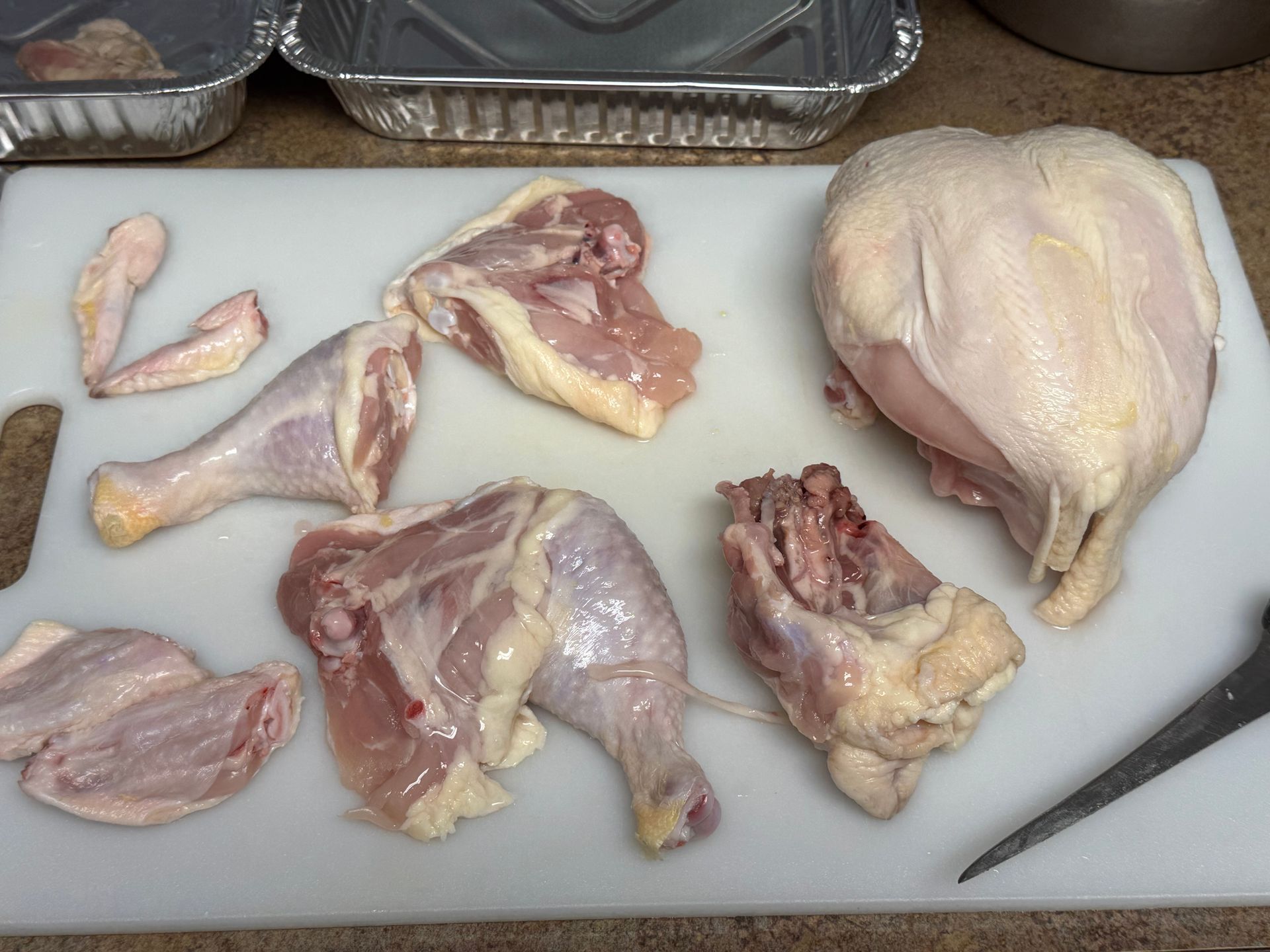
To prepare a broth, I prefer to fabricate a chicken into legs, thighs, wings, breast and frame. If I use all of the chicken pieces, I can pick out the breas earlier than the other parts so it isn't dry (and dice for garnish).
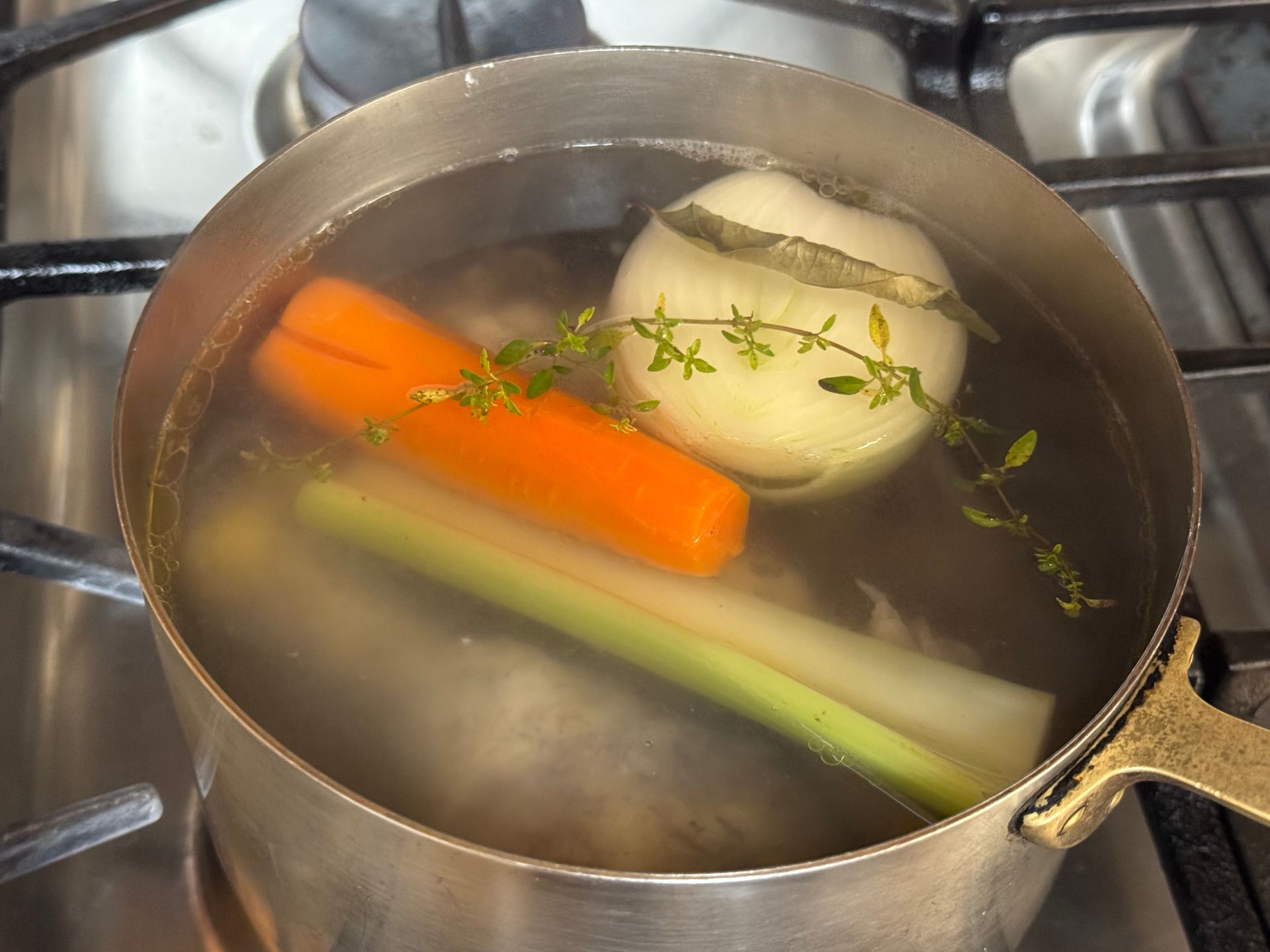
Combine chicken stock, chicken parts, mirepoix and sachet in a pot, bring to a simmer. Simmer the chicken in the stock and seasonings until tender - about 2 1/2 hours.
Step 2
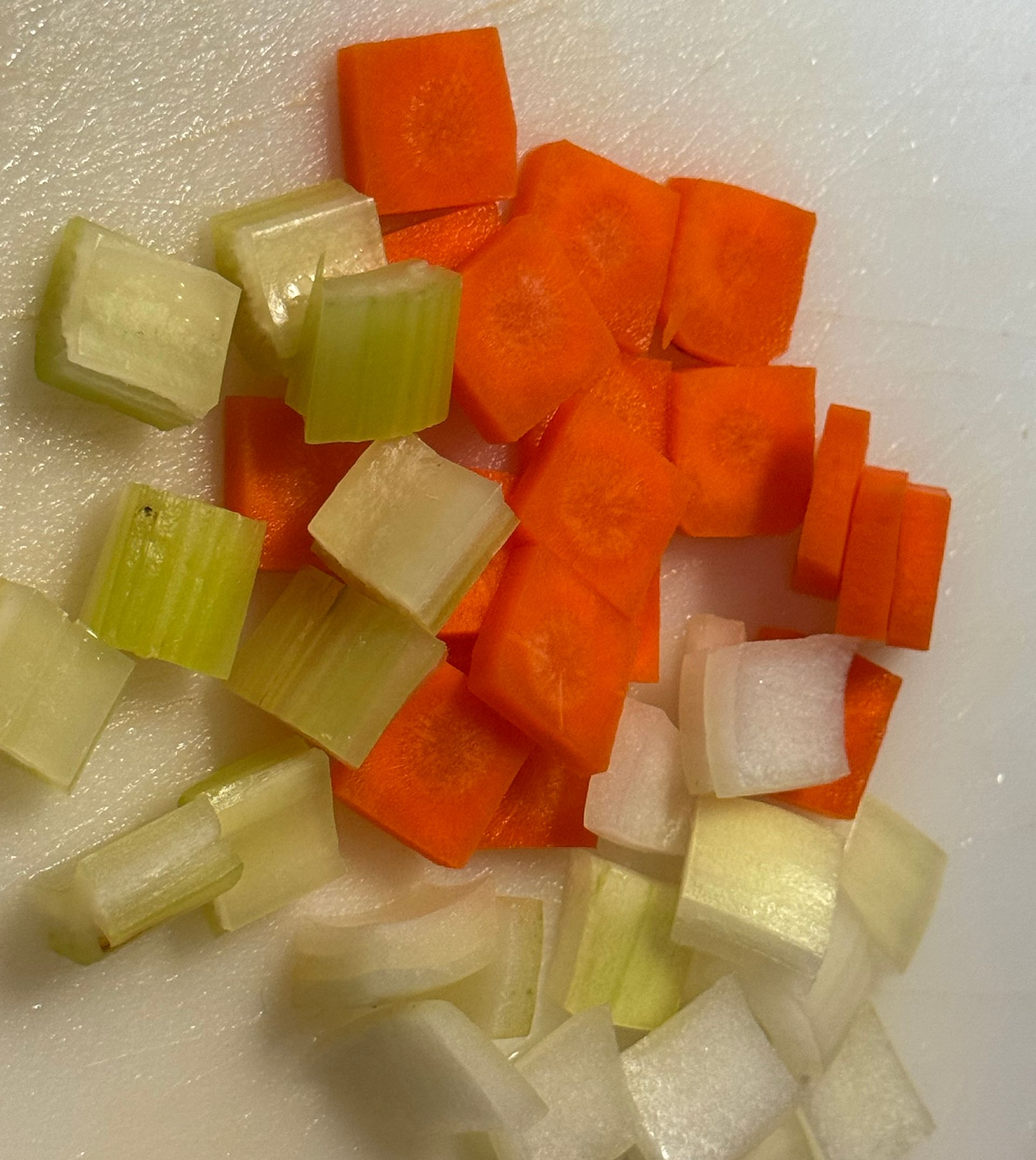
Dice or cut the carrots, onions, celery; reserve.
Step 3
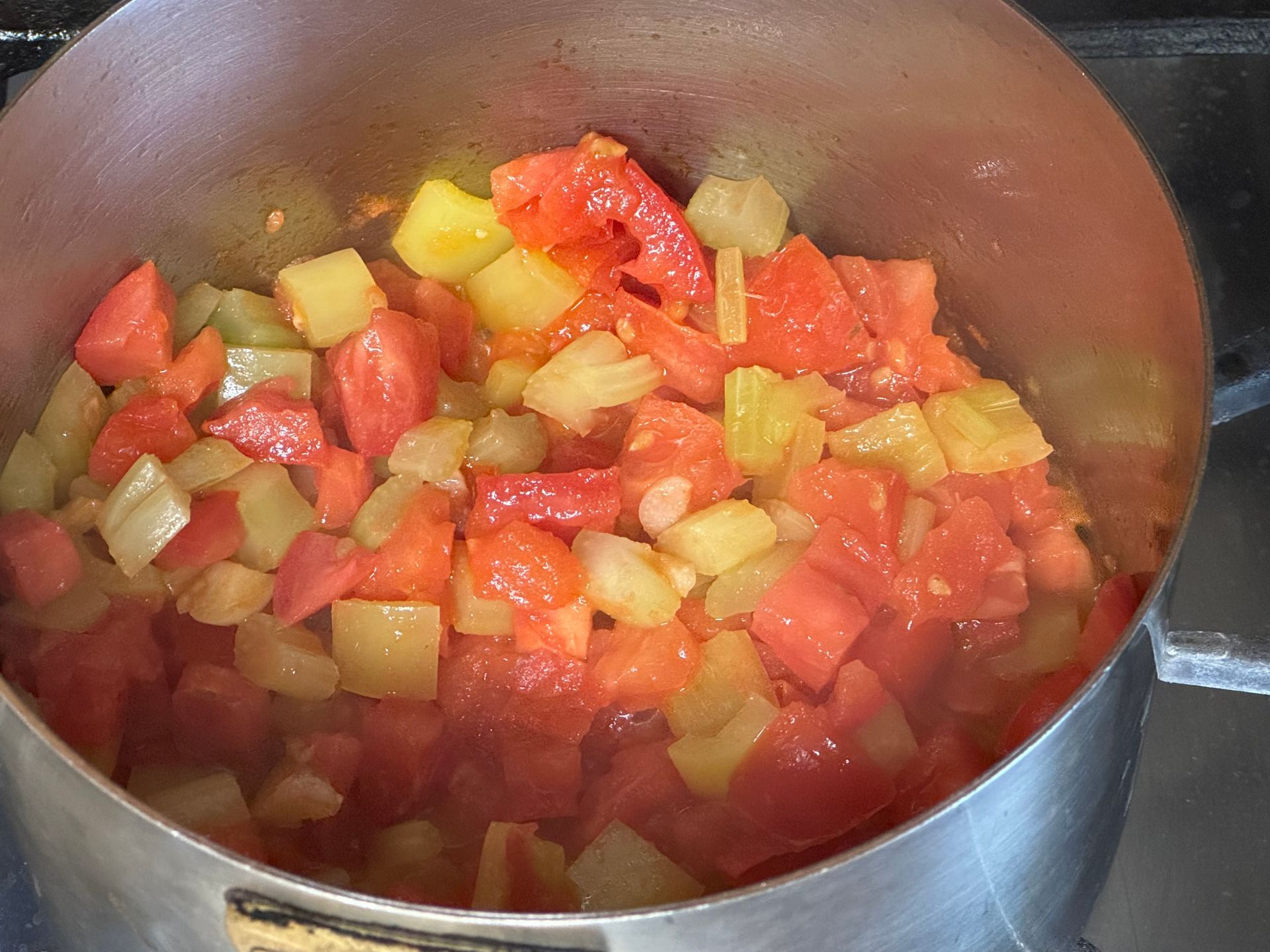
Heat a heavy sauce pot, add olive oil to heat, add the carrots, leeks and celery, sweat until translucent, do not brown. Stir with a wooden spoon. (about five minutes) This is 'sweetening the pot'.
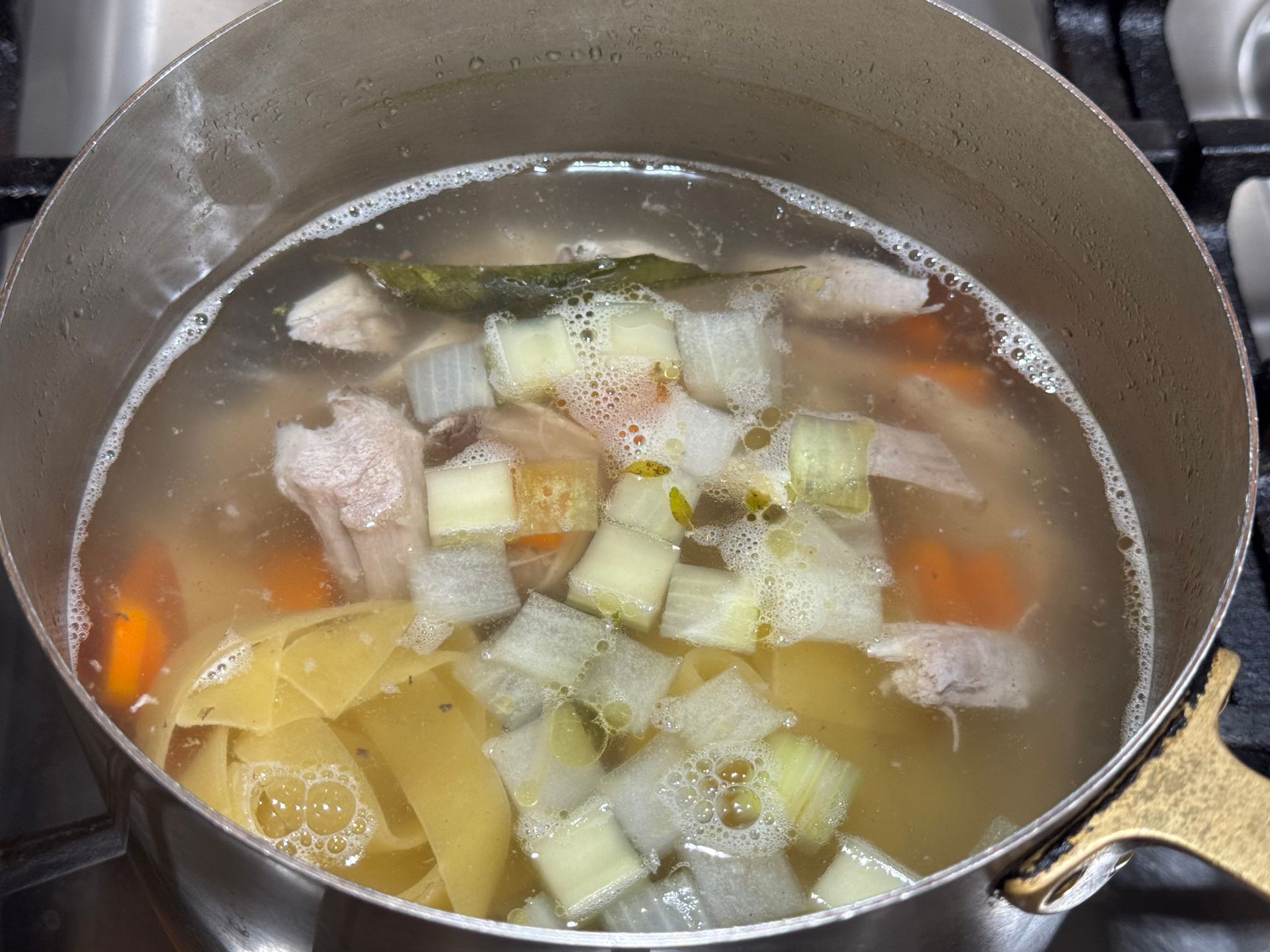
Strain the broth into the vegetables.
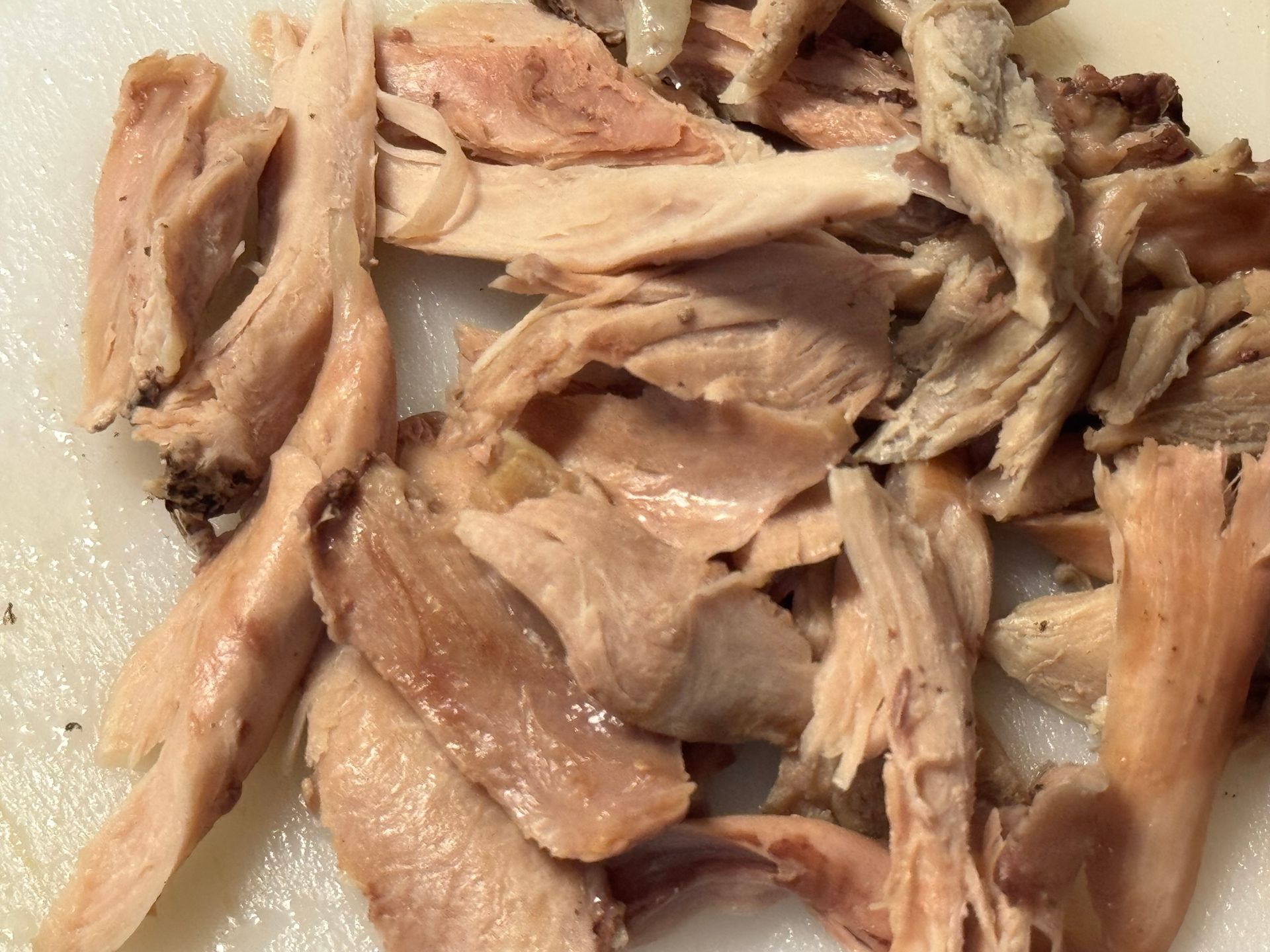
Remove the chicken and cool, cut the meat into dice or strips, add to the soup.
Step 4
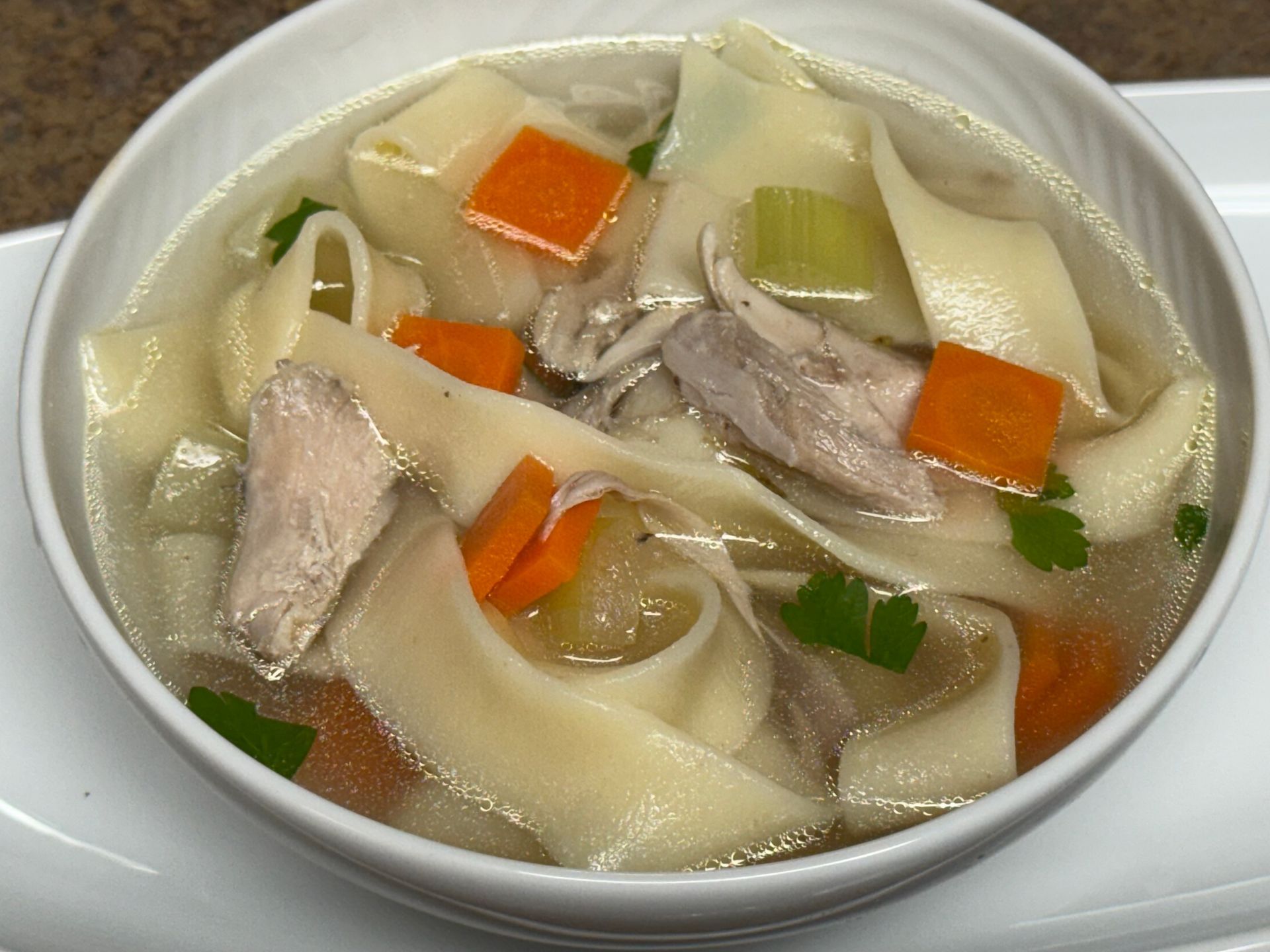
Add the noodles and simmer for 20 minutes until the noodles are tender. The starch in the noodles will slightly thicken the soup.
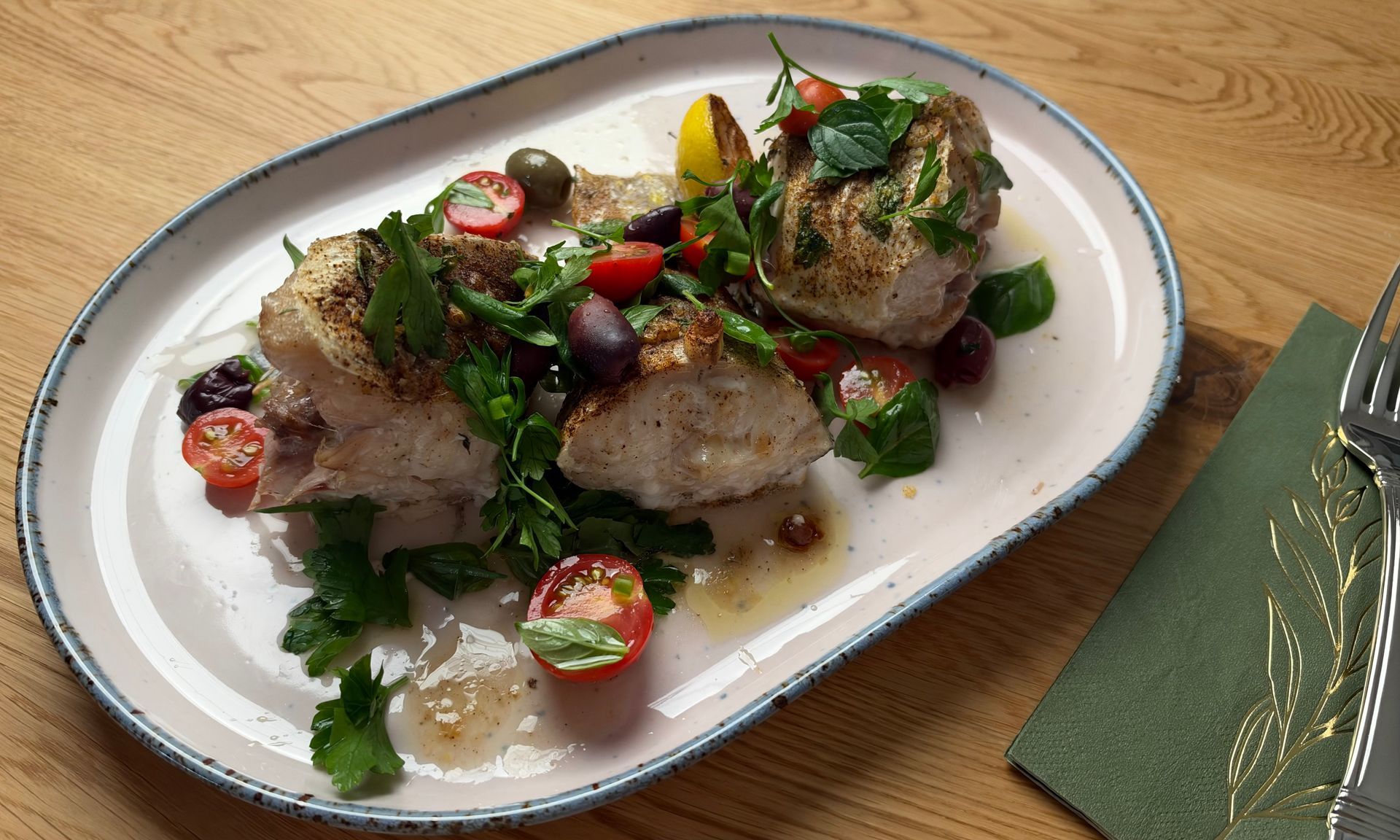
Chef Tom’s Cooking Class Minute — Week 10 Roasting Fish Let the Fish Taste Like Fish
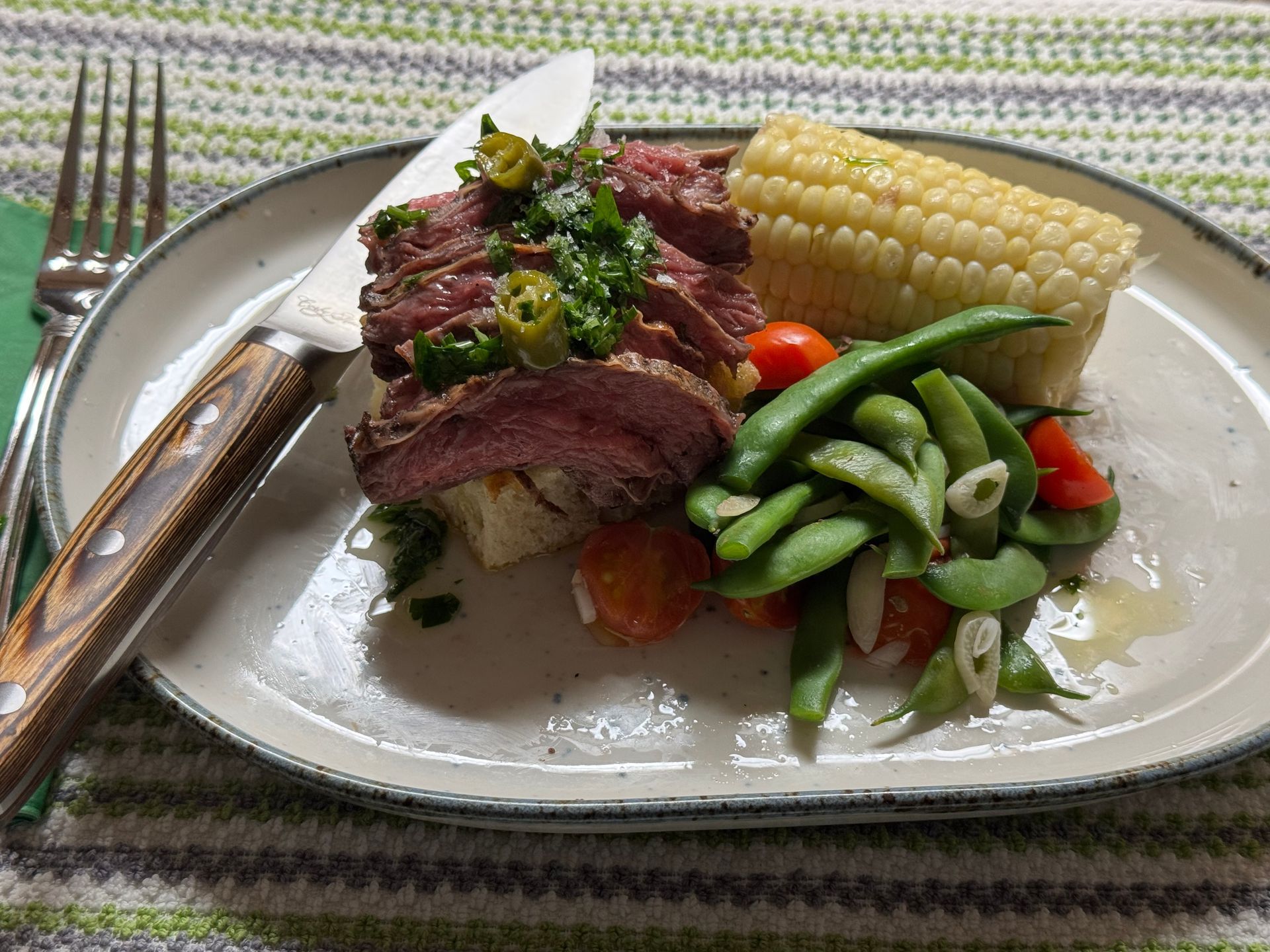
Chef Tom's Cooking Class Minute: Week 9 Late Summer Grilling: Great Steak Doesn’t Have to be a Ribeye
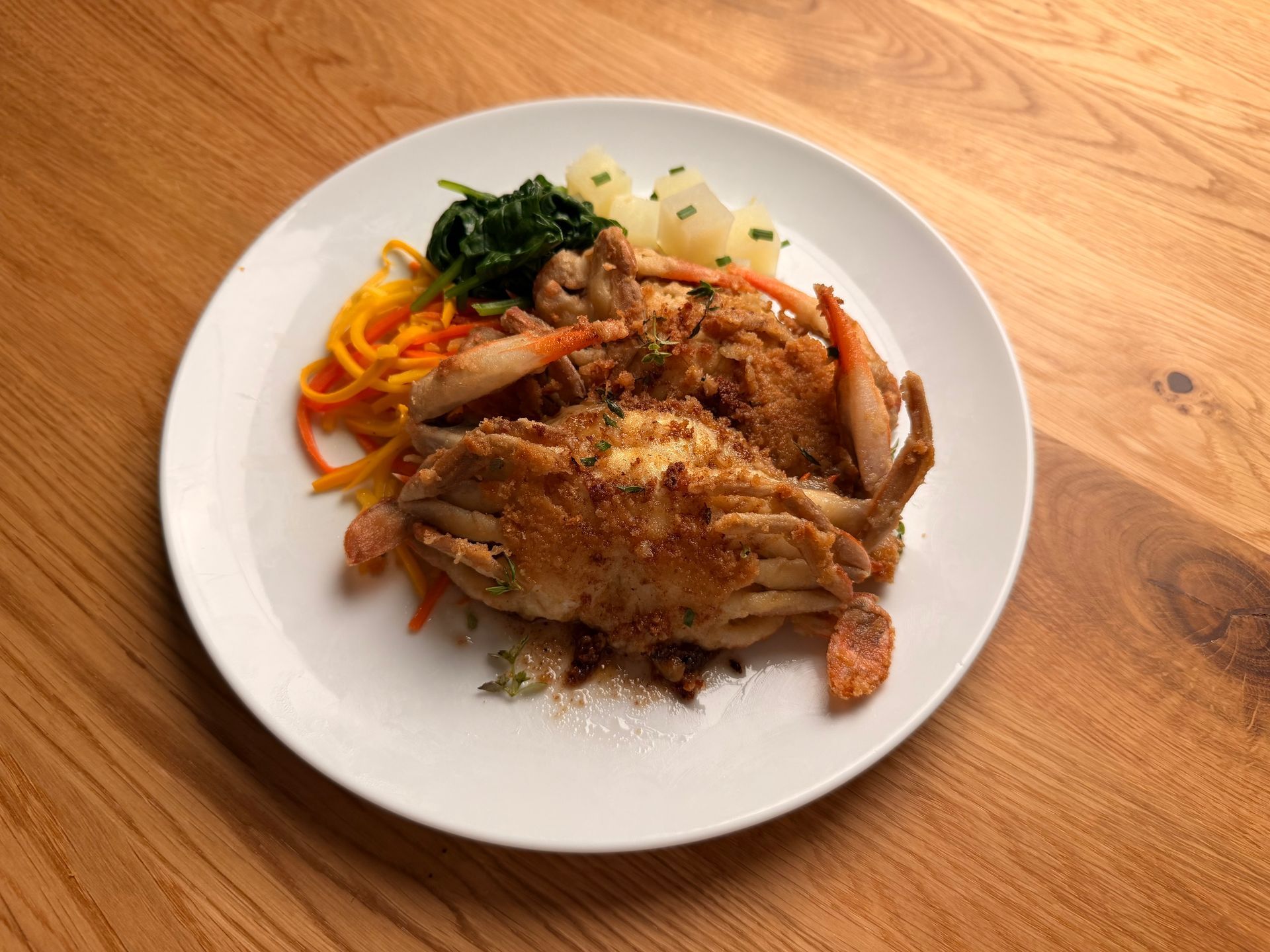
Chef Tom's Cooking Class Minute: Week 8 Soft Shell Crabs-What’s Your Favorite Way to Eat Them?
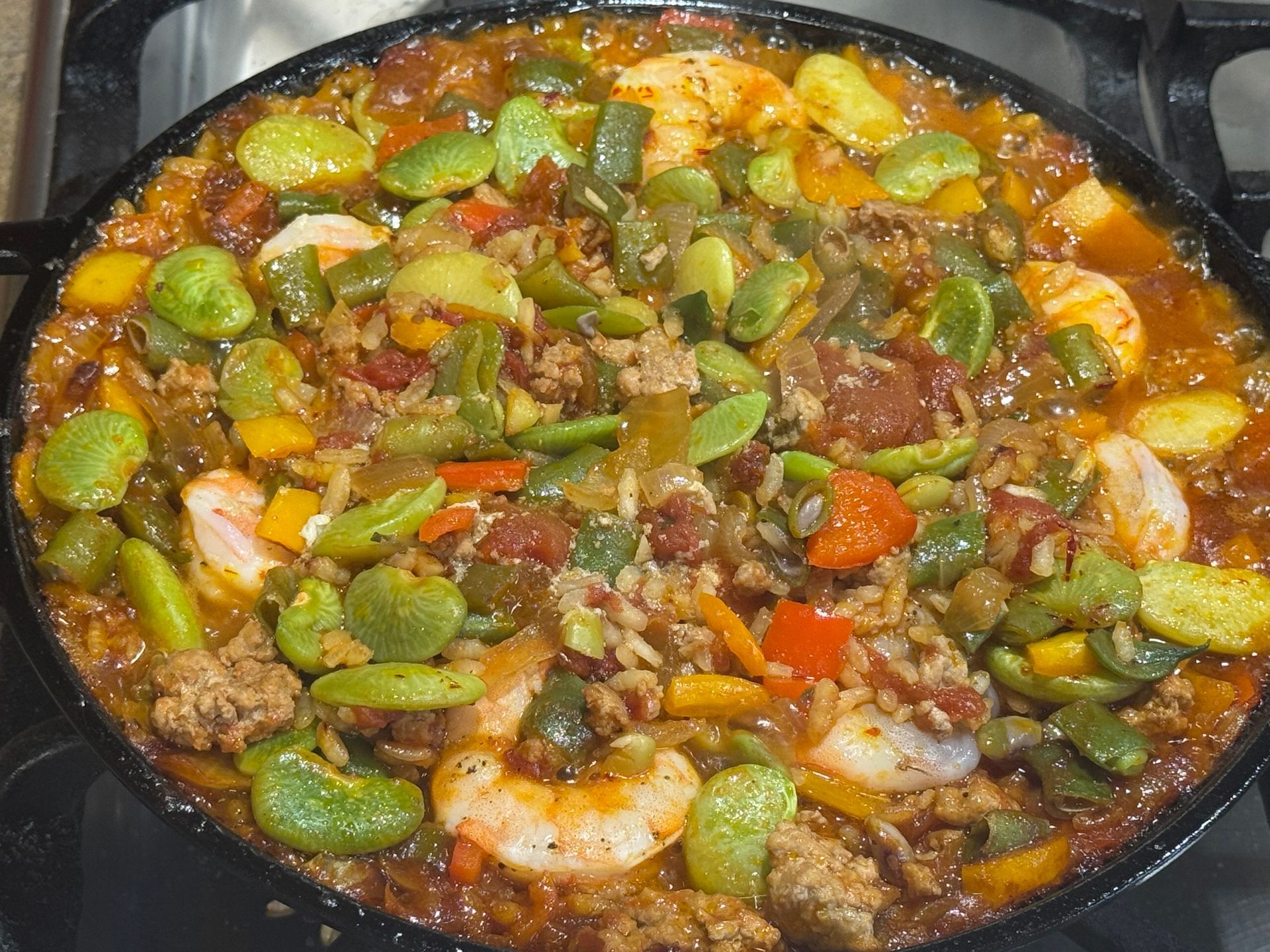
Chef Tom's Cooking Class Minute: Week 7 Fava Beans
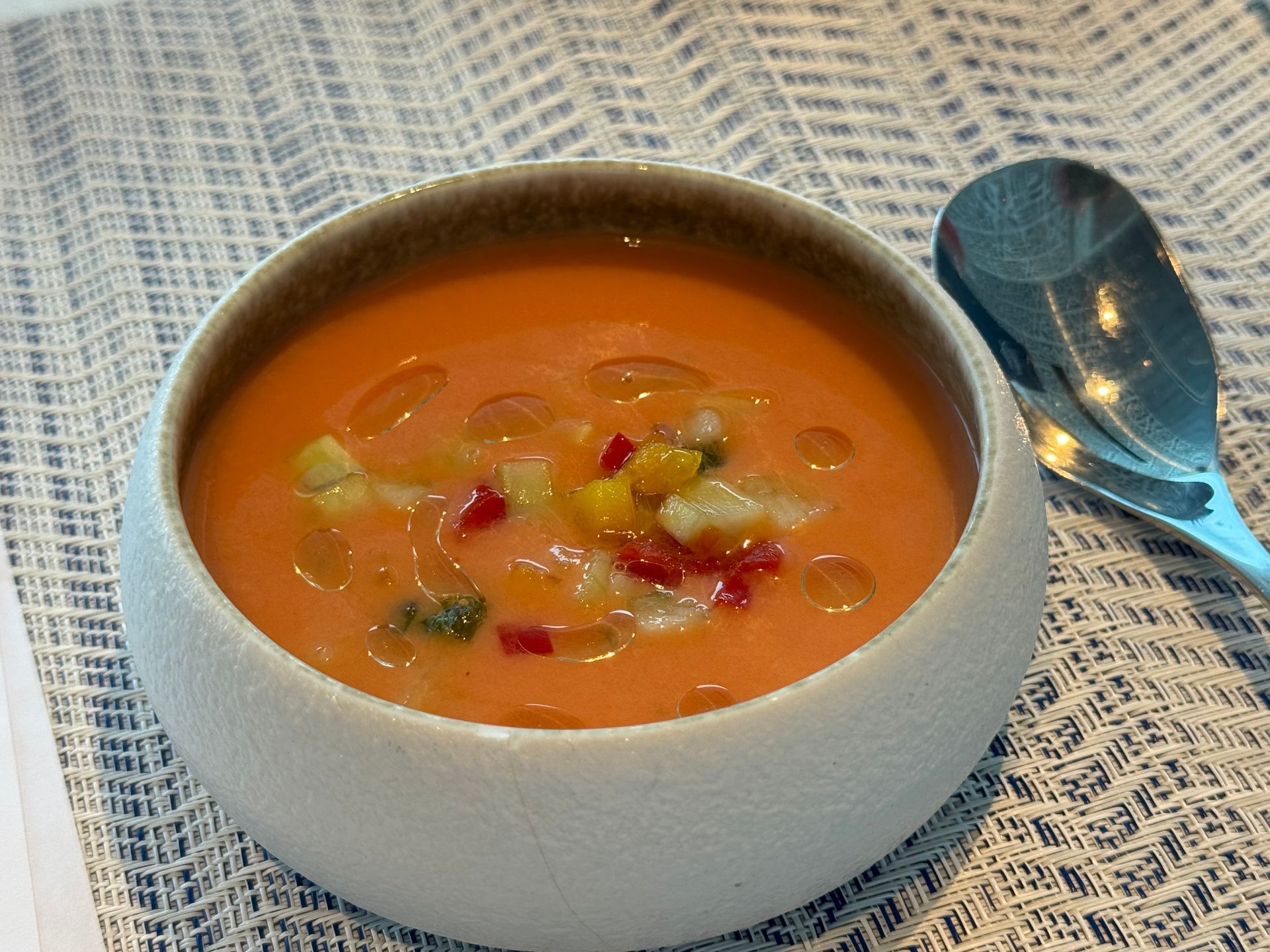
Chef Tom's Cooking Class Minute: Week 6 Gazpacho & Summer Tomatoes
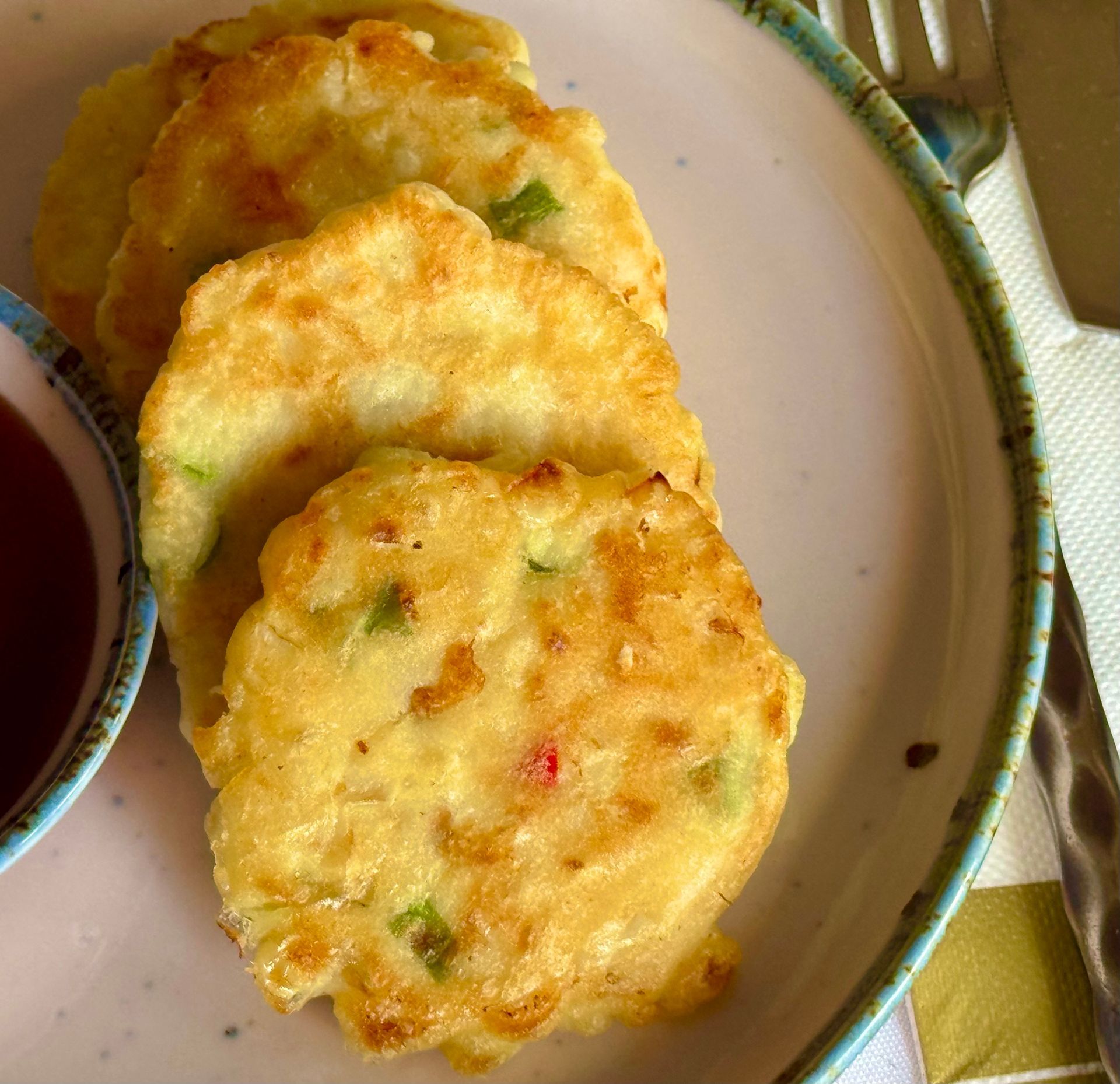
Chef Tom's Cooking Class Minute: Week 5 Summer Corn: Soup, Grill, Roast or Fritters?
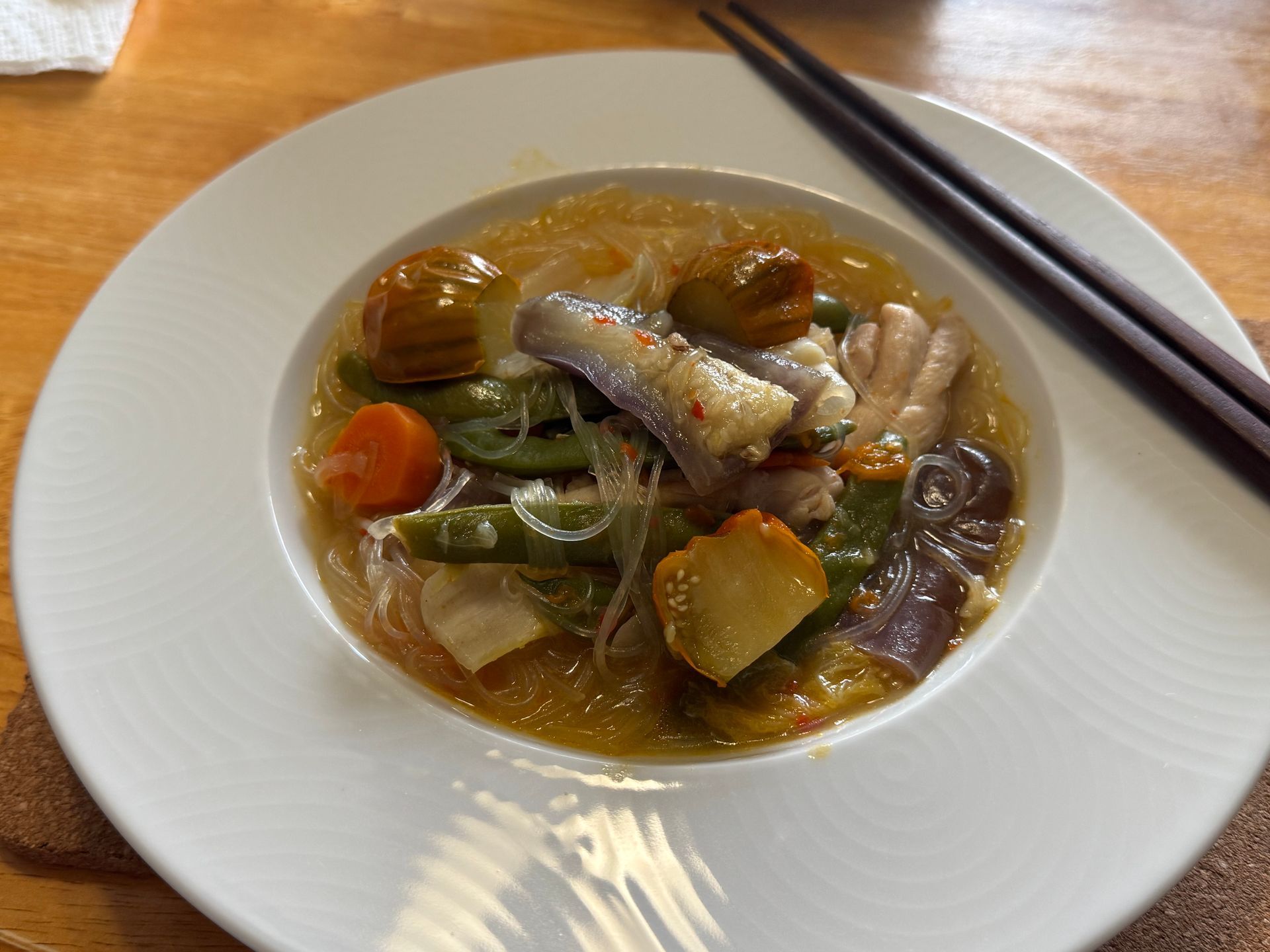
Chef Tom's Cooking Class Minute: Week 4 Cooking Summer Eggplant
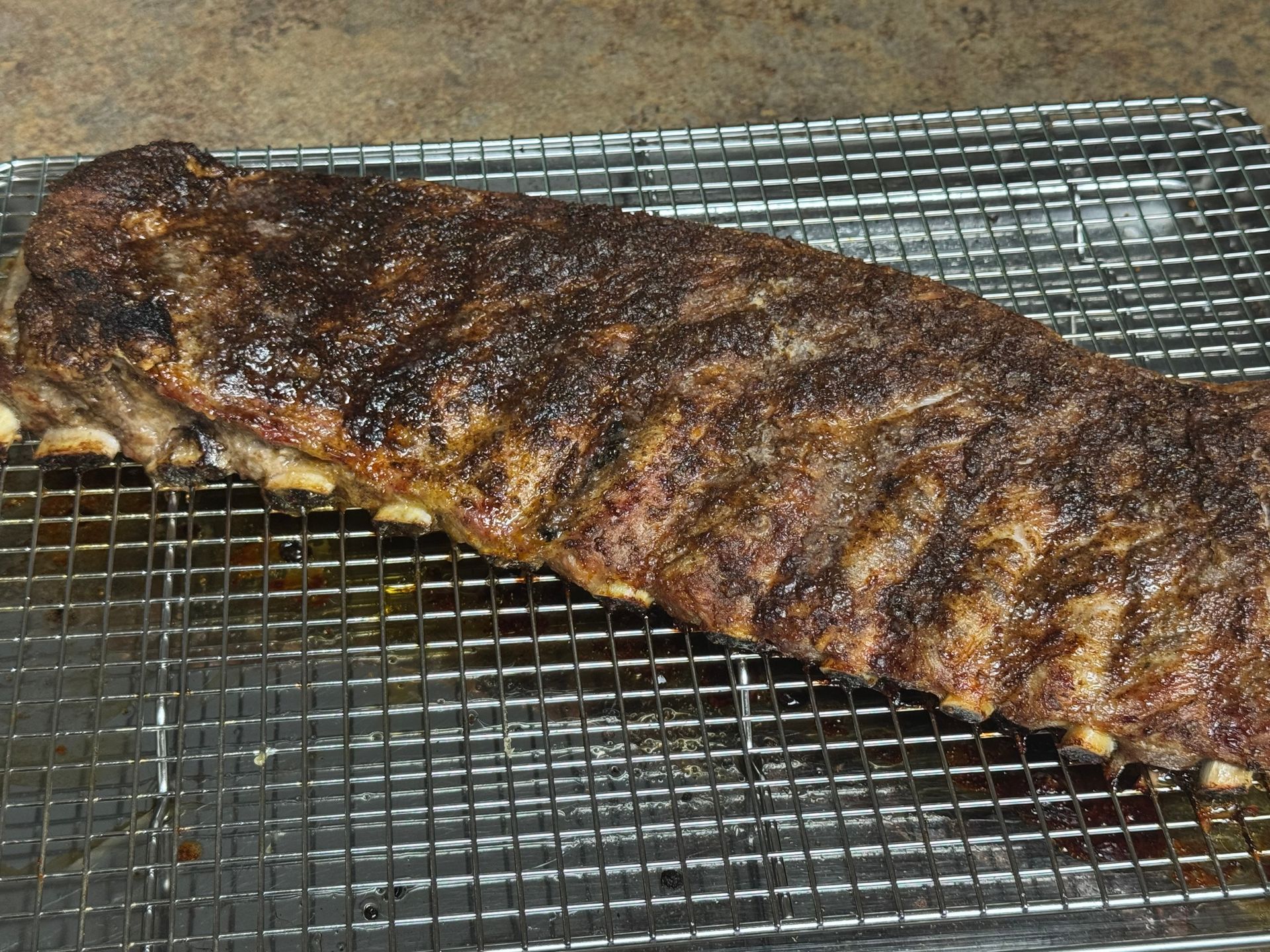
Chef Tom's Cooking Class Minute: Week 3 Cooking Pork Spare Ribs
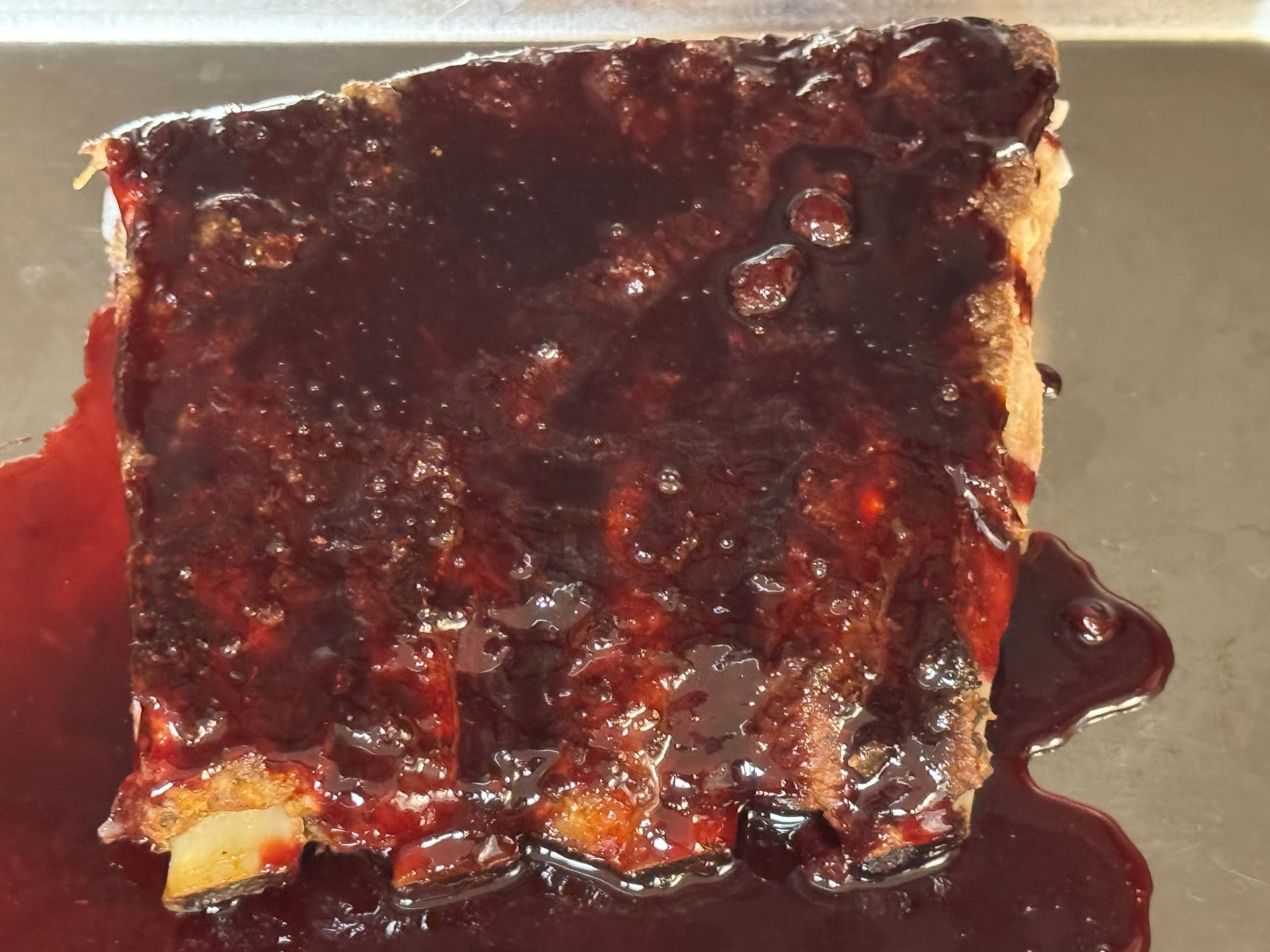
Years ago I traveled around the south for a few weeks researching some of the amazing foods of each region. In Charleston, I was introduced to a local pig farmer, Tank Jackson who manages Holy City Hogs. Tank and his wife raise heritage breed pigs and distribute the pigs around the country. He offers on-site cooking whole pig roasts, primal cuts and sausages, and I believe he produces the best pork in the country.
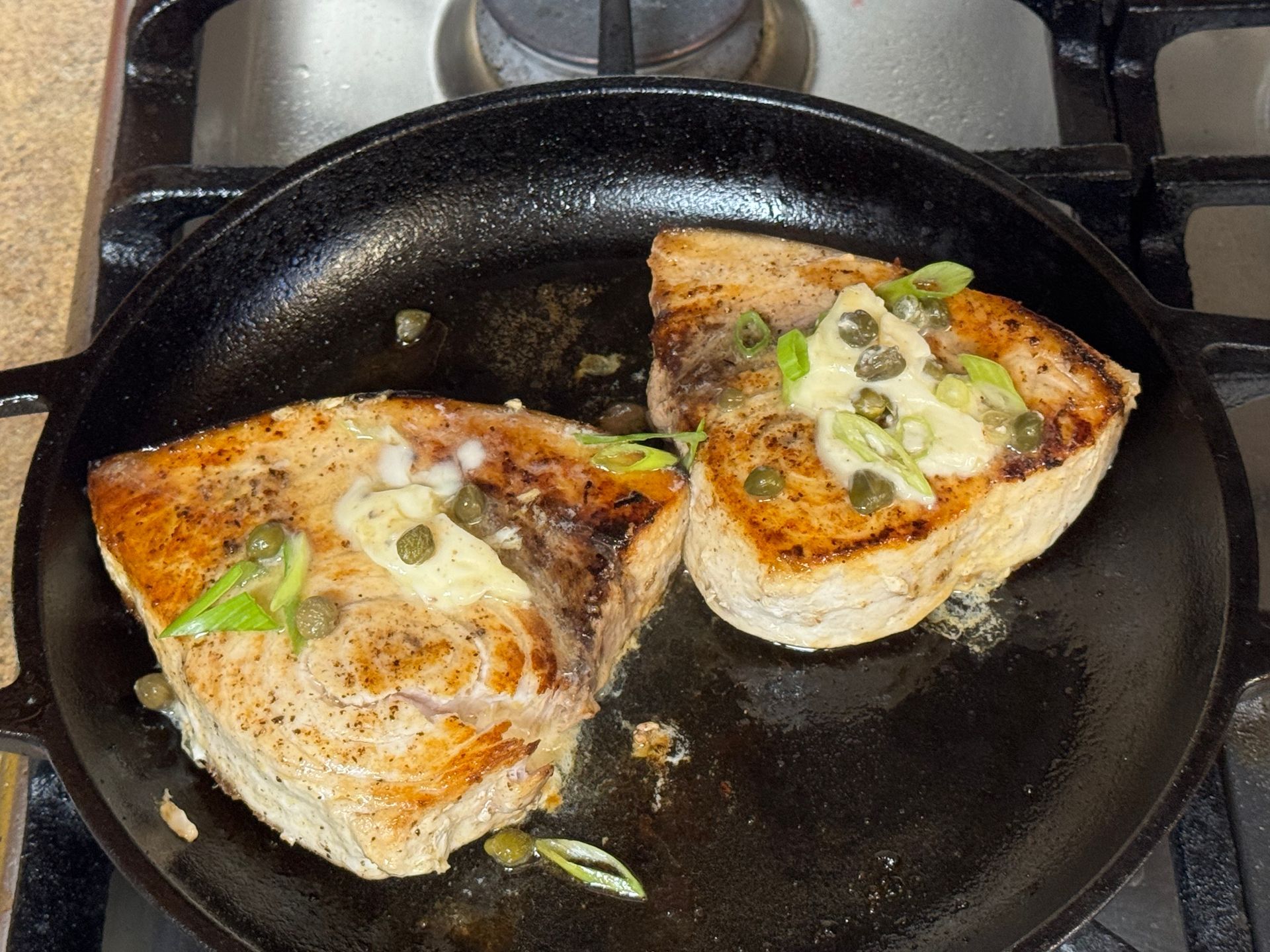
Years ago, while working as a chef in a busy continental restaurant, we featured grilled, fresh swordfish on the menu—finished with a generous spoonful of herbed compound butter and capers. It was popular and delicious. One afternoon, a seafood purveyor stopped by with a sample of frozen swordfish steaks, fully thawed and ready for evaluation. Curious, we grilled it side by side with the “fresh” swordfish we had been serving—fish we believed to be of high quality. The result was surprising. The frozen swordfish was superior—firmer, cleaner in flavor, and more consistent in texture. In contrast, our “fresh” fish, likely several days out of the water, lacked the same integrity. It was a defining moment and an important reminder: in many cases, properly handled and quickly frozen seafood can offer better quality than fish labeled as fresh. For chefs, understanding sourcing and handling is just as critical as technique—especially with a product as prized as swordfish.