Years ago I shared a food stand with close friends at a large fairground. Our families worked the booth on the weekends and it was a lot of fun.
I often came in early to prepare five or six soups... Spicy Vegetarian Black Bean, Chicken & Macaroni, Beef Barley, Tomato etc...
We served salads and sandwiches as well; the most popular sandwich was sliced roast beef on a toasted roll with gravy, onion rings, and provolone, we frequently ended up with extra rolls at the end of a shift. Naturally… croutons.
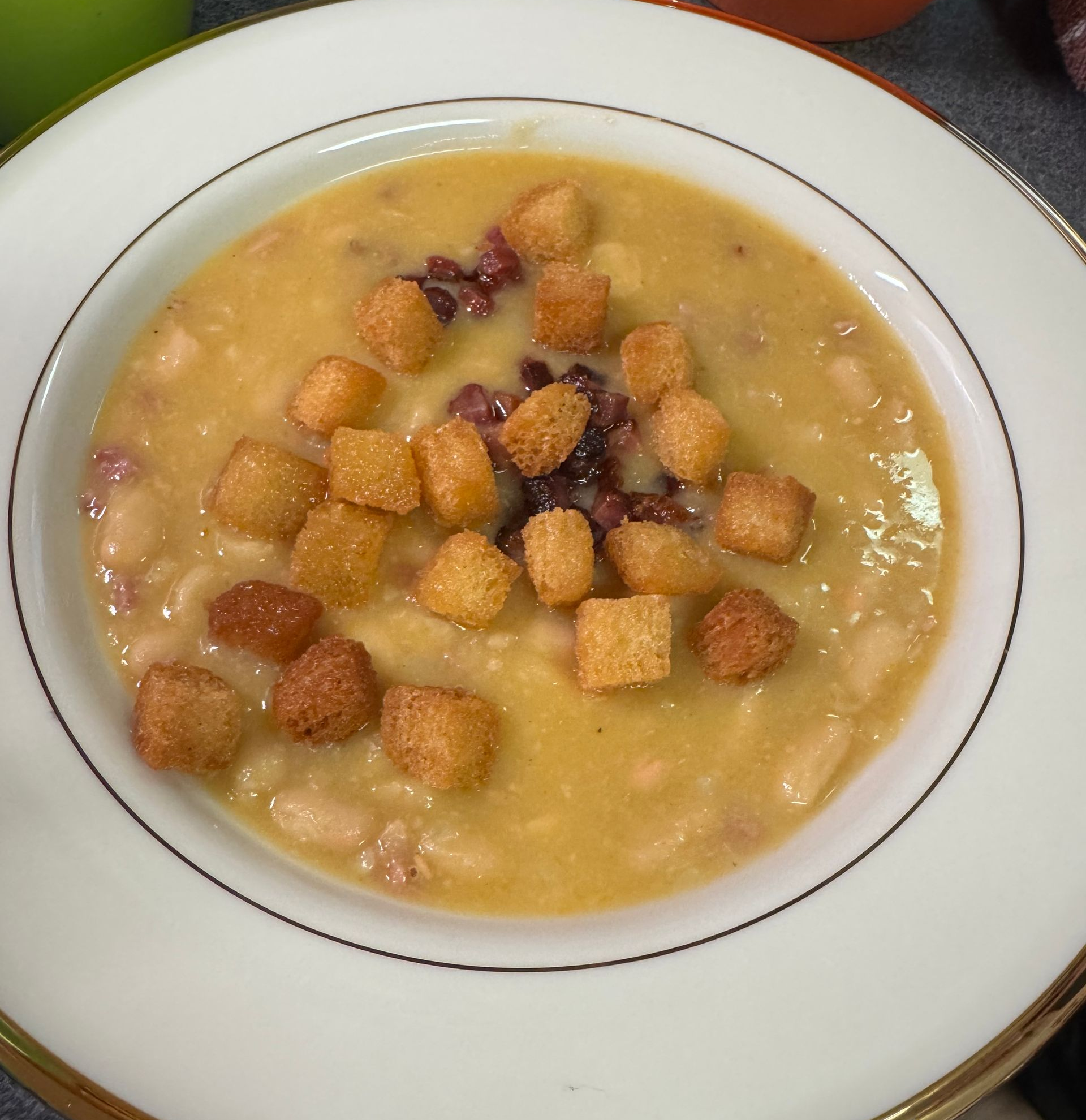
At the time, I typically served croutons only with certain soups—styles that truly benefited from that added texture and richness. But the rest of the team had a different idea. They started offering croutons on every soup, no matter the style, and the customers absolutely loved it. It became one of those small, unexpected touches that kept people coming back.

Croutons for Beginner's

The Craft of Croutons: Elevating Soups & Salad

Croutons are undeniably delicious—after all, delicious bread fried in flavorful fat is one of life’s simple pleasures. Yet what often gets overlooked is the various global styles of croutons which exist, each shaped by regional ingredients preferences and culinary traditions. Thoughtfully prepared, a crouton does far more than add crunch; it enhances the character of the dish it accompanies.
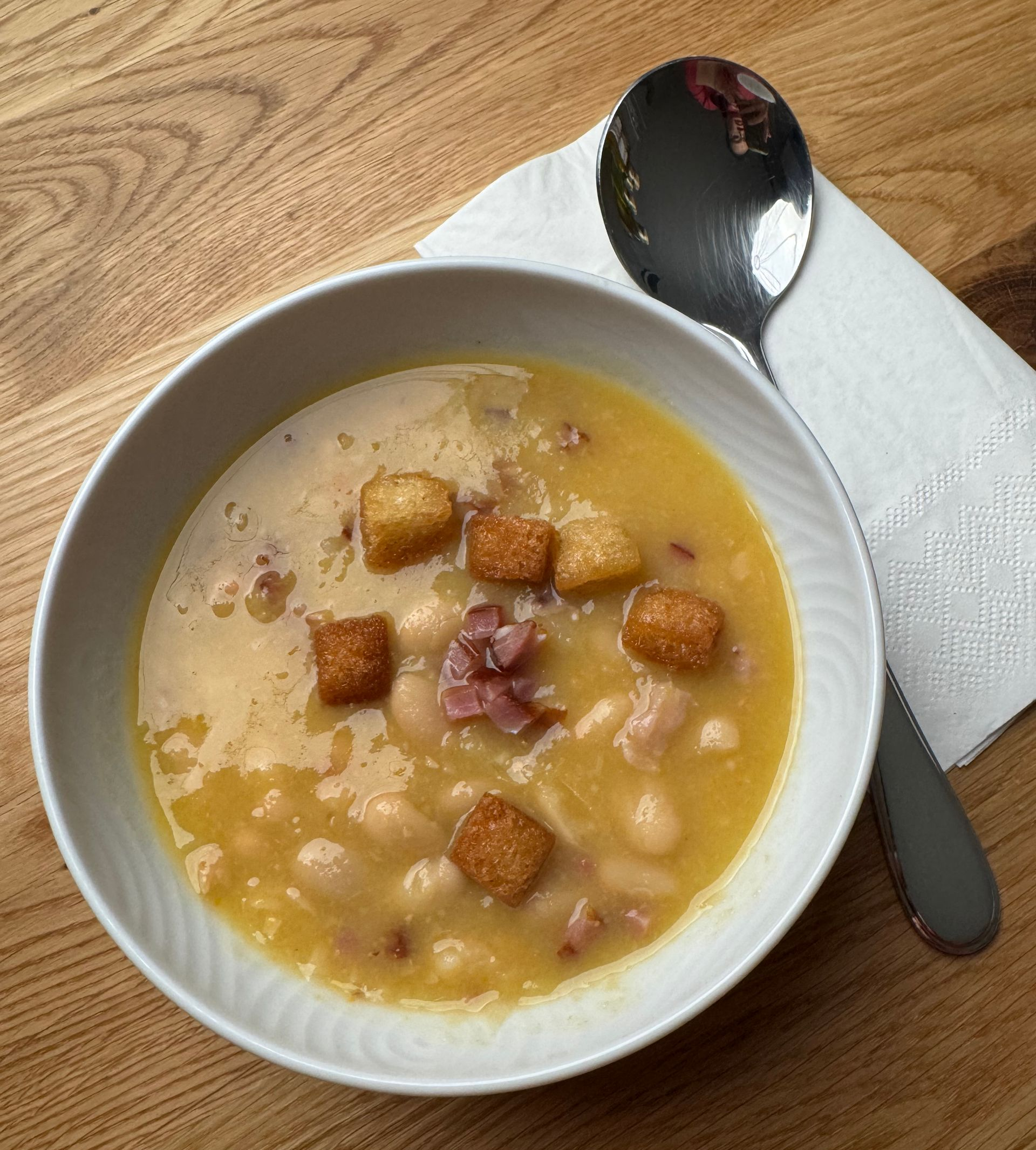
For hearty, split pea soup, I gravitate toward crustless cubes of white bread gently fried in lard or butter—rich, tender, and deeply traditional. In Mediterranean cooking, I take a different approach, tossing rustic chunks of Italian bread with olive oil and baking it until crisp, keeping the crust on for texture and flavor. Sometimes I go even further and grill slices of bread for a crostini-style crouton, perfect for hearty broths (Onion Soup, Gratinee) or vibrant vegetable dishes.

Croutons may be simple, but when prepared with intention, they become an expression of culinary technique—and a small but meaningful way to elevate any bowl or plate.

Croutons

Prep Time: 10 min

Cooking Time: 20 min

Yield:  4 ea


Ingredients                                          

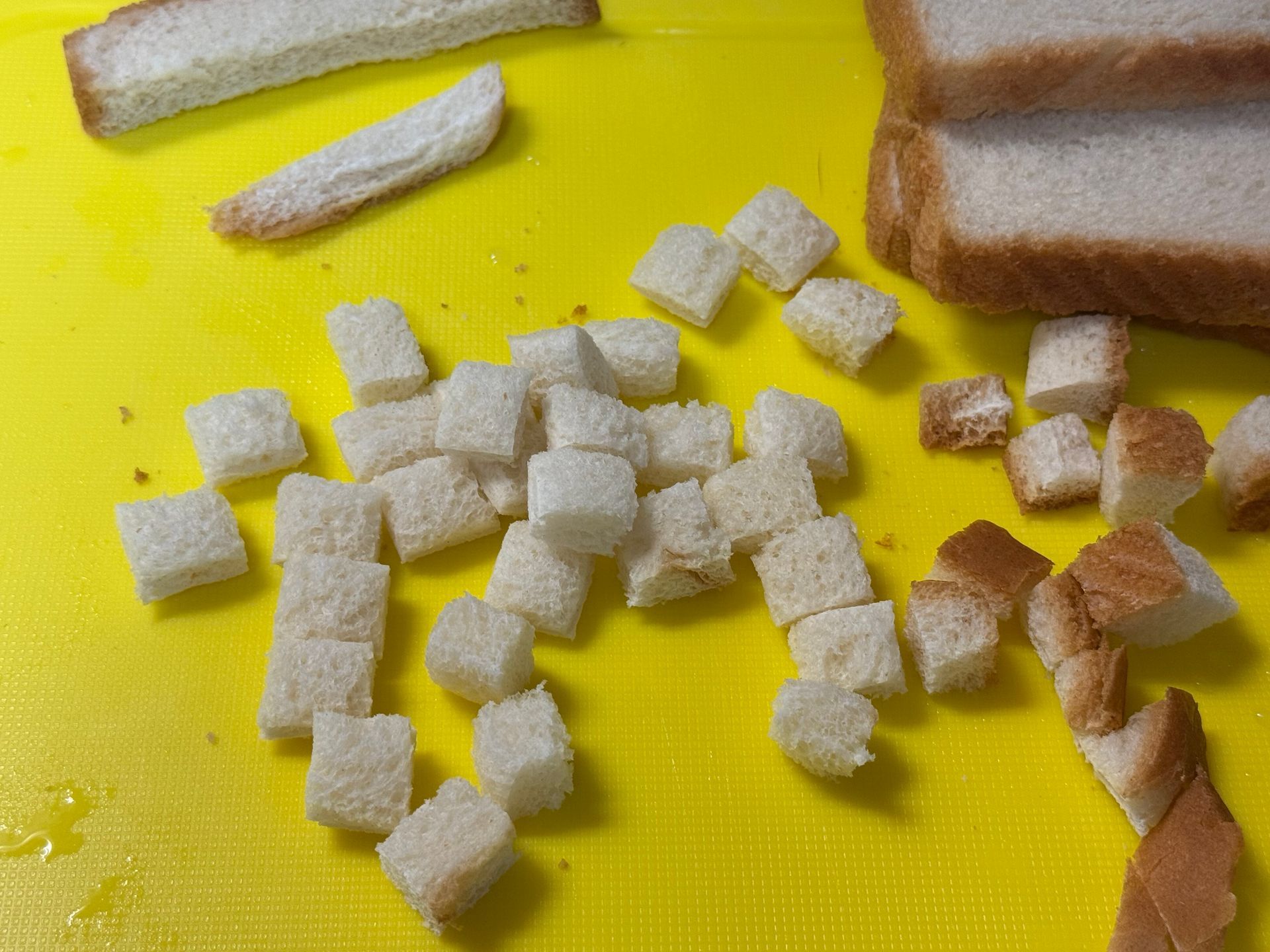
1 Cup          Bread cubed-(crust on or off )

1 Cup          Clarified Butter or Oil (I love Olive Oil)   


tt                Salt and Pepper

                   Spices and/or grated cheese (optional)


How to prepare Croutons
Step 1 Mise en place

Dice the bread; you can save the trim for breadcrumbs.   

Gather a skimmer; set up a plate with napkin to place the fried croutons onto.      

Heat the clarified butter or oil in a small pot.                                                                                 


Step 2 Frying the Croutons (350° F oil)

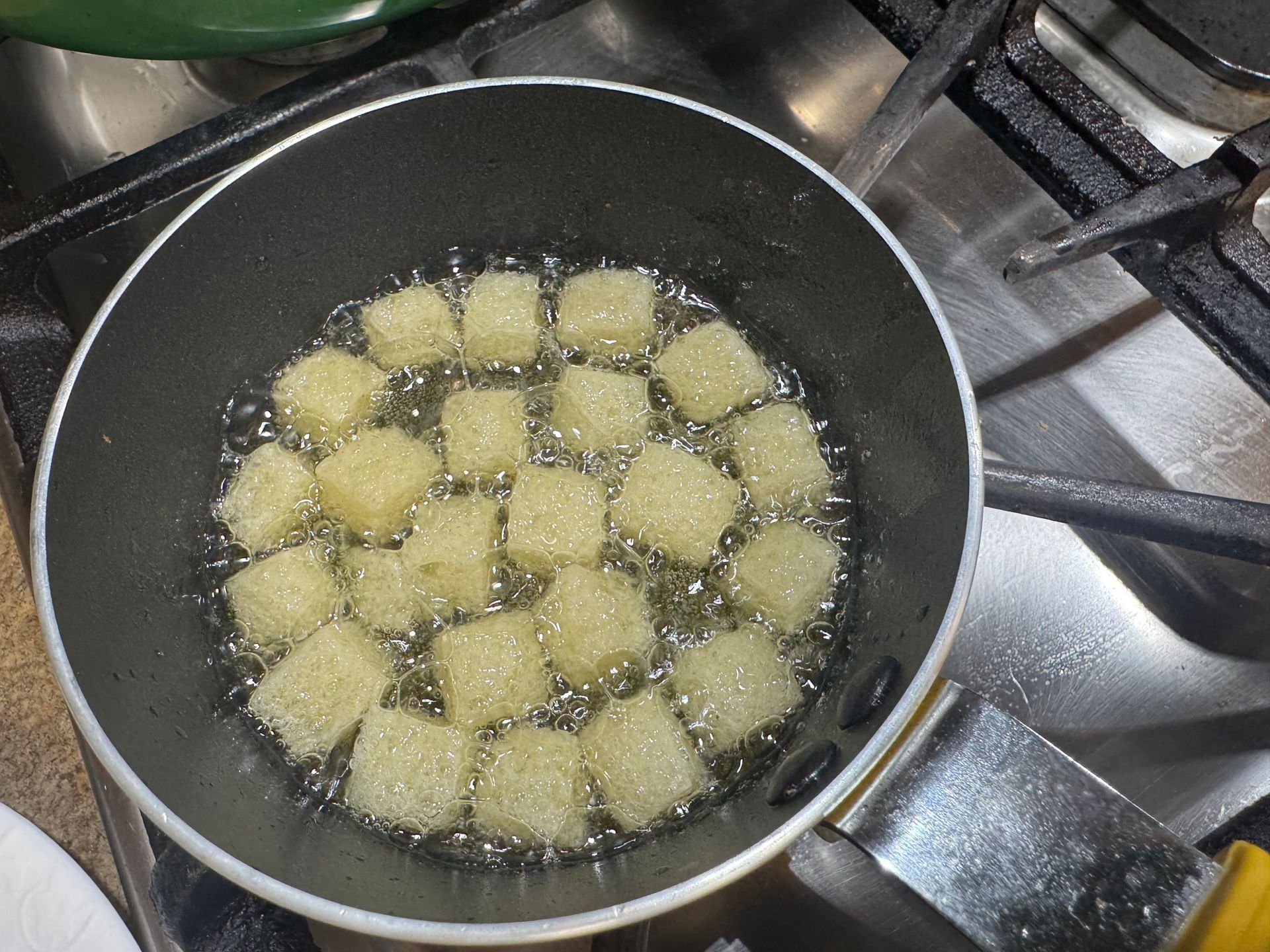
Place some of the croutons carefully into the hot fat, the croutons will float and the fat should bubble immediately. If you are unsure of how to determine if the fat is the correct temperature for frying,  you may choose to use a thermometer or simply place one crouton in the fat to see if it's bubbling and hot.


Baking the Croutons (350° F oven)

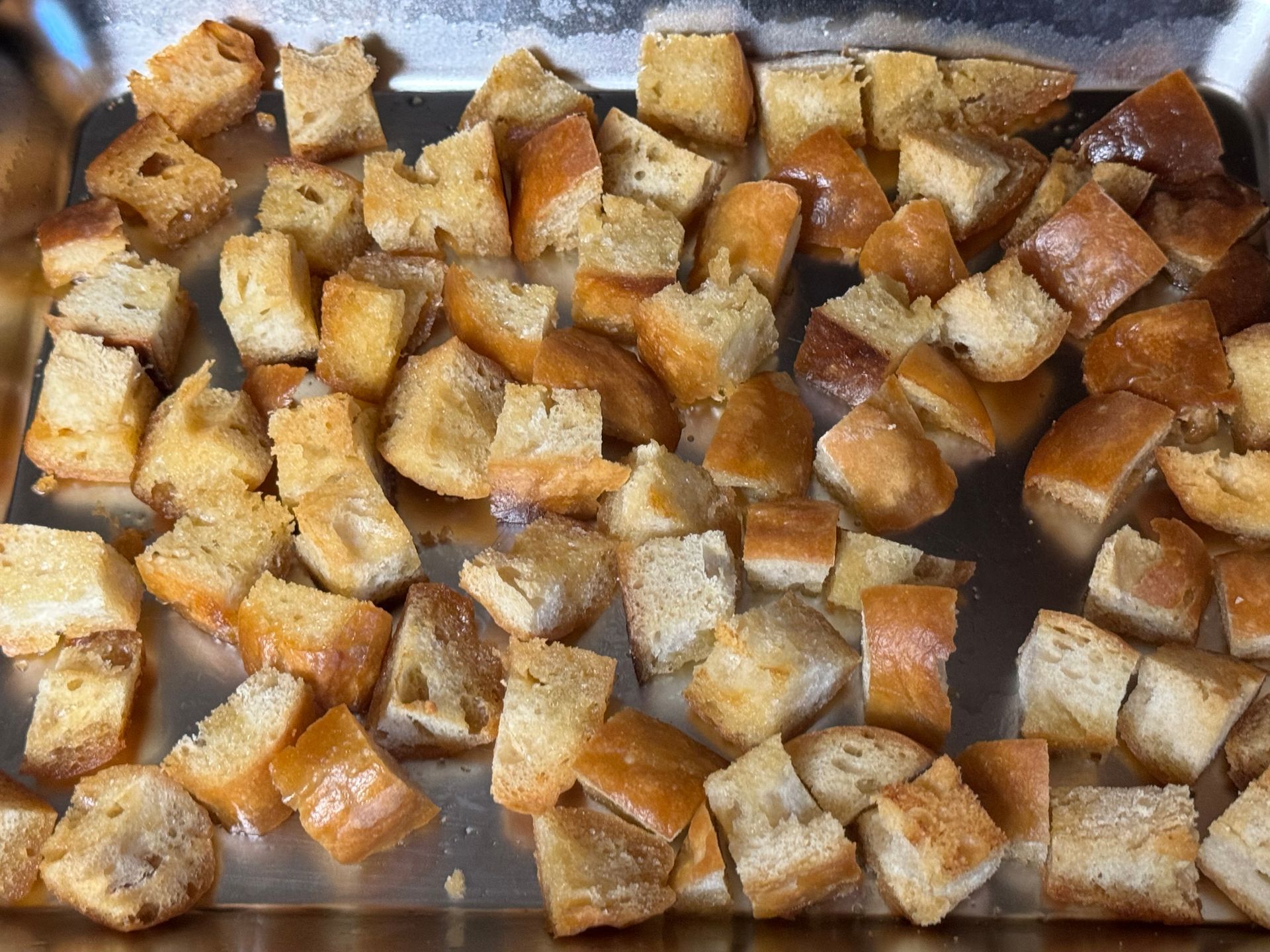
Place the croutons into a bowl and toss with fat (or place croutons onto a sheet tray and drizzle the fat) and bake at 350° F until golden brown).


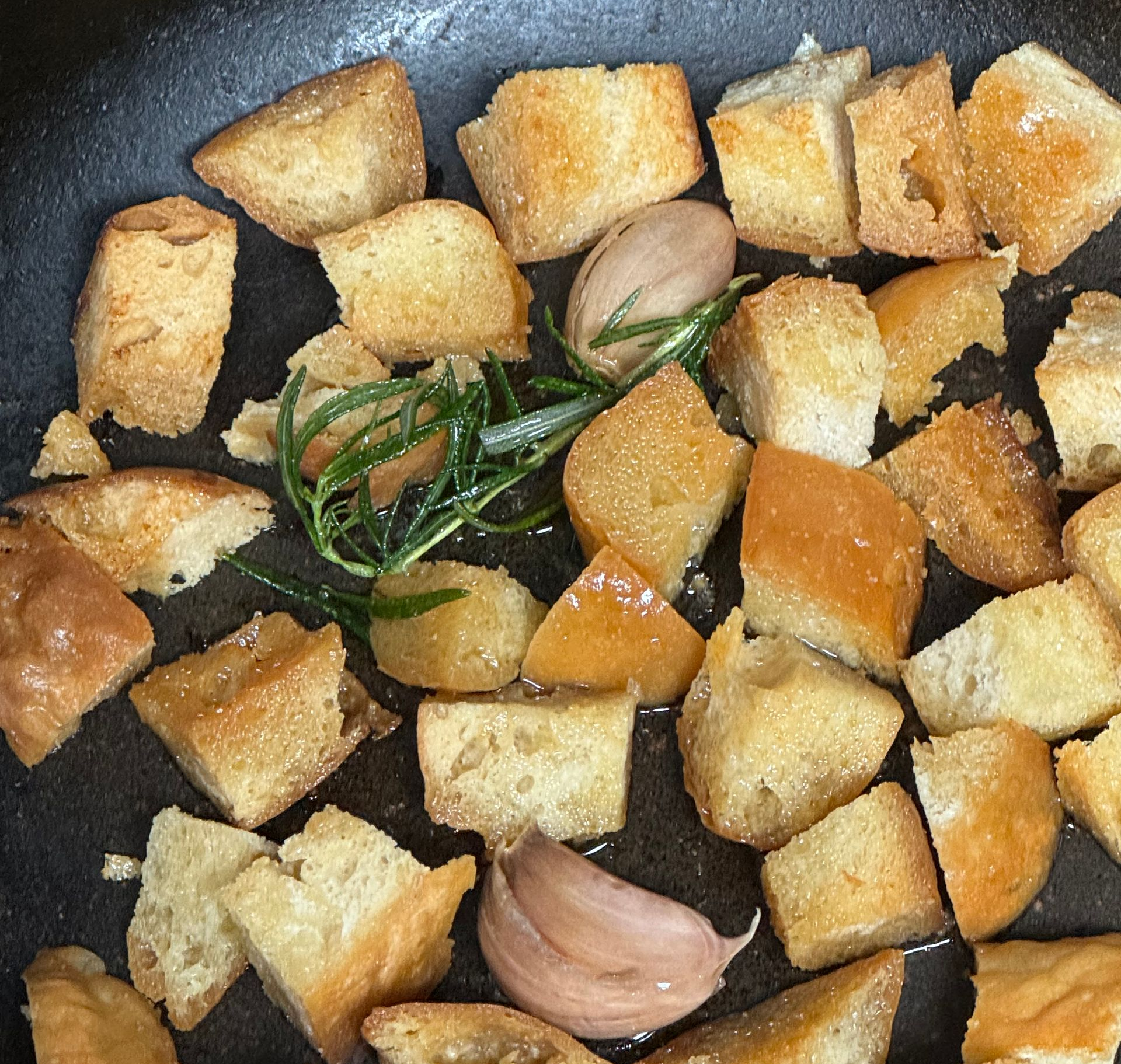
I like to add fresh herbs and garlic to infuse delicious flavors when preparing croutons for salads.


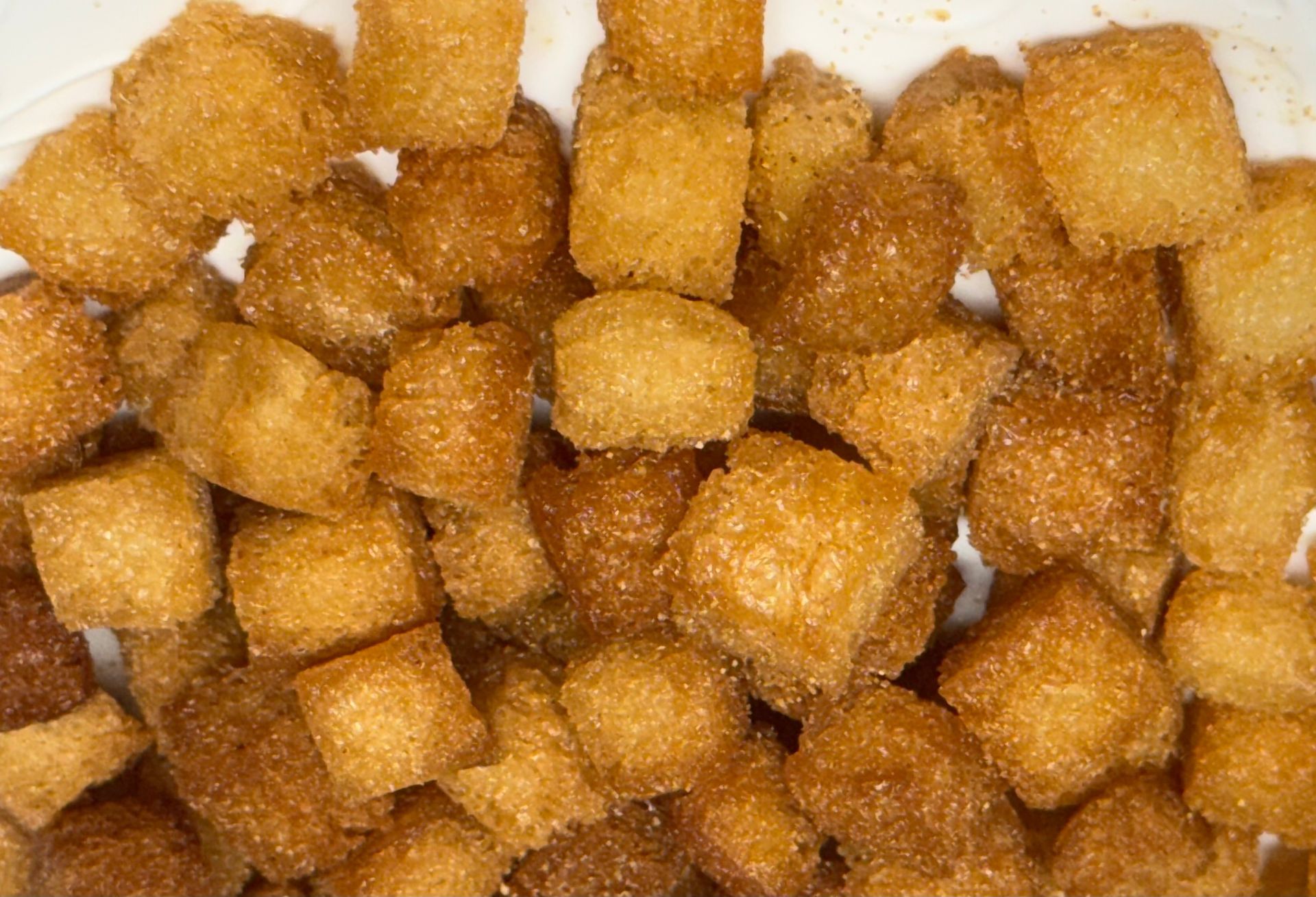
Croutons continue to brown after you've taken them from the hot fat so I scoop them out with a slotted spoon when the croutons are golden brown and sprinkle salt and pepper on for flavor. You can sprinkle grated cheese or spices on at this time as well.
By Tom Griffiths January 4, 2026
Oranges are fantastic in Baking & Pastry. I developed a delicious dessert for the CMC exam (Healthy Cooking) challenge featuring Orange Creamsicle Sorbet with Roasted, Candied Pineapple and Fruit Strudel... with plenty of guidance from the amazing CIA Pastry Instructors! Types of Oranges: There are several distinct varieties of oranges, each with unique characteristics and flavors. The most common type is the Navel orange , recognized for its seedless, sweet flesh and thick, easy-to-peel skin. Valencia oranges are another popular variety, primarily known for their juiciness and are often used for making orange juice. Other notable types include Blood oranges , which have a deep red interior and a distinct berry-like flavor, and Cara Cara oranges , characterized by their pinkish-red flesh and sweet taste. Additionally, Seville oranges , known for their bitterness, are mainly used in making marmalade and flavoring liqueurs. 
By Tom Griffiths January 3, 2026
Flambéed fruits are often used as an accompaniment or variation in desserts like Crêpe Suzette. Common choices for flambéing include bananas, apples, or berries, sautéed in butter and sugar before being doused in a spirit, such as rum or brandy, and set alight. The flambé technique adds excitement to the dining experience! Years ago I was dining at Paul Bocuse with some colleagues and one ordered a f lambé served over rum raisin ice cream. He let me taste and it was amazing.
By Tom Griffiths January 2, 2026
Bell peppers are the sweet, non-pungent members of the Capsicum annuum family, prized for their crisp texture, juiciness, and vibrant colors. Green, red, yellow, and orange peppers are the same fruit at different stages of ripeness, with sweetness increasing as they mature. In the kitchen, bell peppers are valued for their versatility—equally at home raw in salads, roasted for depth and sweetness, or sautéed as a foundational aromatic in countless cuisines.
By Tom Griffiths January 2, 2026
Years ago I was competing in Erfuft, Germany with a CIA Culinary Olympic team. When the competition was over, we had time to walk around Erfurt (home of the famous poet Goethe). There was a man grilling German sausages on a small grill in the center of the town square. I joined the long line of locals purchasing delicious, grilled German sausage with onions-amazing!
By Tom Griffiths January 2, 2026
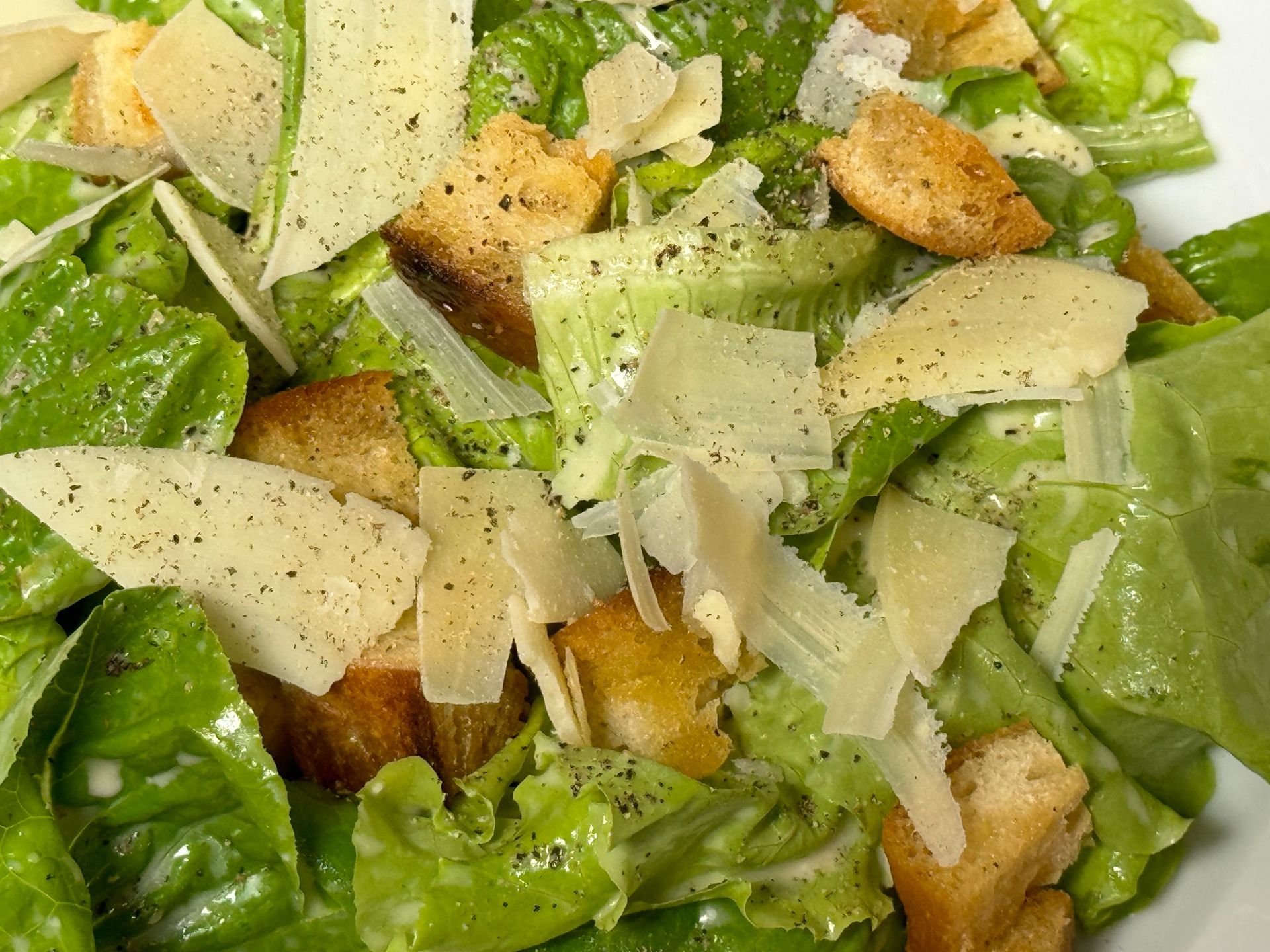
When I was a student studying culinary arts at the CIA, preparing Caesar salad and fambéed desserts were competencies we were tested on when we were studying in the school restaurants. Caesar salad is delicious for a variety of reasons... croutons fried or toasted with olive oil provides great texture and is delicious, Caesar salad dressing is an 'umami bomb' of flavor... savory and deeply satisfying notes from anchovies, Worcester sauce, aged parmesan cheese and rich, creamy mouthfeel from the fat from egg yolks.. absolutely delicious.
By Tom Griffiths January 2, 2026
Arugula is spicy! It's one of my favorite lettuces to make salads with. I like adding toasted nuts, cheeses and sometimes fruits and berries to arugula for great salads. I prefer an emulsified vinaigrette with honey, olive oil, mustard, lemon & herbs... these days I use a little mayonnaise instead of raw egg yolk for the emulsion.
By Tom Griffiths January 1, 2026
One of my most memorable roast duck meals with in Lyon, France. I was in France with two other CIA instructors, cooking a dinner for expats with the local, French chefs. We dined at Paul Bocuse's restaurant one night and Chef Bocuse came to our table to greet us. He announced he would be roasting a duck for us in the hearth that evening! Can you imagine-the room fell silent and all of the diners looked at us (rather jealousy)...  Three of my favorite duck preparations, each showcasing a different culinary tradition are: Peking Duck (China) A highly refined preparation where the duck is air-dried, roasted until the skin is exceptionally crisp, and traditionally served with thin pancakes, scallions, cucumber, and hoisin sauce. The focus is on lacquered skin and precise carving. I had this meal several times in Beijing with some of the amazing Campbell Soup leadership team. Duck à l’Orange (France) A hallmark of French cuisine, this dish pairs roasted duck with a bittersweet orange sauce made from a gastrique (bitter, caramelized sugar), vinegar, citrus, and stock—highlighting the balance of richness and acidity. Confit de Canard (France) Duck legs are salt-cured, slowly cooked in their own fat, and then crisped before serving. Originally a preservation method, confit delivers deeply savory flavor and meltingly tender meat. I enjoyed duck confit many times with Beaujolais while in France.
By Tom Griffiths December 31, 2025
My favorite shrimp are 16/20 tiger shrimp! I love the crunchy bite and visual appearance. I always get 'shell on' so I can use the shells for stocks and sauces. Shrimp are classified primarily by size, typically expressed as a count per pound (for example, 16/20 or 26/30), with smaller numbers indicating larger shrimp. For shrimp cocktail, larger sizes—such as U10, 16/20, or 21/25—are preferred for their dramatic presentation and juicy bite. Shrimp can be purchased fresh or frozen, head on or off, raw, cooked, peeled... Common types include white shrimp (mild and tender), brown shrimp (slightly firmer with a deeper, iodine-rich flavor), pink shrimp (sweet and delicate), and tiger shrimp or prawns (large, meaty, and visually striking).
By Tom Griffiths December 31, 2025
My first professional cooking job was in a continental restaurant built on a large, docked ship. I was hired as the garde manger cook for my culinary school externship. During my externship I must have cooked and peeled hundreds of pounds of shrimp, opened thousands of clams and oysters and prepared gallons of tangy, cocktail sauce during that five month period. I can still remember the aroma of the chili sauce when I opened the number 10 cans...
By Tom Griffiths December 27, 2025
One of the first thing students at the CIA learn to cook is vegetables. I suspect cabbages are not the most popular veggies in the United States but I'm certainly a fan!  I actually prepared braised red cabbage with a poached, sliced stuffing roll and roasted goose on the 10th and final day of the CMC exam. The CMC proctor made me julienne the core of the cabbage... Chefs know all about adding vinegar to keep red cabbage from turning blue!