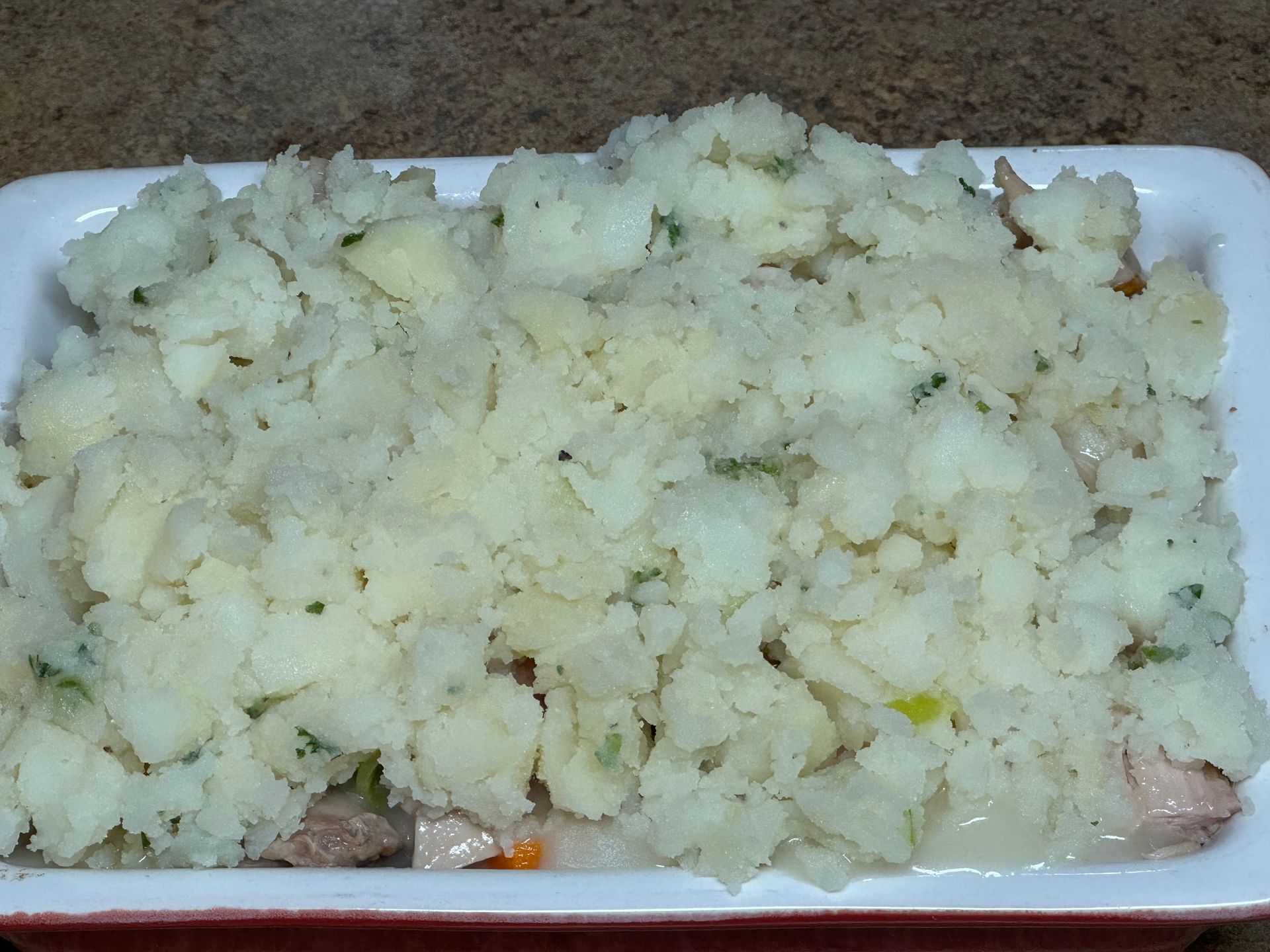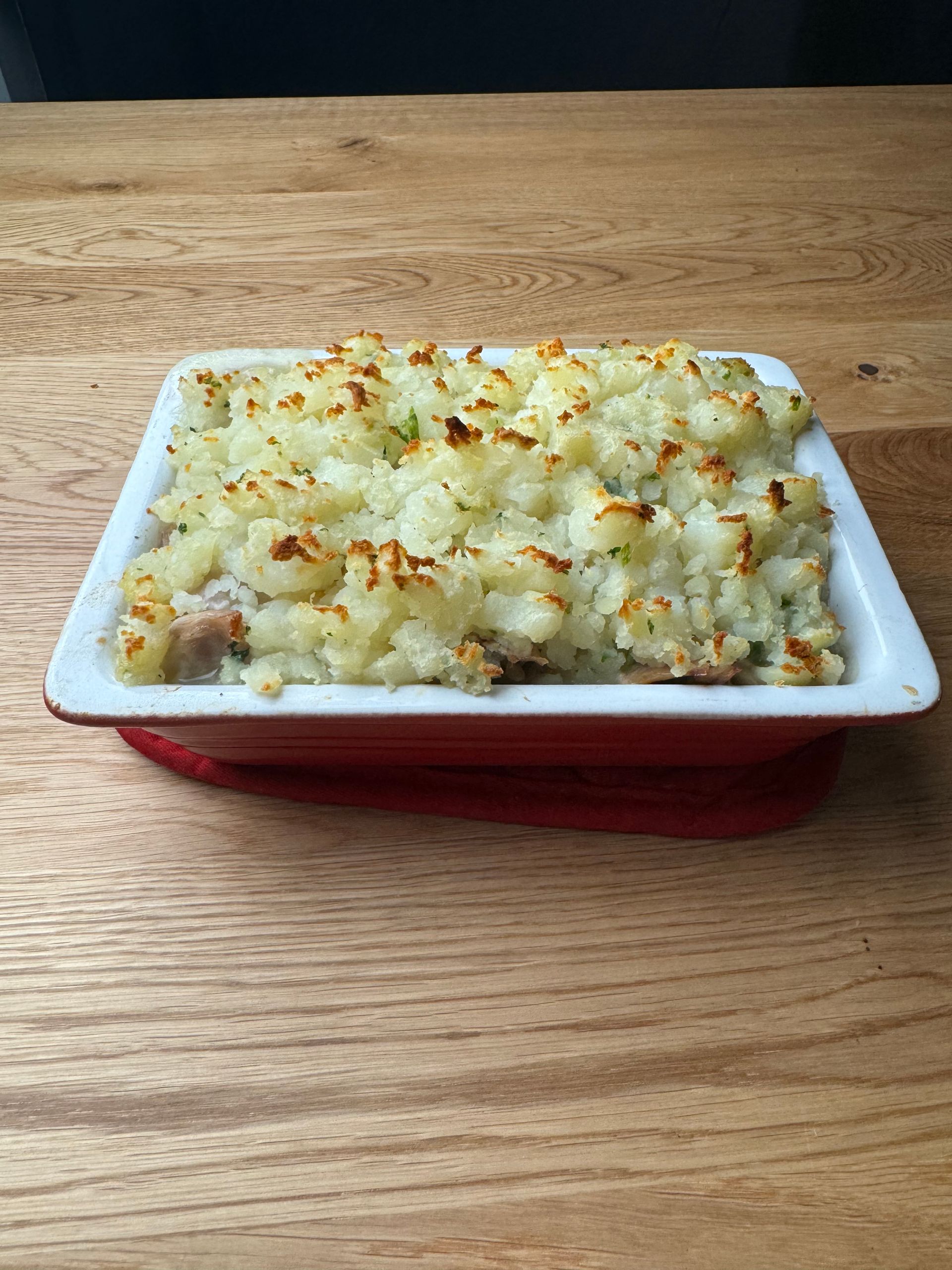
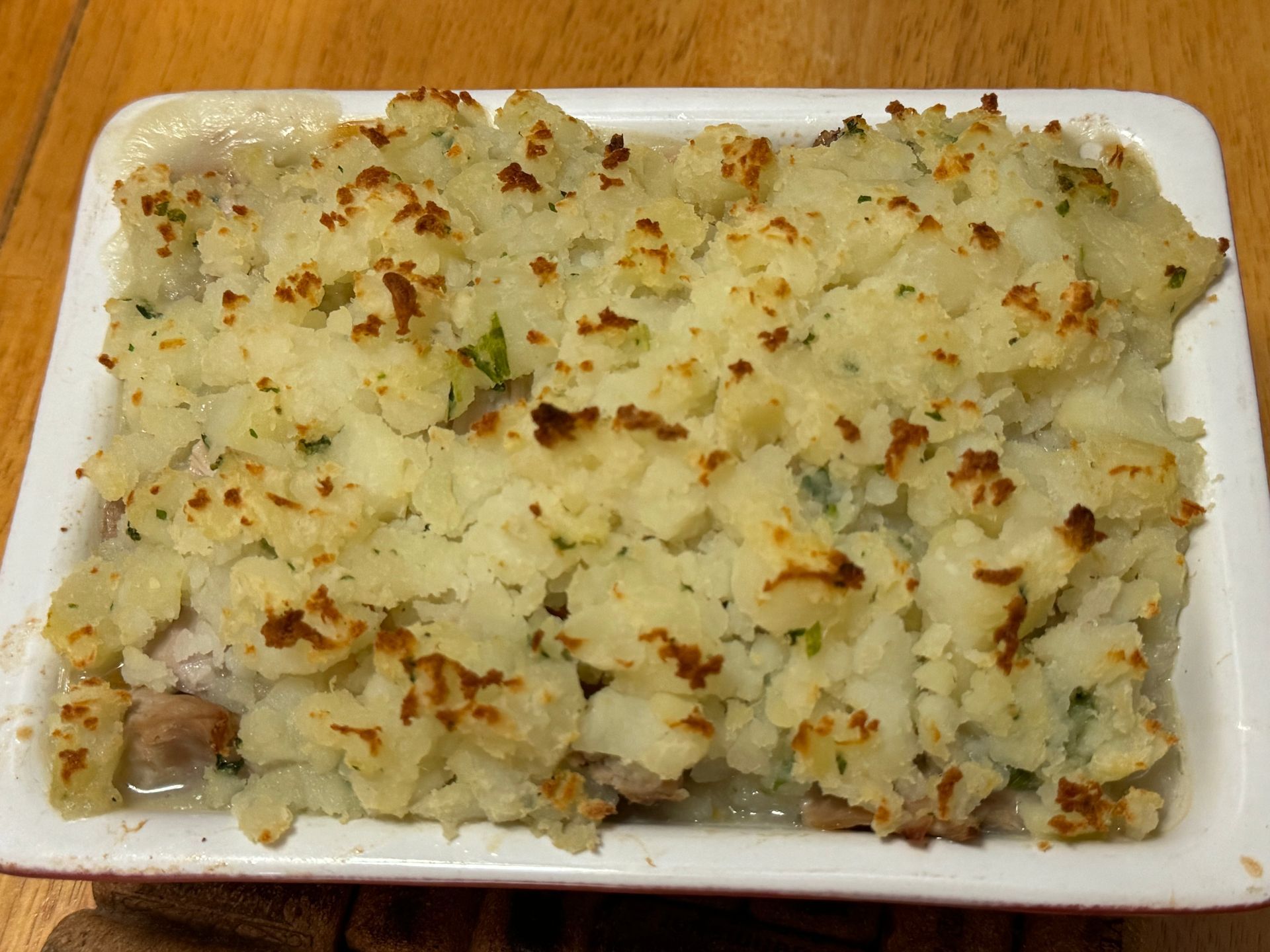
A white casserole dish filled with mashed potatoes and meat
Leftover Thanksgiving turkey sandwiches are amazing but preparing delicious turkey soup & pot pies take it up a notch to the next level. I really love using leftover mashed potato as the crust for a hearty,  post Thanksgiving, Shepherd's pie.
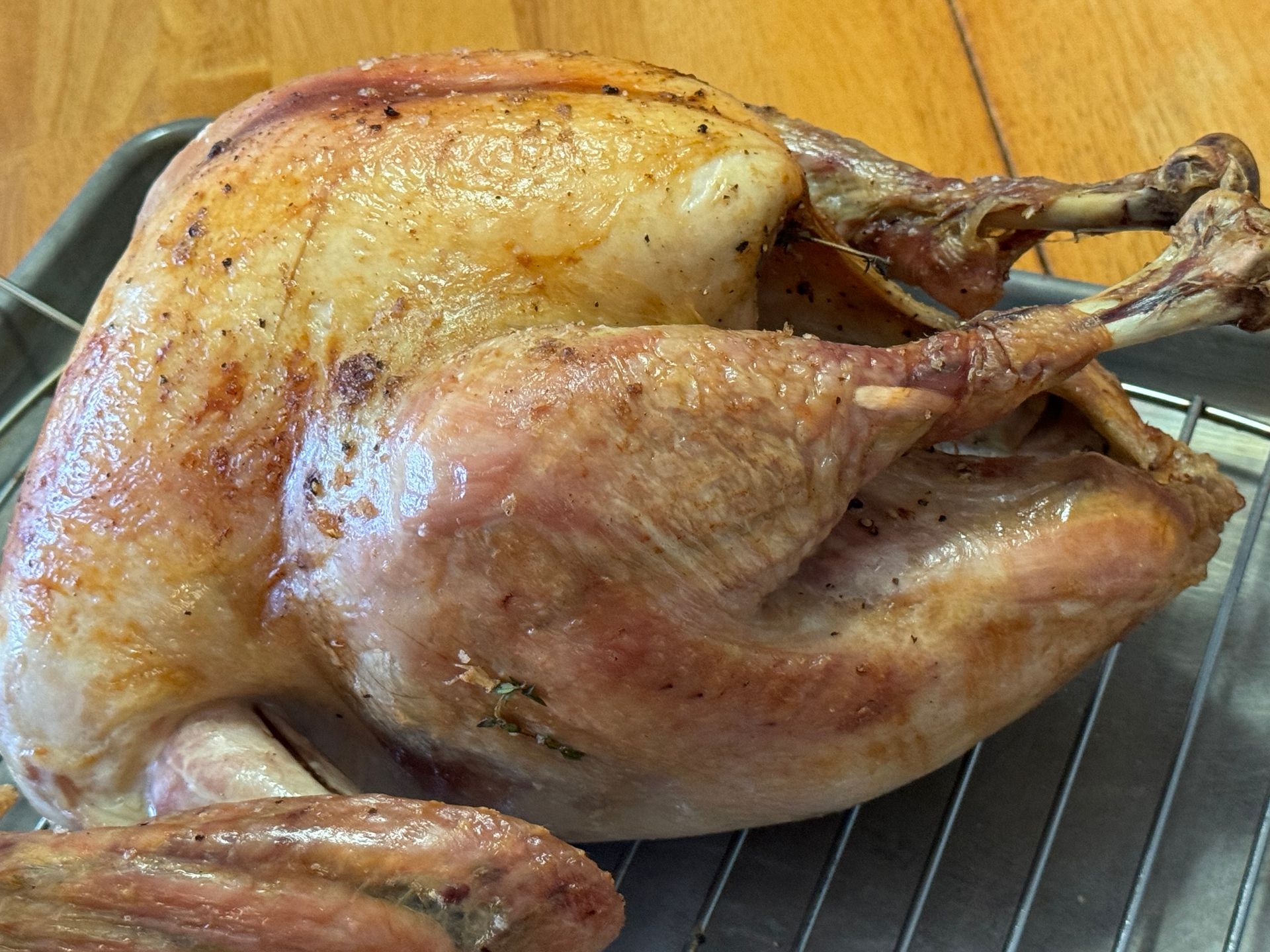
A roasted turkey is sitting on a wire rack on a table.

Turkey Shepherd's Pie

Chefs enjoy innovating new, delicious meals but we also look forward to traditional favorites.                                          My mother made delicious devilled ham or turkey croquettes, turkey & vegetable soup, turkey/cranberry sandwiches of course and various pot pies with delicious, holiday leftovers.

Prep Time: 3o min

Cooking Time: 30 minutes

Ingredients

Yield: 4 portions                                                                                                                 

1 lb              Turkey  cooked white & dark meat, diced 

1 oz.            Olive oil or butter                                                                                                   

1/2 C          Carrot, peeled cubed or sliced

1/2 C          Celery, peeled, small dice

1/2 C          Leek whites, small dice

1 qt             Turkey gravy   

1 C               Heavy cream                                                                                                                                     

                    Salt & Pepper     

                    Herbs, chopped (optional)

3 C              Mashed potatoes
                 

How to prepare Roasted Turkey Shepherd's Pie
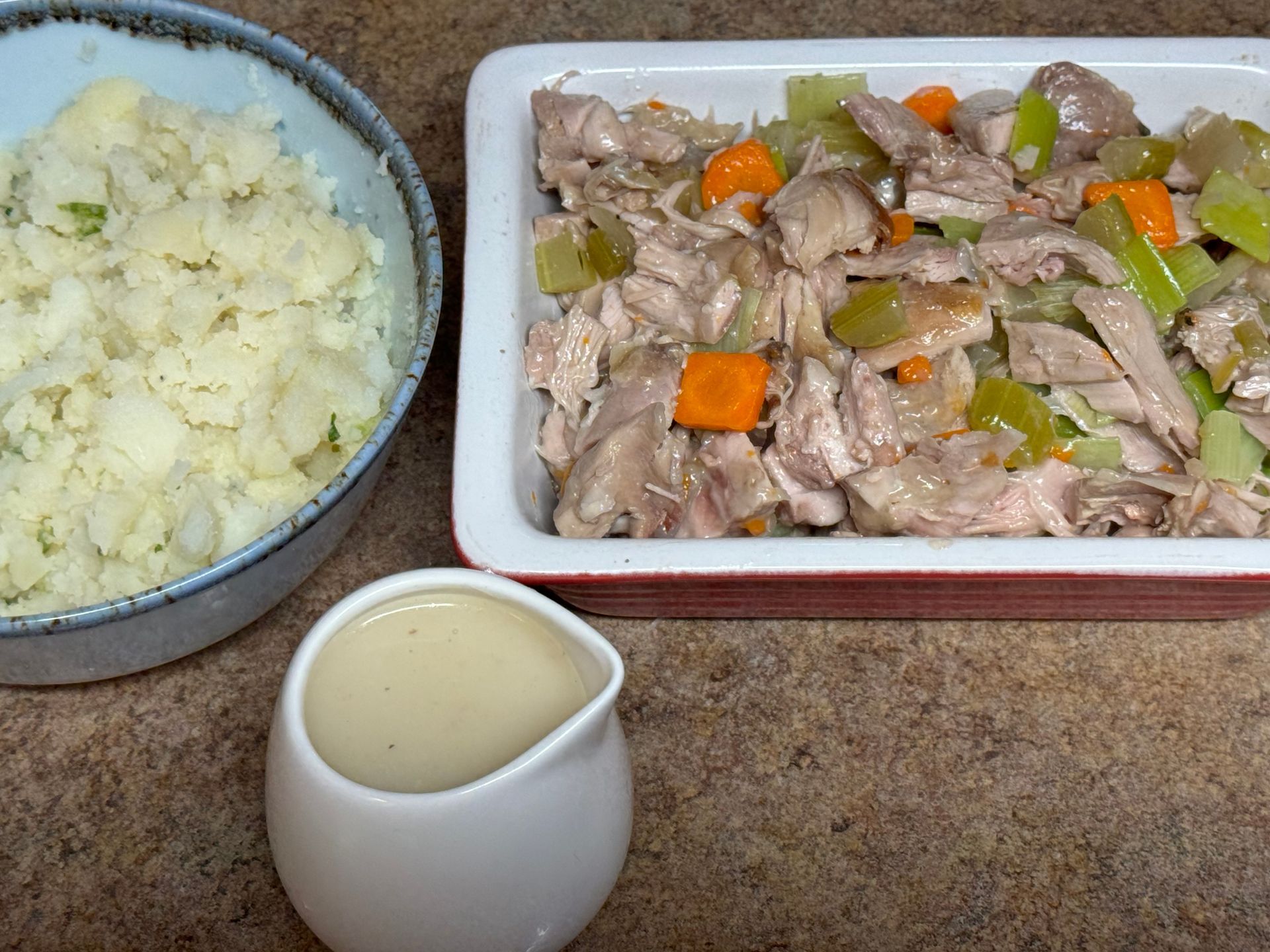
A bowl of mashed potatoes next to a bowl of chicken and vegetables.
A casserole dish filled with mashed potatoes and meat
A casserole dish filled with mashed potatoes and meat is sitting on a wooden table.

Step 1

Heat a sautiour, add the butter/oil and sweat carrots, celery and onions. Season with kosher salt and black pepper.


Step 2

Add the turkey gravy to the vegetables; add the diced turkey meat and simmer for 20 minutes to develop flavors. Spoon into a casserole dish.


Top with mashed potatoes and place onto a sheet pan to catch any overflow of the gravy.


Step 3

Bake in a preheated oven at 350° F  until the mashed potatoes are golden brown. Enjoy.
   

By Tom Griffiths • October 1, 2026
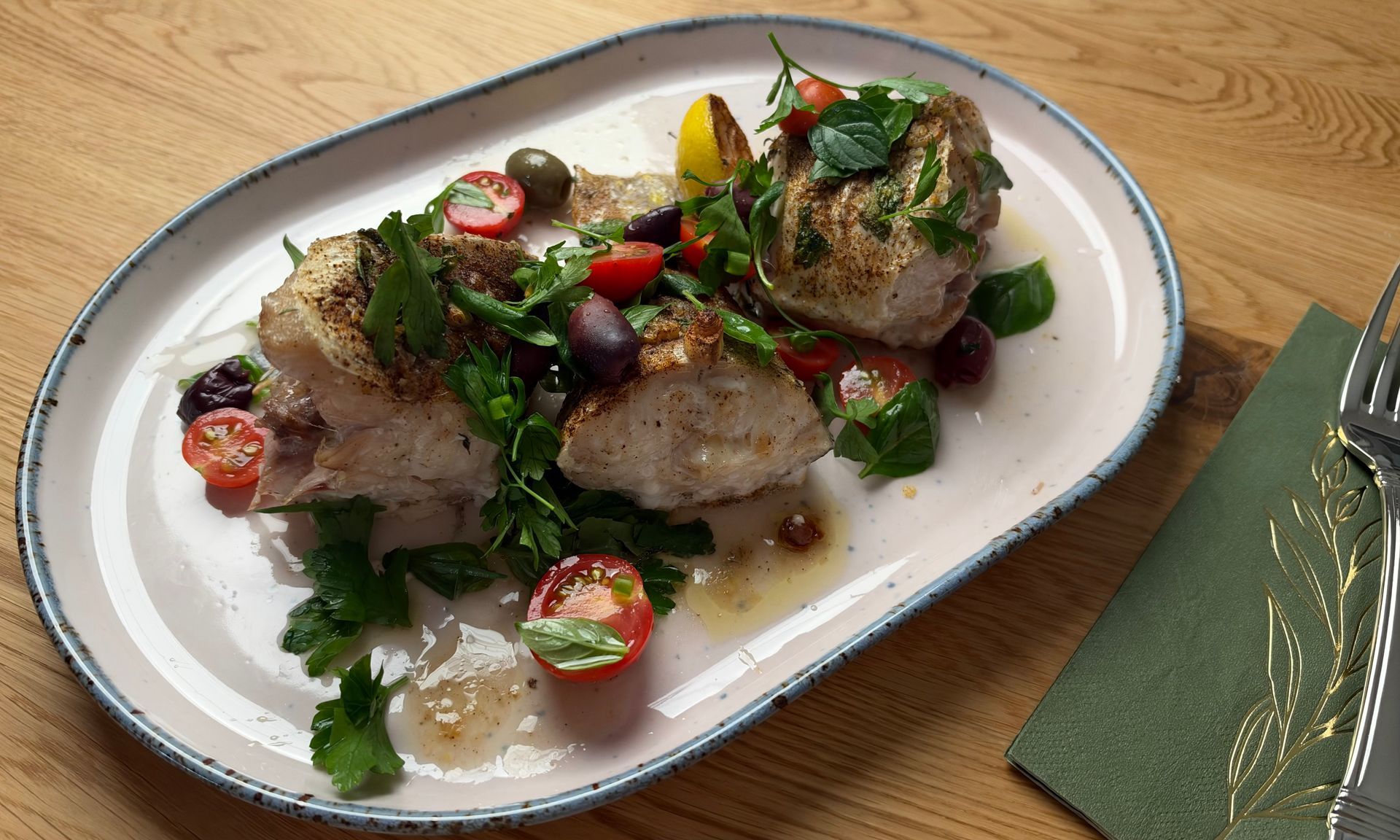
Chef Tom’s Cooking Class Minute — Week 10 Roasting Fish Let the Fish Taste Like Fish
By Tom Griffiths • October 1, 2026
Chef Tom's Cooking Class Minute: Week 9 Late Summer Grilling: Great Steak Doesn’t Have to be a Ribeye
By Tom Griffiths • October 1, 2026
Chef Tom's Cooking Class Minute: Week 8 Soft Shell Crabs-What’s Your Favorite Way to Eat Them?
By Tom Griffiths • October 1, 2026
Chef Tom's Cooking Class Minute: Week 7 Fava Beans
By Tom Griffiths • September 4, 2026
Chef Tom's Cooking Class Minute: Week 6 Gazpacho & Summer Tomatoes
By Tom Griffiths • September 4, 2026
Chef Tom's Cooking Class Minute: Week 5 Summer Corn: Soup, Grill, Roast or Fritters? 
By Tom Griffiths • September 4, 2026
Chef Tom's Cooking Class Minute: Week 4 Cooking Summer Eggplant
By Tom Griffiths • August 11, 2026
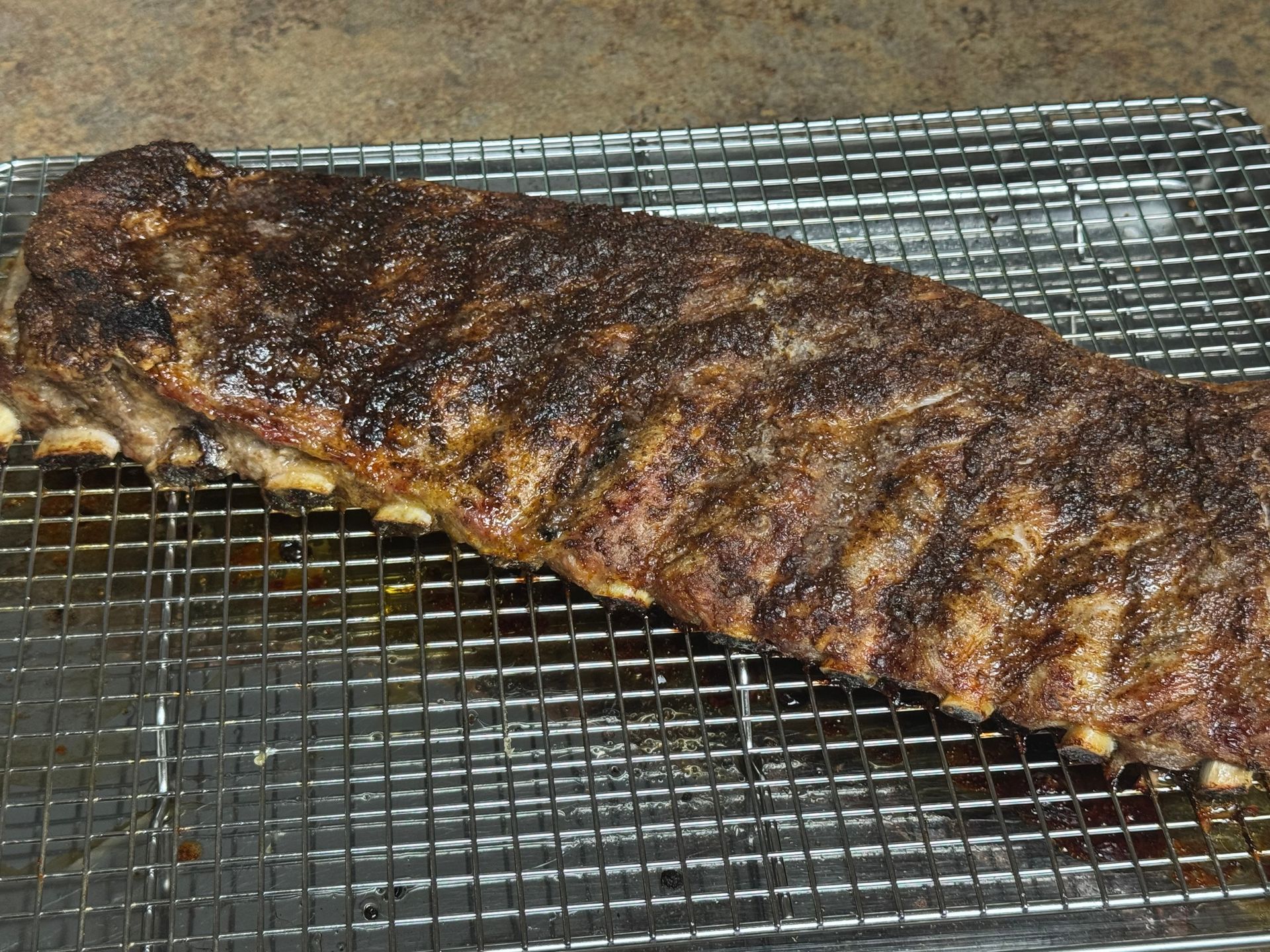
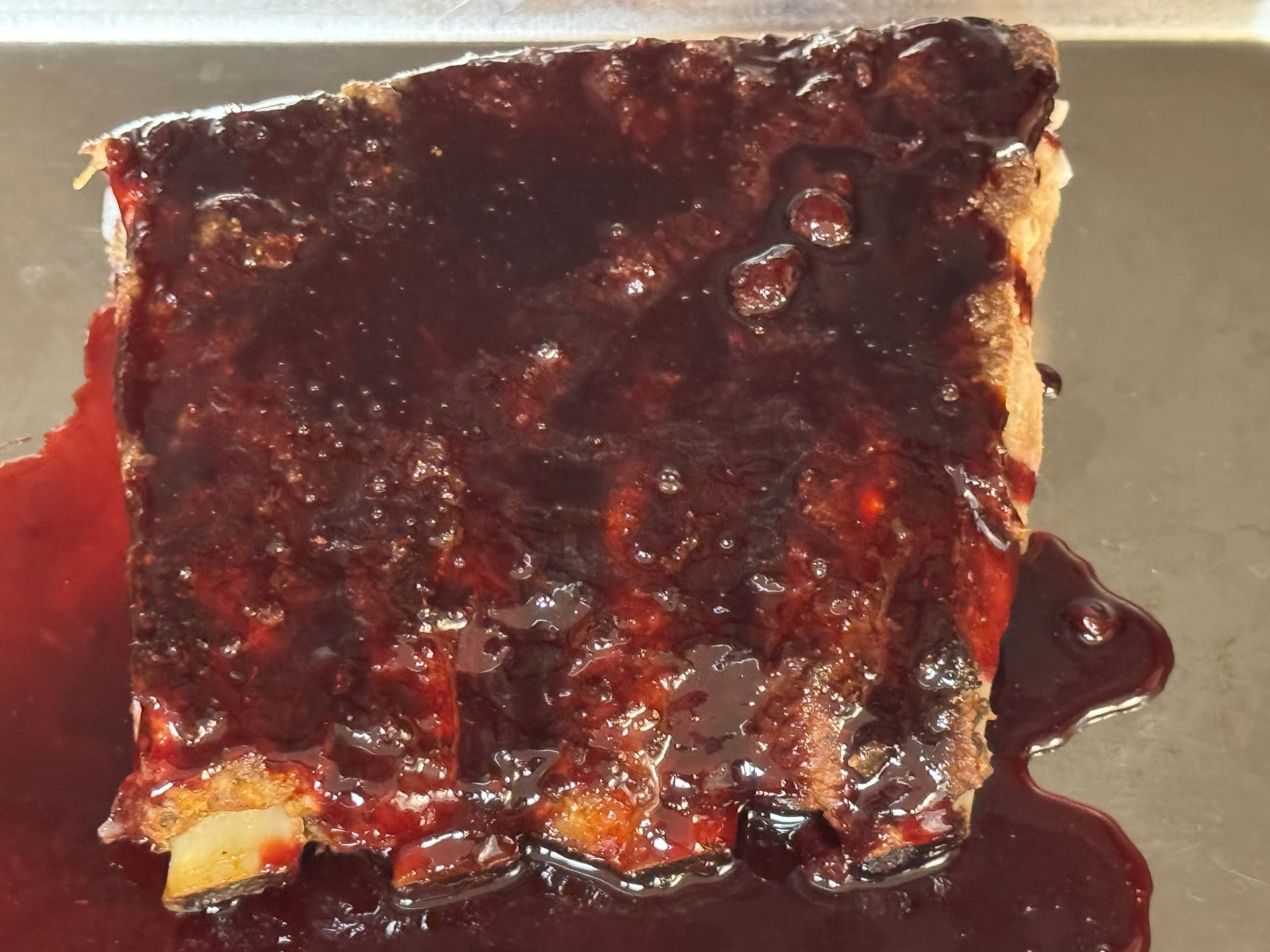
Chef Tom's Cooking Class Minute: Week 3 Cooking Pork Spare Ribs
By Tom Griffiths • August 8, 2026
Years ago I traveled around the south for a few weeks researching some of the amazing foods of each region. In Charleston, I was introduced to a local pig farmer, Tank Jackson who manages Holy City Hogs. Tank and his wife raise heritage breed pigs and distribute the pigs around the country. He offers on-site cooking whole pig roasts, primal cuts and sausages, and I believe he produces the best pork in the country.
By Tom Griffiths • August 8, 2026
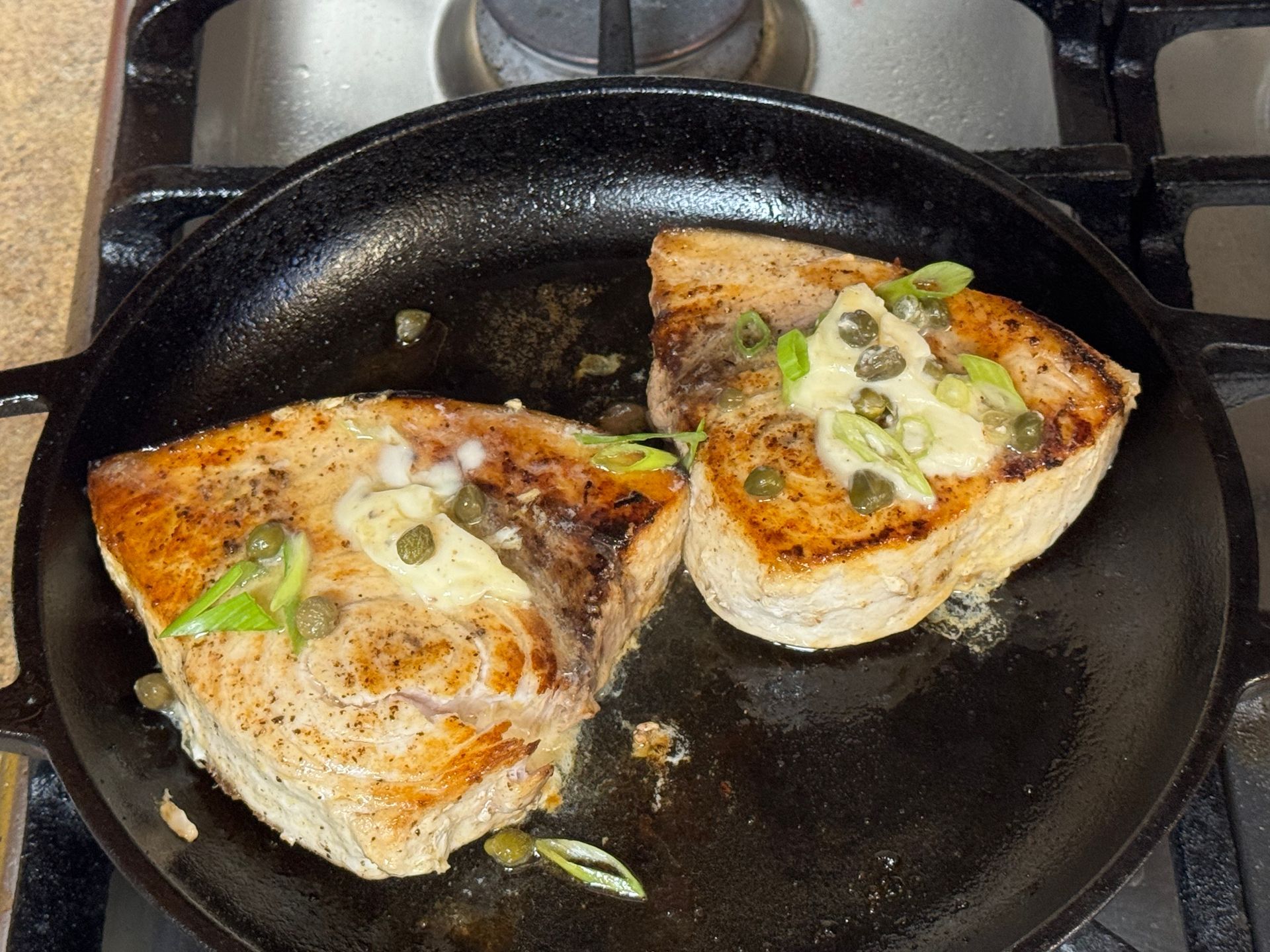
Years ago, while working as a chef in a busy continental restaurant, we featured grilled, fresh swordfish on the menu—finished with a generous spoonful of herbed compound butter and capers. It was popular and delicious. One afternoon, a seafood purveyor stopped by with a sample of frozen swordfish steaks, fully thawed and ready for evaluation. Curious, we grilled it side by side with the “fresh” swordfish we had been serving—fish we believed to be of high quality. The result was surprising. The frozen swordfish was superior—firmer, cleaner in flavor, and more consistent in texture. In contrast, our “fresh” fish, likely several days out of the water, lacked the same integrity. It was a defining moment and an important reminder: in many cases, properly handled and quickly frozen seafood can offer better quality than fish labeled as fresh. For chefs, understanding sourcing and handling is just as critical as technique—especially with a product as prized as swordfish.