We love making sweet crêpes at home for breakfast... folded into half or quarters in a pan of melted butter & caramelized sugar. We like to add apples, oranges, berries or bananas 'Crêpes Suzette' style for very special breakfasts.
I like to prepare savory crêpes filled with seafood, chicken and vegetable fillings. For holidays I prepare manicotti, savory crêpes filled with ricotta, egg, romano & mozzarella cheeses.
I remember learning to make crêpes at the CIA using a small, square of pork fat for the pans. I was able to cook with five pans at a time and I remember being very hot & having very burnt fingers when I was done...
and also feeling very proud.
Crêpes a la Reine was the first crepe recipe I learned as a young, CIA student in 1980's...
We didn't eat many crêpesgrowing up in New Jersey...

Crepes

Crêpes originated in the Brittany region of northwestern France, where thin pancakes made from buckwheat (sarrasin) were a practical staple rather than a luxury. These early crêpes were typically savory, filled with eggs, cheese, or ham, and traditionally paired with hard cider in Brittany.

Years ago, I visited an old castle in Brittany that had been converted into a small restaurant, perched just beyond the shoreline—reachable only by a narrow stone walkway extending into the surf. We enjoyed savory buckwheat crêpes and cider as the tide slowly crept in, and then had to rush back to shore as the rising water began to cover the path, a reminder of how closely gastronomy is tied to geograpy, culture, tradition, and rhythm of the sea.


Wheat flour crêpes became more common and were associated with sweeter preparations, especially as sugar became more accessible. Crêpes eventually spread beyond France, evolving into both street food and refined restaurant fare.  

Prep Time: 2o min

Cooking Time: 20 min

Yield: 4 portions


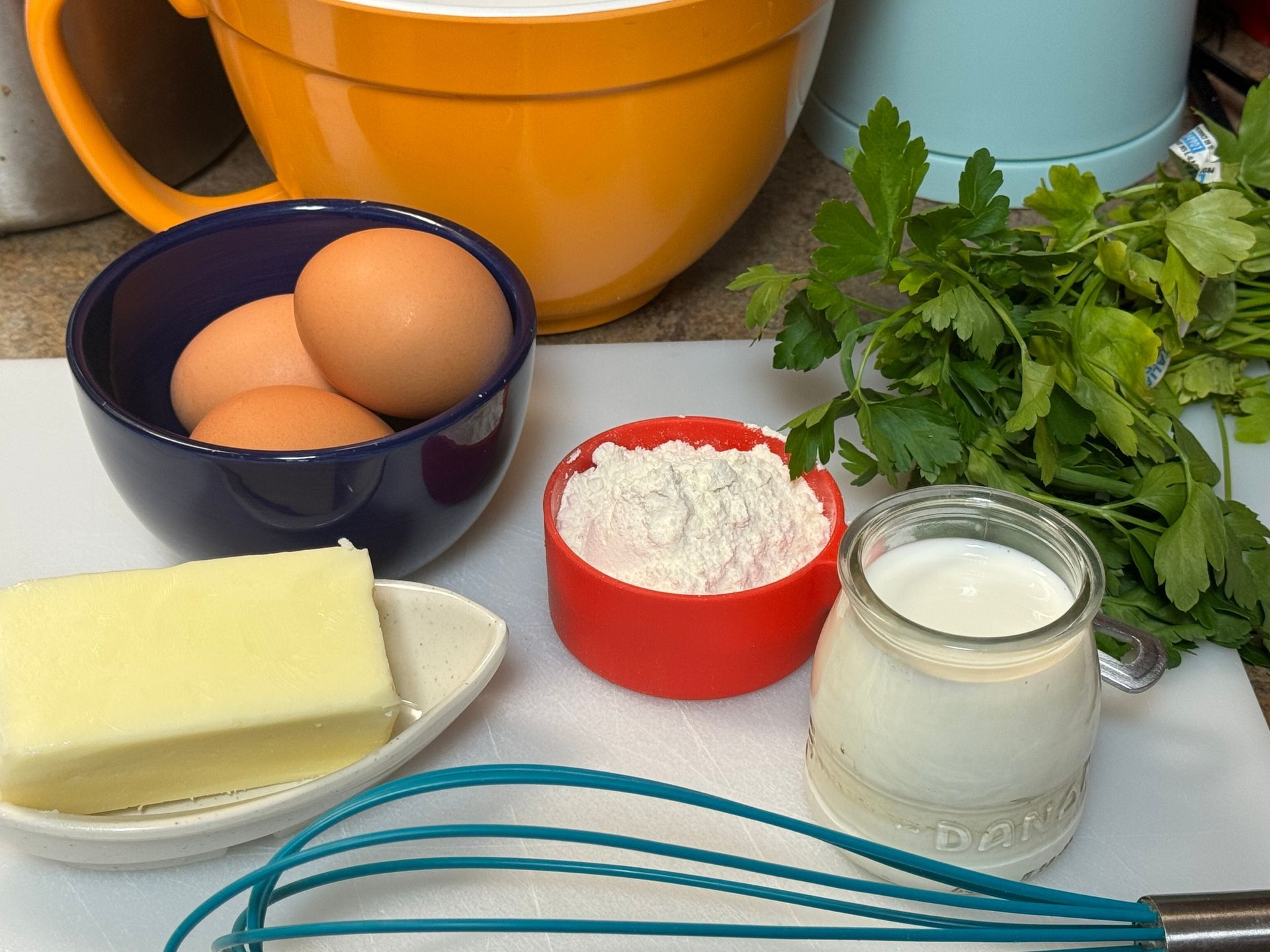
Ingredients   for Crêpes  

1  Cup            AP flour                                     

2  ea              Eggs, cracked & whisked                                   

1/2 tsp         Kosher Salt                                       

t.t.                 Black pepper                                   

1 1/2 C          Milk                     

1 Tbsp         Butter, lightly salted (melted)

1  Tbsp        Fresh Italian parsley, chopped   (chives, tarragon etc)


4 Tbsp        Butter (melted)       


How to Prepare Crêpes
Step 1

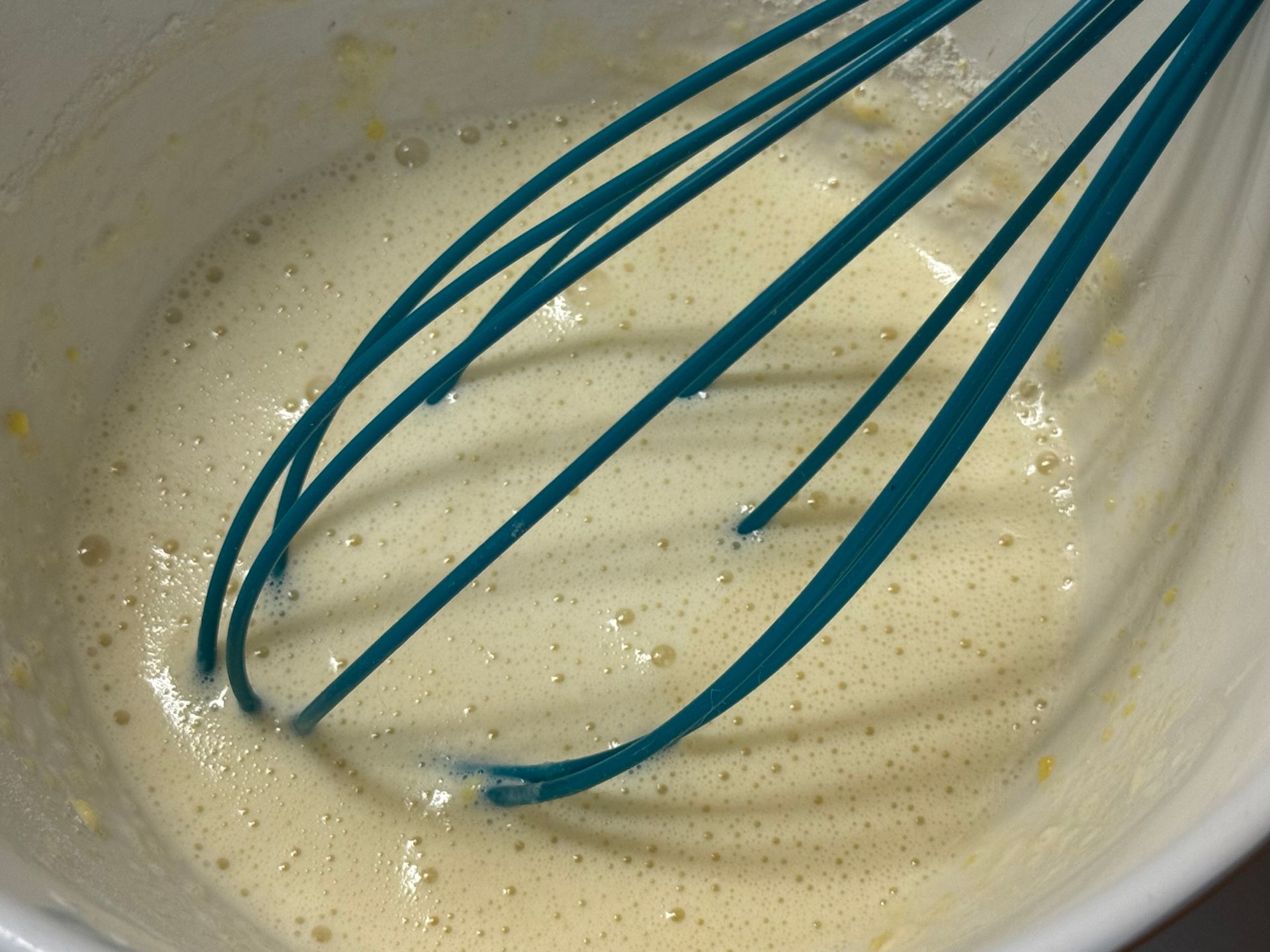
Sift the flour into a bowl & add the eggs, salt & pepper. Whisk gently and continue to whisk while slowly drizzling in the milk, creating a smooth batter.
Step 2

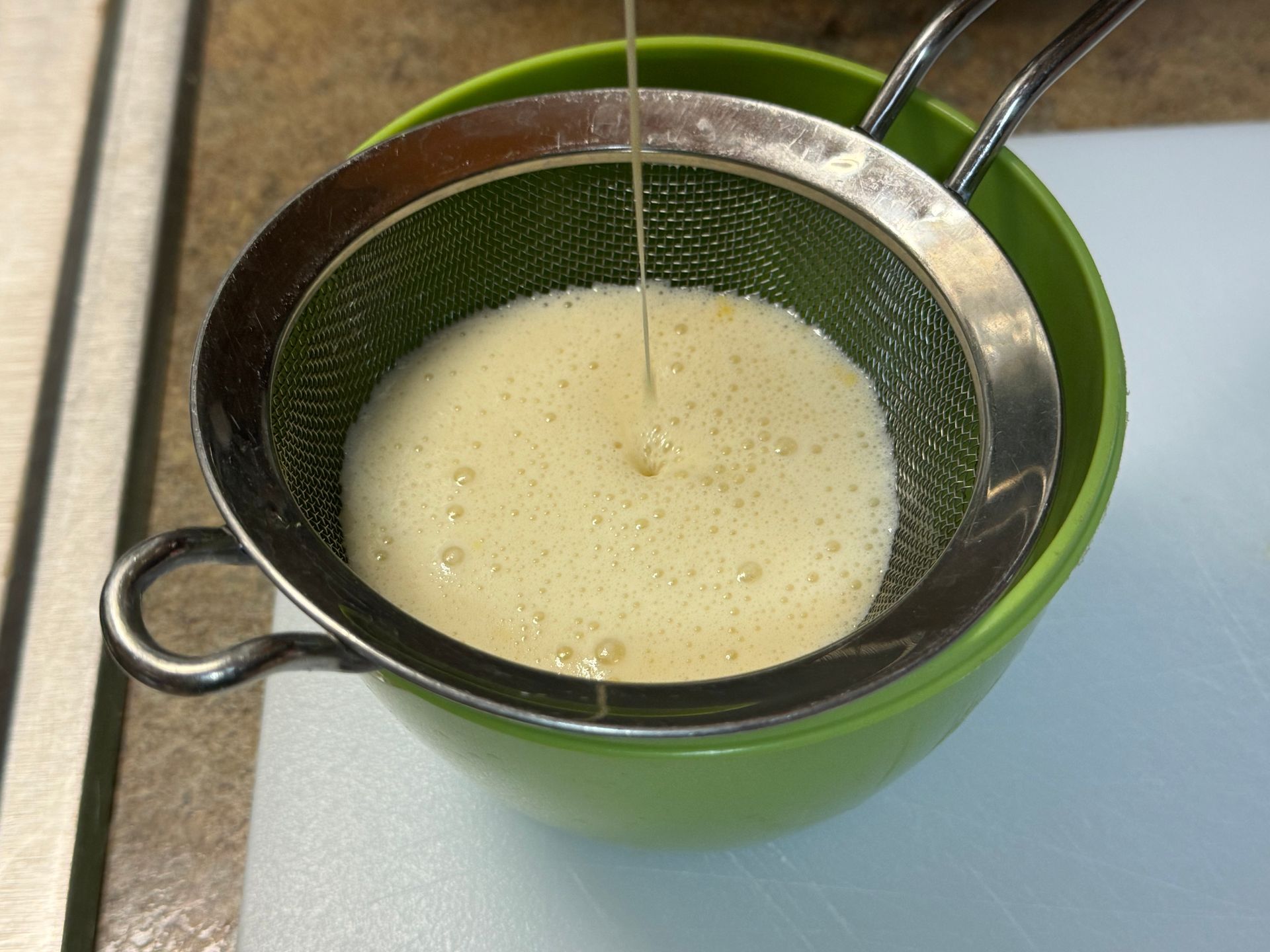
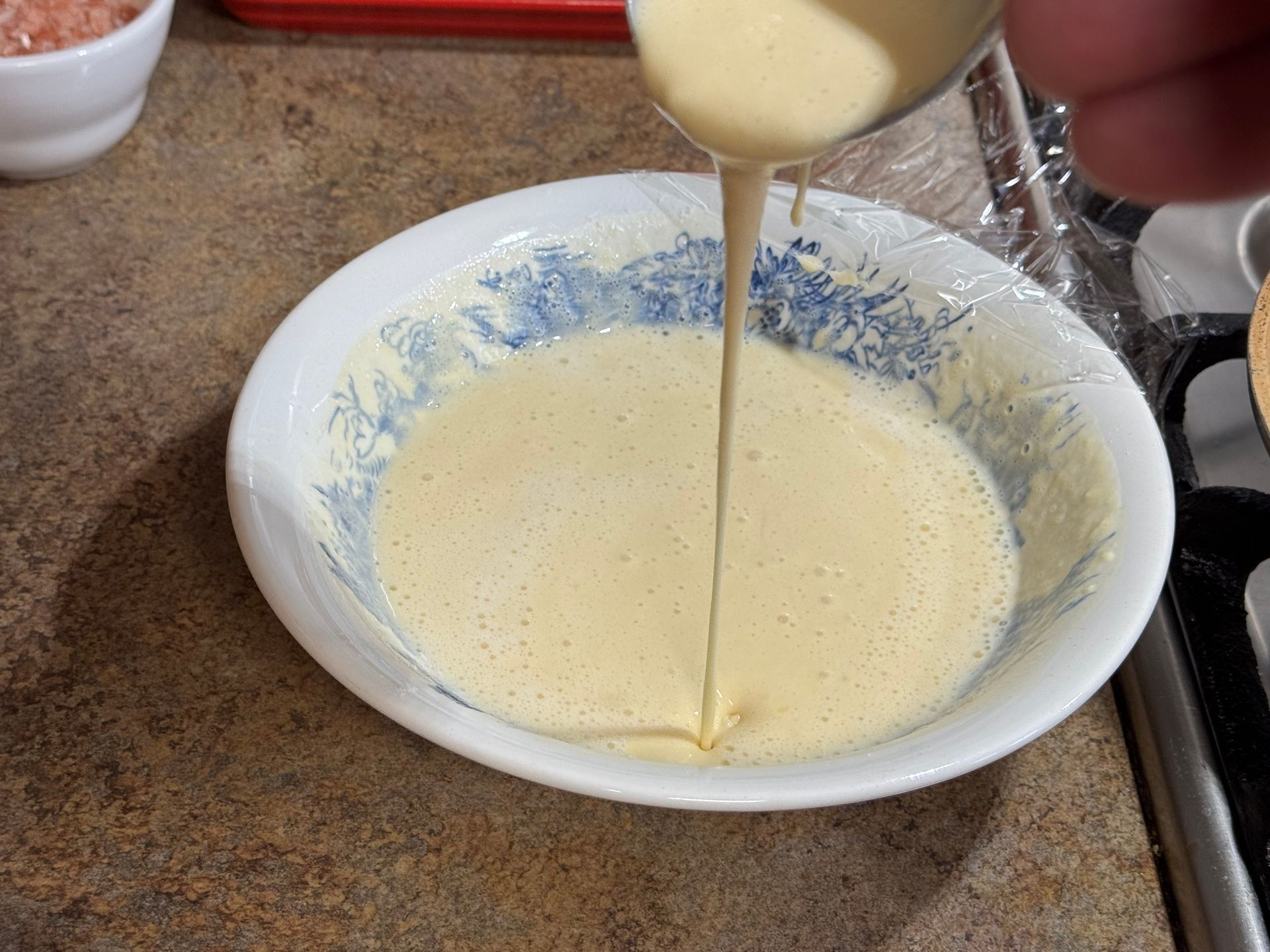
Add the melted butter and strain into a container, cover with plastic & rest for an hour. I like to lightly brown the butter for added flavor.

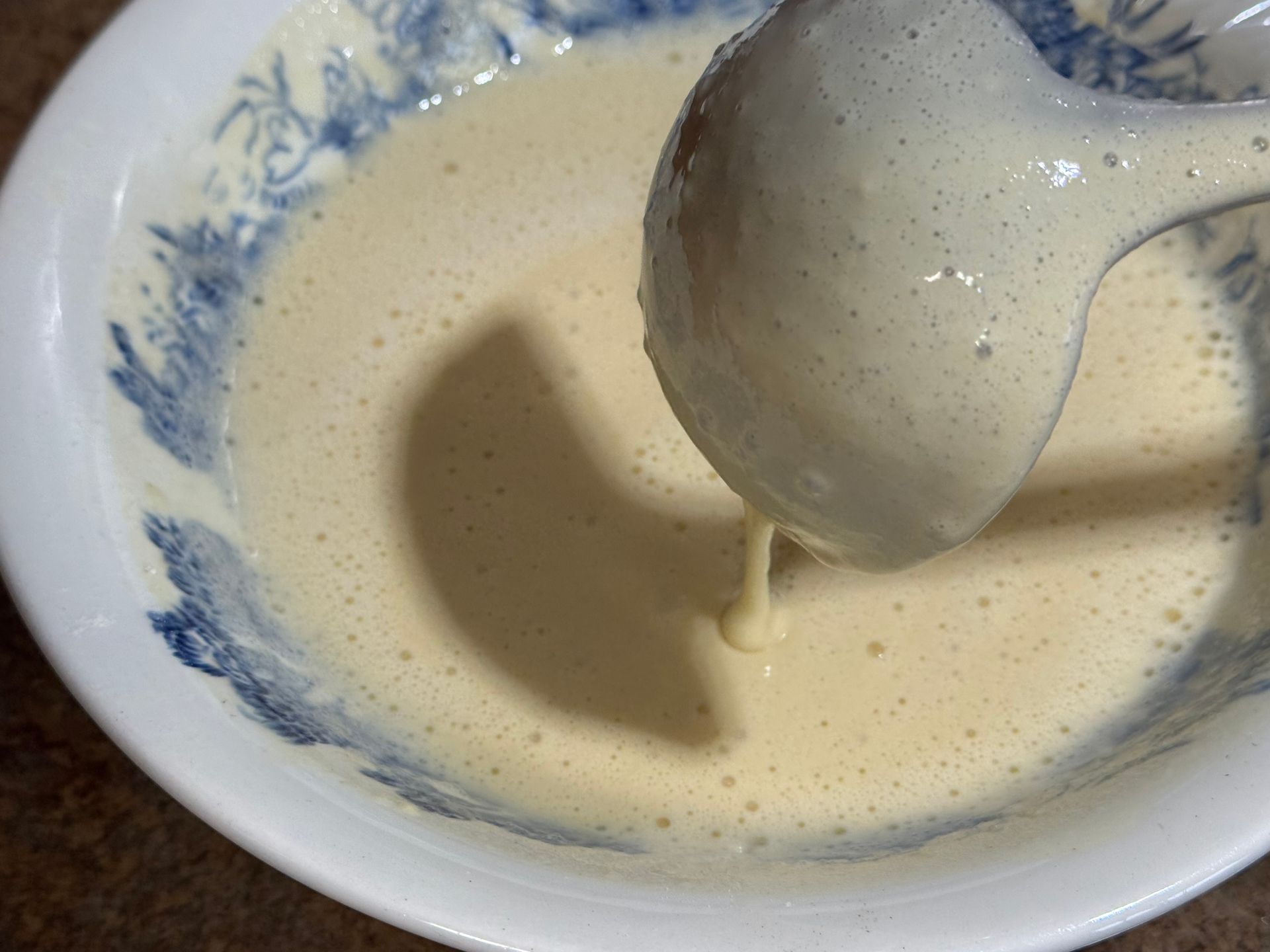
The crêpe batter should be smooth and slightly thicker than cream, add a little milk or water to thin out if too thick. Add the parsley.
Step 3

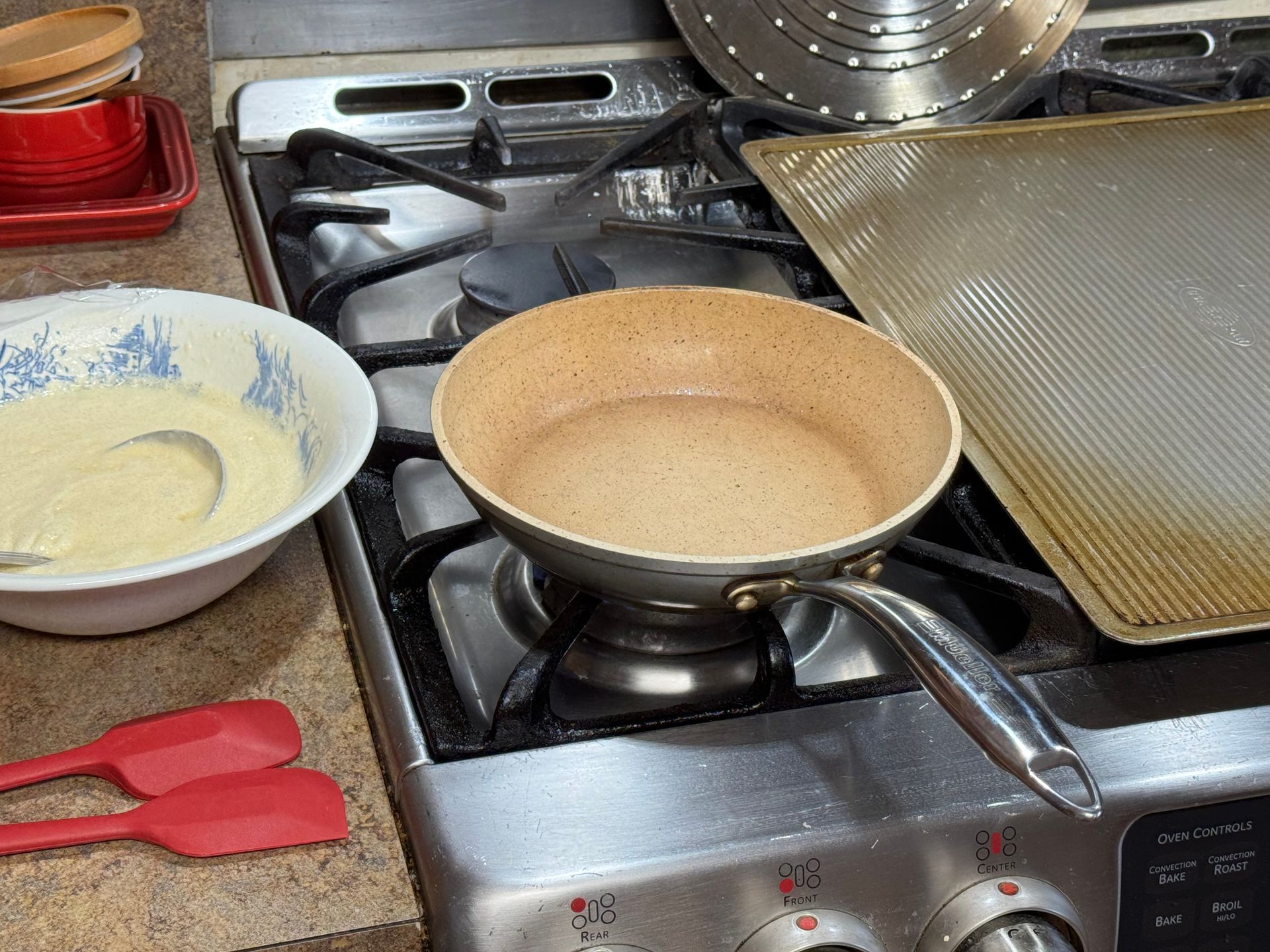
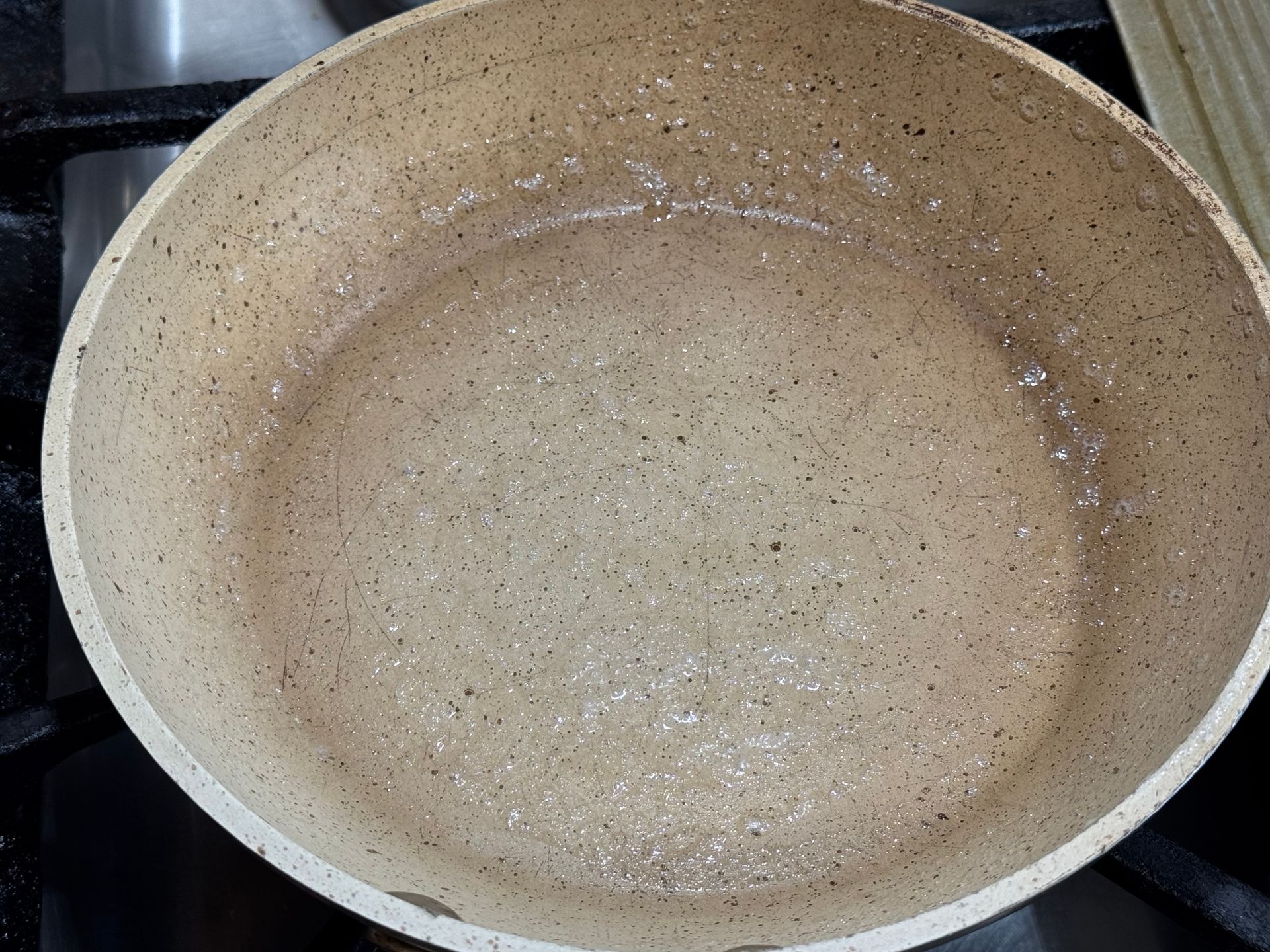
Heat a crêpes pan or teflon pan to medium heat, it's best to have all of the equipment you'll need near the pan you'll be cooking with


The batter should be thick enough to coat the back of the ladle. You can easily thin out the batter with a splash of milk-if the batter is too thin, place a tbsp of AP flour into a separate bowl and slowly whisk in the batter to avoid lumps-this thickens the batter.


Add a very small amount of butter or oil spray to the pan, making sure to coat all of the bottom and lower side of the pan.


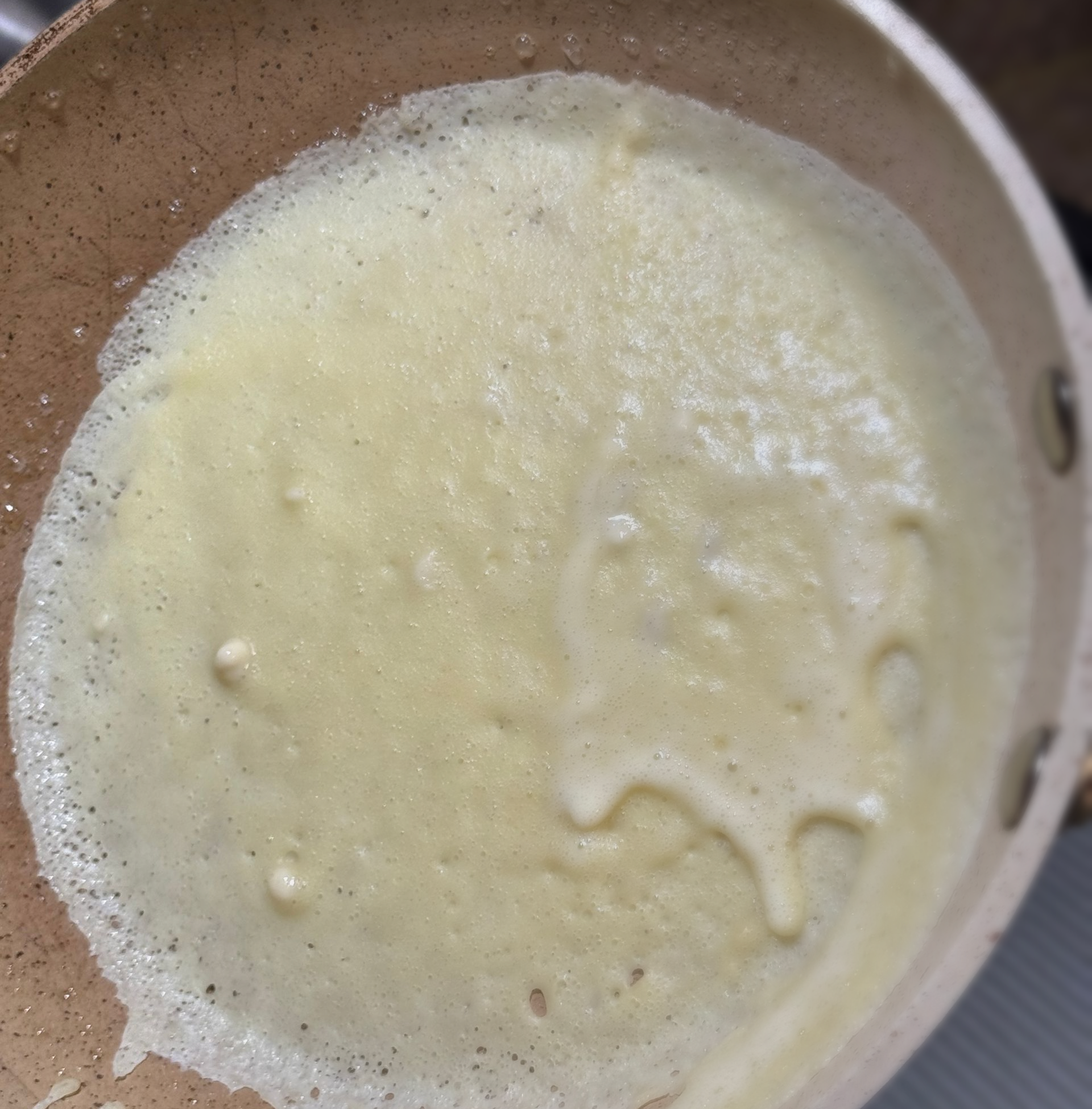
With one hand holding the pan, ladle a portion of the batter into the pan, swirling to cover the entire bottom surface of the pan. It is very helpful to use a 1 oz ladle or the ladle size necessary to coat the size of the pan you are using.


Tilt the pan so the side to get all of the batter to coat the bottom of the pan.

This is a recipe made without straining the batter; note the two spots of flour on the left. This can easily be picked out with a small spoon-but it demonstrates the importance of straining and adjusting the viscosity of the batter.


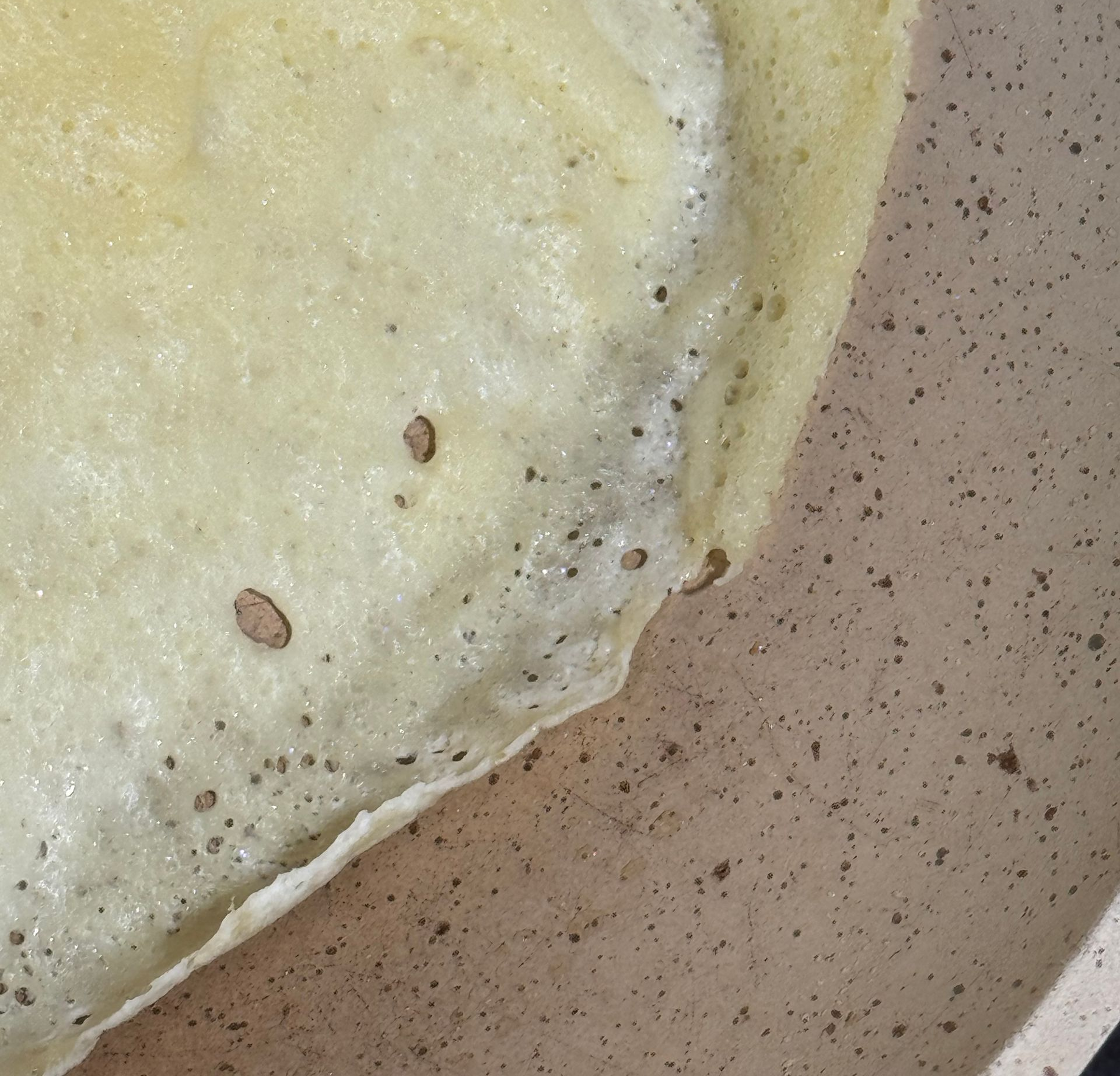
Cook for about 1 minute and flip with a rubber spatula. You'll see the sides peeling up (as in this picture) when it's time to flip.


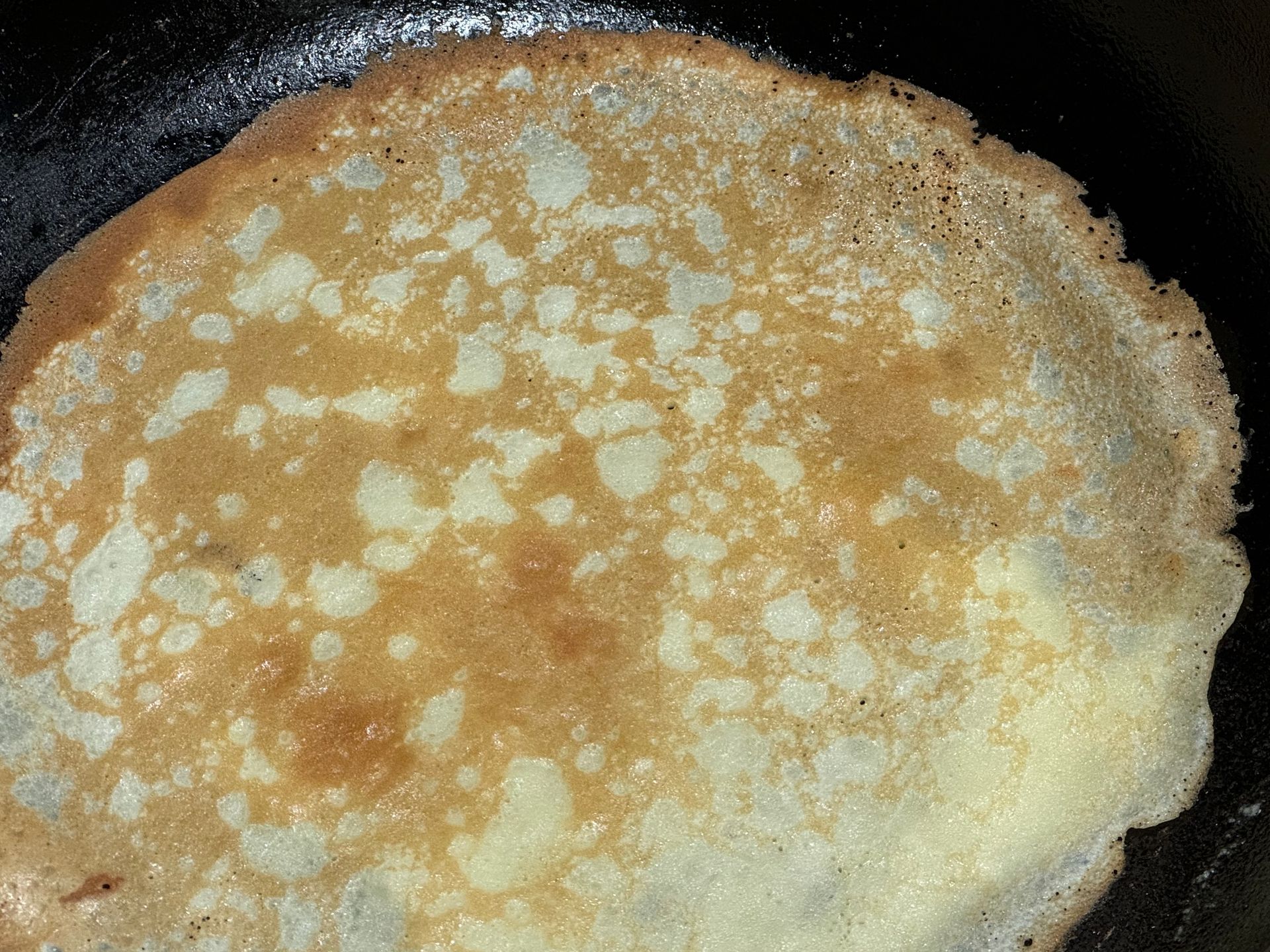
(I prefer to flip with my fingers to avoid tearing the delicate crepes). Cook for about 1 more minute and lay out onto a clean towel or parchment.


Repeat until all of the batter is used and cover with a second clean towel to cool the crepes for 20 minutes.

Crepes can be refrigerated or frozen.


By Tom Griffiths January 7, 2026
I still remember cooking breakfast burritos with my son Daniel, for volunteer workers at church events—simple, hearty, and made to fuel a long day of service. The workers were always so appreciative. Years later, I served a crowd favorite, nicknamed “The Bacon-ator,” a breakfast superstar inspired by the over-the-top spirit of fast-food indulgence. We had a popular food booth at the local country fair, where we cooked hundreds of breakfast burritos each day-stuffed with Mexican cheeses, extra bacon, fluffy scrambled eggs, and fresh salsa—nothing pre-made, nothing rushed. Every burrito was warm, fresh, and full of flavor. When food is made with love, even the most straightforward breakfast is memorable. 
By Tom Griffiths January 6, 2026
Beef Wellington is a restaurant classic! Chefs prepare whole tenderloins, wrapped in pastry as well as individually portioned Wellingtons. Culinary historians widely agree that Beef Wellington evolved from French preparations such as filet de bœuf en croûte, which paired beef tenderloin with mushrooms and pastry—techniques well established in French haute cuisine.
By Tom Griffiths January 4, 2026
Oranges are fantastic in Baking & Pastry. I developed a delicious dessert for the CMC exam (Healthy Cooking) challenge featuring Orange Creamsicle Sorbet with Roasted, Candied Pineapple and Fruit Strudel... with plenty of guidance from the amazing CIA Pastry Instructors! Types of Oranges: There are several distinct varieties of oranges, each with unique characteristics and flavors. The most common type is the Navel orange , recognized for its seedless, sweet flesh and thick, easy-to-peel skin. Valencia oranges are another popular variety, primarily known for their juiciness and are often used for making orange juice. Other notable types include Blood oranges , which have a deep red interior and a distinct berry-like flavor, and Cara Cara oranges , characterized by their pinkish-red flesh and sweet taste. Additionally, Seville oranges , known for their bitterness, are mainly used in making marmalade and flavoring liqueurs. 
By Tom Griffiths January 3, 2026
Flambéed fruits are often used as an accompaniment or variation in desserts like Crêpe Suzette. Common choices for flambéing include bananas, apples, or berries, sautéed in butter and sugar before being doused in a spirit, such as rum or brandy, and set alight. The flambé technique adds excitement to the dining experience! Years ago I was dining at Paul Bocuse with some colleagues and one ordered a f lambé served over rum raisin ice cream. He let me taste and it was amazing.
By Tom Griffiths January 2, 2026
Bell peppers are the sweet, non-pungent members of the Capsicum annuum family, prized for their crisp texture, juiciness, and vibrant colors. Green, red, yellow, and orange peppers are the same fruit at different stages of ripeness, with sweetness increasing as they mature. In the kitchen, bell peppers are valued for their versatility—equally at home raw in salads, roasted for depth and sweetness, or sautéed as a foundational aromatic in countless cuisines.
By Tom Griffiths January 2, 2026
Years ago I was competing in Erfuft, Germany with a CIA Culinary Olympic team. When the competition was over, we had time to walk around Erfurt (home of the famous poet Goethe). There was a man grilling German sausages on a small grill in the center of the town square. I joined the long line of locals purchasing delicious, grilled German sausage with onions-amazing!
By Tom Griffiths January 2, 2026
When I was a student studying culinary arts at the CIA, preparing Caesar salad and fambéed desserts were competencies we were tested on when we were studying in the school restaurants. Caesar salad is delicious for a variety of reasons... croutons fried or toasted with olive oil provides great texture and is delicious, Caesar salad dressing is an 'umami bomb' of flavor... savory and deeply satisfying notes from anchovies, Worcester sauce, aged parmesan cheese and rich, creamy mouthfeel from the fat from egg yolks.. absolutely delicious.
By Tom Griffiths January 2, 2026
Arugula is spicy! It's one of my favorite lettuces to make salads with. I like adding toasted nuts, cheeses and sometimes fruits and berries to arugula for great salads. I prefer an emulsified vinaigrette with honey, olive oil, mustard, lemon & herbs... these days I use a little mayonnaise instead of raw egg yolk for the emulsion.
By Tom Griffiths January 1, 2026
One of my most memorable roast duck meals with in Lyon, France. I was in France with two other CIA instructors, cooking a dinner for expats with the local, French chefs. We dined at Paul Bocuse's restaurant one night and Chef Bocuse came to our table to greet us. He announced he would be roasting a duck for us in the hearth that evening! Can you imagine-the room fell silent and all of the diners looked at us (rather jealousy)...  Three of my favorite duck preparations, each showcasing a different culinary tradition are: Peking Duck (China) A highly refined preparation where the duck is air-dried, roasted until the skin is exceptionally crisp, and traditionally served with thin pancakes, scallions, cucumber, and hoisin sauce. The focus is on lacquered skin and precise carving. I had this meal several times in Beijing with some of the amazing Campbell Soup leadership team. Duck à l’Orange (France) A hallmark of French cuisine, this dish pairs roasted duck with a bittersweet orange sauce made from a gastrique (bitter, caramelized sugar), vinegar, citrus, and stock—highlighting the balance of richness and acidity. Confit de Canard (France) Duck legs are salt-cured, slowly cooked in their own fat, and then crisped before serving. Originally a preservation method, confit delivers deeply savory flavor and meltingly tender meat. I enjoyed duck confit many times with Beaujolais while in France.
By Tom Griffiths December 31, 2025
My favorite shrimp are 16/20 tiger shrimp! I love the crunchy bite and visual appearance. I always get 'shell on' so I can use the shells for stocks and sauces. Shrimp are classified primarily by size, typically expressed as a count per pound (for example, 16/20 or 26/30), with smaller numbers indicating larger shrimp. For shrimp cocktail, larger sizes—such as U10, 16/20, or 21/25—are preferred for their dramatic presentation and juicy bite. Shrimp can be purchased fresh or frozen, head on or off, raw, cooked, peeled... Common types include white shrimp (mild and tender), brown shrimp (slightly firmer with a deeper, iodine-rich flavor), pink shrimp (sweet and delicate), and tiger shrimp or prawns (large, meaty, and visually striking).