I would consider stuffing poached in a napkin as a roullade or torchon (like a foie gras torchon).
It is a European technique where seasoned bread stuffing is formed into logs, wrapped tightly in a damp linen napkin or cheesecloth (or plastic wrap), and then gently poached to create moist, cohesive, flavorful stuffing 'log', perfect for slicing and serving with gravy. I like to slice and gently toast in butter to serve with pork or poultry. 

I learned to prepare stuffing, rolled in a cloth napkin and poached in chicken broth at the CIA. I actually prepared this and served this stuffing roll sliced with roasted goose and braised red cabbage on the 10th and final day of the CMC exam.
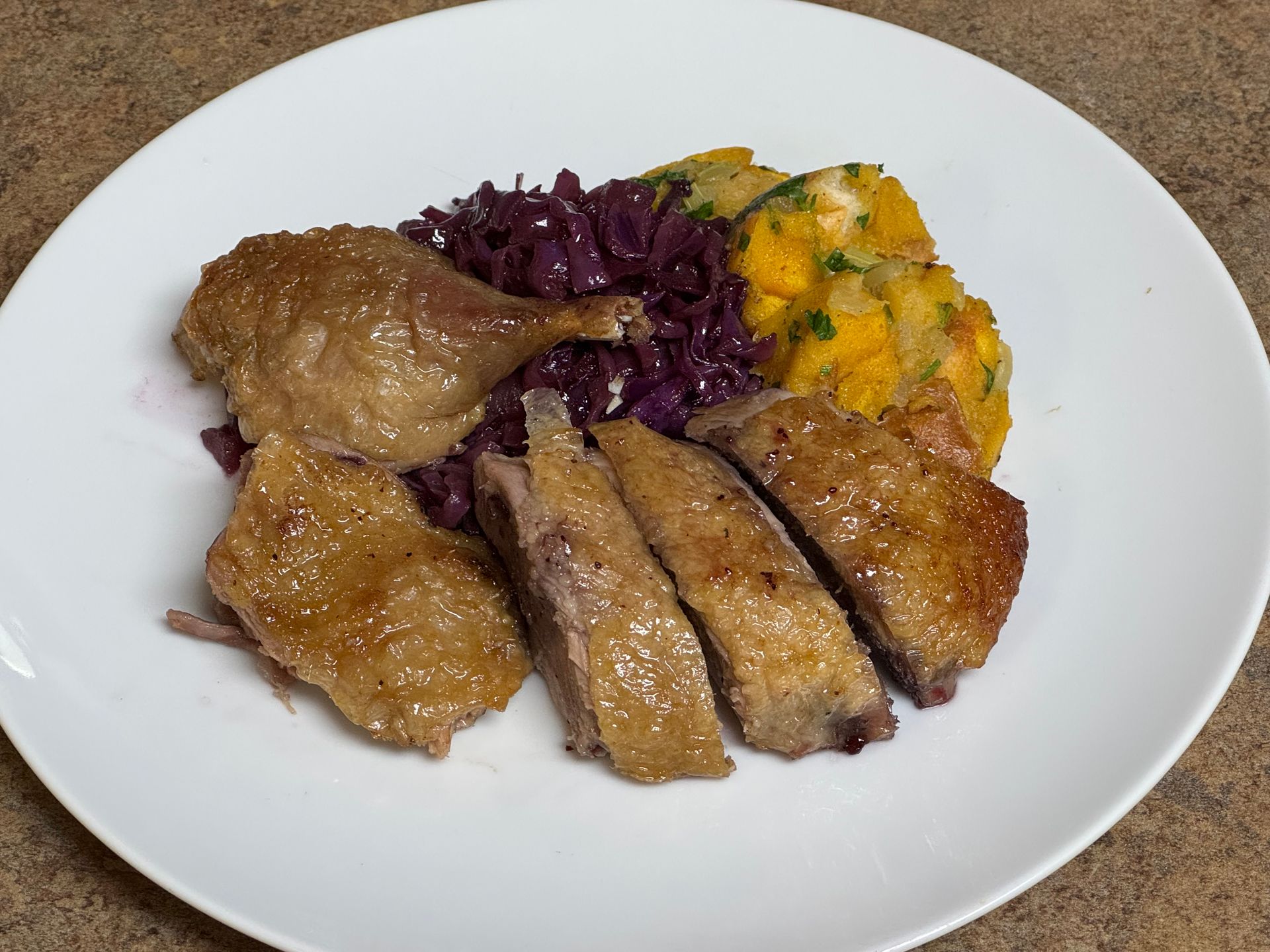

A white bowl filled with stuffing and green onions

European style poached Stuffing

Growing up, our Thanksgiving stuffing was always a simple but deeply satisfying Italian tradition: chopped, sweet Italian sausage, onions, celery and day-old, toasted, Italian bread with eggs packed into the cavity of the turkey. The aroma was incredible, and the juices from the roasted turkey gave the stuffing an unmatched richness and moisture. I especially loved the 'cavity' stuffing the following day.


Today, best practices have shifted. To ensure food safety—and to prevent undercooking the turkey—most people prepare stuffing outside the bird.

Cooking the stuffing separately allows the turkey to reach 165°F safely (and quickly) while giving chefs more control over texture, seasoning, and browning. I always add rich, delicious turkey broth to my stuffing. It’s every bit as flavorful, with improved consistency and far fewer risks.

Prep Time: 3o min

Cooking Time: 30 min 

Ingredients

 Yield: 10 portions                                       

3 Tbsp       Butter, melted                                                                                            

2 Cups       Bread, small dice, toasted  (crusts optional) (bagels are great to use)

                    Seasoning

3 Tbsp       Butter, melted                                                   

1/2 Cup.    Onions, minced & sweated                                                           

1/2 Cup     Celery, minced & sweated     

1 Cup          Apple, granny smith, peeled/cored & diced (optional)

1 sprig       Thyme, fresh, picked                                                

1/4 tsp.      Poultry seasoning                                                                           

1 Cup         Turkey or chicken stock                                                                                   

2 ea            Eggs                 

1/2 Cup.    Bacon, Breakfast Sausage, Sweet Italian Sausage, cooked-chopped (optional)                                                                                    

t.t.               Salt                                                                                                                 

t.t.               Black pepper       

How to prepare Stuffing
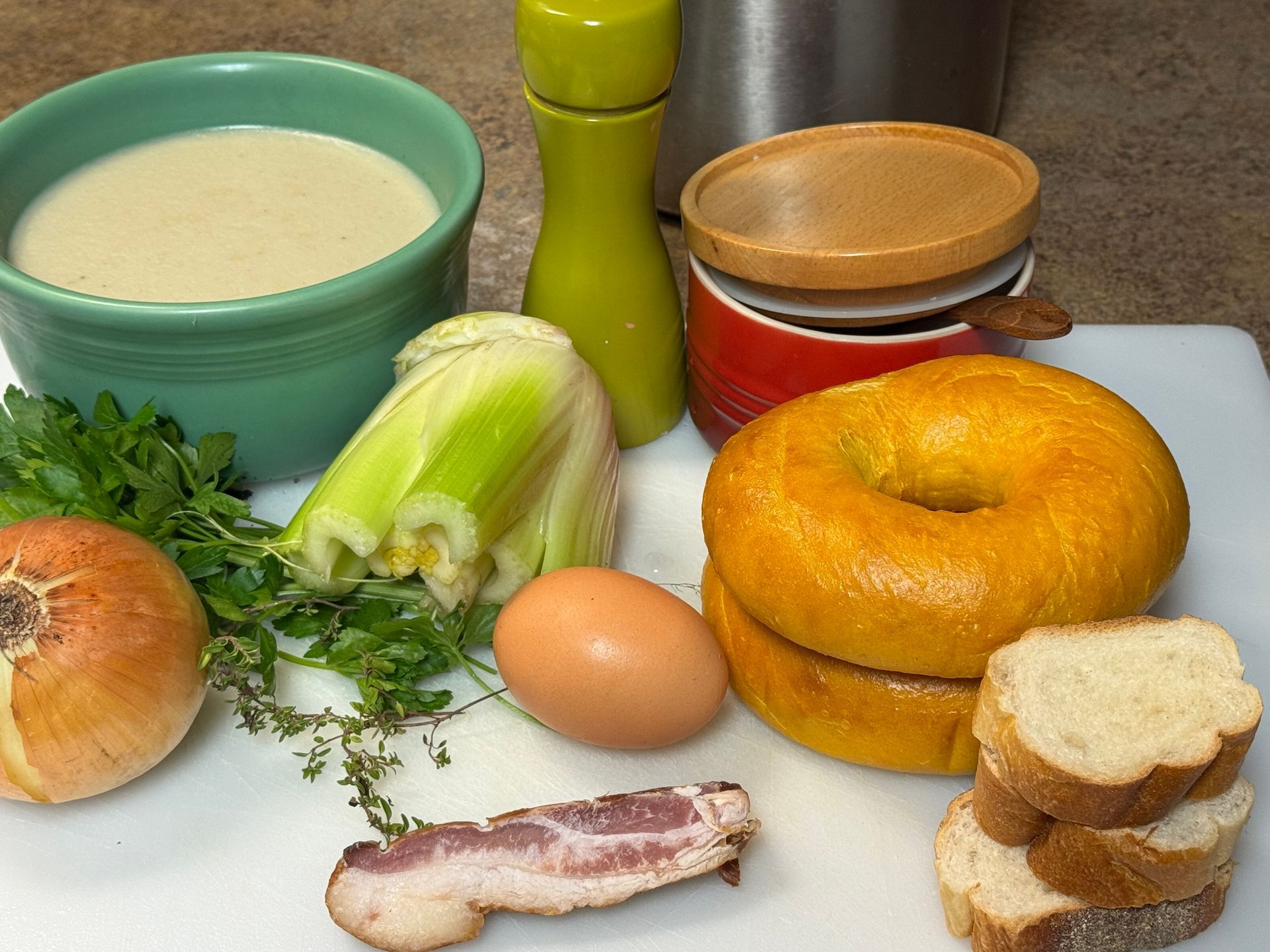
A cutting board with eggs , apples , celery , onions and croutons on it
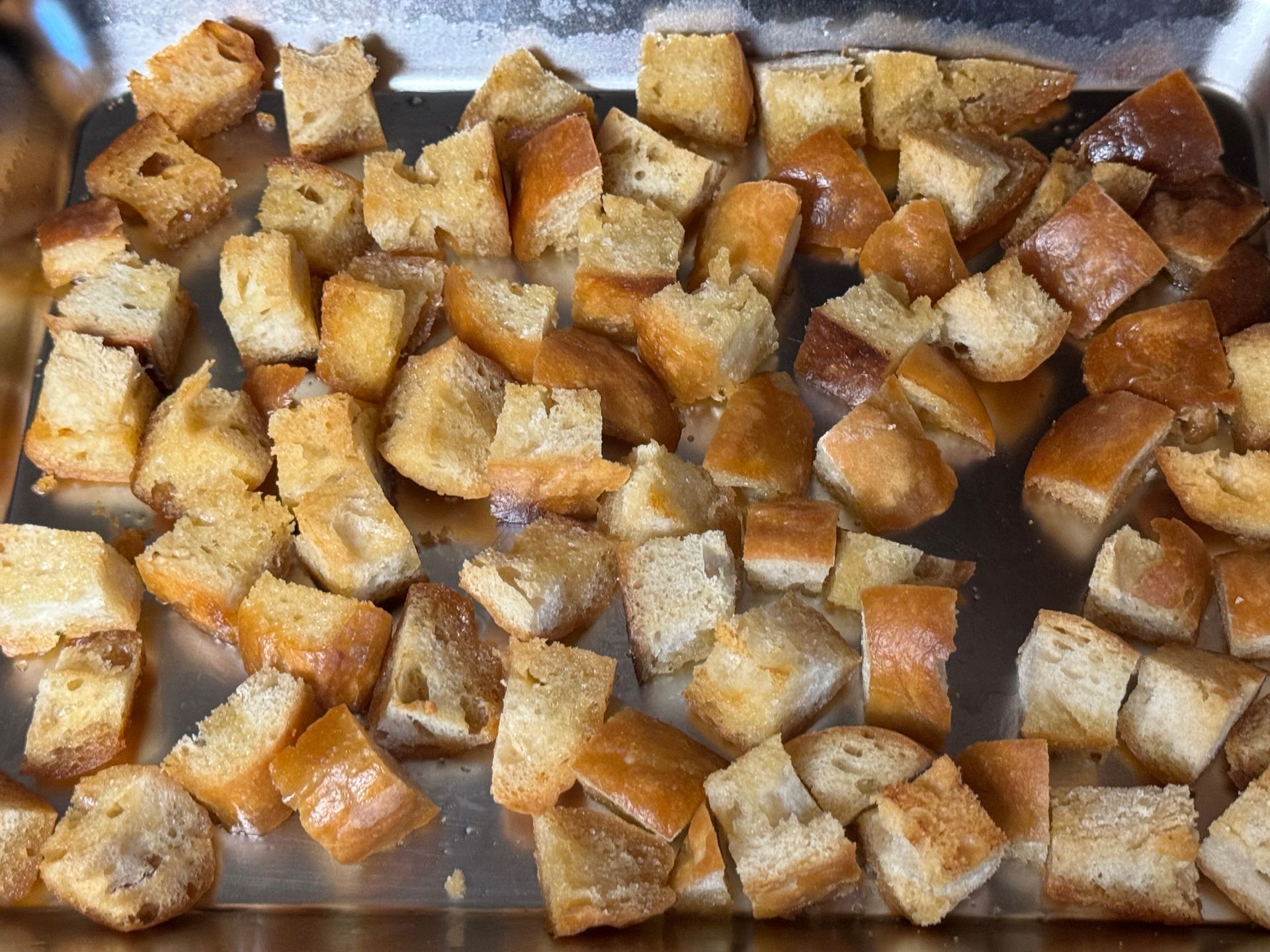
A tray of bread cubes is sitting on a table.

Step 1

Chop the bacon and render in a warm pan-no butter or oil needed.  Brown lightly and coat the croutons in the bacon and rendered fat, season and bake until lightly browned.     
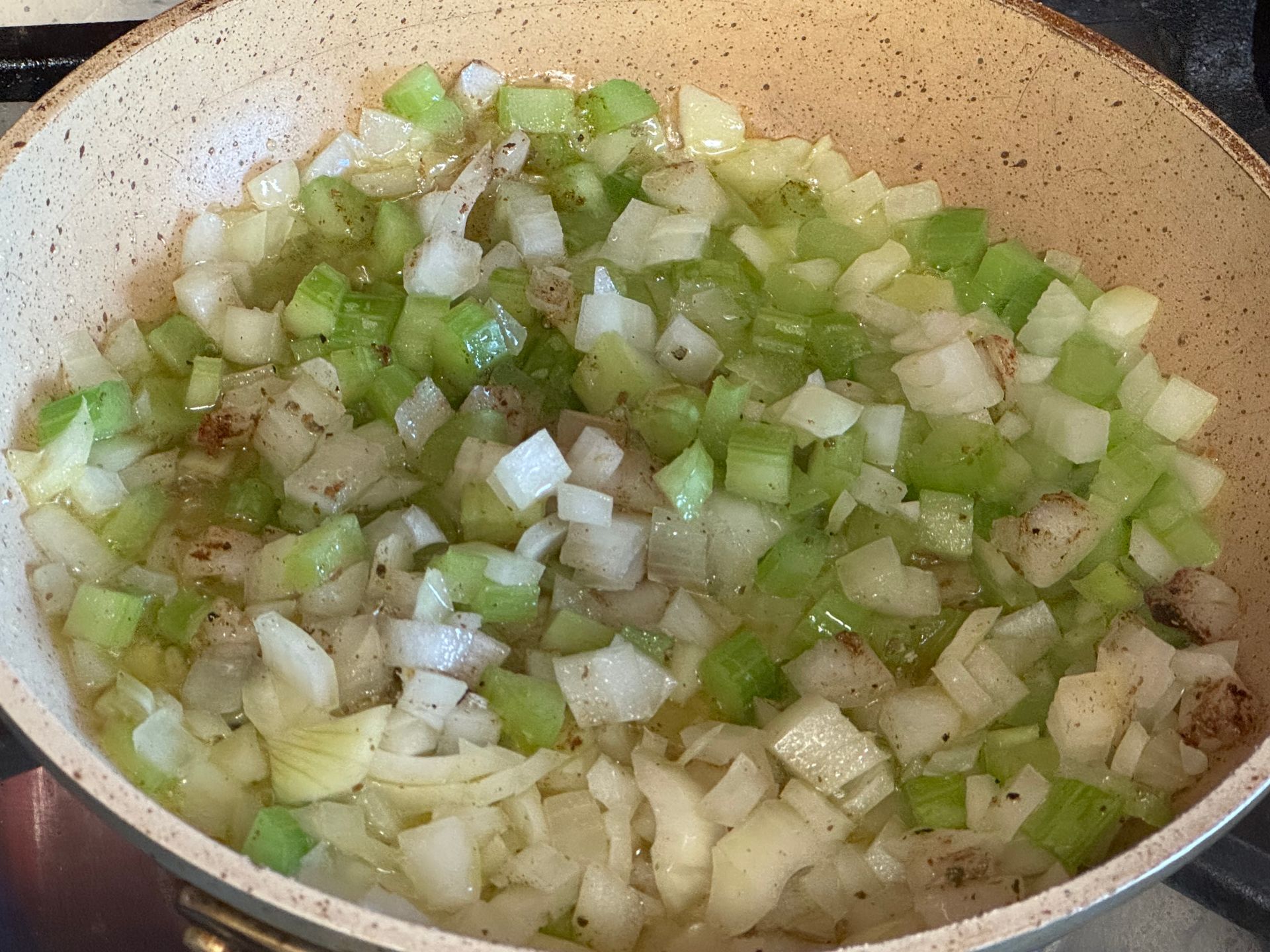
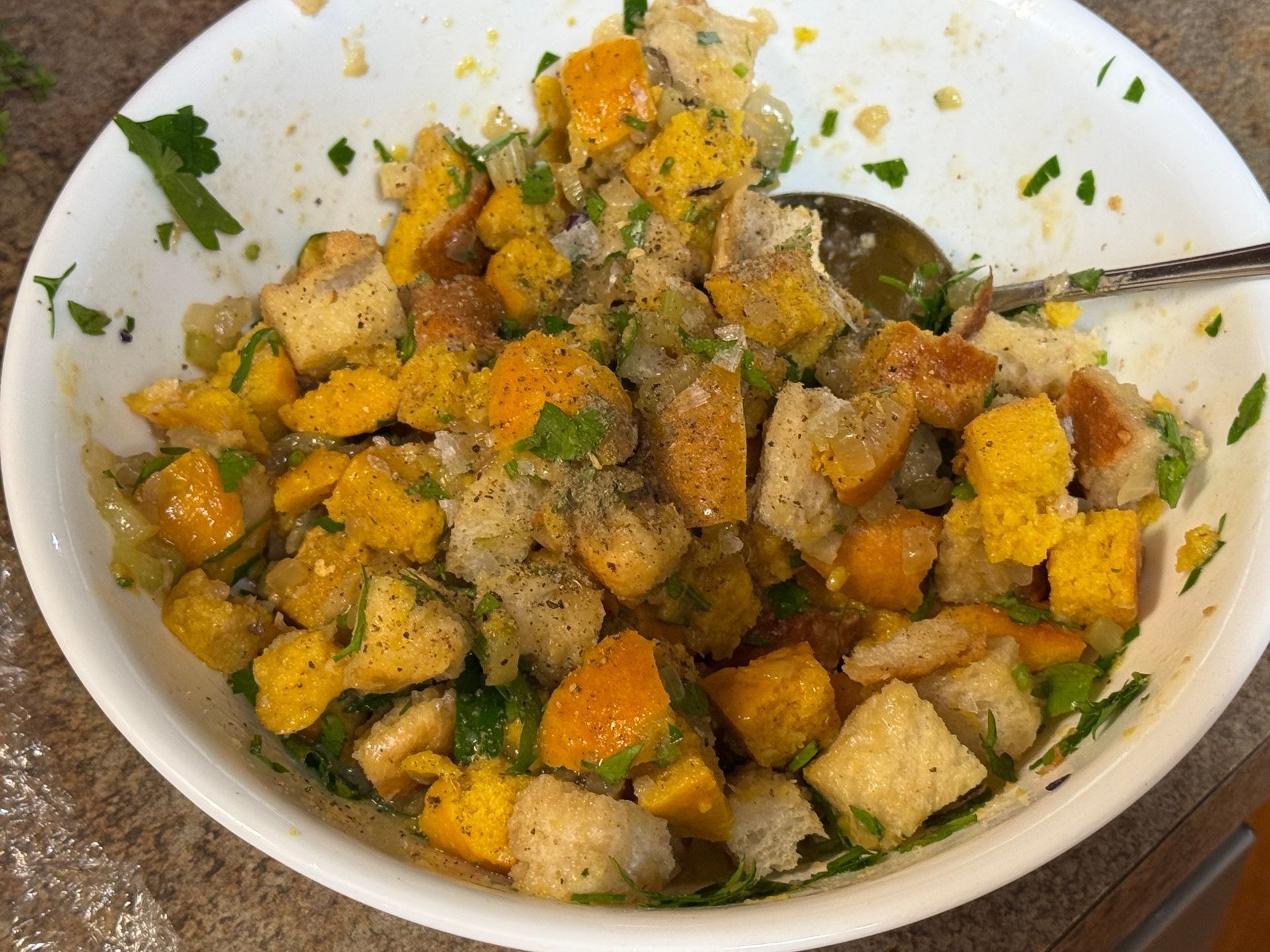
A close up of a bowl of stuffing with bread and vegetables.

Step 2

Sweat the onions and celery in the pan you rendered the bacon-(you may need to add a little butter) for 3-4 minutes, add the seasonings and turkey stock and reduce by half.

Mix the egg with the stock with a whisk, add the cooked onion and celery mixture.                                             

Toss the egg and onions blend with seasonings and croutons, together in a bowl.

If adding cooked sausage, nuts, diced apples, etc... add now and cool with the onions/celery mix.                         
A glass casserole dish filled with stuffing and apples.
A bowl of stuffing is sitting on a table

Step 3

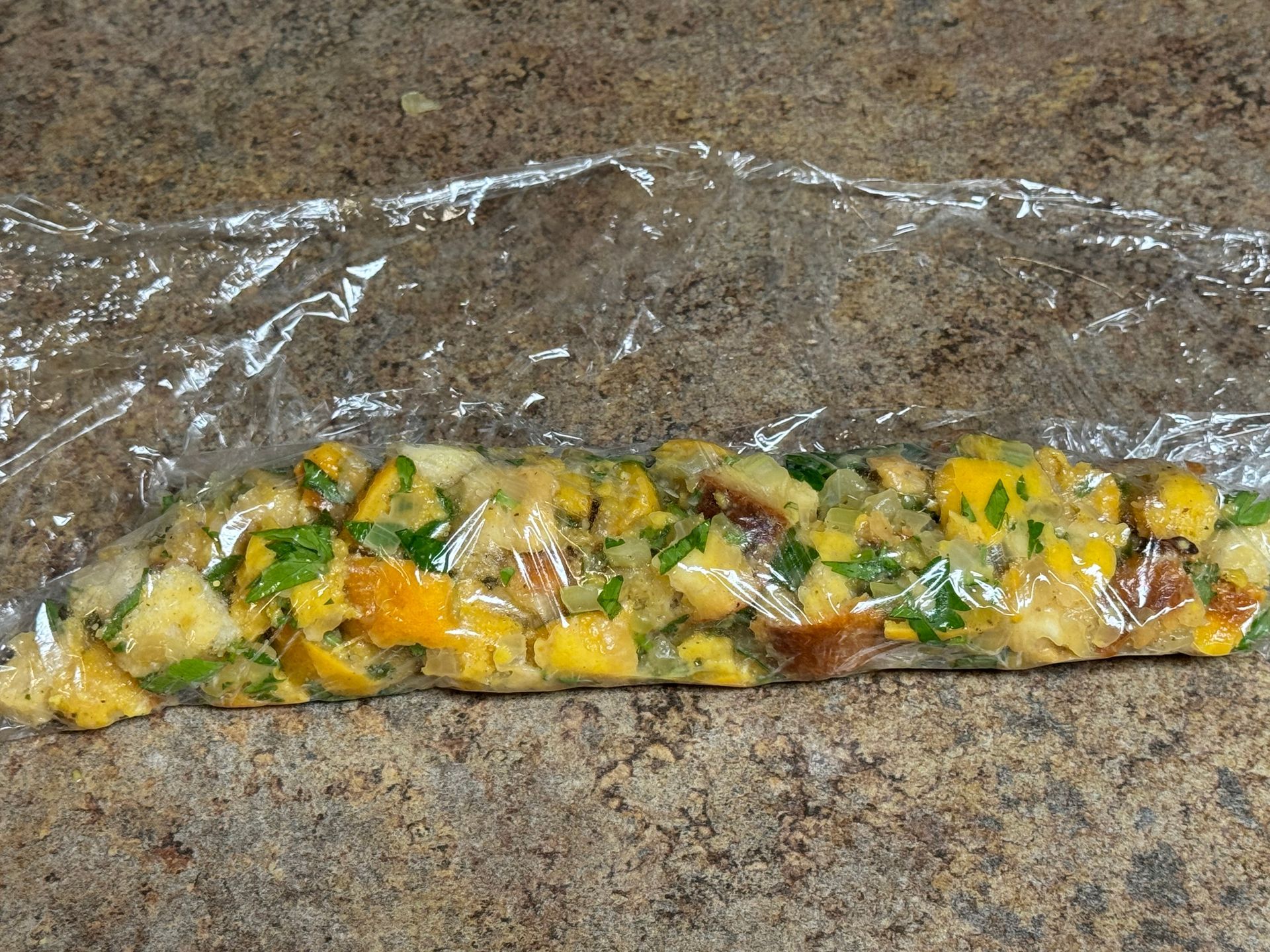
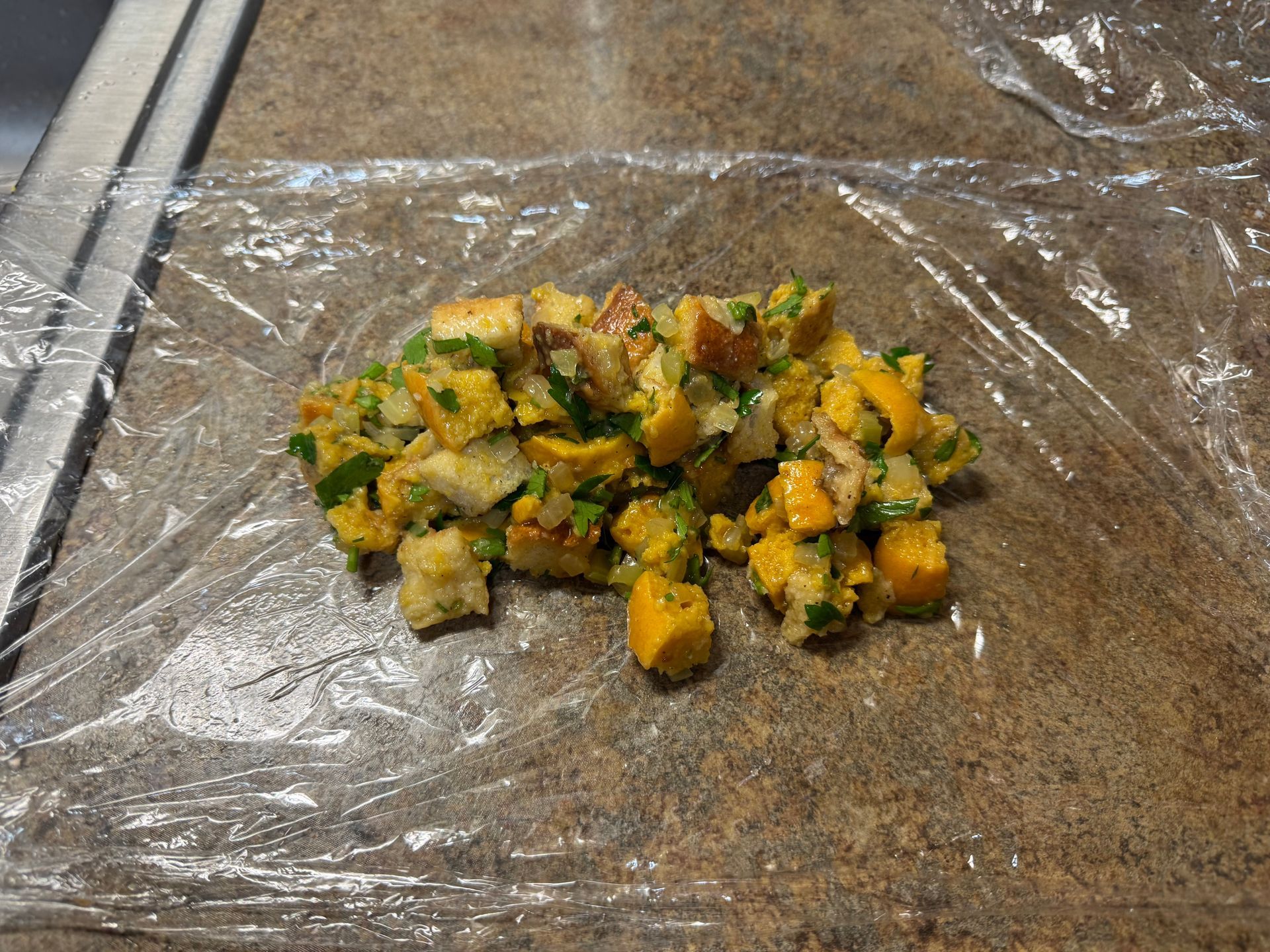
Place some of the stuffing onto a clean, damp cloth napkin or plastic wrap;


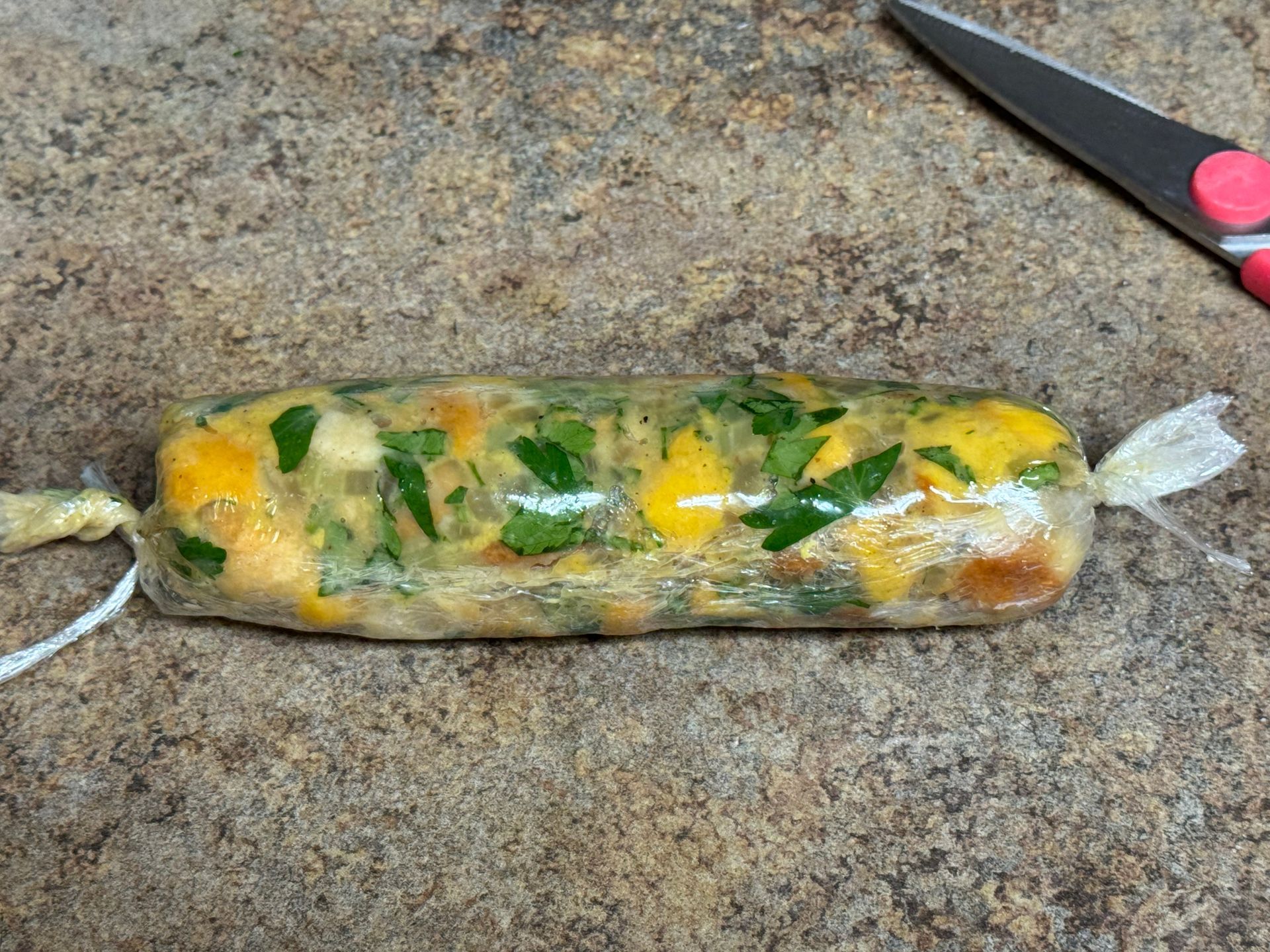
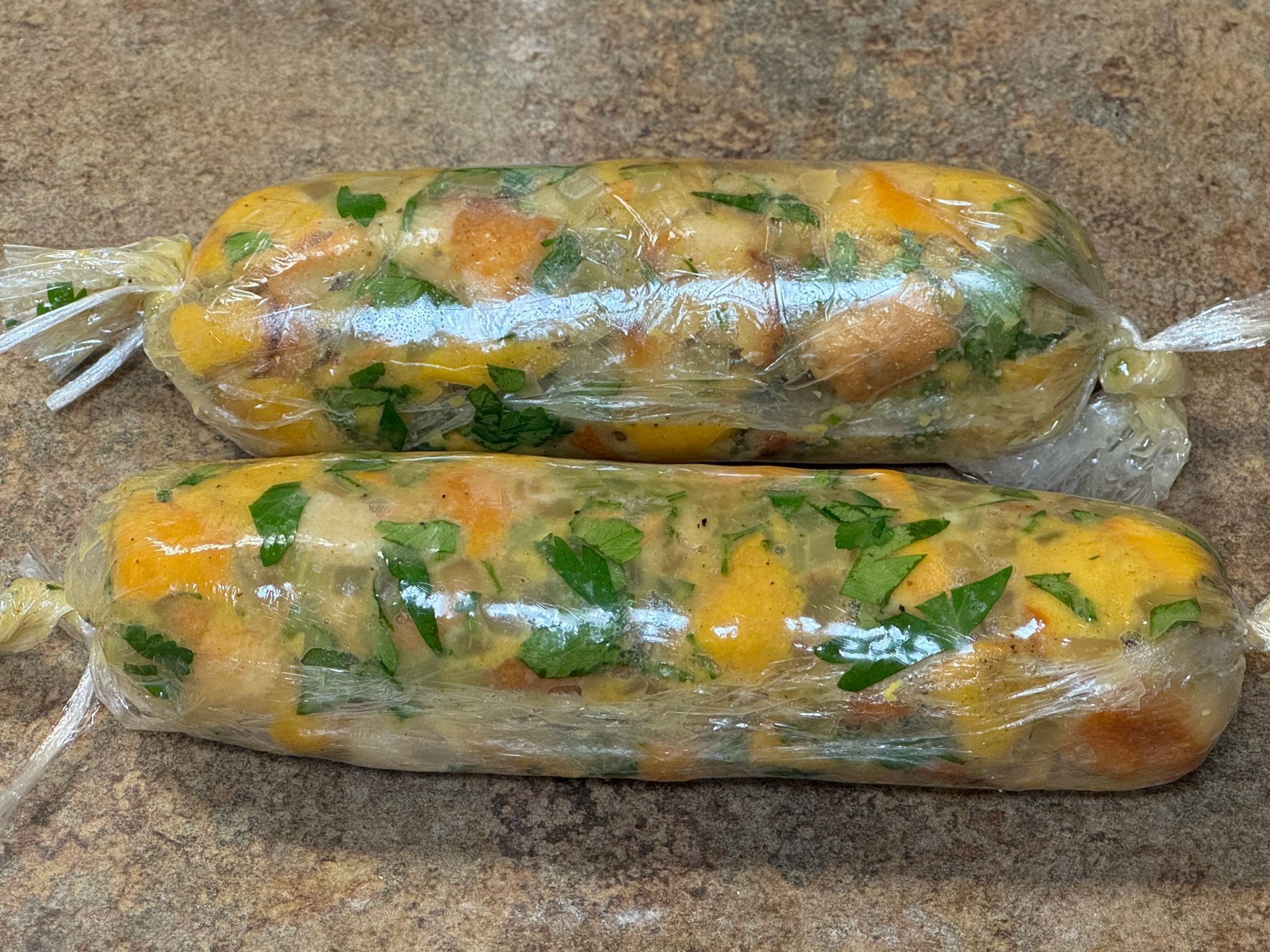
Roll the napkin tightly around the stuffing, forming a log. Try to avoid gaps or holes in the stuffing. It should resemble a sausage.


Roll each end several times, twisting to create a small 'knot' and tie the ends with string tightly, with the knots as anchors. This will stop the stuffing from coming out of the ends.


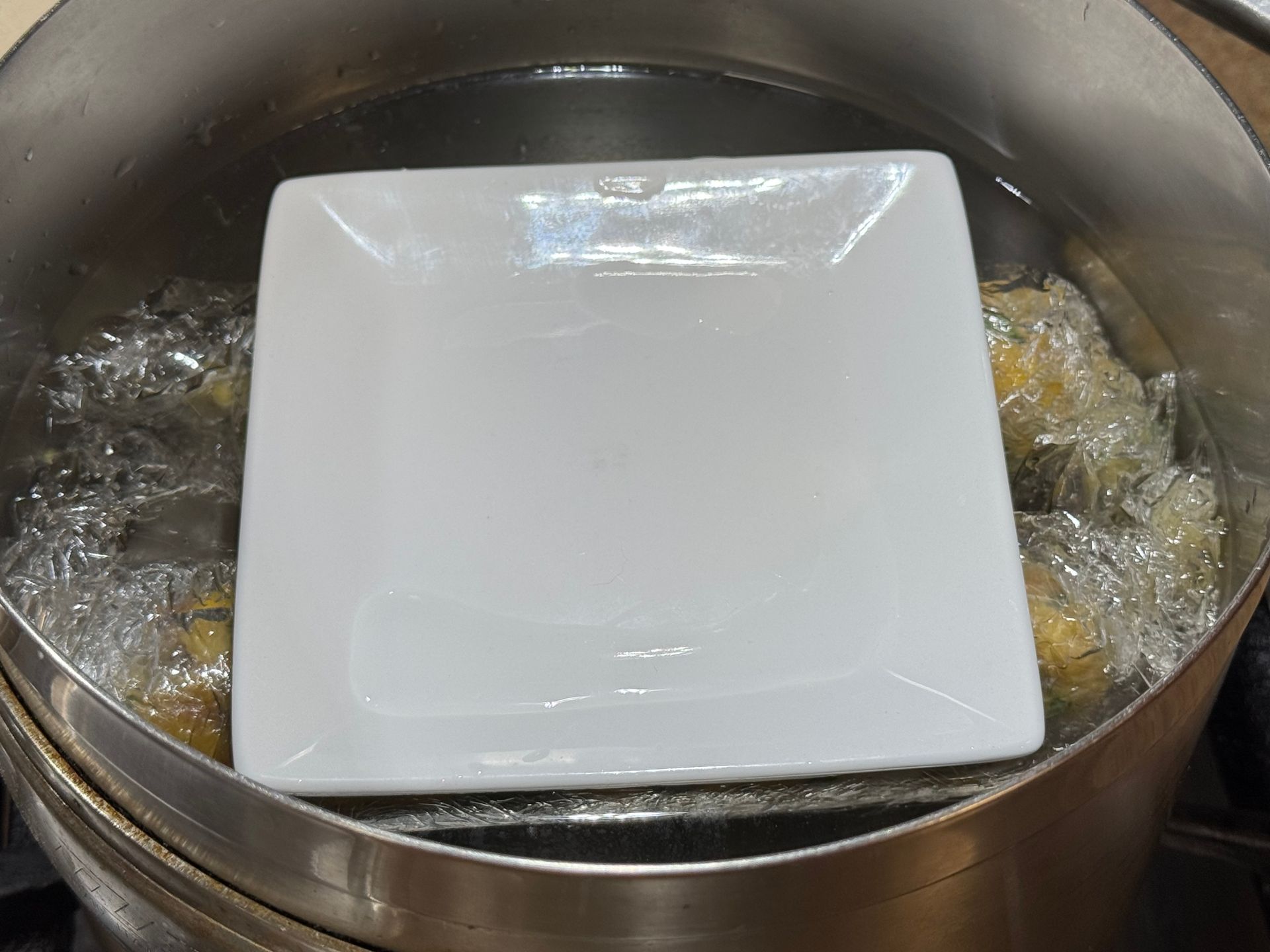
Transfer to a pot of simmering water if using plastic wrap, chicken broth if using a napkin, cover with a clean napkin and then place a plate on top to submerge the stuffing rolls; poach gently for 30 minutes to cook. Turn off the heat and let the stuffing cool in the water.
By Tom Griffiths December 27, 2025
One of the first thing students at the CIA learn to cook is vegetables. I suspect cabbages are not the most popular veggies in the United States but I'm certainly a fan!  I actually prepared braised red cabbage with a poached, sliced stuffing roll and roasted goose on the 10th and final day of the CMC exam. The CMC proctor made me julienne the core of the cabbage... Chefs know all about adding vinegar to keep red cabbage from turning blue!
By Tom Griffiths December 17, 2025
Butter, spices, and traditional family recipes bring us together in the simplest—and most meaningful—ways. This is a cookie my mother baked at Easter time. The lemon sugar crust is delicious... perfect with coffee or tea.
By Tom Griffiths December 17, 2025
Butter, spices, and traditional family recipes bring us together in the simplest—and most meaningful—ways. Christmas cookies are more than nostalgic treats; they’re a celebration of childhood memories, and maybe cookies help to make us all a little more patient, thoughtful & friendly each holiday season. I remember driving with my father to the city each Christmas to pick up Aunt Flora. She would send us out with decorative plates of homemade, Italian Christmas cookies to deliver to the local relatives. It was always snowing-we would spend a few minutes visiting each family, have a few cookies and a glass of sweet wine or coffee. My mother and aunts began baking cookies the day after Thanksgiving. They filled the freezer with shoe boxes of cookies lined with wax paper for protection... frozen cookies are pretty delicious!
By Tom Griffiths December 15, 2025
Years ago I traveled to Santa Fe and Alburque with my son Ciro. We enjoyed fantastic Southwest cuisine at local shops and cafes. A highlight was purchasing fresh pine nuts in the shell- a little challenging to get the nuts out of the shells but the flavor was fantastic.
By Tom Griffiths December 15, 2025
I taught garde manger for years at the CIA... it was one of my favorite classes. I love caviar, foie gras, preparing hors d' oeuvres, decorative platters and especially forcemeats. And yes... I love making watermelon carvings too!
By Tom Griffiths December 8, 2025
I was amazed to learn of a French Tomato sauce (Sauce Tomat) as a young, CIA students many years ago. It's very different than the Italian sauce my mother made each week for Sunday dinner. I enjoy purchasing cases of inexpensive, local tomatoes in late summer called 'seconds'. These tomatoes are generally ripe, bruised tomatoes which I wash, chop and freeze to invite a taste of summer in my kitchen during the cold, winter months.
By Tom Griffiths December 3, 2025
Choosing Garlic: For the best flavor, select firm, heavy heads with tight skins. Hardneck garlic varieties (such as Music or German Red) offer more complexity and a cleaner heat than most supermarket softneck varieties. Preventing Bitterness: Garlic burns quickly. Add minced garlic to warm—not scorching—fat, and cook just until fragrant. Overcooking turns it harsh and metallic. Balancing Butter & Olive Oil: A blend of butter for richness and extra-virgin olive oil for aroma delivers a more nuanced flavor and prevents the butter from over-browning under the broiler. their color and freshness.
By Tom Griffiths December 3, 2025
There is a large variety of Pears available to cook with. I remember peeling and poaching tiny, Seckel pears for garde manger presentations-challenging! Pears, like apples vary widely in texture, flavor, and culinary performance, making selection an important step in recipe development. Bartlett are juicy and great to eat ripe or for purees and sauces. Bosc are a little more dense and good for cooking. Red and green Anjou are more versatile and can be eaten fresh in salads as well as cooked in baked goods or savory dishes.
By Tom Griffiths December 2, 2025
Butter, spices, and traditional family recipes bring us together in the simplest—and most meaningful—ways. Christmas cookies are more than nostalgic treats; they’re a celebration of childhood memories, and maybe cookies help to make us all a little more patient, thoughtful & friendly each holiday season. I remember driving with my father to the city each Christmas to pick up Aunt Flora. She would send us out with decorative plates of homemade, Italian Christmas cookies to deliver to the local relatives. It was always snowing-we would spend a few minutes visiting each family, have a few cookies and a glass of sweet wine or coffee. My mother and aunts began baking cookies the day after Thanksgiving. They filled the freezer with shoe boxes of cookies lined with wax paper for protection... frozen cookies are pretty delicious!
By Tom Griffiths December 2, 2025
With just a few delicious ingredients and a little attention, you can turn an everyday sandwich into something crisp, gooey, and deeply satisfying... delicious. Try topping the melted cheese sandwich with fresh basil or sun-dried tomato or prosciutto as you take it from the oven-amazing.