Chef Tom's Cooking Class Minute-Week 14
Cooking Green Vegetables: Autumn Brussels Sprouts
Cooking green vegetables is one of the first skills young cooks learn when they begin their training at the CIA. I remember plenty of students telling me they didn't like Brussels sprouts, asparagus, or other green vegetables. Then we prepared them properly in class, and suddenly they liked them! They weren't anything like the vegetables they remembered eating at home.
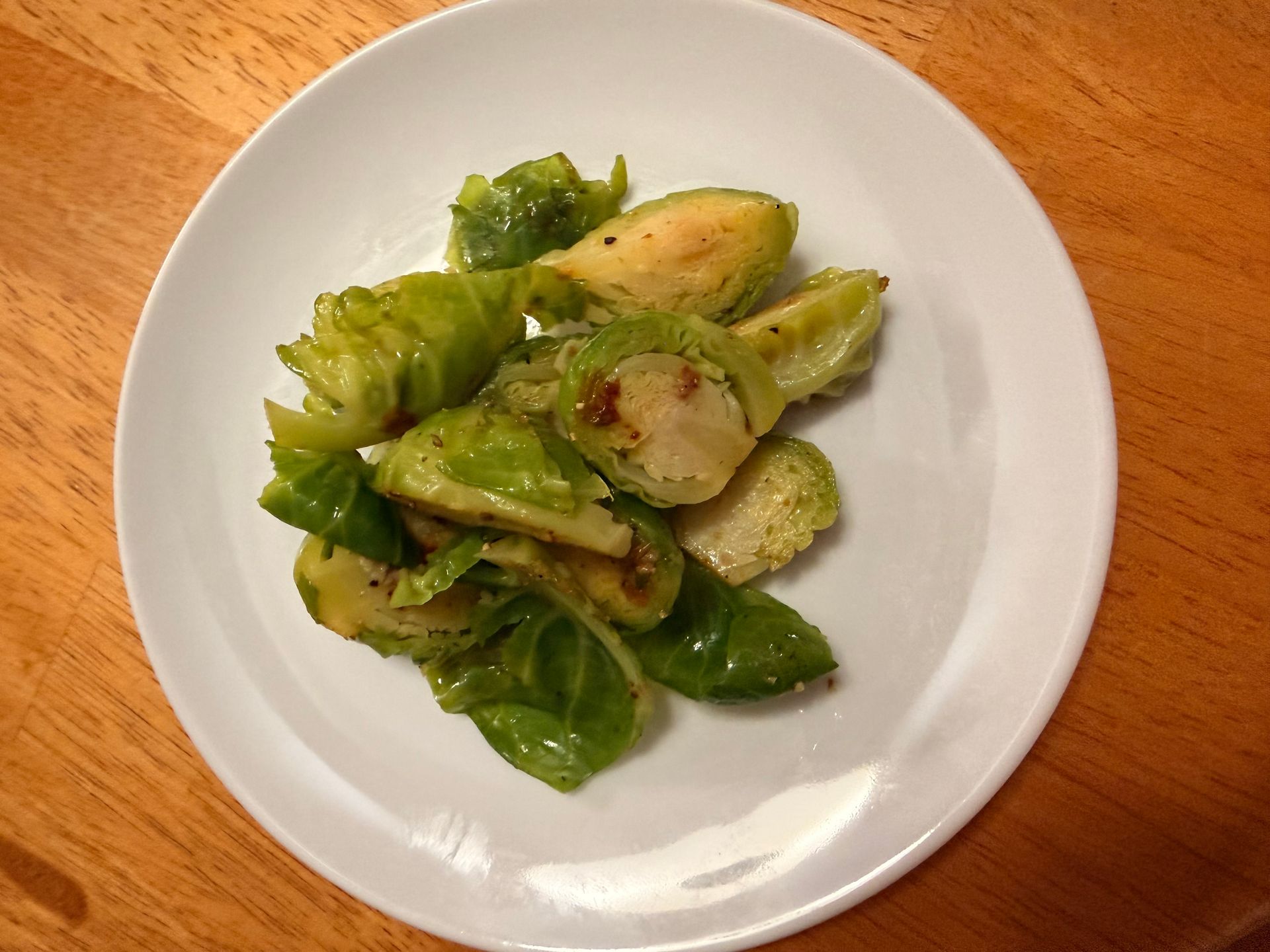
Brussels sprouts are a good example. They need enough cooking to become tender and develop a sweeter flavor, without losing their color or turning mushy. Often times, we simply boiled the green vegetables in salted water and we all felt they were delicious.
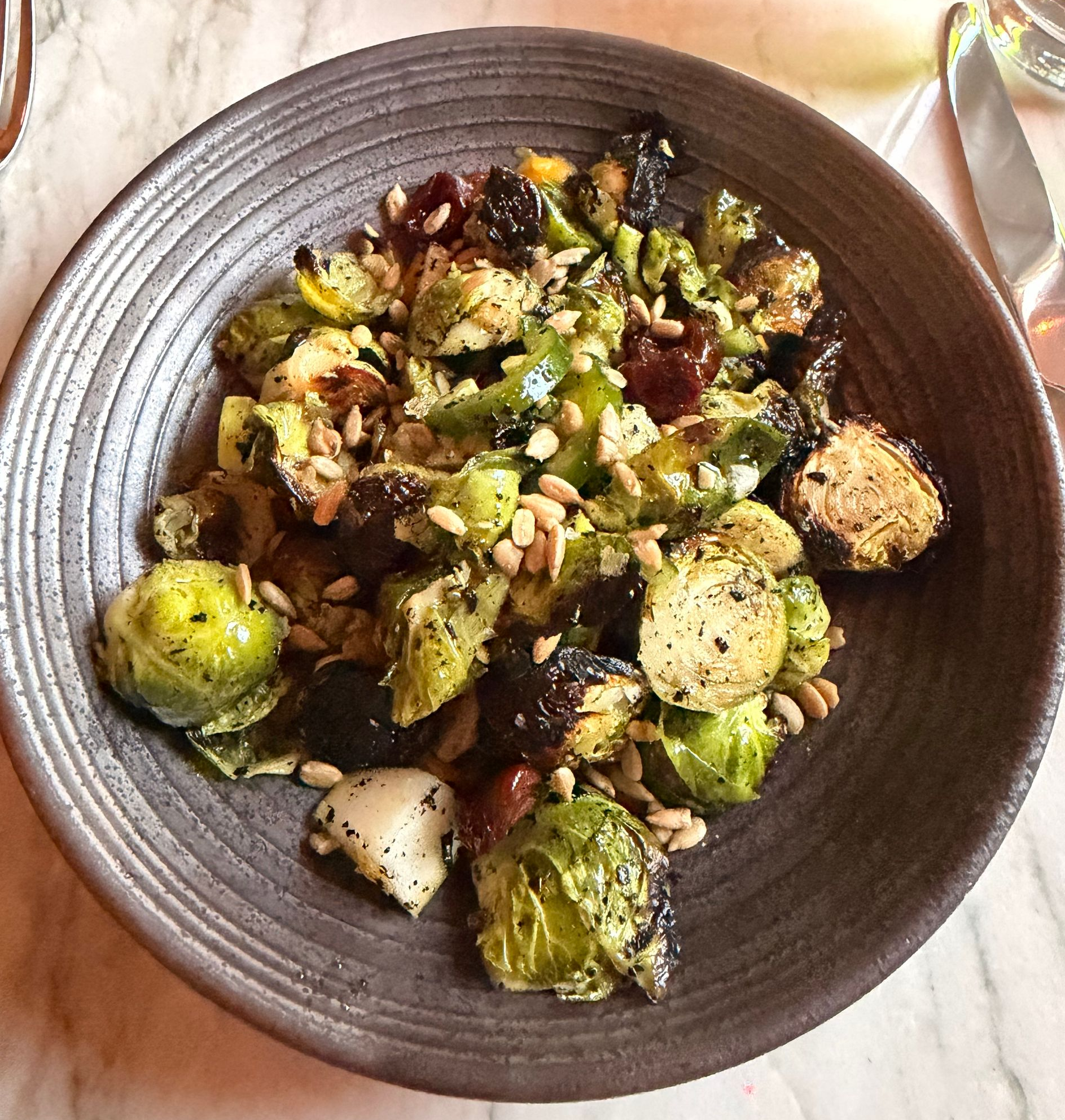
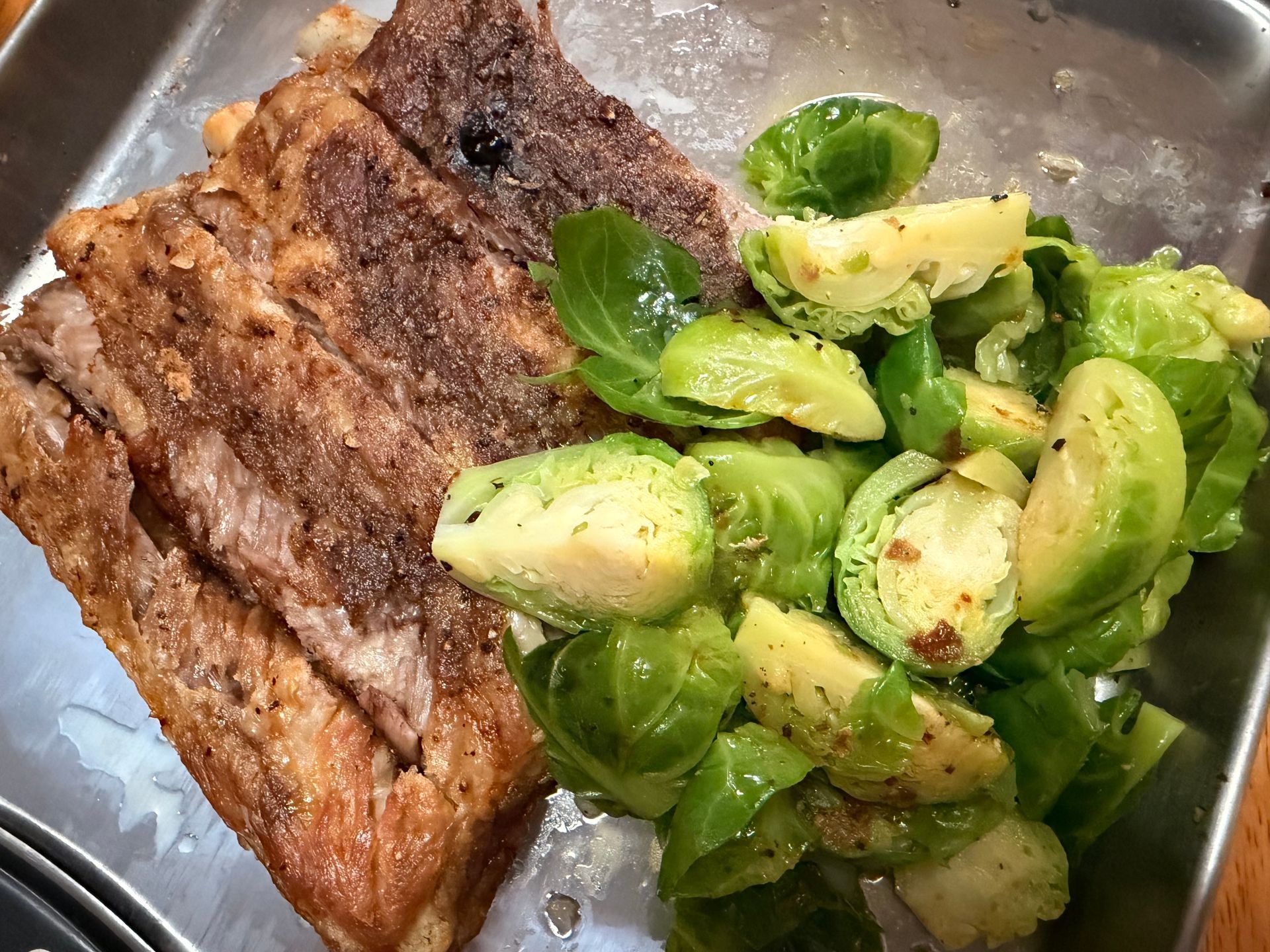
My wife and I recently had dinner at a very busy restaurant near our home. It's an expensive place that markets itself as offering “Philly quality.” Our bill came to almost $400, and that's BYOB! We ordered a delicious rigatoni with Italian sausage and beans, which inspired my Tuesday article, along with charred Brussels sprouts to start.
I suspect the sprouts had been blanched before they were charred, which I consider to be a good technique. The problem was that about a third of each sprout was burned black and tasted like ash. When I mentioned it, the server seemed surprised and to think that's how they were supposed to be served? Photo above left-
I remember when chefs first started caramelizing Brussels sprouts in a red-hot cast-iron pan. The idea was to get a beautiful golden brown color and a sweet, roasted flavor. Chefs were also roasted the Brussel sprouts-both methods were great. I've never grilled Brussel sprouts-I guess that's possible. Somewhere along the way, cooks took that a little too far. Then came the deep-fried, 'shoe-maker' versions, bowls of greasy sprouts and mayonnaise-based sauces. No thanks!
Chef Tom’s Tips for Cooking Green Vegetables
· Start with plenty of boiling, salted water. The water should return to a boil quickly after adding the vegetables. This helps preserve their green color. Some chefs say the water should taste like the sea.
· Don't overcrowd the pot. Cook in batches if necessary, so the water temperature doesn't drop too much.
· Cook until just tender. Taste as you go. Brussels sprouts are dense and take longer than many other green vegetables, but don't cook them until they're dull, soft, and overdone.
· Prepare Brussels sprouts for even cooking. Trim the stem and cut the sprouts in half. For quicker cooking, you can pare off the individual leaves and toss them with butter and fresh herbs.
· If cooking them whole, trim the stem and cut a small X into the base to help them cook more evenly.
· For a nice char, dry them well. Blanch the sprouts until just tender, drain and dry thoroughly, then sear them in a very hot pan with a little oil. Let them brown before turning them. Brown is delicious; black and ashy is not!
· Season and serve promptly. A little butter, salt, pepper is all you need.
Autumn is Brussels sprout season! Whether you serve them simply with butter or give them a good sear in a cast-iron pan, pay attention to the cooking. There's a big difference between caramelized and burned.
"Helping chefs, entrepreneurs, and food companies create exceptional food products."
Let’s learn together-What topic would you like me to cover in a future Cooking Class Minute?