In my opinion, a great broth begins with a properly prepared stock. Homemade stock is one of the fundamentals I encourage every cook to learn. It is quite simple to prepare but takes some time, but much of that time is hands-off, and the results are worth the effort.
I understand that there are plenty of stock 'products' on the market-bases, bouillon cubes, shelf stable boxes etc... these are simply not good.
My approach is straightforward: start with good ingredients and give them the time they need.
Fish stock requires only about 30–40 minutes, while chicken stock generally takes three to four hours. Beef stocks can take considerably longer, depending on the bones and the result you want.
I prefer a gentle simmer rather than a rolling boil. It helps keep the stock clear, and careful skimming and proper straining make a difference in the finished product.
There is plenty of room to experiment, too. Mushrooms, ginger, lemongrass, herbs, spices and Parmesan rinds can add their own character to a broth.
Stocks, Broths & Bone Broth
The Foundation of Good Soup
After years of cooking, teaching at the Culinary Institute of America, and developing soups at Campbell’s and Freshly, I believe that a good stock is one of the most important tools in the kitchen.
Stock is the foundation for many of the soups I prepare. It adds depth, body and flavor that water alone usually cannot provide. A simple chicken noodle soup, a French onion soup, or a rich mushroom soup can only be as good as the ingredients and the technique behind it.
So, what’s the difference between stock, broth and the bone broth we hear so much about today?
Traditionally, stock is prepared by gently simmering bones with aromatics, seasonings and water.
Broth generally includes meat or meaty bones and is often ready to enjoy on its own. You can make a broth with meaty bones, aromatics and water or use stock for a much more fortified and delicious final soup.
Bone broth is a term commonly used for a broth made by simmering bones for an extended period to extract flavor, gelatin and other components. The terms overlap, and there is no single definition used by every chef or producer.
I also believe stocks should be treated as recipes, not guesswork. Consistent measurements and techniques give you consistent results.
Chicken Broth
Prep Time: 30 min
Cooking Time: 3 hours
Yield: 2 qts
Ingredients
4 Qts Chicken Stock
2.5 lbs. Fowl (old chicken) or drumsticks (bone in and skin on)
1 Cup Carrots, peeled and med dice
1 Cup Celery, peeled and med dice
1 Cup Leek whites, sliced in 1 inch pieces
1 Cup Onion, peeled and med dice
3 cloves Garlic, peeled
1 Cup Plum Tomatoes, small diced
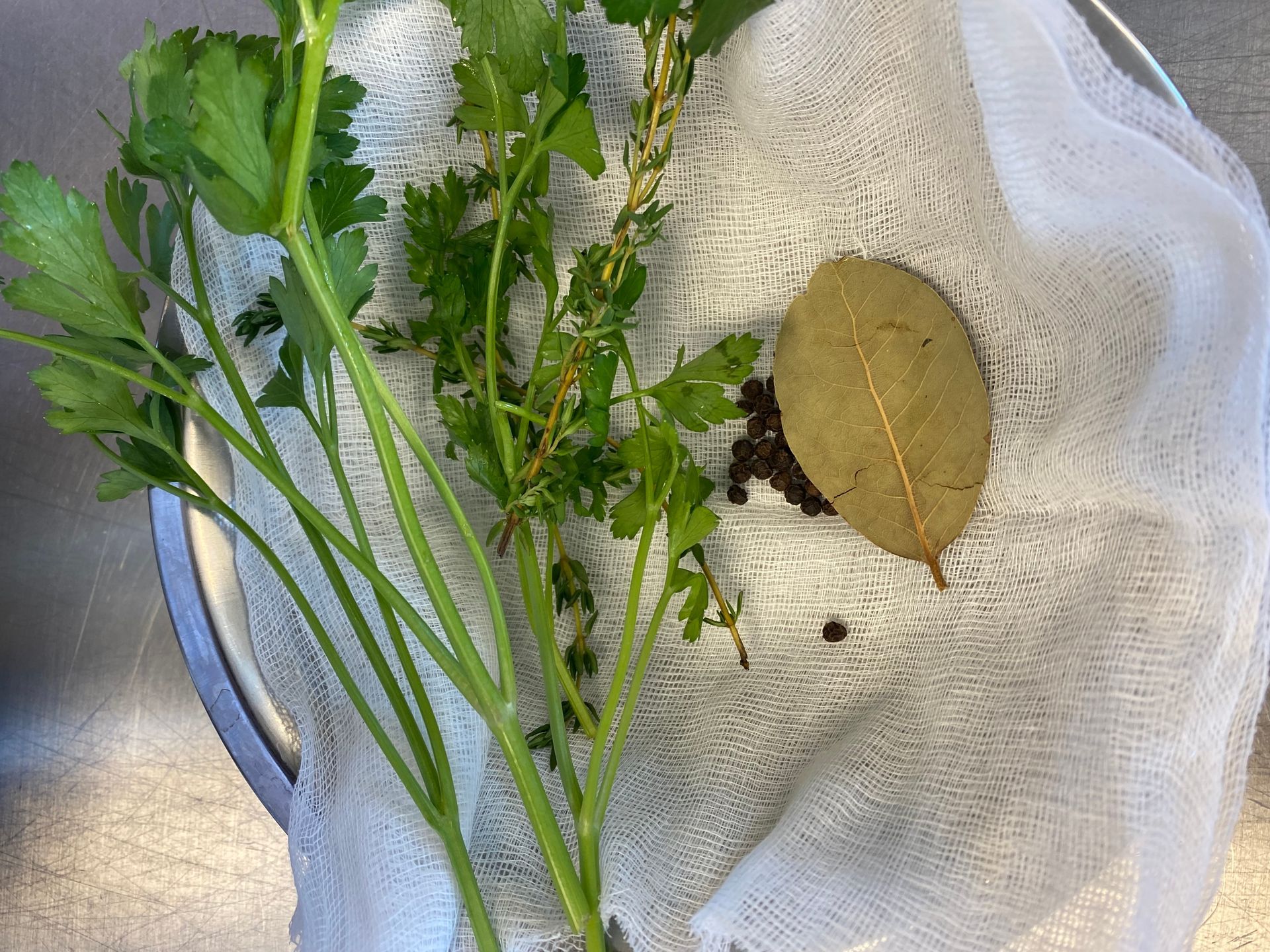
1 ea. Sachet d' epices (1 bay leaf, 6 peppercorns, 1 sprig fresh thyme in cheesecloth
t.t. Kosher Salt
How to prepare Chicken Broth/Bone Broth
note-to prepare Chicken Stock, simply use water in place of the chicken stock and chicken bones in place of the fowl or drumsticks
Step 1
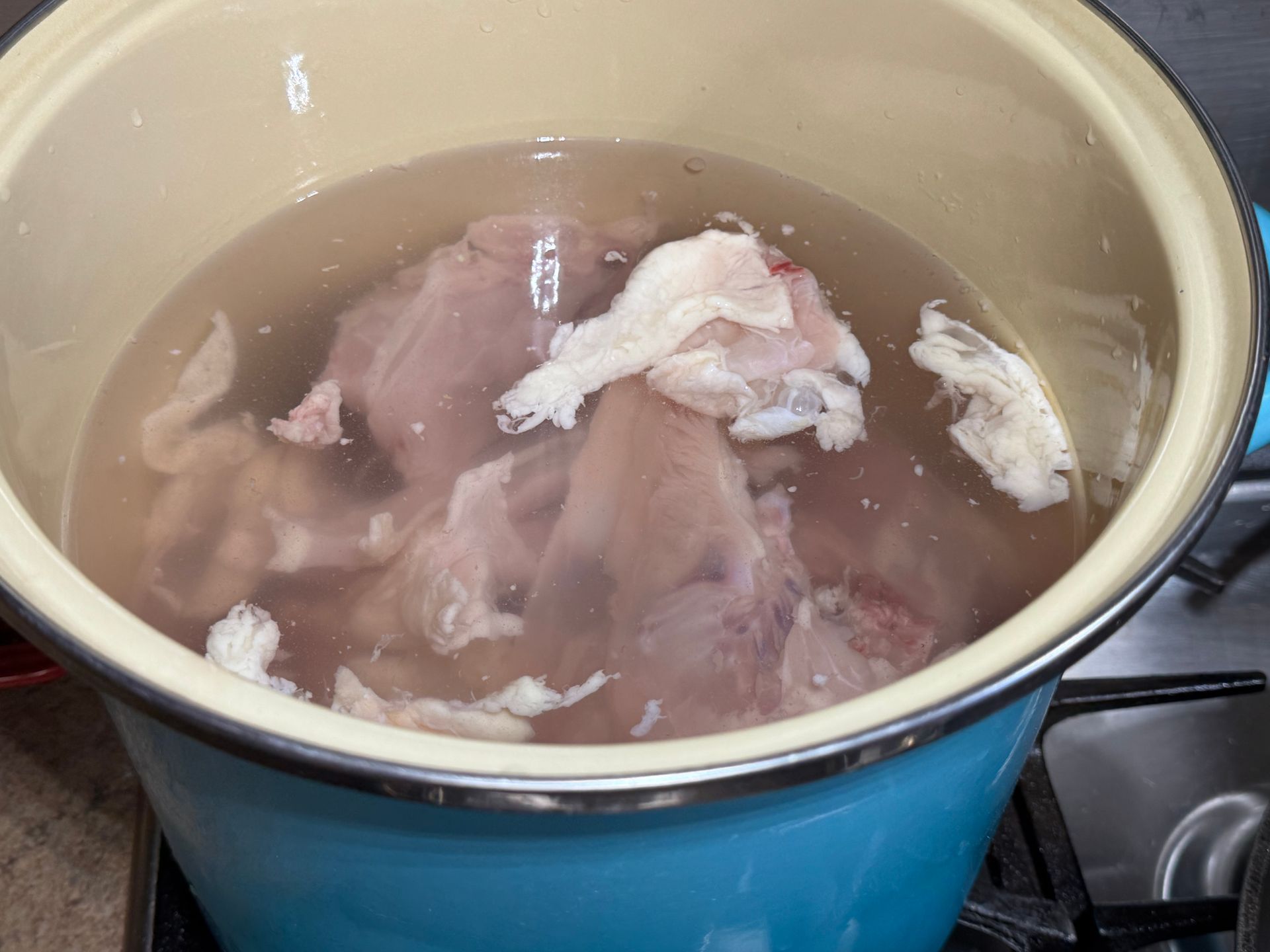
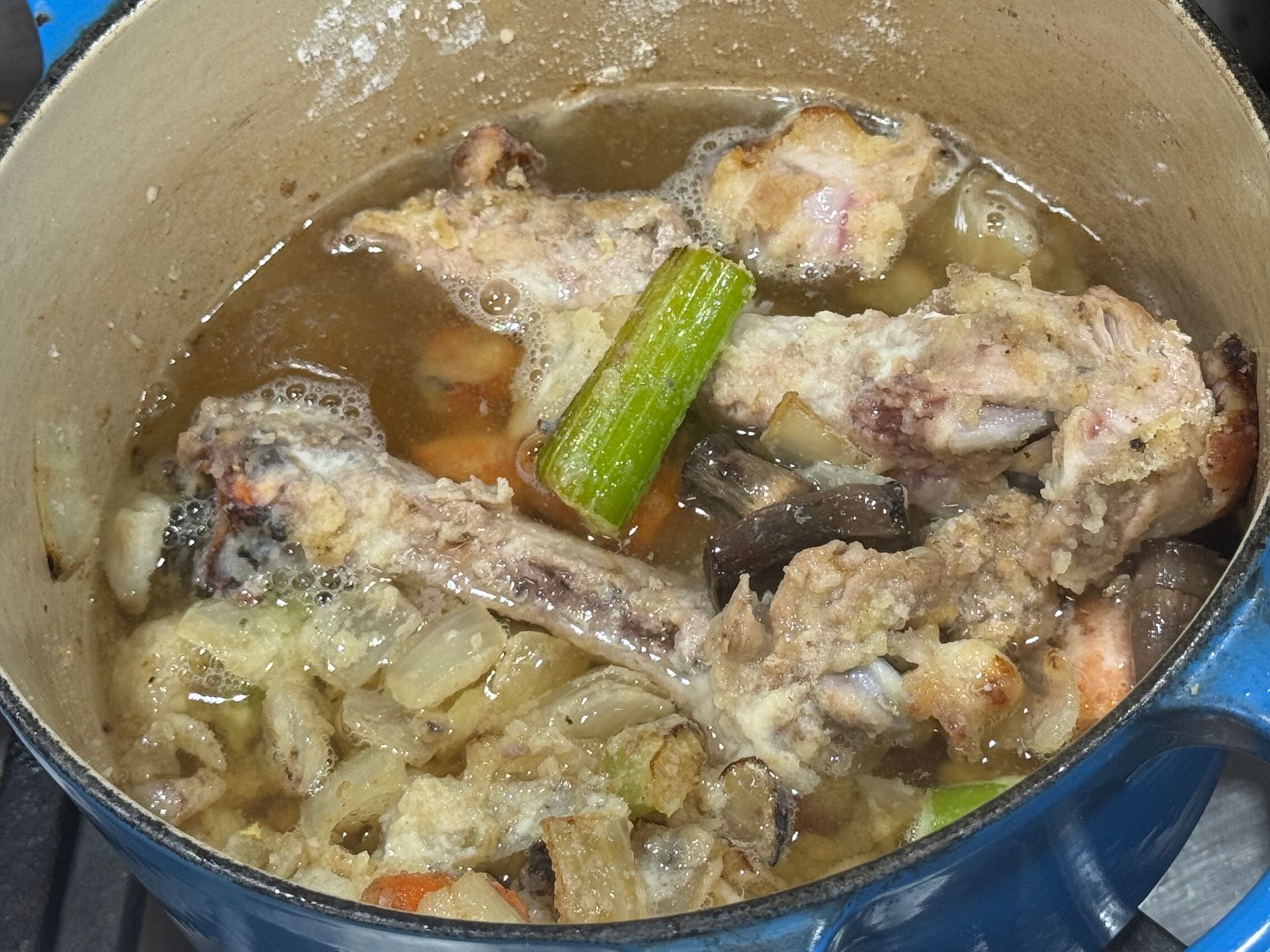
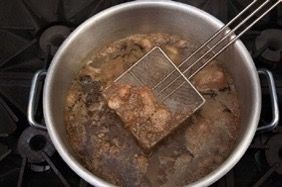
Assemble the ingredients; place the chicken stock and chicken into a tall, stock pot. Bring to a boil, lower the heat to a simmer and simmer for 2 hours, carefully removing the chicken fat and scum.
Note-if you plan to reserve the chicken fat for cooking, separate the fat and the scum separately.
Step 2
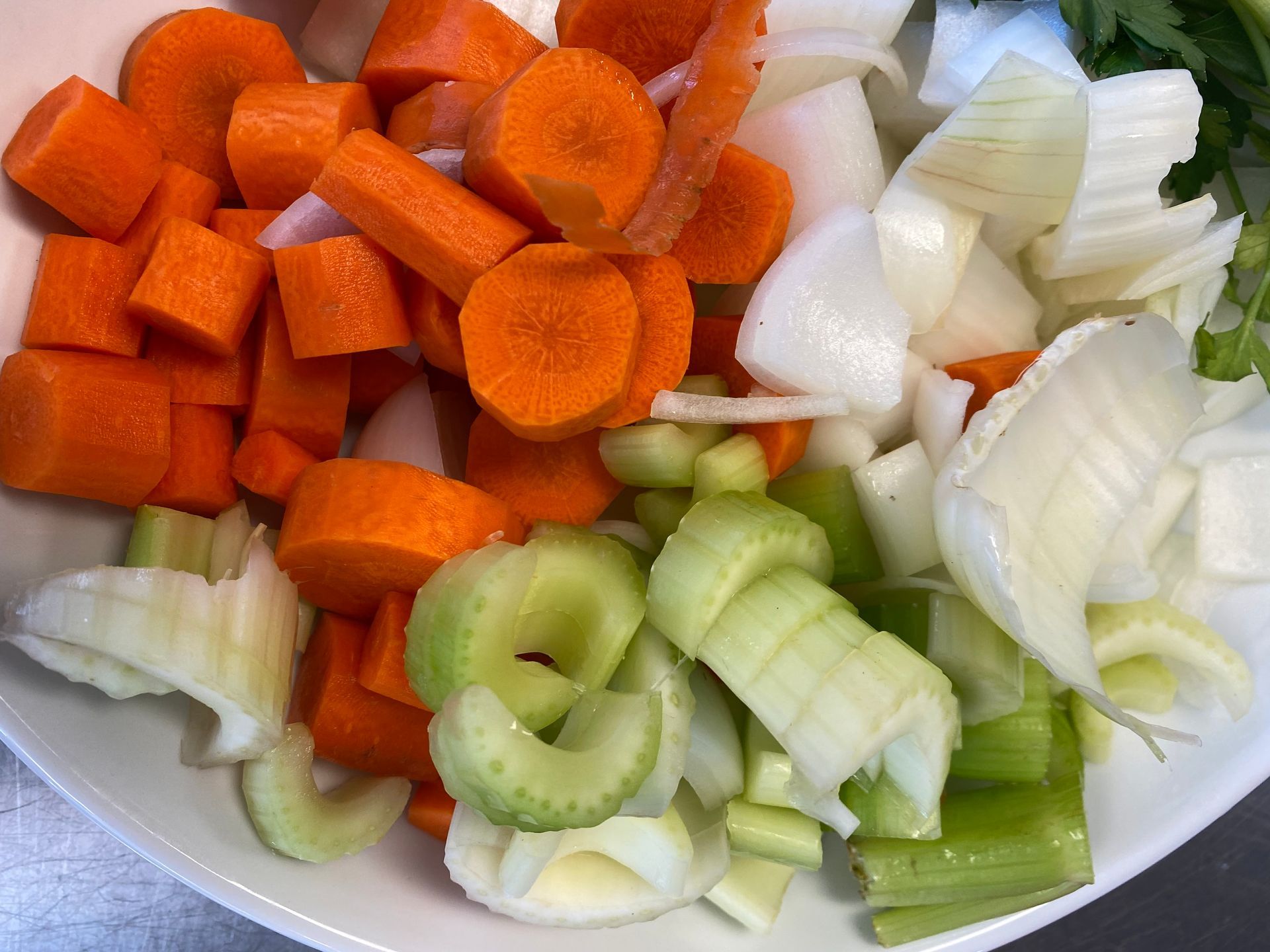
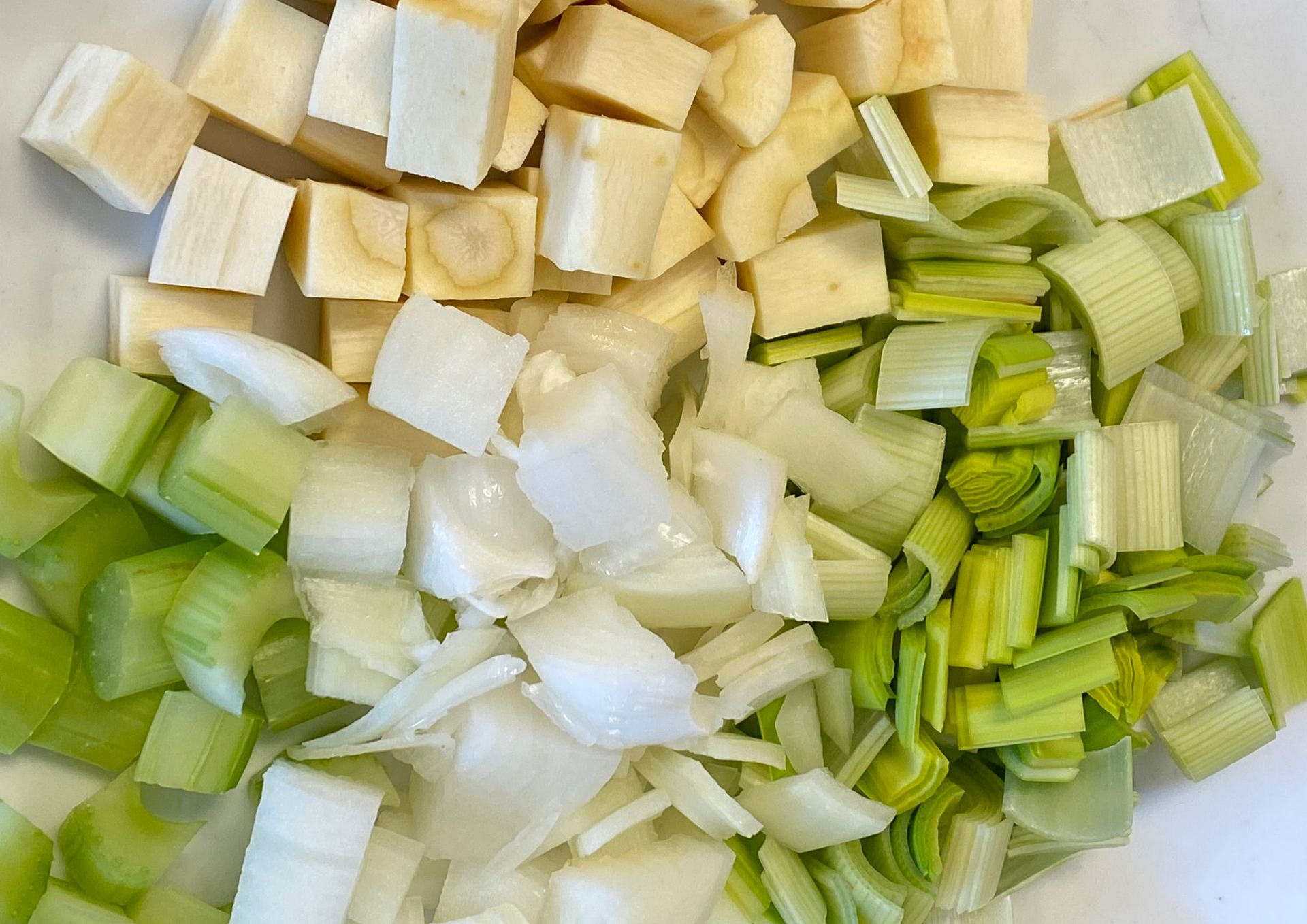
Add the mirepoix; carrots, celery, leek whites, onions, garlic and tomatoes. Add the sachet d' epices and 1 tbsp salt. Continue to simmer for one hour-taste.
Note: a white mirepoix uses parsnips in place of carrots as shown in the picture to the left.
The sachet d' epices before being tied. Simply fold the cheesecloth around the ingredients, tie at the top; drop into the stock or broth and tie to the handle. If you notice the stock or broth is getting too strong of an herb flavor, simply pull out the sachet and discard.
Step 3
If the broth is delicious and leaves a sticky, gelatinous feel to your lips, adjust seasoning and strain.
Note-the vegetables will sink to the bottom when they are cooked-if the vegetables are still floating-they are not cooked yet.
Skimming the scum from the top of the simmering stock or broth.
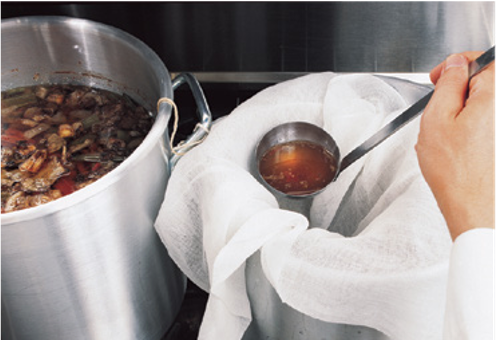
Straining the stock or broth through cheese cloth and a conical sieve.
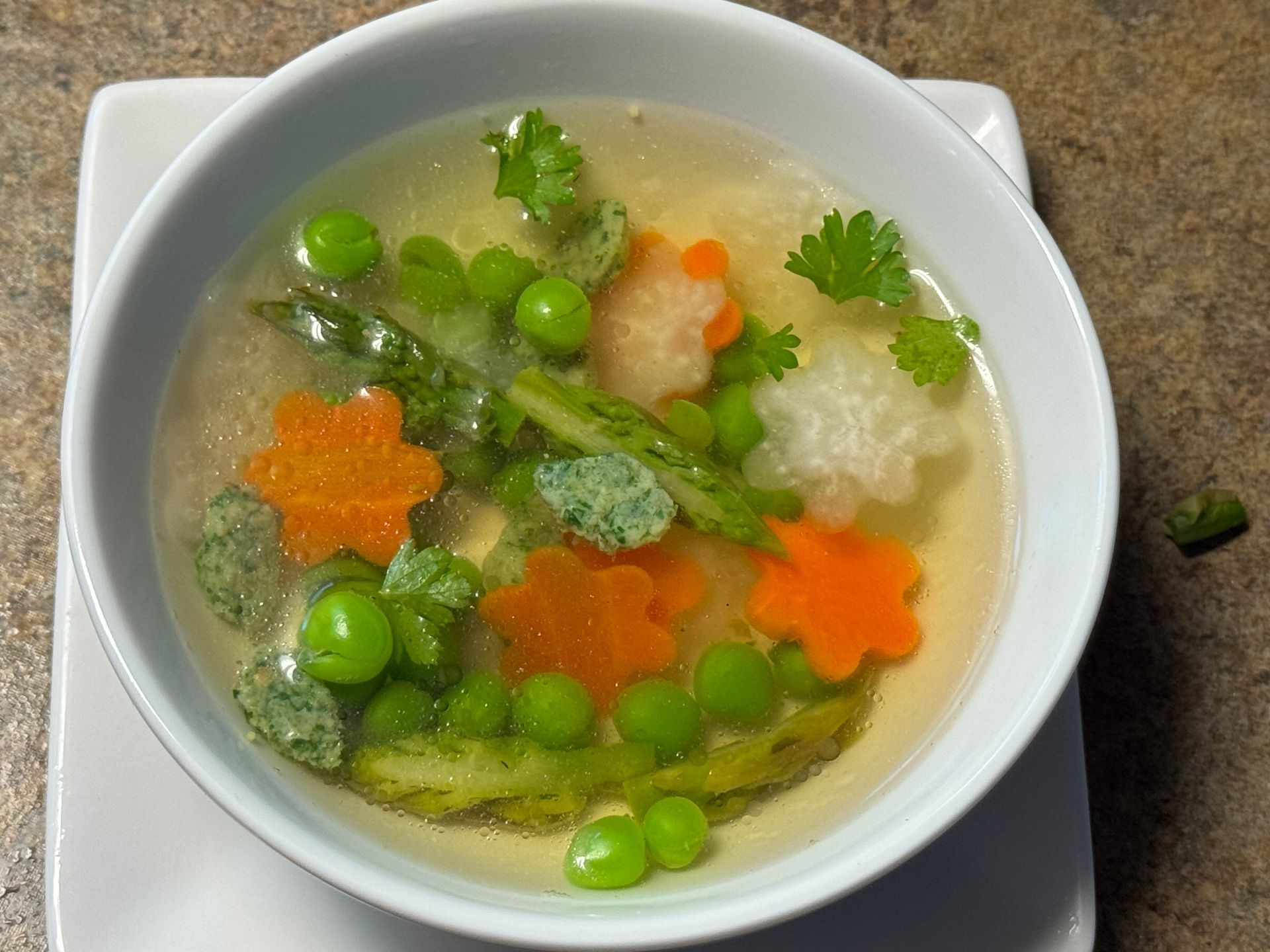
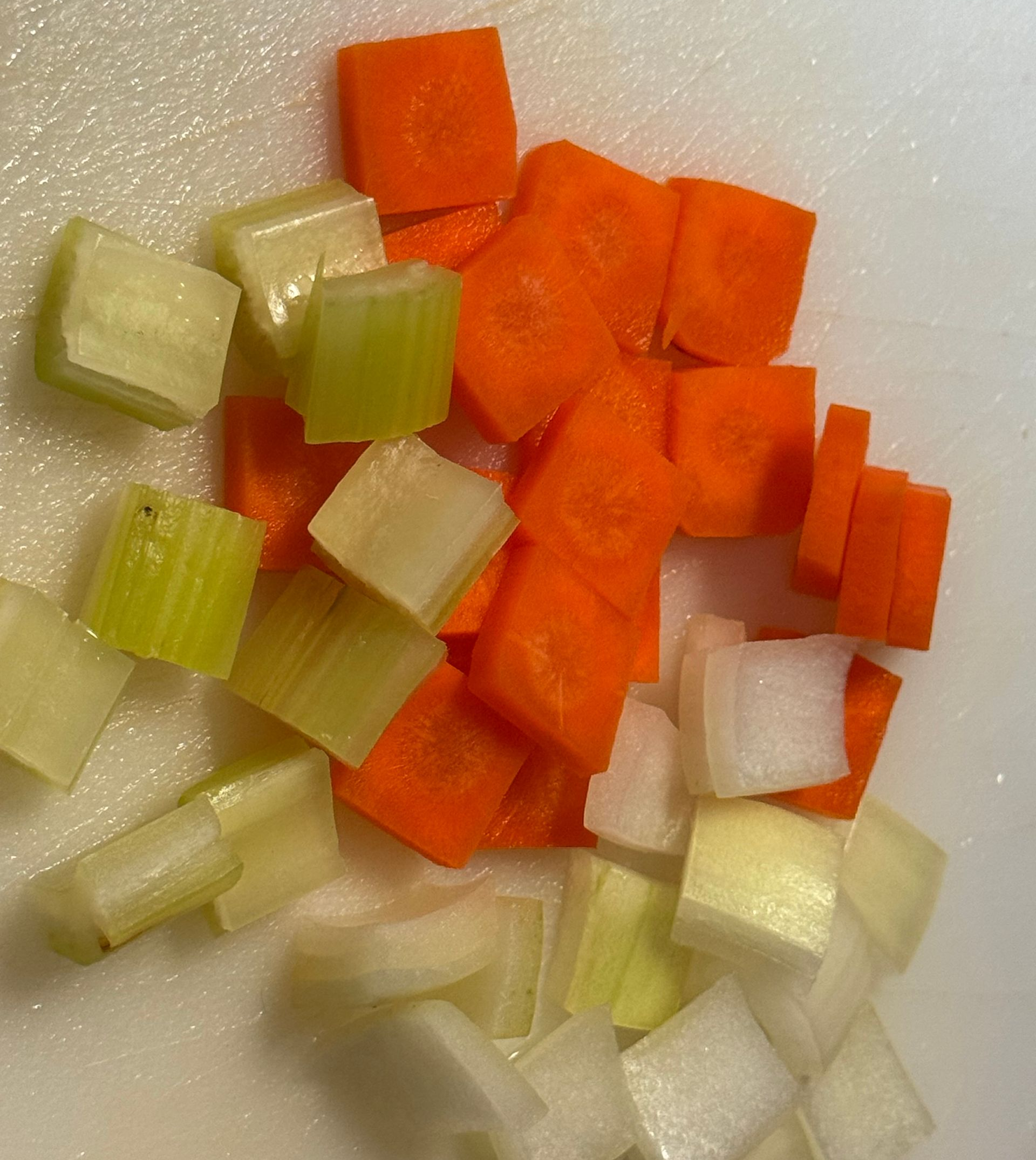
Paysanne knife cuts to be used to garnish a broth.