Chef Tom’s Cooking Class Minute — Week 11
The Garden Is Telling Me It’s Fall

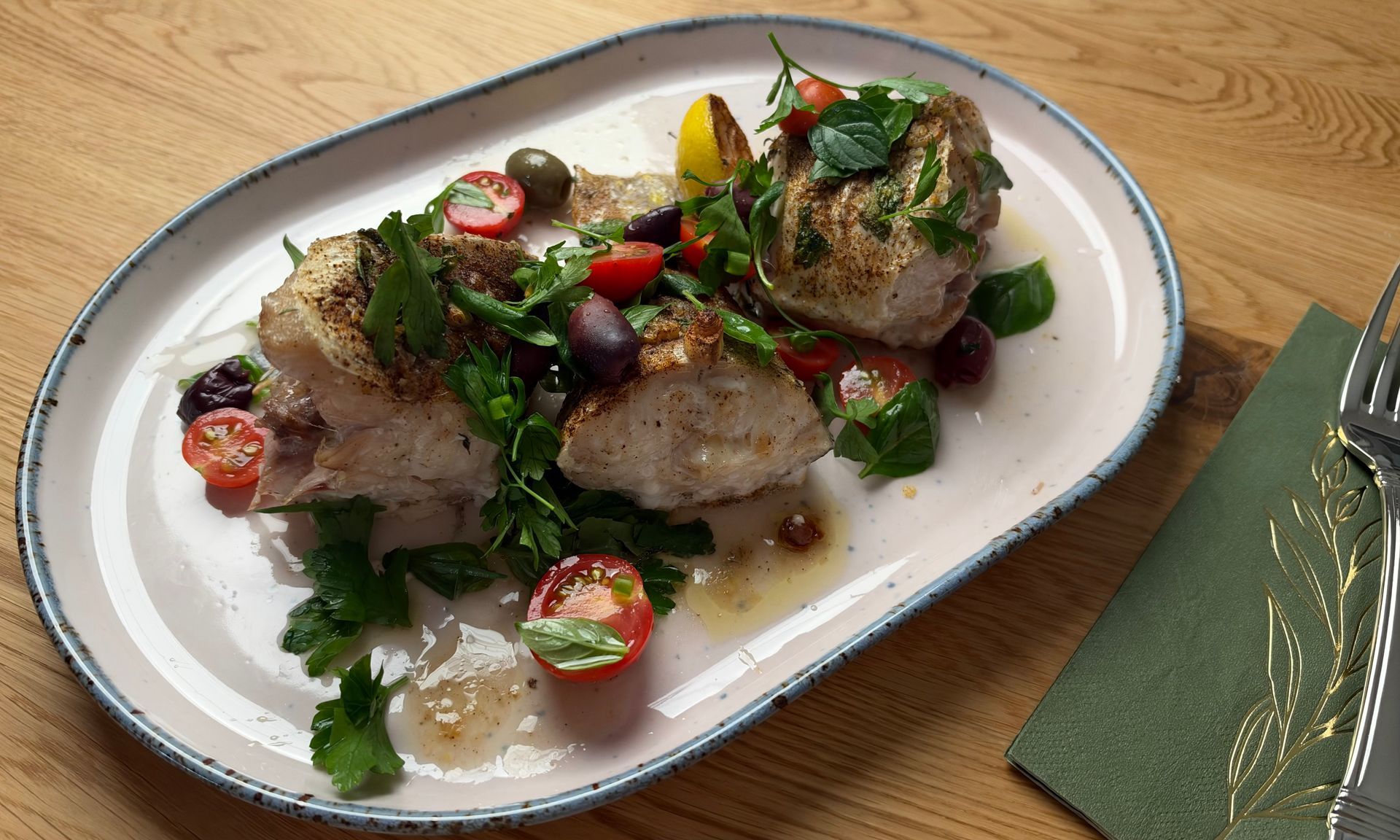
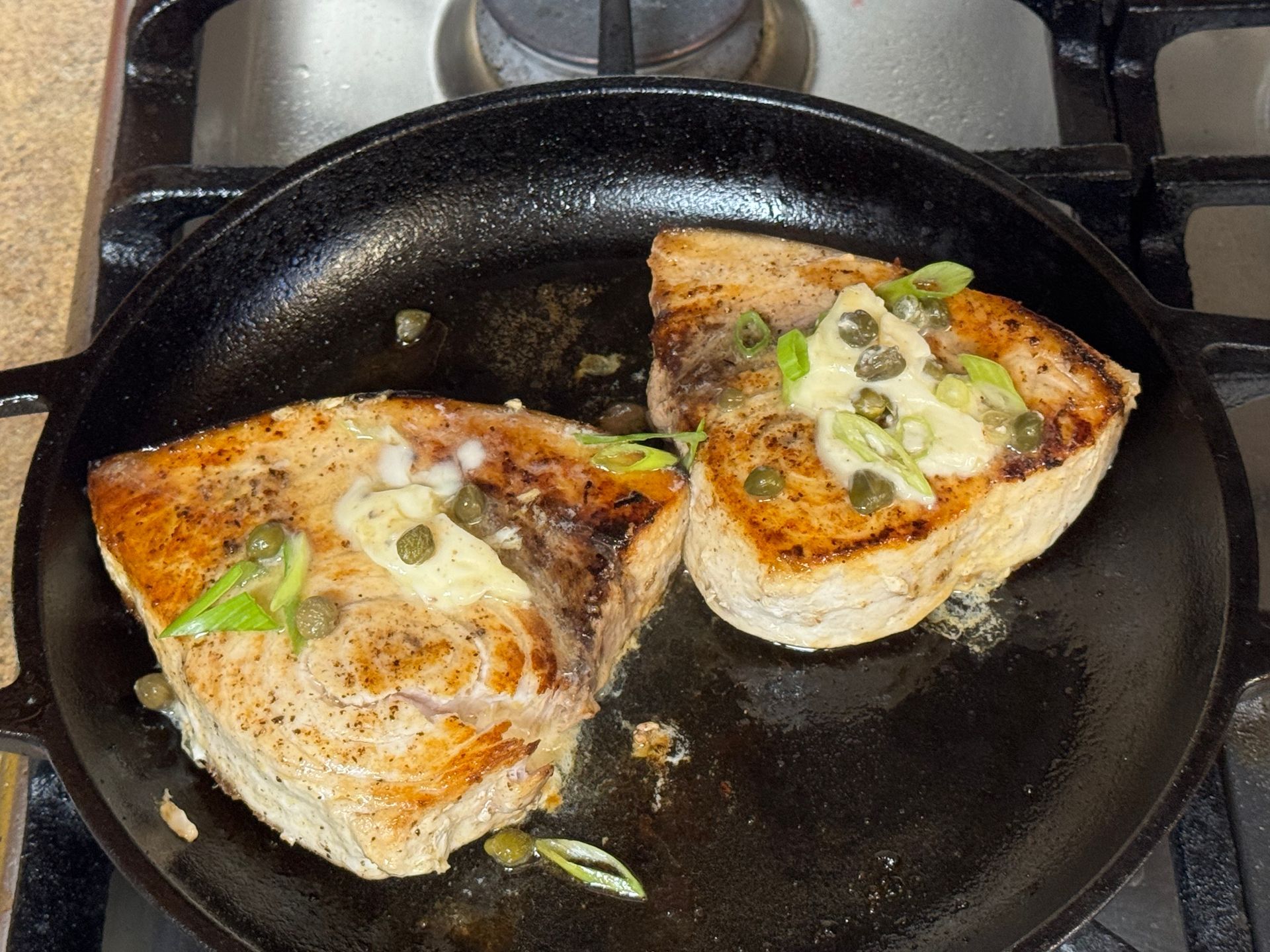
I'm continually inspired by author & seafood expert Barton Seaver. I like his philosophy of treating seafood with respect and allowing the true flavor of the fish to come through. I found a beautiful tilefish at the market. Instead of sautéing it or putting it on the grill, I decided to cut it in to thick steaks (darnes) and roast it.
I wanted to taste the fish, with just enough seasoning and herbs to complement it. I marinated the tilefish with kosher salt, garlic, olive oil, fresh herbs, black pepper and a little ginger powder. Then I roasted it to 140°F and let it rest before serving. The recipe itself was inspired by one of my favorite ways to prepare chicken—sauteed with fines herbes. I love the combination of fresh parsley, chervil, tarragon and chives with chicken, so I used that idea with the tilefish.
I enjoy researching food history, especially the food that would have been prepared in biblical times. There are many references to fish being cooked over a fire during the time of Jesus and his apostles. It makes me wonder what those meals actually tasted like. Local fish, cooked over a fire and finished with whatever was available—fresh herbs, tomatoes, garlic, onions and olive oil—would have been a simple and delicious meal. It isn't difficult to imagine a preparation very similar to what I made with this tilefish.
My appreciation for fish steaks, or darnes, goes back to practicing for the CMC exam. One of the preparations I had to work on was poached darnes of salmon with Sauce Hollandaise. Learning to properly cut the darnes, truss and then poach them without breaking was challenging. Cleaning and plating the hot salmon darnes while making Sauce Hollandaise, poaching tourneed potatoes and cooking spinach at the same time was another matter altogether! That experience gave me a much better understanding of how different cuts of fish respond to different cooking methods.
A Few Seafood Tips:
• Bring seafood to room temperature before baking, roasting or grilling. It will cook more evenly
• Don't be afraid to use a simple marinade. Kosher salt, garlic, olive oil, herbs & pepper can add plenty of flavor without covering up the fish
• Consider a compound butter. A little herb butter added after cooking adds moisture & flavor
• Cook fish to an internal temperature of 145°F and let it rest for a few minutes before serving
#Seafood #CookingTips #SeafoodLovers #Fish #ProfessionalChef #CulinaryInstituteofAmerica #Proud2bCIA #acfchefs #corbyhallchina
Everything looks delicious on Corby Hall China
Let's Keep Learning Together
What topic would you like me to cover in a future Cooking Class Minute? I'm always looking for ideas from fellow cooks, chefs, and food enthusiasts.
If you'd like to learn more techniques-check out my Seafood e-Cookbook, designed to help home cooks prepare 12 delicious seafood recipes with confidence.
Click here to purchase
https://bit.ly/4e8fY7n
Chef Tom Griffiths, Certified Master Chef
Former CIA Instructor • R&D Chef • Hospitality Advisory Consultant
"Helping chefs, entrepreneurs, and food companies create exceptional food products."