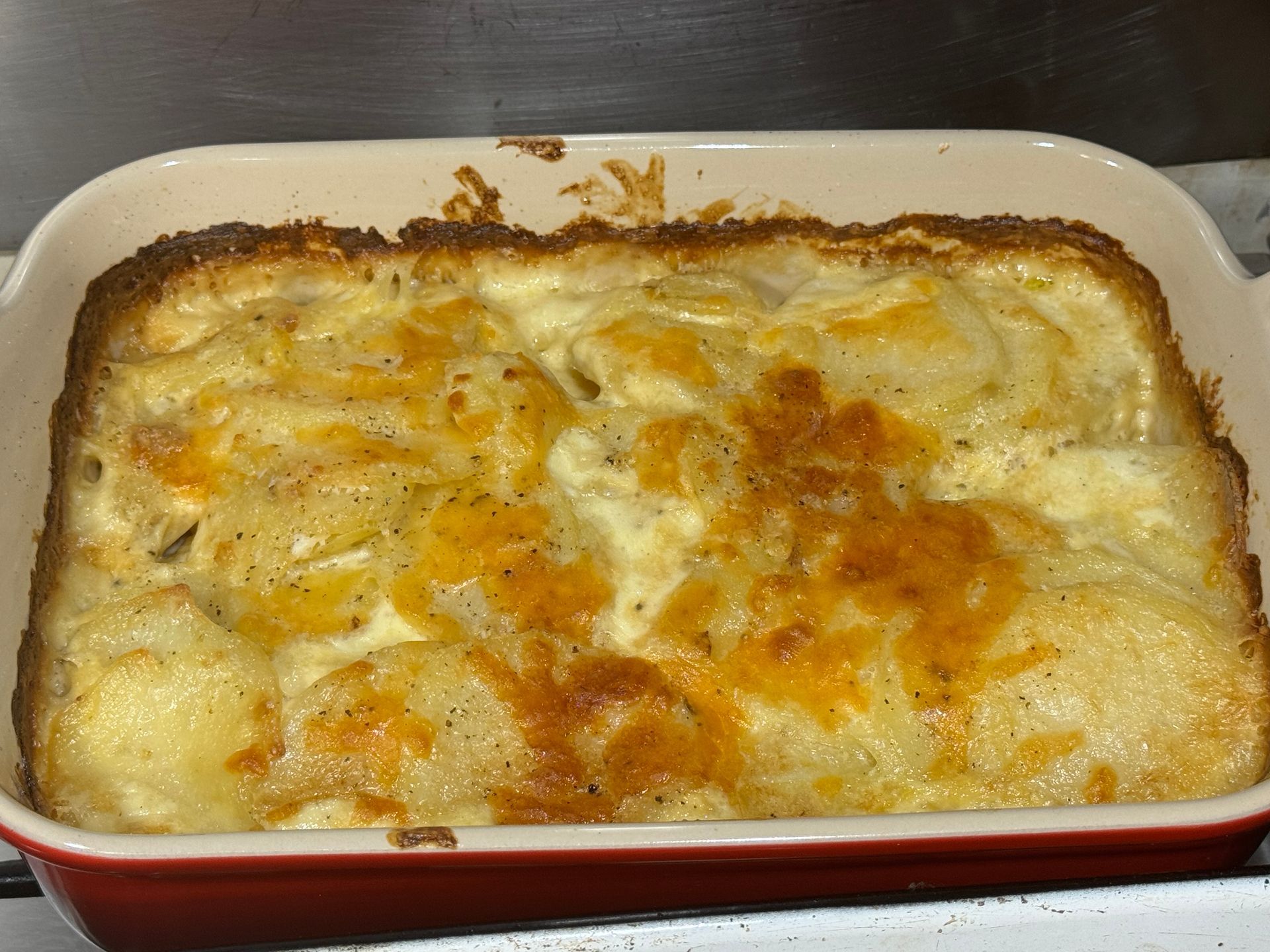
There are countless versions of Potatoes au gratin, many of them heavy with cheese. I prefer a more restrained approach—using little or no cheese—so the flavor of the potatoes remains the focus rather than being masked.
Milk produces a lighter, more delicate gratin, while light or heavy cream creates a richer, more structured dish. Both are valid—it simply depends on the desired outcome. One constant, however, is nutmeg. Used sparingly, it acts as a quiet “secret weapon,” adding depth without calling attention to itself.
This recipe is inspired by Xavier LeRoux, one of the finest chefs I’ve had the privilege to work with. His method includes an extra step—gently simmering the potatoes in cream before baking—which yields a noticeably superior result. The potatoes begin to release their starch into the cream early, ensuring a more uniform texture and a fully integrated dish from the first bite to the last.
Au Gratin Potatoes
Potatoes Dauphinoise and au gratin are both creamy, baked potato dishes, but Dauphinoise (from the French region of Dauphiné) relies strictly on cream, garlic, and sliced raw potatoes for a rich, silky texture. Conversely, au gratin is a broader term for any dish with a browned crust, usually achieved by adding grated cheese and/or breadcrumbs between layers and on top.
In professional kitchens, gratin preparations are often adapted for scale. Large pans may be baked, then pressed and chilled to set the structure before being portioned into clean shapes for banquets or plated service. This approach allows for consistency, efficiency, and refined presentation under volume.
I sometimes like developing thoughtful variations by incorporating thin slices of parsnips, eggplant, or other vegetables to add depth of flavor and contrast in texture.
This remains one of my go-to preparations—simple, indulgent, and based on technique. I favor high-starch potatoes such as russet or Yukon Gold, which help the layers bind naturally, creating that signature cohesive texture without unnecessary additions.
Prep Time: 30 min
Cooking Time: 60 min
6 portions
Ingredients
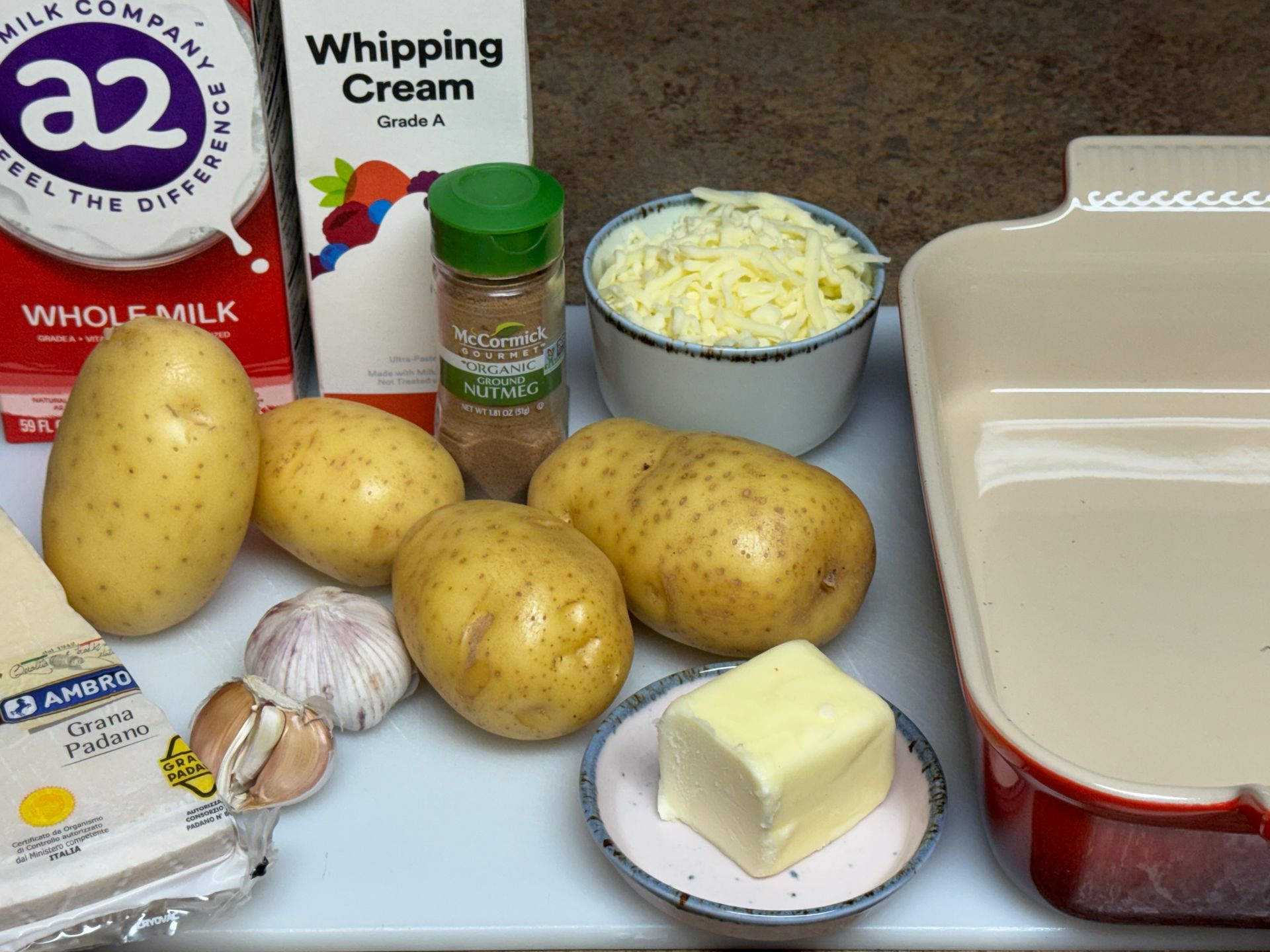
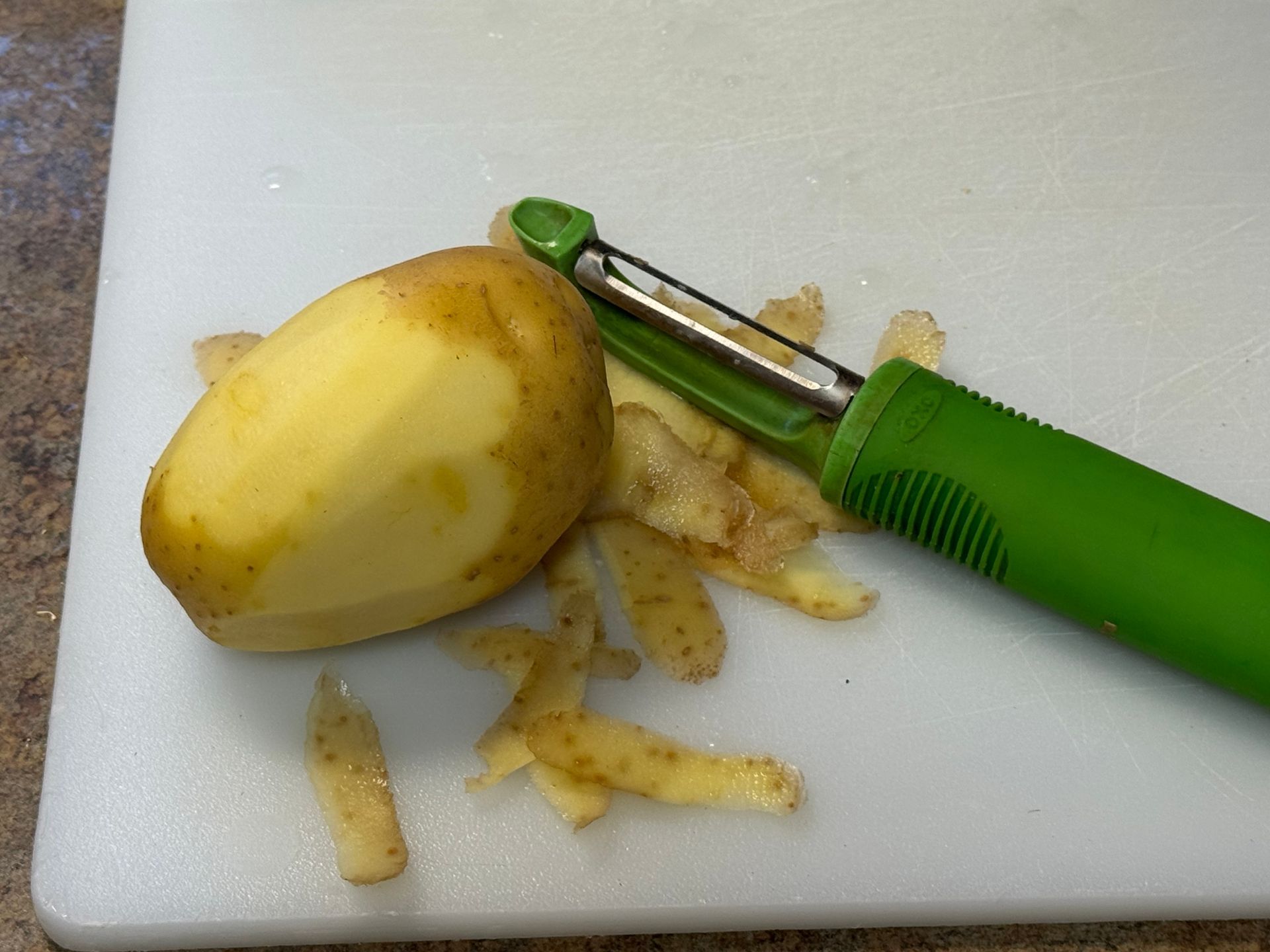
2 bs Russet or Yukon Gold potatoes, peeled (it has to be a high starch potato)
2 C Heavy cream
1 C Light cream/half and half
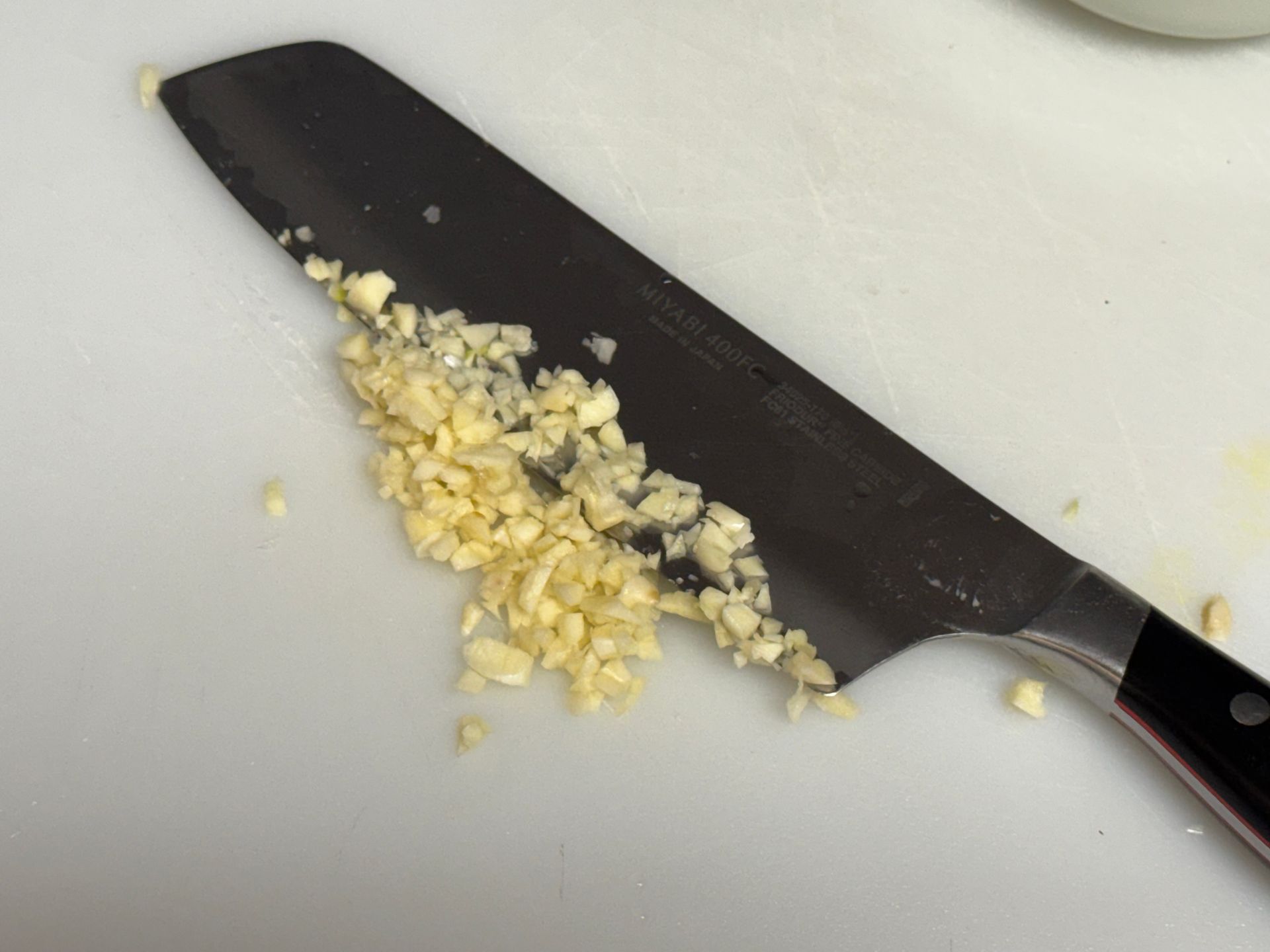
2 cloves Garlic, peeled, smashed & minced (not the pre sliced garlic-yuk)
1 tsp Kosher Salt (the cheese is salty so you don’t need much salt)
½ tsp Crushed Black Pepper
¼ tsp Nutmeg
1½ C Gruyère cheese, (optional) shredded (you could use cheddar/ Monterey Jack)
2 Tbsp Parmesan cheese, (optional) (this gives umami and salt flavor)
Topping (optional)
½ C Gruyère cheese, shredded
1 Tbsp Parmesan cheese, grated
2 Tbsp Butter, room temperature for the casserole
How to prepare Au Gratin Potatoes
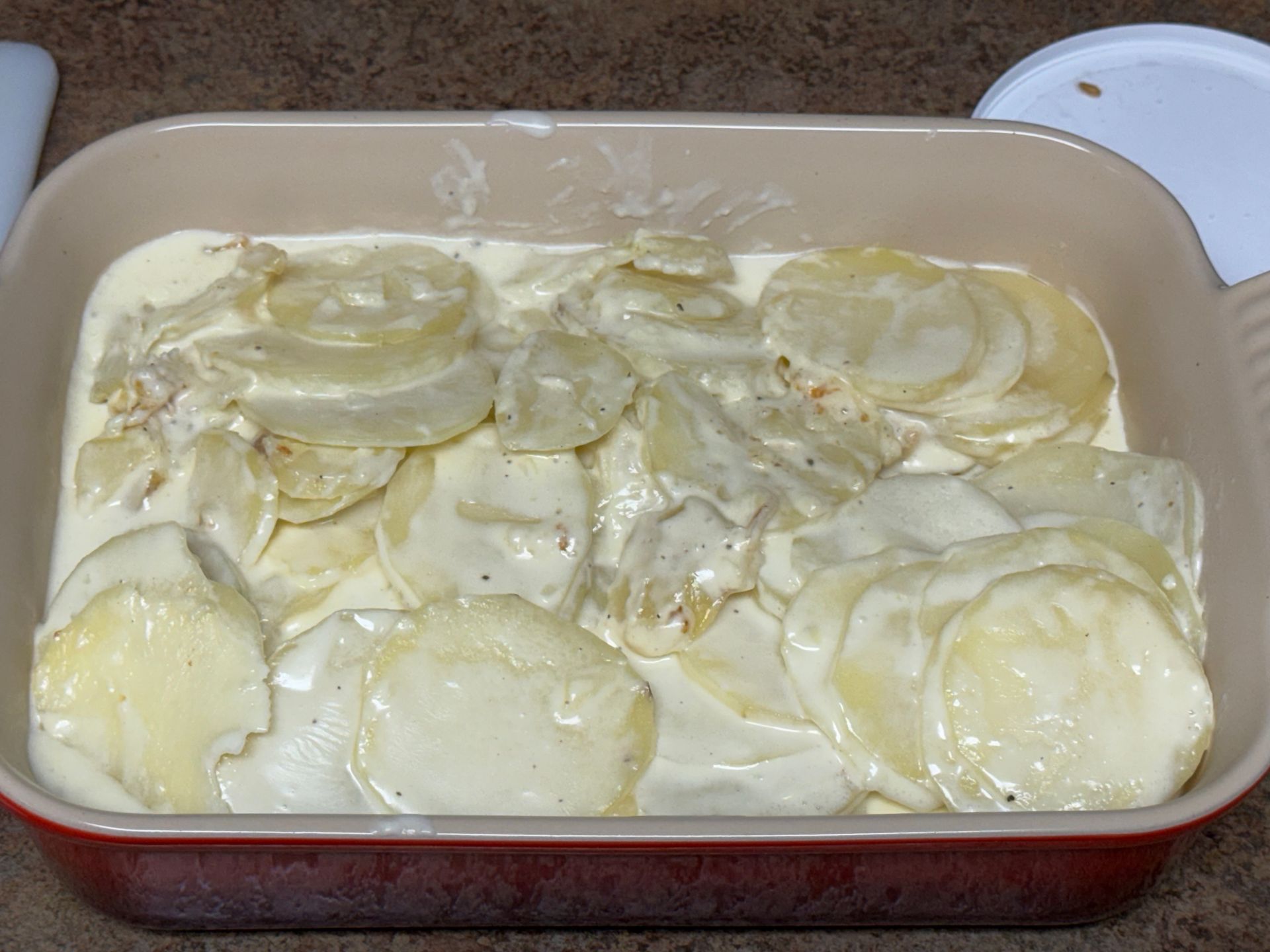
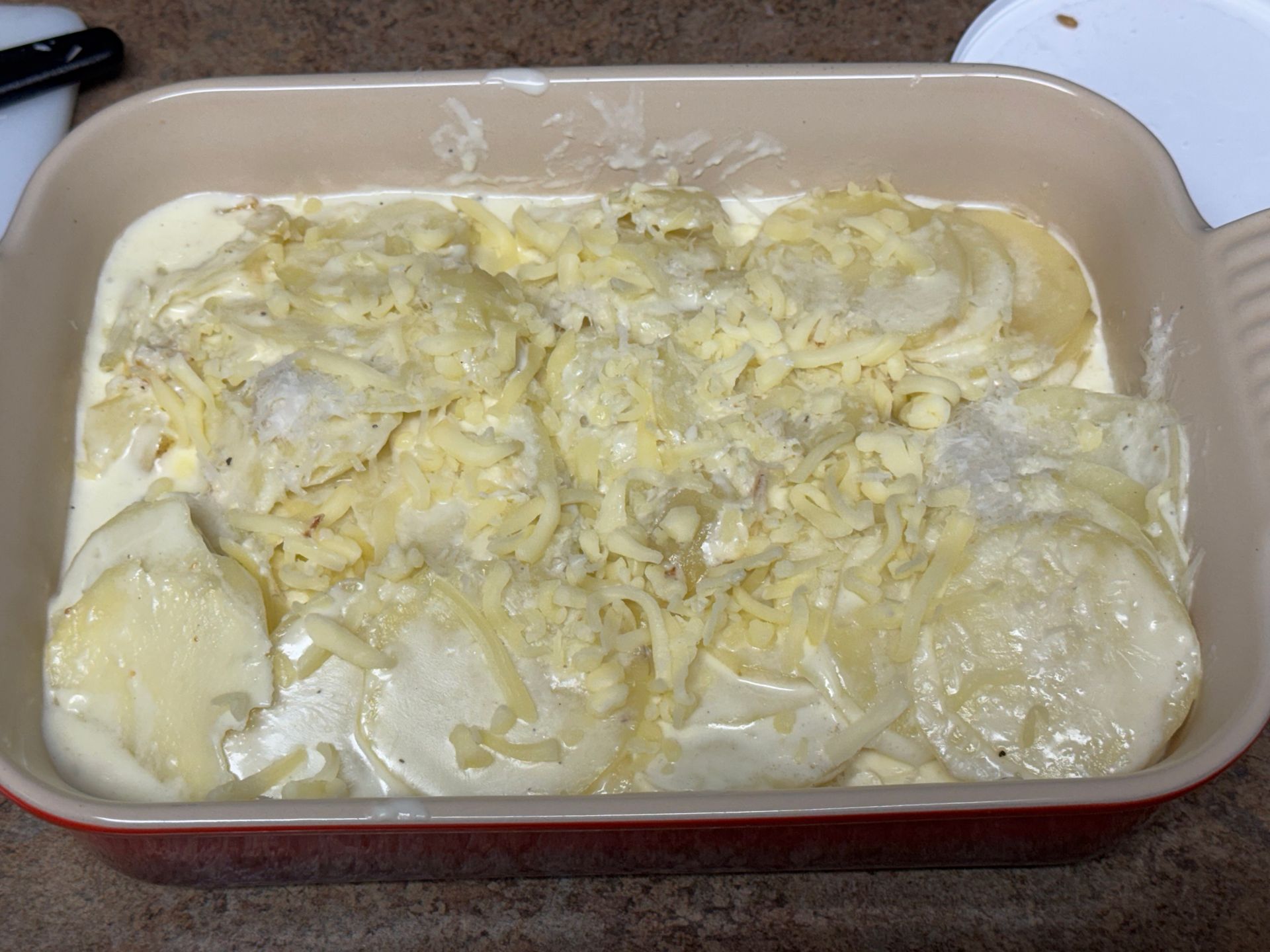
Step 1
1. Preheat the oven to 350°F. Place a rack in the center of the oven. Butter a shallow casserole dish to avoid the potatoes sticking after baking.
2. Peel and chop fresh garlic.
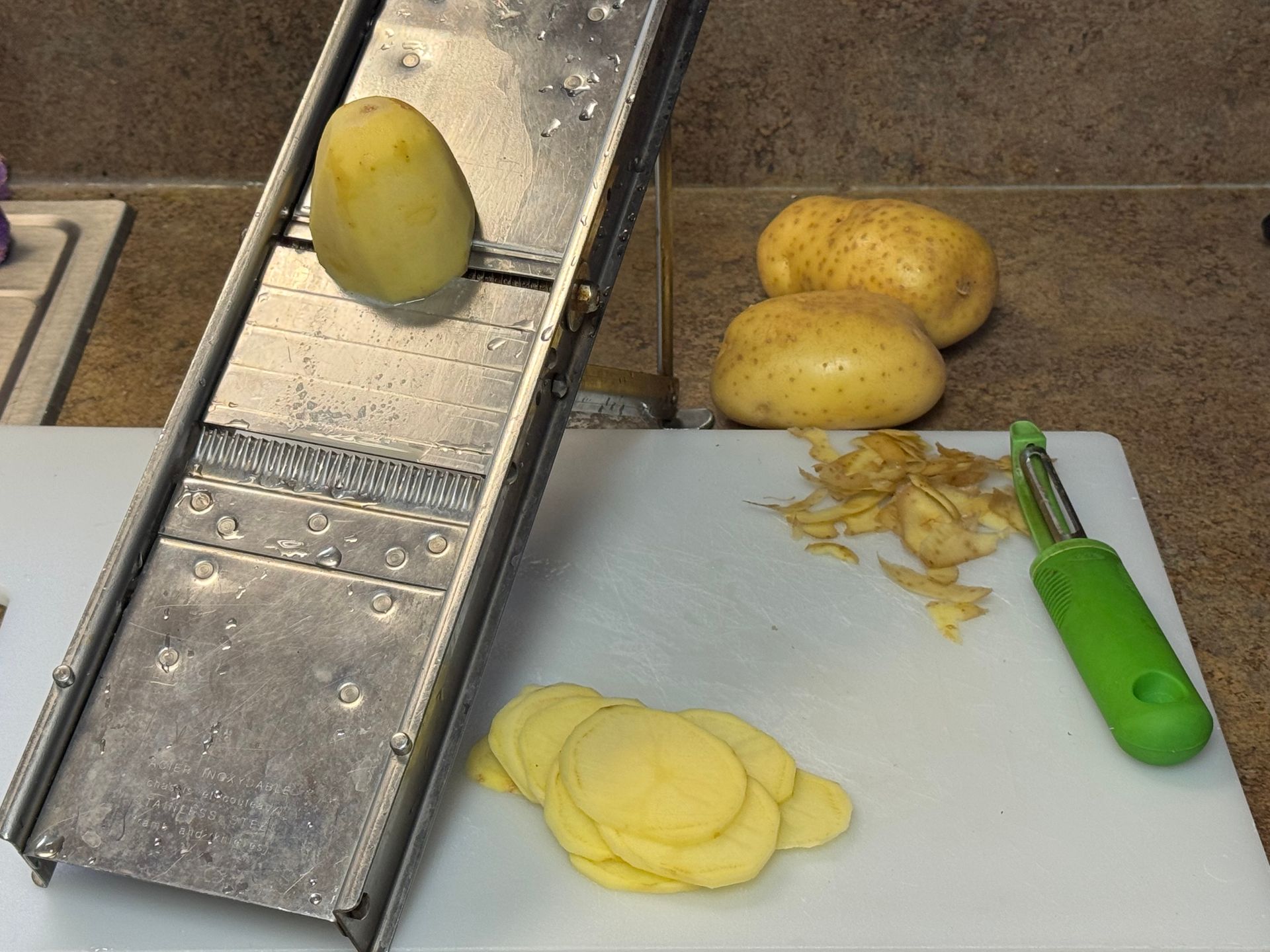
3. Peel, wash and slice the potatoes thinly (⅛ inch) using a knife or mandoline. Keep the slices uniform for even cooking.
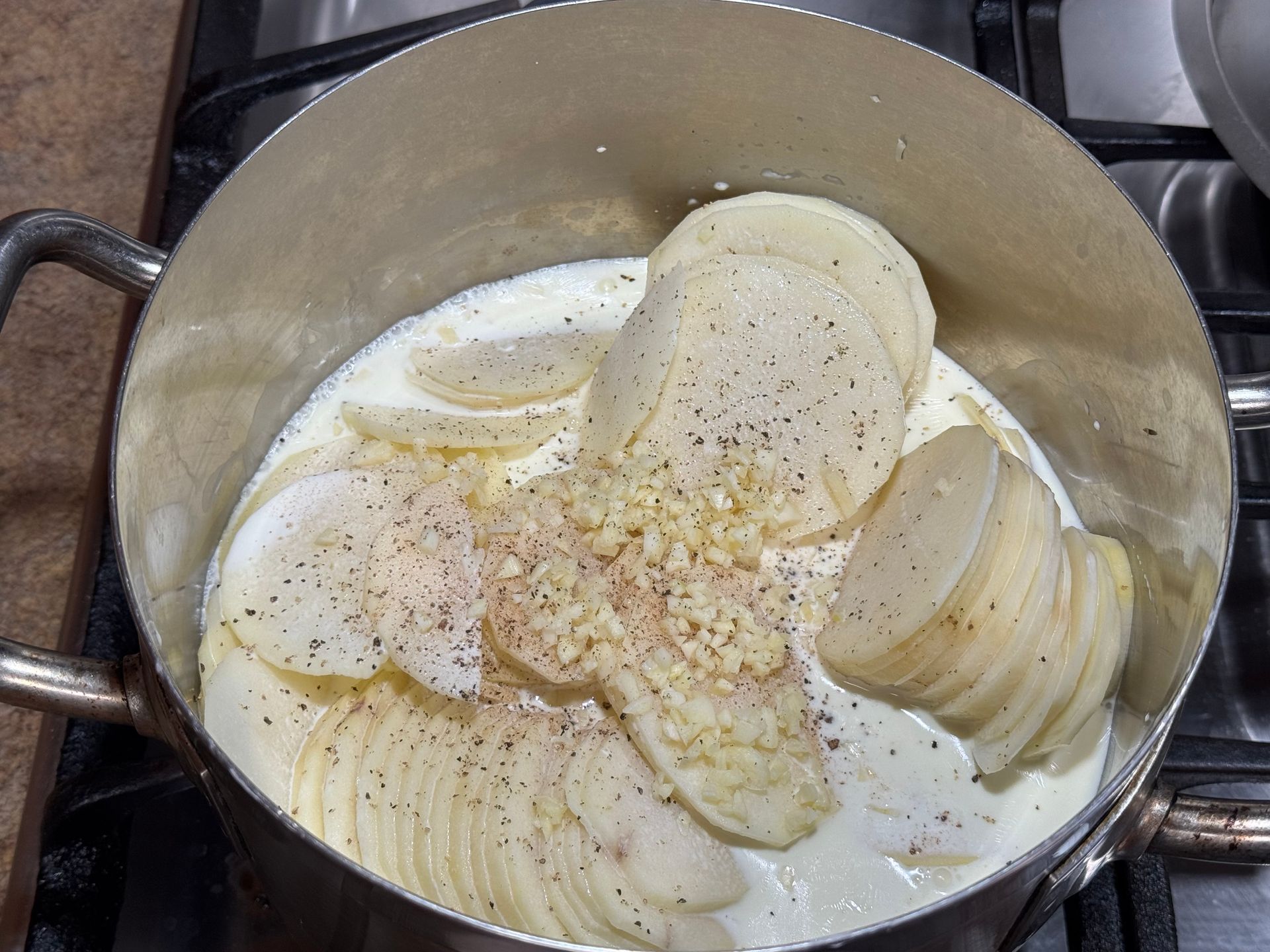
Do not rinse or put the sliced potatoes into water or you’ll wash off the starch. Put directly into the pot of cream and stir with a wooden spoon.
4. Put the heavy cream, half and half, garlic, salt, pepper and nutmeg into a heavy pot. Stir to incorporate.Heat the potatoes and cream mixture, stirring with a wooden spoon, to a gentle simmer for 5 minutes to develop flavor and release the potato starch into the cream base—do not boil. Be careful not to scald or burn the bottom-it’s very dense.
5. Add the cheeses (optional) to the potato mixture and fold together so that the cheeses are blended into the potatoes. Taste and add salt or pepper if needed. Pour out the potatoes into the casserole dish and spread the potatoes down evenly. There may be a little too much cream but it will be absorbed into the potatoes during cooking.
Optional: Top with Gruyère and Parmesan. Place the casserole onto a half sheet pan in case any of the cream boils over the side during baking.
6. Bake at 350°F for 30–45 minutes, until the potatoes are tender-you can simply insert a sharp paring knife into the potatoes to see if they are tender.