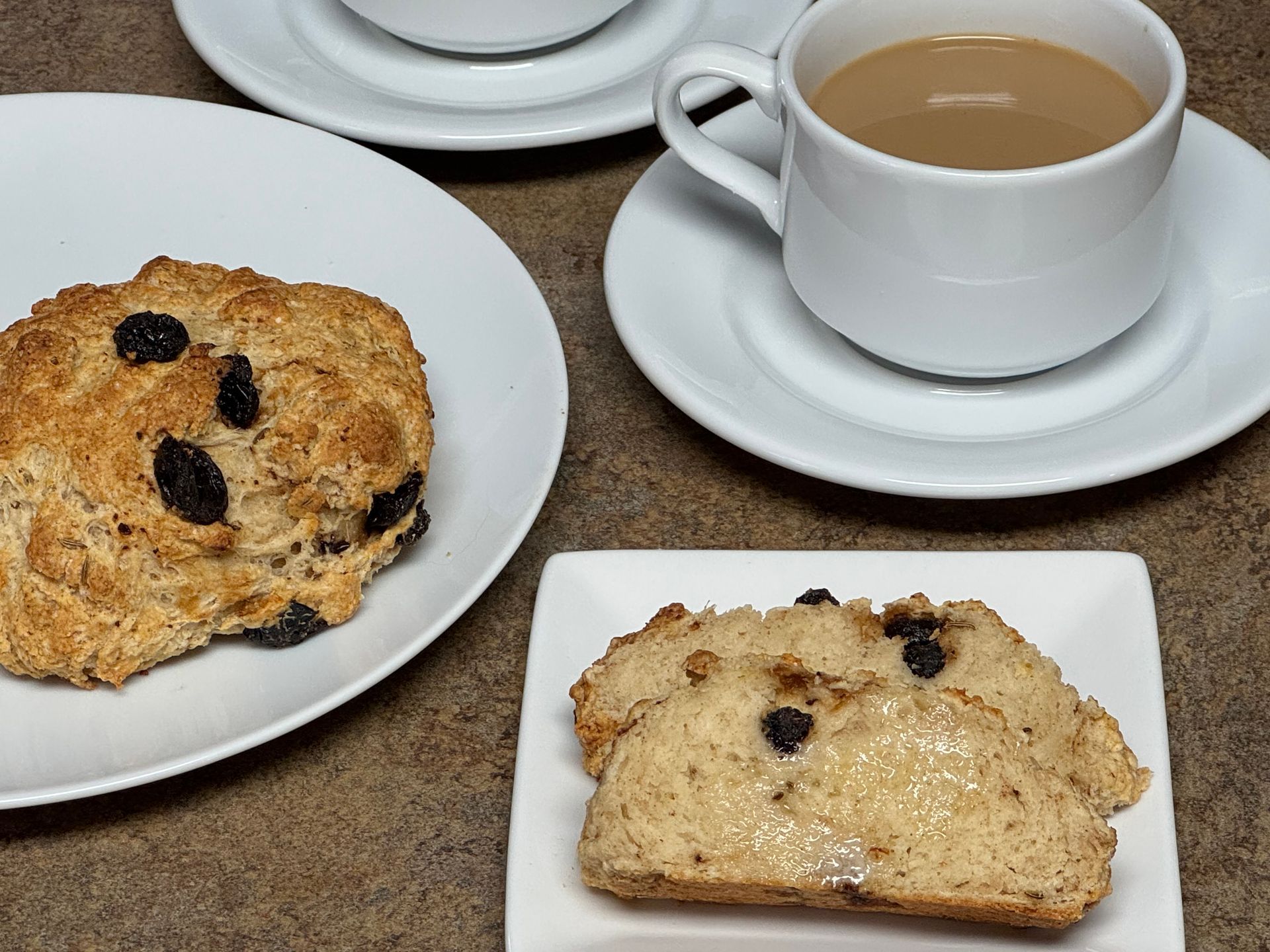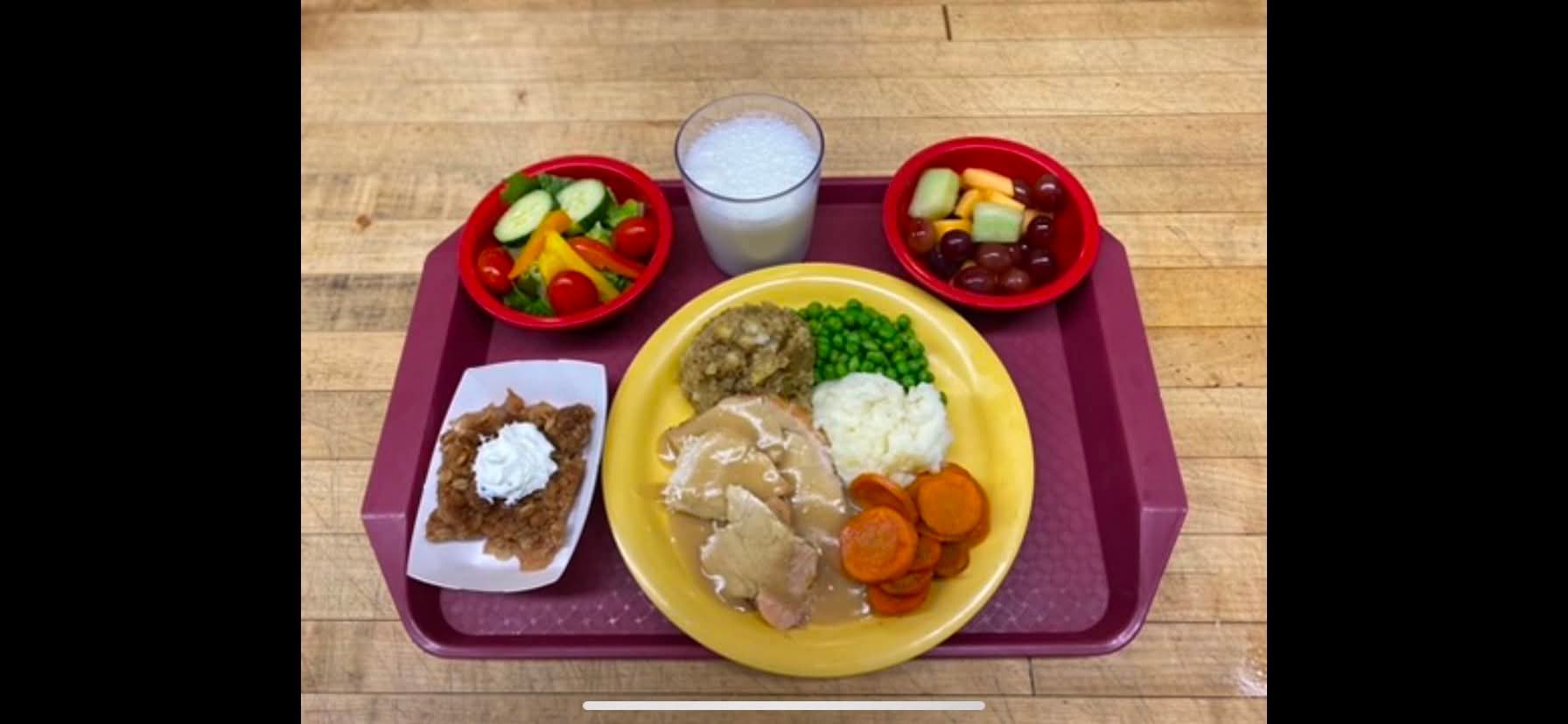
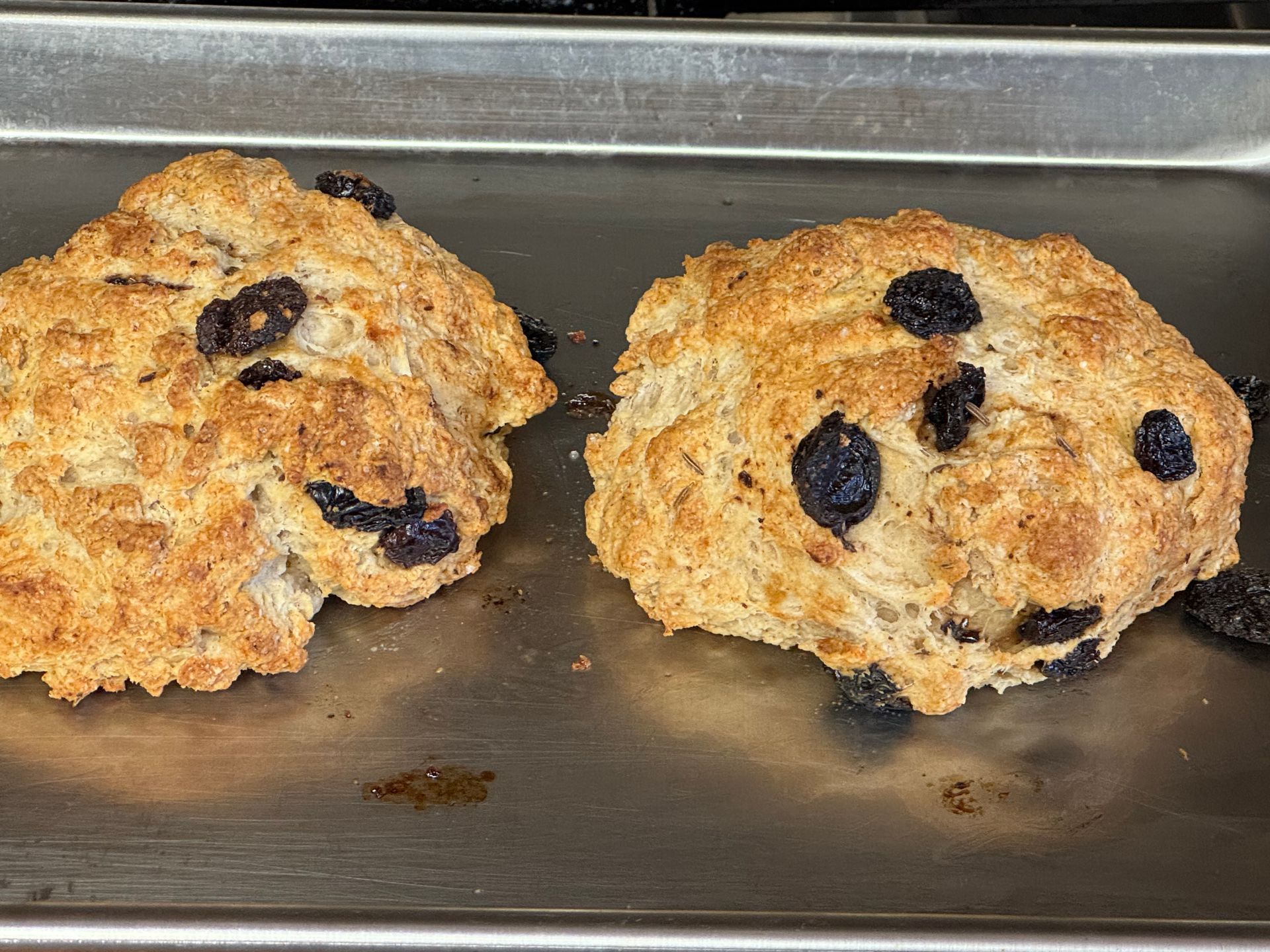
Three desserts are sitting on a table with a measuring cup in the background.

We ate Irish soda bread one day each year—and it was never store-bought. Soda bread wasn’t part of our cultural lineage, but it earned its place through something more universal: respect for tradition.

My mother was not an occasional baker— growing up, her baking centered on Italian traditions: special Christmas cookies, the Vigna family birthday cake, and beautifully braided Easter breads that reflected heritage.

Later, like many serious home bakers of her generation, she was influenced by Julia Child. That influence expanded her repertoire into classic European pastry—Paris-Brest, pound cakes, even German chocolate cake.


The iconic cross cut into the top of the loaf is often said to “let the fairies out,” though in professional kitchens we recognize its functional role: allowing heat to penetrate and the loaf to expand evenly during baking.

Irish Soda Bread

Irish soda bread, as we know it today started in Ireland in the early 19th century, following the introduction of baking soda (sodium bicarbonate) as a leavening agent. Unlike yeast-based breads, soda bread relies on a simple chemical reaction between baking soda and the natural acidity of buttermilk to create lift. This method eliminated the need for fermentation, making bread production faster, more reliable, and accessible to rural households.


Equally important were the ingredients themselves. Ireland’s climate favored soft wheat varieties, lower in gluten strength than those used for traditional European hearth breads. The result was a dough better suited to quick bread methods—mixed briefly, shaped simply, and baked immediately. Buttermilk, a byproduct of butter churning, was widely available, further reinforcing the practicality of the formula.


Over time, regional and household variations developed. The addition of raisins or currants—often referred to as “spotted dog”—introduced a touch of sweetness, particularly for tea service. 


soda bread stands as a reminder that great food does not require complexity—only an understanding of ingredients, technique, and purpose.

Prep Time: 25 min

Cooking Time: 30 min

Yield: 4 small breads


Ingredients

4 Cups (500 g)    All-purpose flour, sifted

3 Tbsp                   Granulated sugar

1 tsp                       Kosher salt

1 tsp                       Baking soda

1 Tbsp                   Baking powder

4 Tbsp (60 g)     Unsalted butter, cold

1/2 cup (              Raisins or currants

1 Cup                    Yogurt

                              Caraway seeds, optional

How to Prepare Irish Soda Bread
Step 1

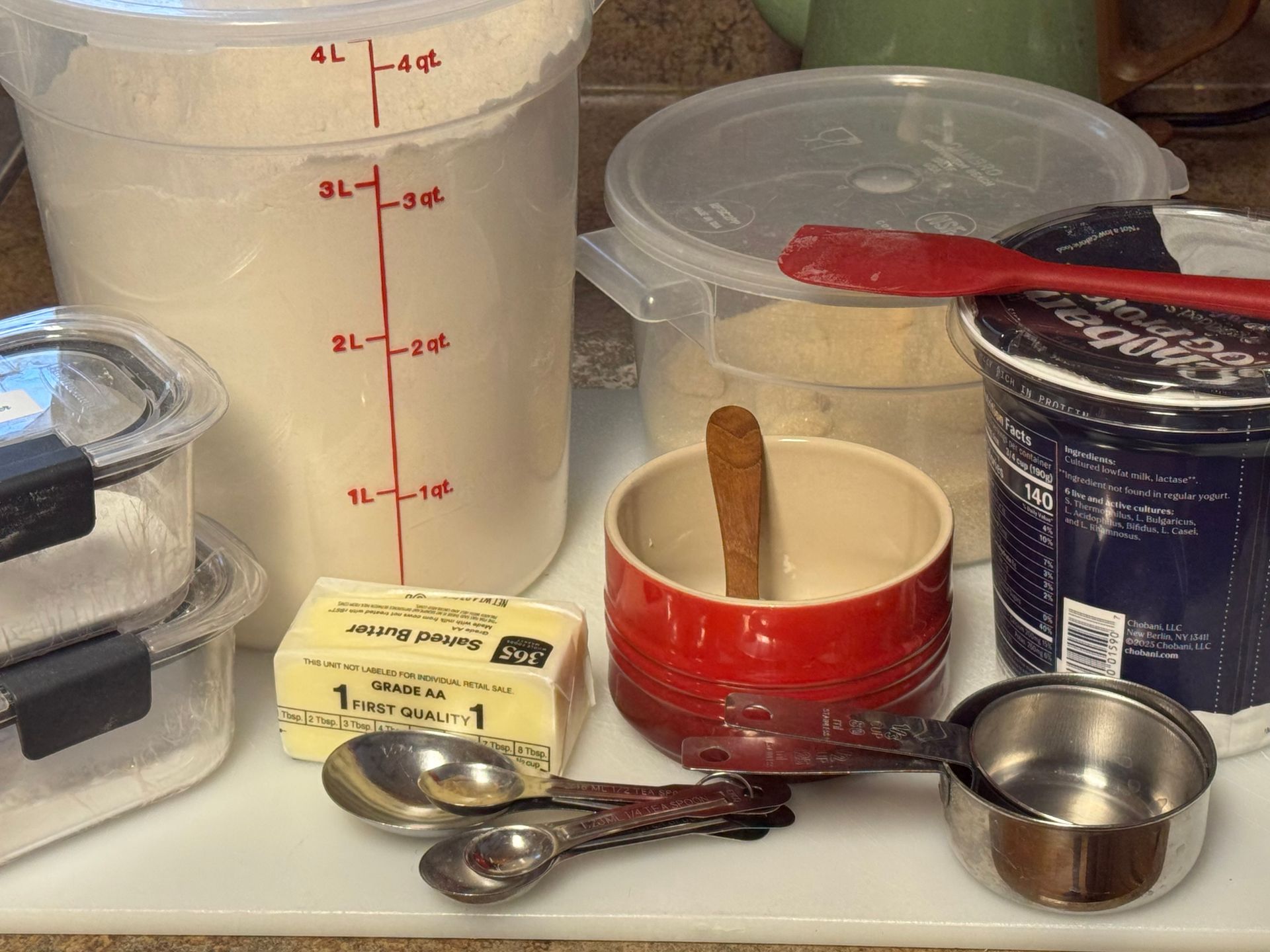
Preheat the oven to 400°F (205°C). Collect mise en place.

Line a sheet tray with parchment or lightly butter to avoid the soda bread from sticking.


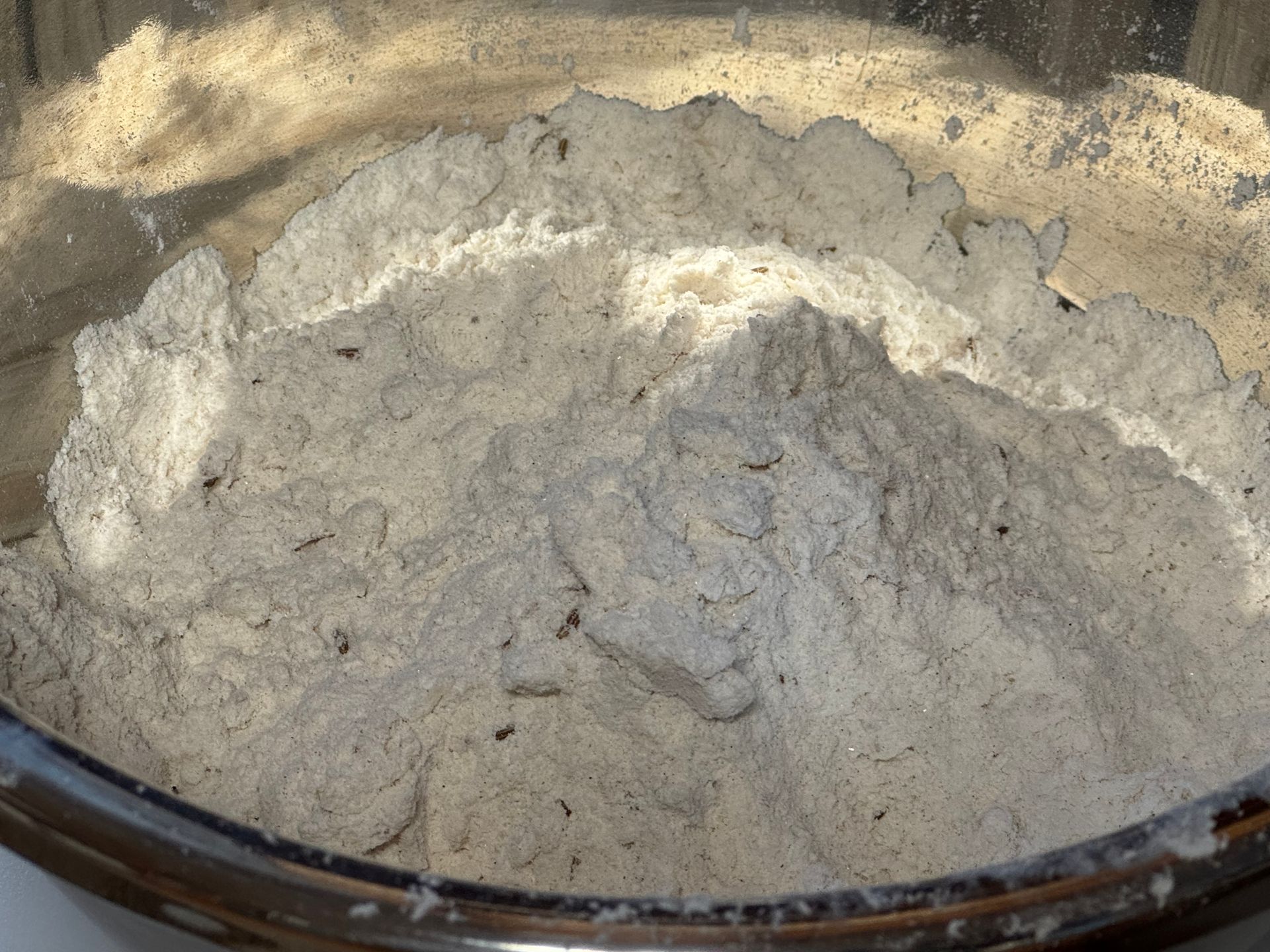
In a large bowl, whisk together the sifted flour, sugar, salt, baking soda and baking powder. I use a fork for this small recipe.


Cut the cold butter into thin slices and the
butter into the flour mixture. Using your fingers, rub the butter into the flour until the mixture resembles coarse crumbs-the butter should be smaller than the size of a pea.

This is similar to making a pie crust.


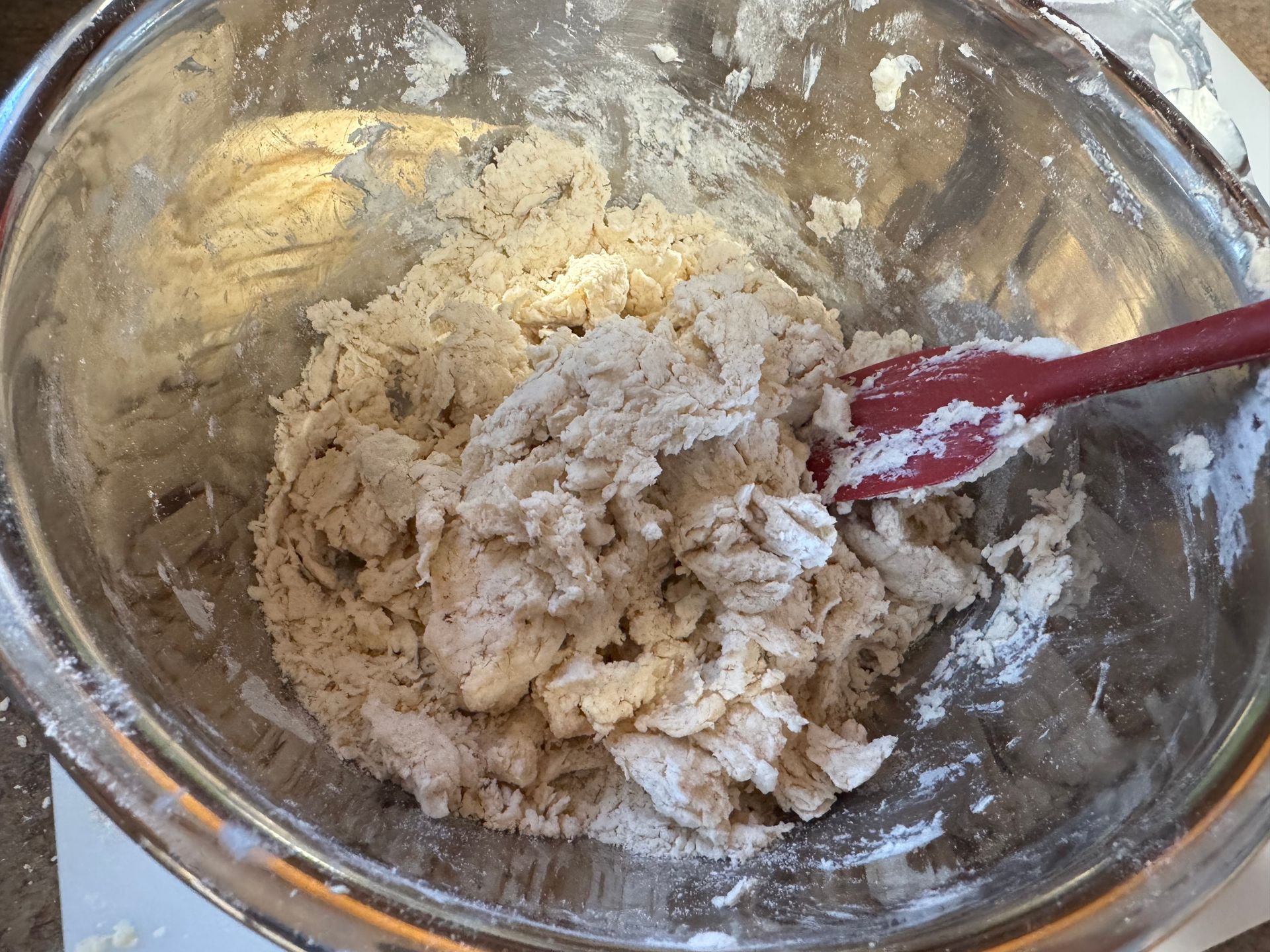
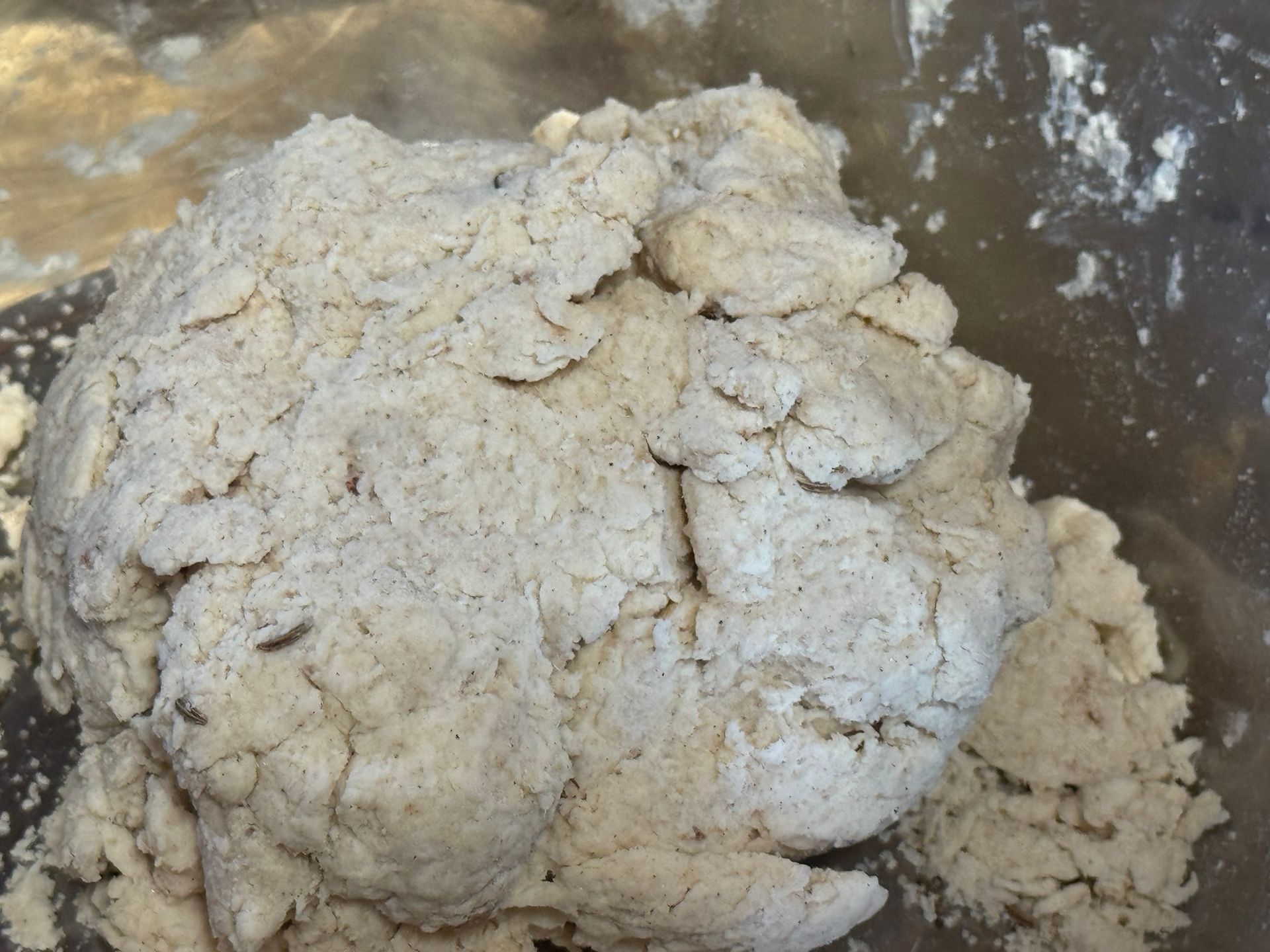
Add the yogurt and mix gently to incorporate and form a ball. Don't overwork the dough or it will begin to get tough.


Fold in the raisins and caraway seeds at this point-gently.
Step 2

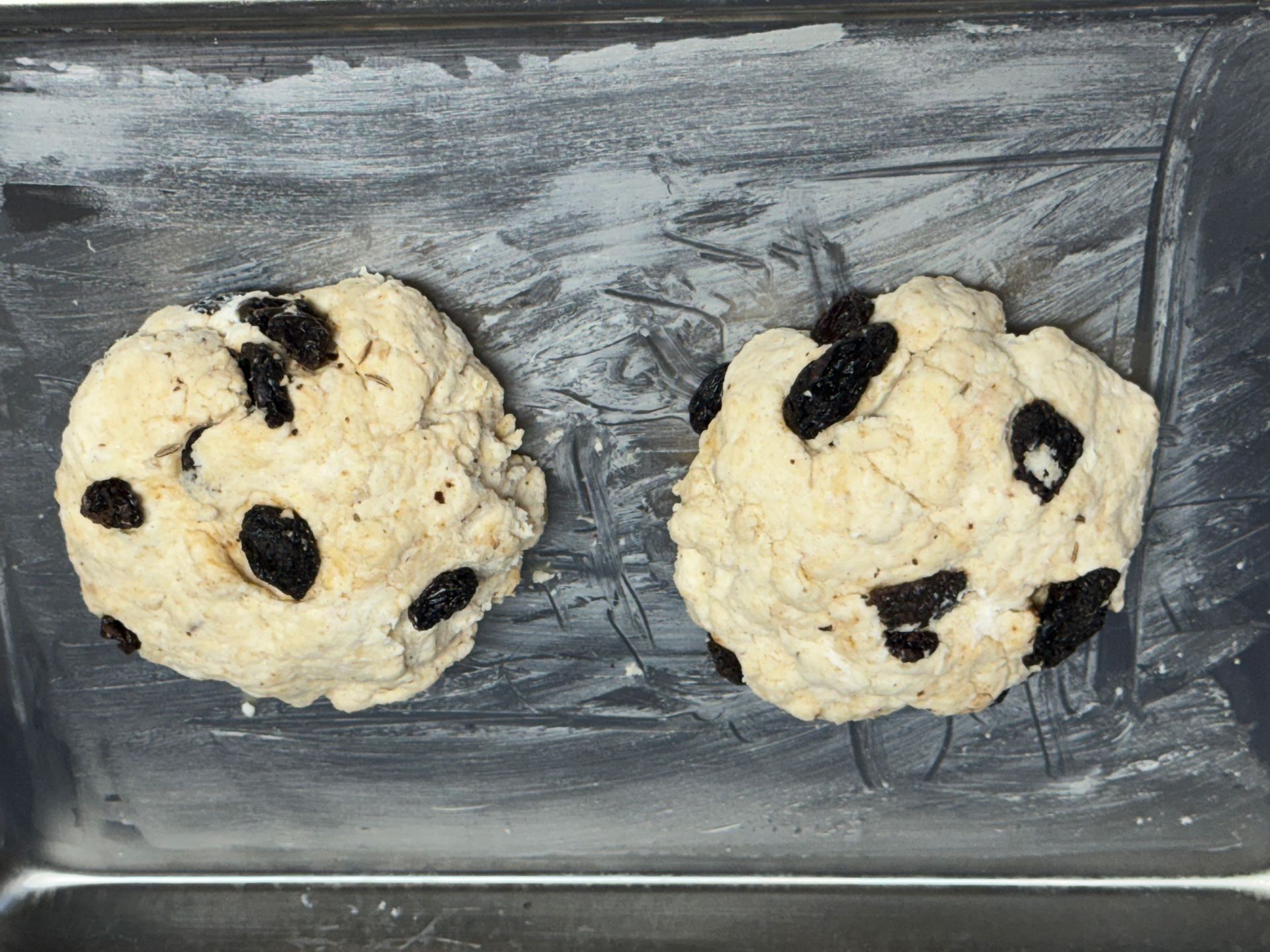
Cut the dough into 4 separate pieces and gently form into balls. Place each ball onto the buttered sheet tray-about 2 inches apart. The soda bread doesn't spread too much.


Score a criss cross indentation into the  center of the top to help steam escape...—this is traditional.


Bake for 30 minutes, until the crust is deep golden, turn off the oven and let the soda bread cool in the oven.


Enjoy with butter-and coffee or tea!


By Tom Griffiths February 26, 2026
Authentic Guacamole, Hospitality, and the Responsibility of Feeding People
By Tom Griffiths January 16, 2026
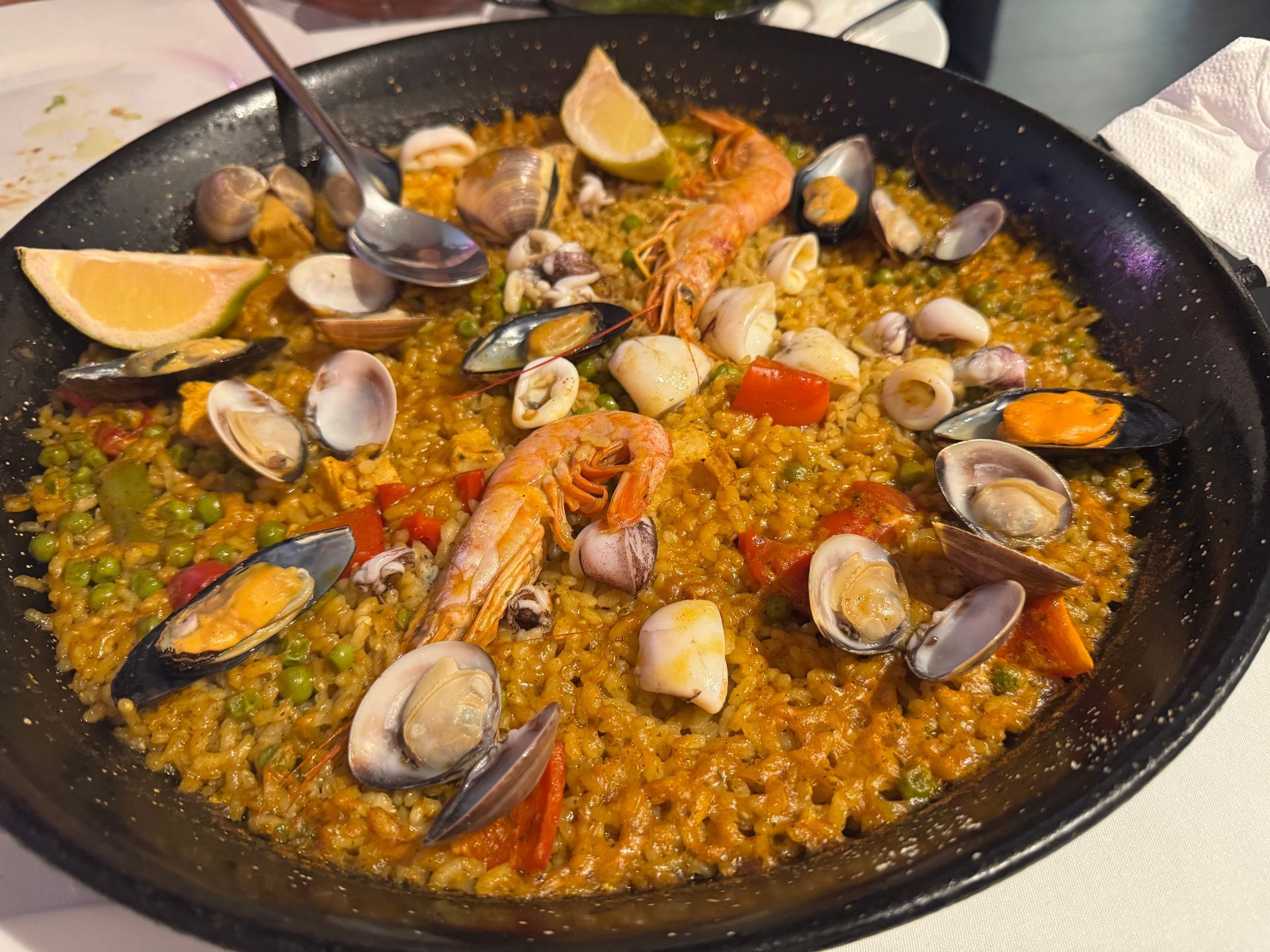
I recently volunteered to prepare vegetable paella for a church Bible group potluck. I was very excited to develop a delicious, new paella recipe and spent time preparing fresh vegetable stock with flavors of the Mediterranean. I always prepare vegetable and fish stocks fresh, as I intend to use them. I’m not a fan of bases or frozen stocks but I sometimes add a small amount of quality base to my stocks.  A vegetable stock with mirepoix, cabbage, mushrooms makes sense in certain applications, for certain recipes—but why would we use a mushroom or cabbage-forward stock in a paella? It doesn’t make culinary sense. Paella is a Mediterranean dish originating in the Valencia region of Spain as a humble meal cooked on an open fire. I’ve enjoyed wonderful paella meals in Valencia prepared with water-not stock, prepared with rabbit, snails and local beans. While traveling through Spain this spring I researched and sampled many styles of paella… no mushrooms, no carrots, no celery and no cabbage.
By Tom Griffiths January 16, 2026
I still remember cooking breakfast burritos with my son Daniel, for volunteer workers at church events—simple, hearty, and made to fuel a long day of service. The workers were always so appreciative. Years later, I served a crowd favorite, nicknamed “The Bacon-ator,” a breakfast superstar inspired by the over-the-top spirit of fast-food indulgence. We had a popular food booth at the local country fair, where we cooked hundreds of breakfast burritos each day-stuffed with Mexican cheeses, extra bacon, fluffy scrambled eggs, and fresh salsa—nothing pre-made, nothing rushed. Every burrito was warm, fresh, and full of flavor. When food is made with love, even the most straightforward breakfast is memorable.
By Tom Griffiths January 15, 2026
Chefs often share a bond that transcends politics, religion, and borders. While working in Saudi Arabia with a diverse group of chefs, I experienced this firsthand on my final day. To mark the occasion, they prepared special dishes representing their home countries—a generous feast rooted in tradition and pride. At the center of the table was a beautiful tray of stuffed peppers, zucchini, cabbages, squash, and other vegetables, each prepared with care and respect. As we shared the meal, the chefs beamed with pride, and the room filled with a sense of genuine camaraderie. It was a powerful reminder that food remains one of the most universal languages we have.
By Tom Griffiths January 15, 2026
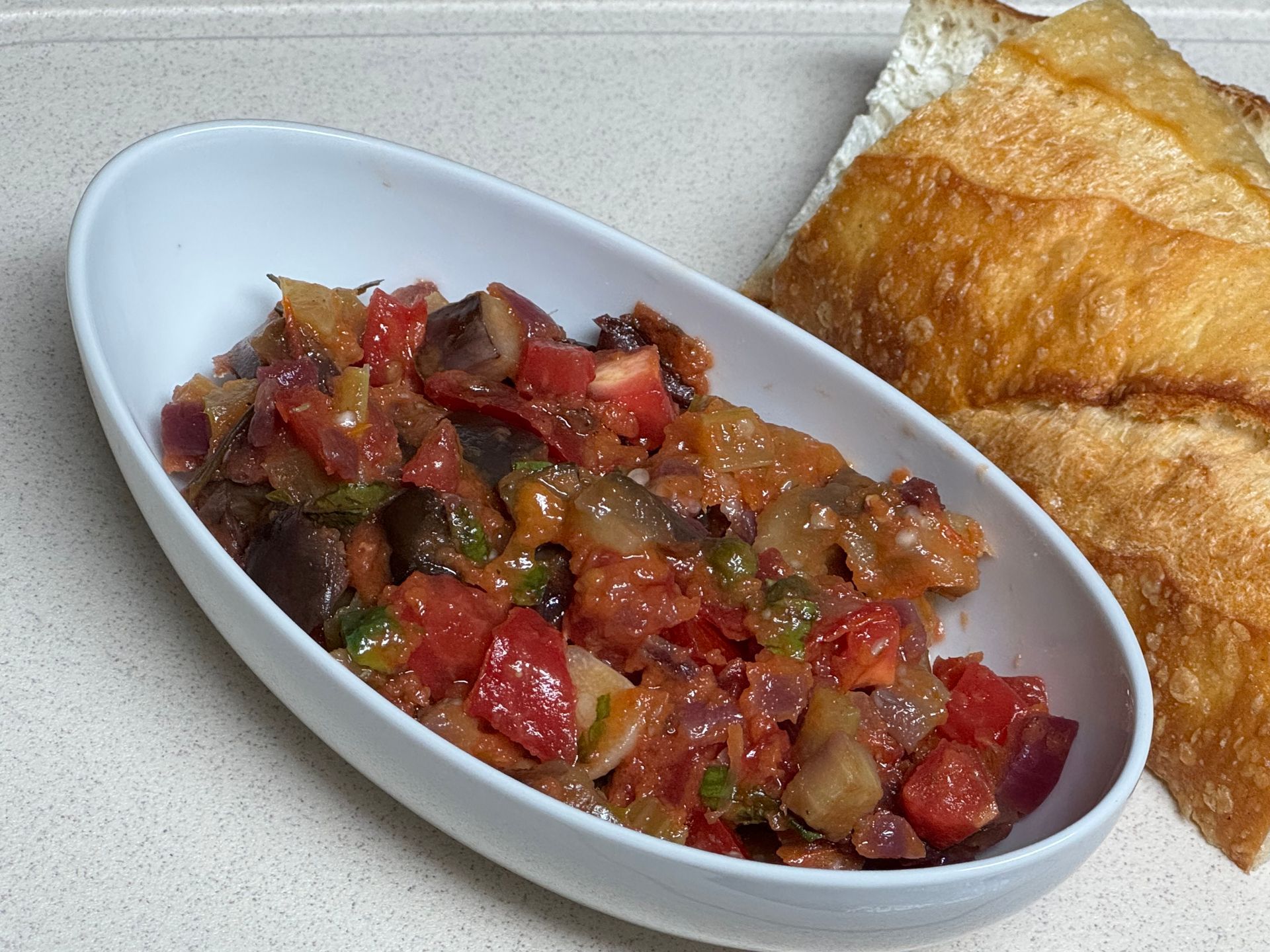
I remember a chef teaching me to carefully slice the center seeds from a zucchini and then prepare beautiful dices for a ratatouilli. The seeds and center area get soft and mushy before the outer 'meaty' section of the squash cooks.
By Tom Griffiths January 15, 2026
Lobster macaroni and cheese is my all time favorite version of Mac and Cheese... I make it by preparing a classic lobster sauce, (flambé and all) and blending it with Béchamel sauce, macaroni and sweet, tender chunks of freshly poached lobster. Macaroni and cheese with pancetta
By Tom Griffiths January 13, 2026
Culinary Basics: The Art of preparing Stocks
By Tom Griffiths January 13, 2026
Paella is a Mediterranean dish originating in the Valencia region of Spain. It is a humble meal, originally cooked on an open fire. I’ve enjoyed many wonderful paella meals in Spain. In Valencia I had a local paella with rabbit, snails and local beans. Short-grained rice is always used to prepare Paella, there are several great Spanish varieties like Bomba and Calasparra , prized for absorbing the delicious, flavorful stock and flavors of the ingredients without getting mushy. This is important for creating the dish's signature, crusty bottom layer called the socarrat. Paella is all about the rice!
By Tom Griffiths January 7, 2026
I still remember cooking breakfast burritos with my son Daniel, for volunteer workers at church events—simple, hearty, and made to fuel a long day of service. The workers were always so appreciative. Years later, I served a crowd favorite, nicknamed “The Bacon-ator,” a breakfast superstar inspired by the over-the-top spirit of fast-food indulgence. We had a popular food booth at the local country fair, where we cooked hundreds of breakfast burritos each day-stuffed with Mexican cheeses, extra bacon, fluffy scrambled eggs, and fresh salsa—nothing pre-made, nothing rushed. Every burrito was warm, fresh, and full of flavor. When food is made with love, even the most straightforward breakfast is memorable. 
By Tom Griffiths January 6, 2026
Beef Wellington is a restaurant classic! Chefs prepare whole tenderloins, wrapped in pastry as well as individually portioned Wellingtons. Culinary historians widely agree that Beef Wellington evolved from French preparations such as filet de bœuf en croûte, which paired beef tenderloin with mushrooms and pastry—techniques well established in French haute cuisine.