Beyond Sweet Basil: An Herb with History, Health, and Global Range
A Lesson in Stress and Flavor
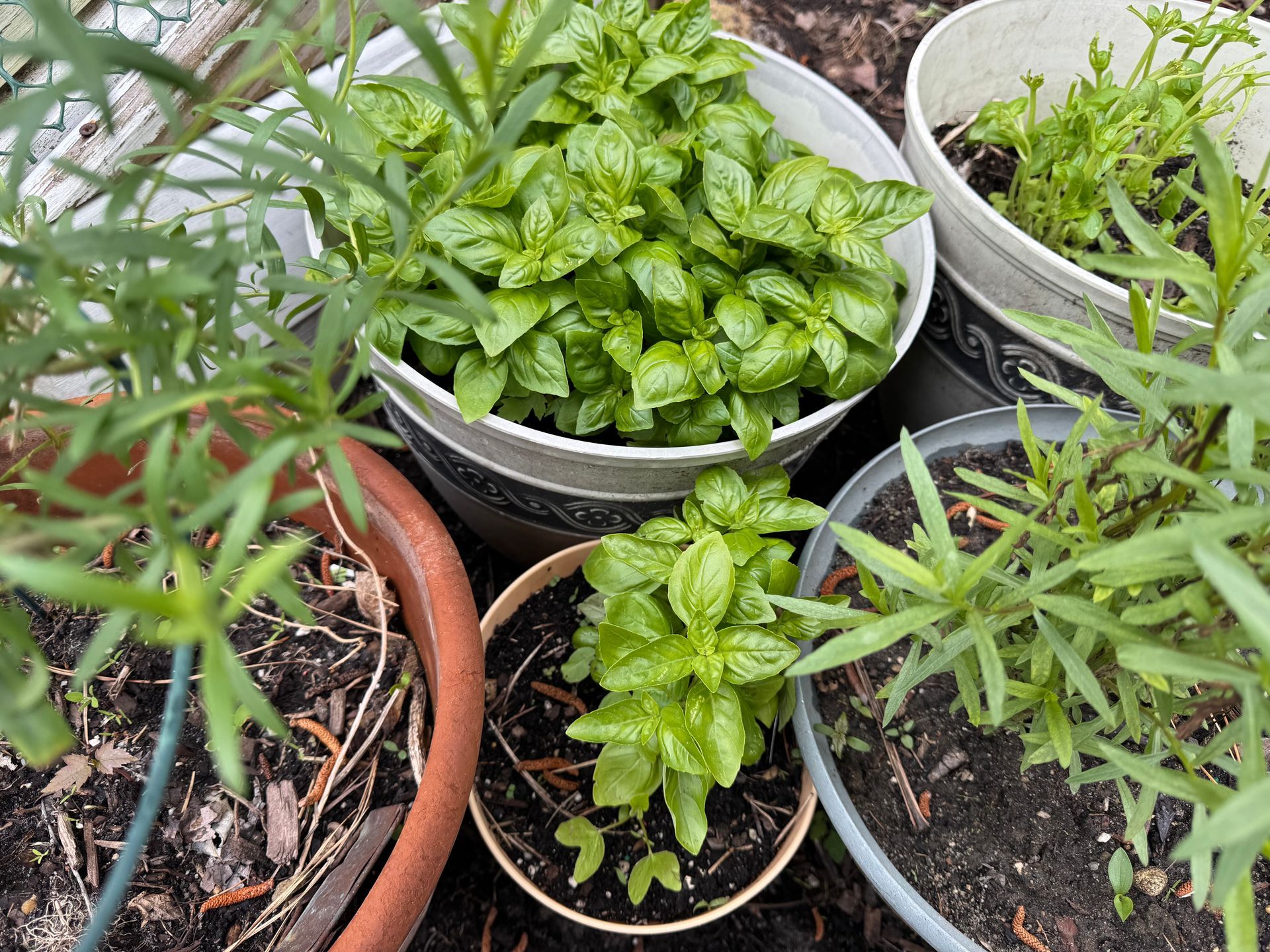
Last year, I noticed a batch of basil used for pesto had become unexpectedly bitter. The cause: environmental stress—specifically heat and sun exposure. Under stress, basil shifts chemically:
Bitterness increases
Aromatic oils diminish
Leaf texture toughens
This led me to expand the research.
This season, I’m growing multiple basil plants under controlled variations:
Same cultivar, different environments (pot, ground, greenhouse)
Pruned vs. unpruned plants
Wintered-over basil vs. new growth
The goal is simple: understand how environment and handling impact flavor at a practical level.
A Brief Global History
Basil (Ocimum basilicum and related species) originates in India and Southeast Asia, where it held both culinary and spiritual importance. Through trade, it moved into the Mediterranean and became foundational in Italian cuisine.
In Southeast Asia, different cultivars evolved—more robust, heat-tolerant, and structurally suited for high-temperature cooking. Today, basil is global, but its regional expressions remain distinct and purposeful.
Nutritional and Functional Value
While used in small quantities, basil offers meaningful benefits:
Vitamin K (bone health)
Vitamin A (beta carotene)
Antioxidant and antimicrobial compounds
Polyphenols with anti-inflammatory effects
Holy basil (Tulsi) is particularly valued in Ayurvedic practice as an adaptogen, supporting stress response, immunity, and metabolic balance.
Final Thought
Understanding an ingredient like basil at this level isn’t just about flavor—it’s about consistency, yield, and performance in real kitchens.
As a chef and consultant, I work with operators, producers, and brands to translate culinary fundamentals into scalable, profitable solutions.
If you’re looking to elevate your products or menus, let’s connect.
Book a free consultation with TWG Consulting
Few ingredients are as familiar—and as misunderstood—as basil.
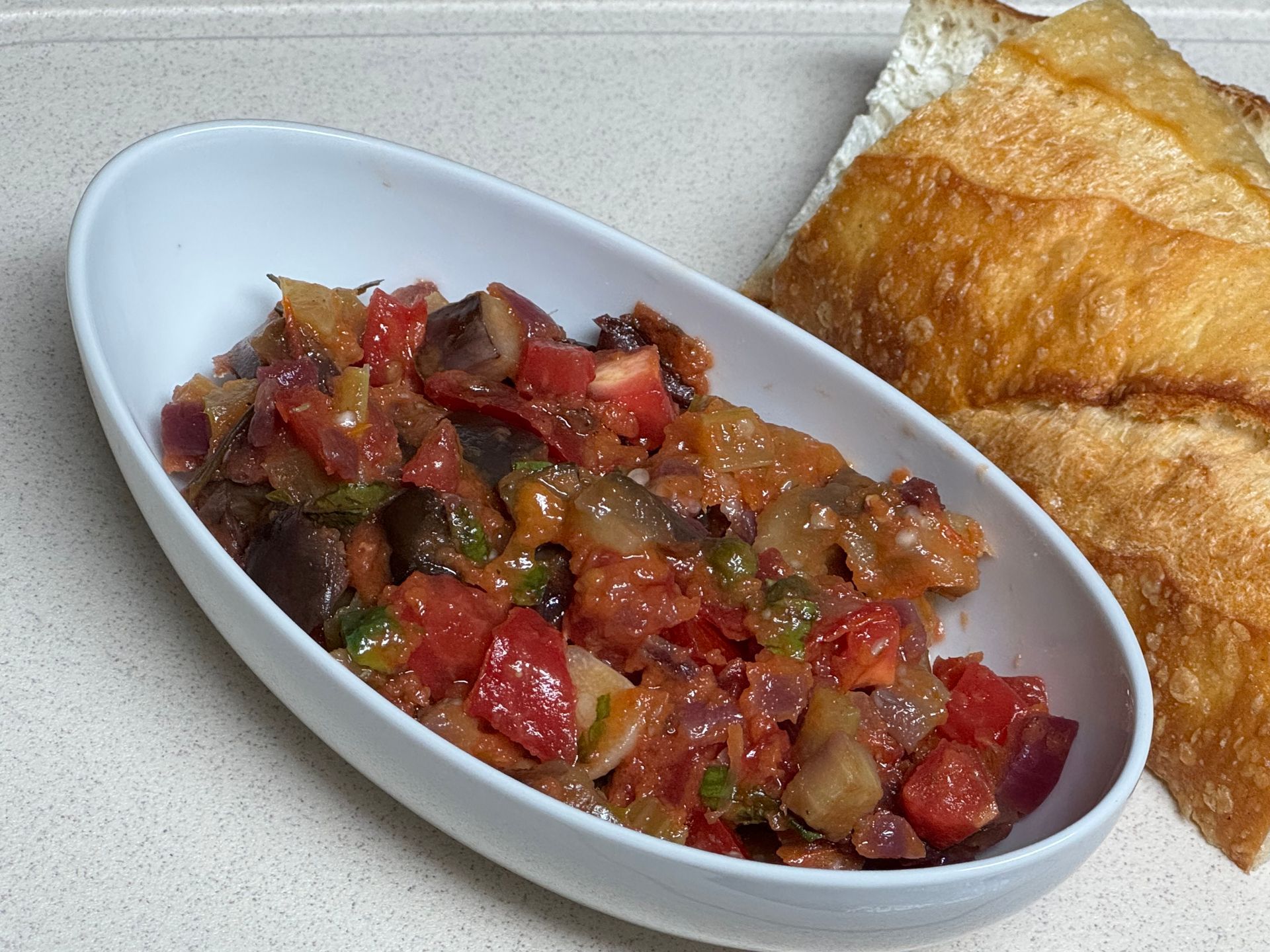
Like most cooks, I approached basil as a supporting ingredient—something visually appealing (and Italian) to finish a dish, add to my tomato sauce, or decorate a Caprese salad. That changed when I began consulting with dairy-free cheeses and chose pizza as my blank canvas. Fresh basil quickly became essential—for flavor, authenticity and visual appeal.
But my connection to basil goes back much further. I remember my mother frying large basil leaves with garlic and olive oil for Sunday tomato sauce—the aroma is still one of the clearest food memories I have. We’d also tear fresh basil into simple salads with tomatoes, iceberg lettuce, olives, and red onion, finished with red wine vinegar and olive oil. I remember putting the canned olives on our little fingers, bowls of fried meatballs and the smell of basil on Sundays … childhood memories.
Basil Is Not Just “Sweet Basil”
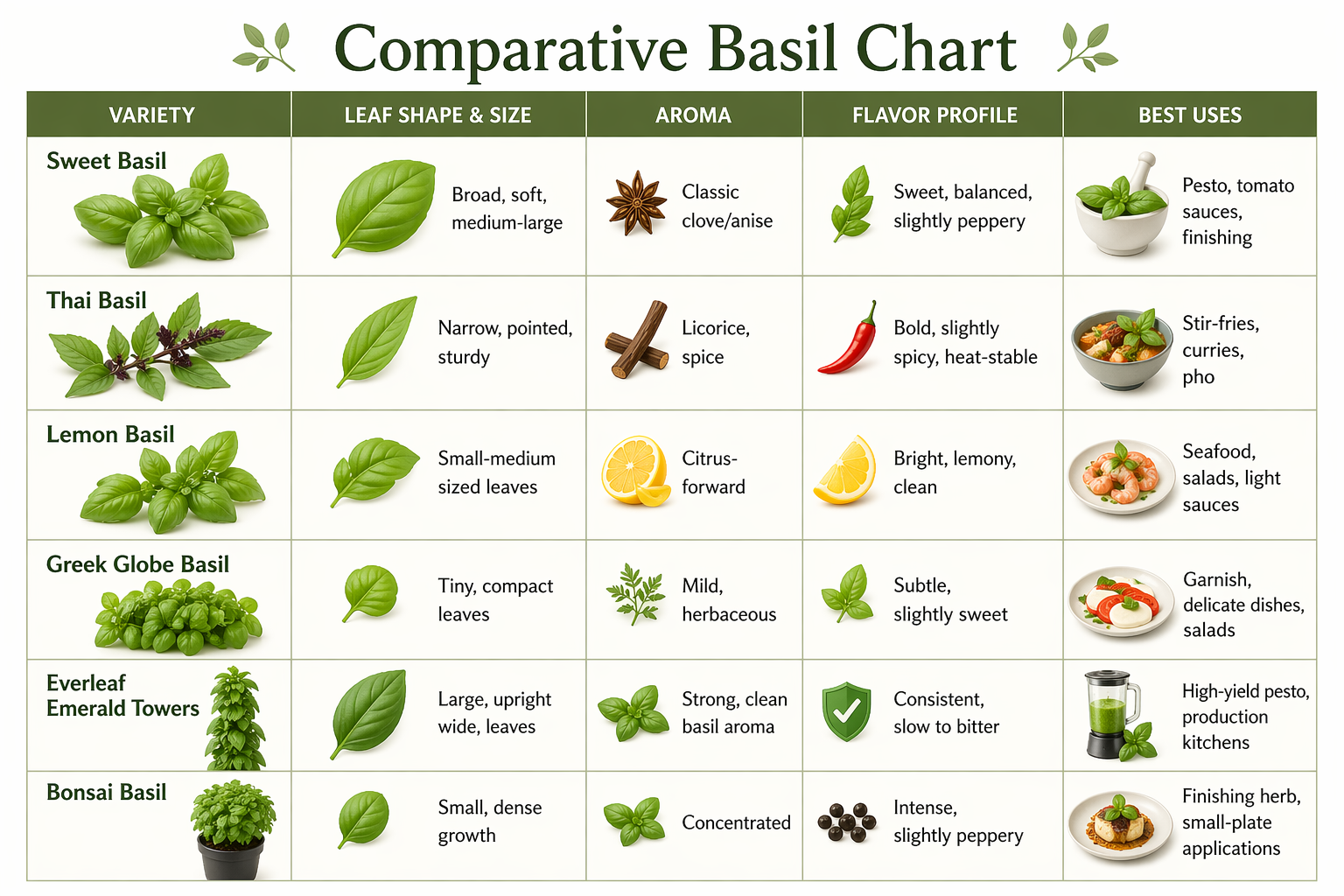
What most people consider a single ingredient is, in reality, a diverse global family. Through research and market visits, I found a wide range of basil varieties: Genovese, Thai, Red and Dark Opal, Lemon basil, Greek Globe, Cinnamon basil, and more specialized varieties like Everleaf Emerald Towers and Bonsai basil.
Each offers distinct characteristics—aroma, structure, heat tolerance, and culinary application. Understanding these differences isn’t academic—it directly impacts flavor, yield, and how the ingredient performs on the plate.
To approach this seriously, I built a structured evaluation:
Visual and leaf structure
Aroma (crushed and whole)
Flavor (raw, steeped as tea, and applied to pizza)
This mirrors how we evaluate ingredients in professional R&D environments.