One of the great pleasures of my career is spending time each year working as a Culinary Educator aboard a cruise ship alongside my wife. She teaches baking & pastry while I focus on savory cooking and culinary techniques.

Our travels take us to fascinating ports around the world, providing opportunities to explore local markets and study regional cuisines.

I have a particular affection for the Mediterranean and always make it a point to seek out local variations of pesto, one of the world's great culinary treasures.

One evening aboard ship, the pasta station served rigatoni with a choice of pesto, marinara, or Alfredo sauce. The cook prepared each order by reheating the pasta in hot water and then finishing it briefly in a sauté pan with the selected sauce.

I watched in disbelief as he prepared to heat the pesto exactly the same way.

"Horror!" flashed through my mind.

Pesto is not a cooked sauce. Heating it aggressively dulls the fresh basil aroma, darkens its vibrant color, and diminishes the delicate flavors of basil, garlic, pine nuts, and extra virgin olive oil that make pesto so special.

I may have startled the cook when I quickly called out, "Please don't cook my pesto!"

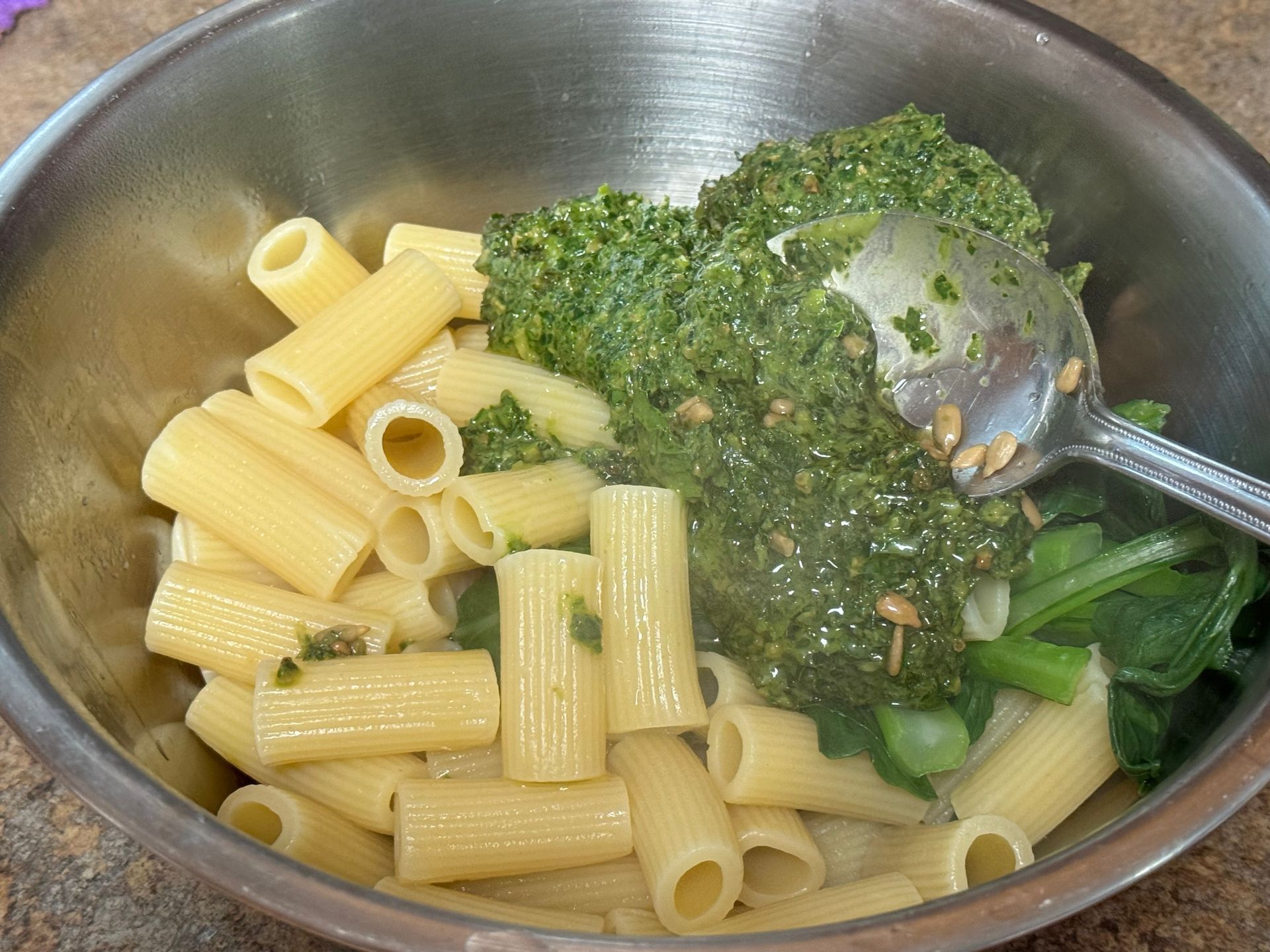
Instead, I asked him to simply toss the hot rigatoni with the pesto off the heat, allowing the warmth of the pasta to gently release the fragrance and flavor of the basil.

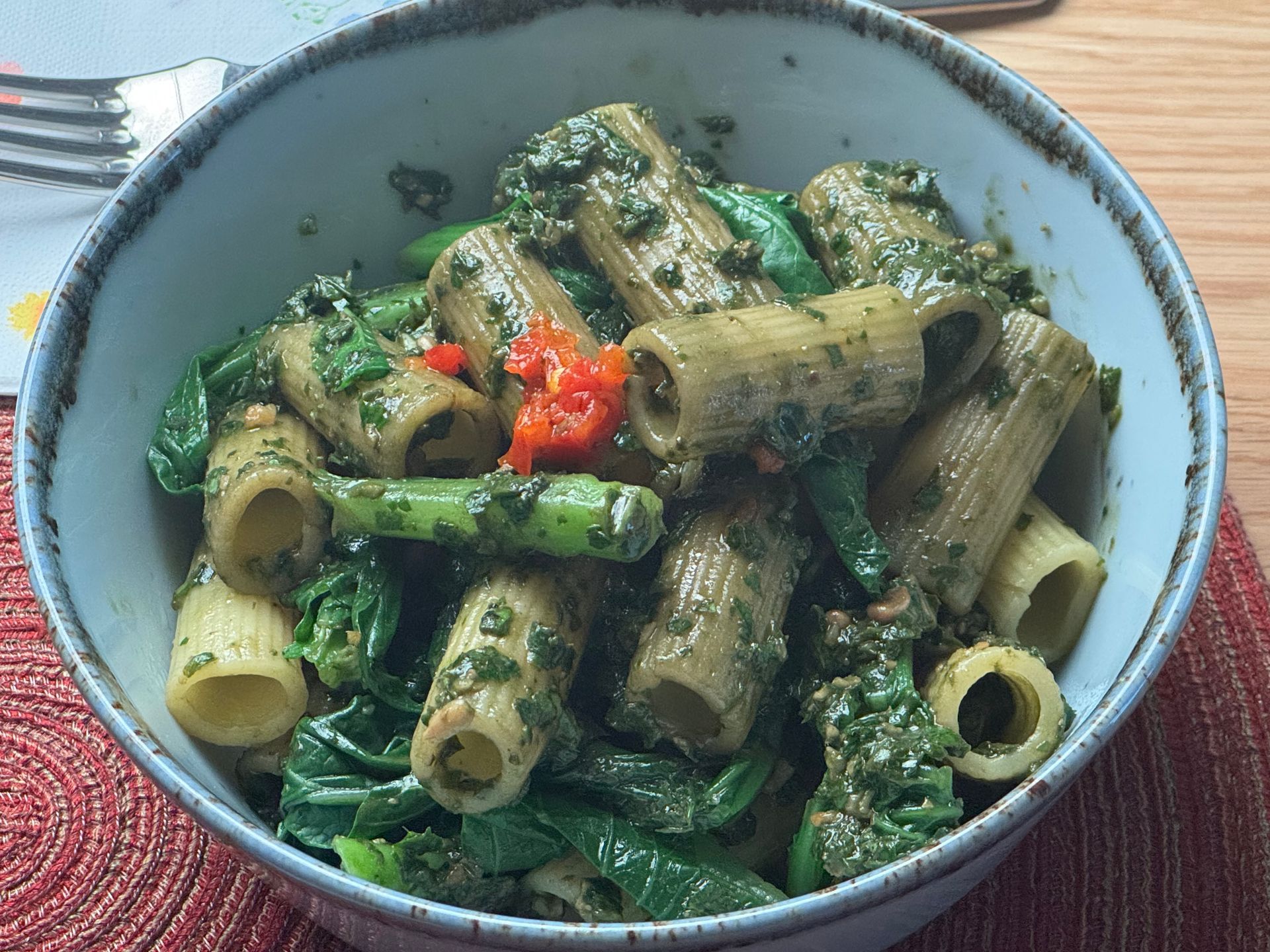
The result was exactly as pesto was intended to be enjoyed—fresh, vibrant, aromatic, and unmistakably Mediterranean.

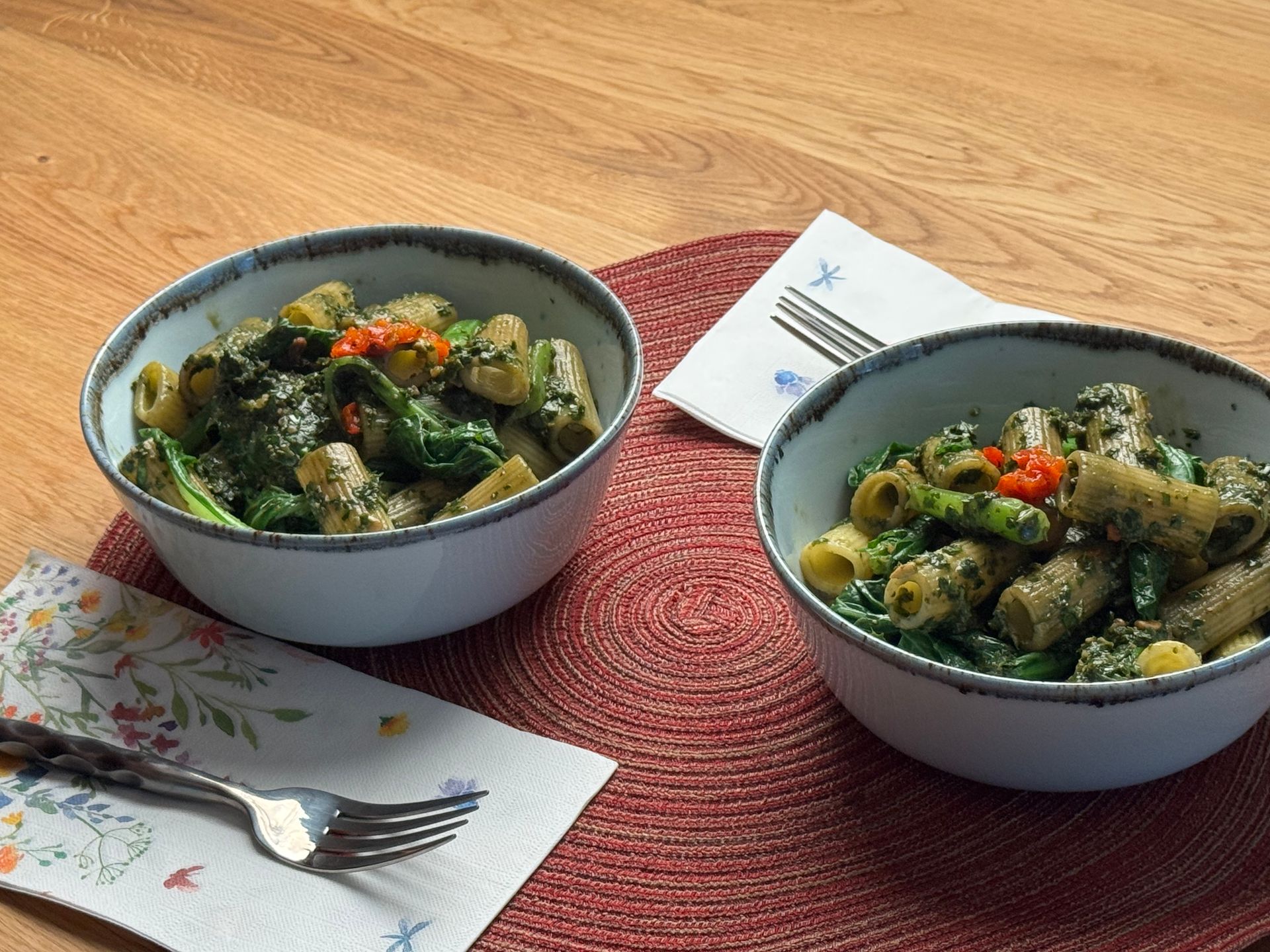
Rigatoni with Pesto & Asian Greens

Pesto is far more than the classic combination of basil, pine nuts, garlic, Parmesan cheese, and olive oil associated with the hills surrounding Genoa. At its heart, pesto is a technique rather than a recipe—a celebration of fresh greens, herbs, nuts, cheese, and good olive oil transformed into a vibrant sauce. Throughout the Mediterranean and increasingly in modern kitchens, cooks have embraced the flexibility of pesto by incorporating a wide range of ingredients dictated by season, geography, abundance and innovation.

I've posted several pesto recipes and received notes from my network about their favorite pestos with arugula, carrot tops, herbs, fennel, lamb's quarters, chickweed and even seaweed.

Each green brings its own personality to the mortar and pestle—or food processor—creating sauces that are unique expressions of season and place.

Pesto is more than simply delicious. Basil is rich in antioxidants and beneficial plant compounds. The aromatic essential oils found in basil have been studied for their anti-inflammatory and antimicrobial properties.

The choice of nuts can dramatically influence the character of a pesto. Although pine nuts are traditional, walnuts offer a more economical and sustainable alternative and give rich flavor and heart-healthy omega-3 fatty acids.

Be sure to always toast and skin the walnuts lightly before using them. Gentle toasting awakens their natural oils, deepens their flavor, and adds complexity and sweetness to the finished sauce.

Removing the thin papery skins from toasted walnuts eliminate bitterness. and olive oil.

Rigatoni with Pesto & Asian Greens

4 portions

Prep Time for Pesto: 30 min

Yield:  1 Cup


Ingredients                                          

2 Cups     Basil leaves, rinsed in cool water (I like Genovese & Lemon basil varieties)

1 Cup.      Lamb quarters, chickweed, arugula

2 Tbsp.   Fresh herbs (tarragon, chives, parsley)

3 Tbsp    Garlic, freshly peeled (rough chop)

4 Tbsp.   Walnuts, (toasted and peeled by rubbing in a clean towl)

6-8 oz     Extra Virgin Olive Oil

4 Tbsp    Parmesan Cheese, freshly grated (or to taste)

t.t.            Kosher Salt and Freshly Milled Black Pepper


4 Cups    Rigatoni, cooked

2 Cups.   Asian broccoli, choy, greens, cooked

2 Tbsp.   Calabrian hot pepper


How to Prepare Rigatoni with Pesto & Asian Greens
Step 1

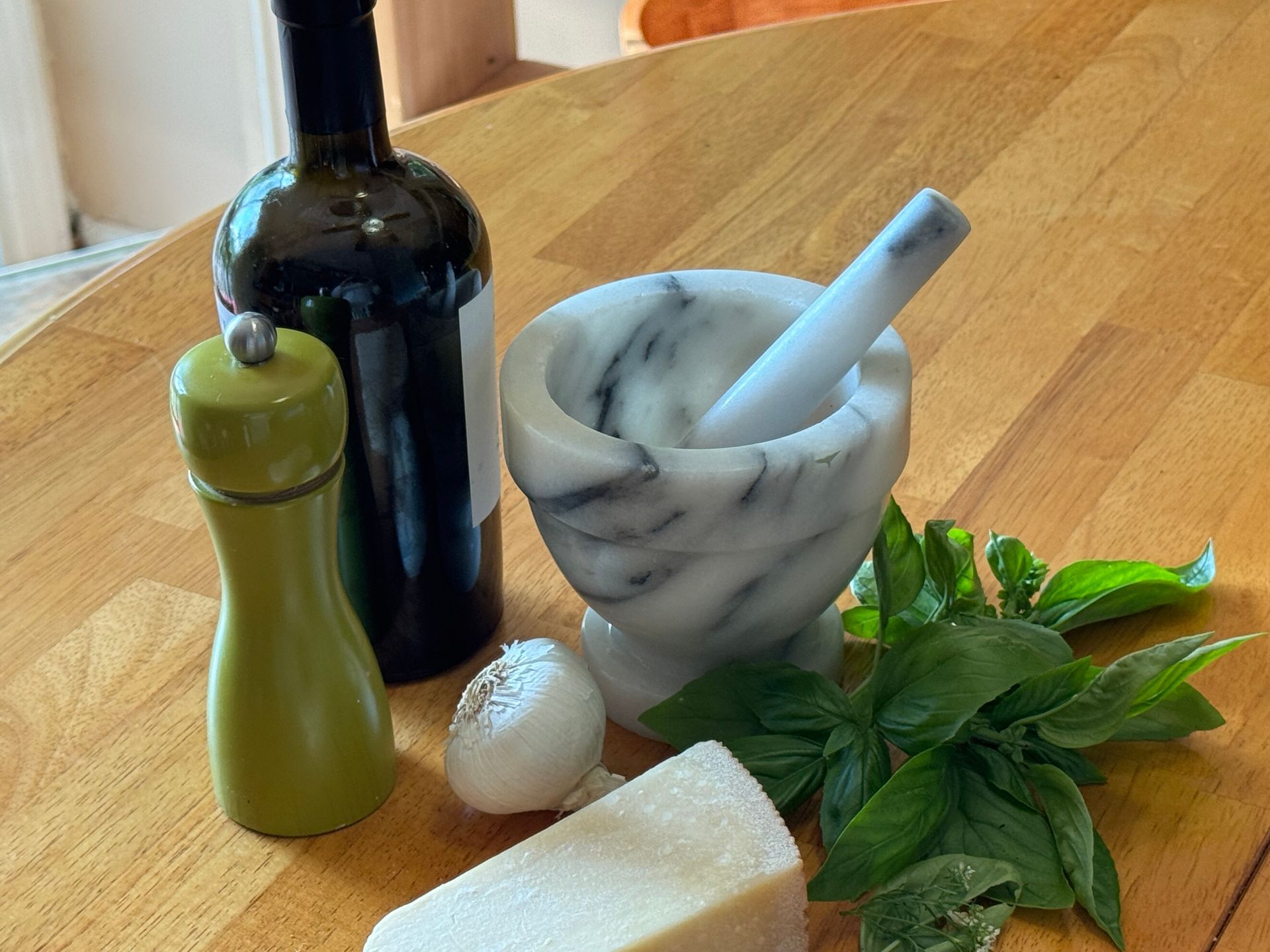
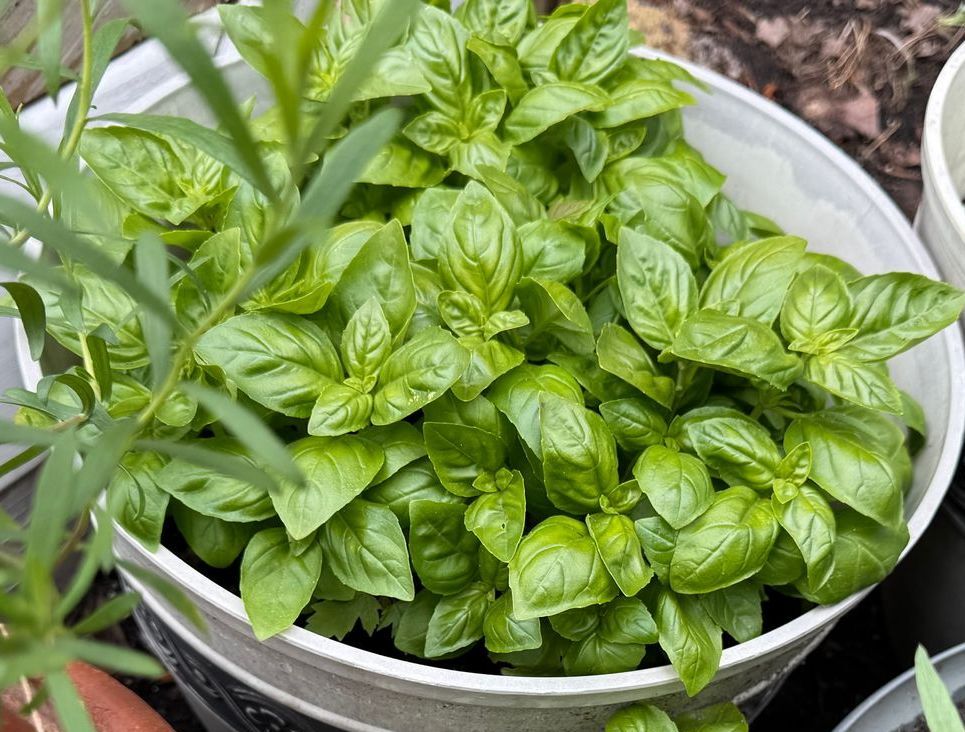
Assemble all of the ingredients; I like to pick the smaller, tender basil leaves and always cut off any extra stem.


For the Walnuts: 

toast in the oven until golden brown, (about 8 minutes at 350 F) rub the warm walnuts in a kitchen towel to loosen much of the skin which results in a cleaner, sweeter, and more refined pesto. It is a small investment of time that pays enormous dividends in flavor.


If you are using a food processor, you can simply add all of the ingredients, pulse and wipe the sides with a rubber spatula-repeat until the ingredients are a smooth paste.


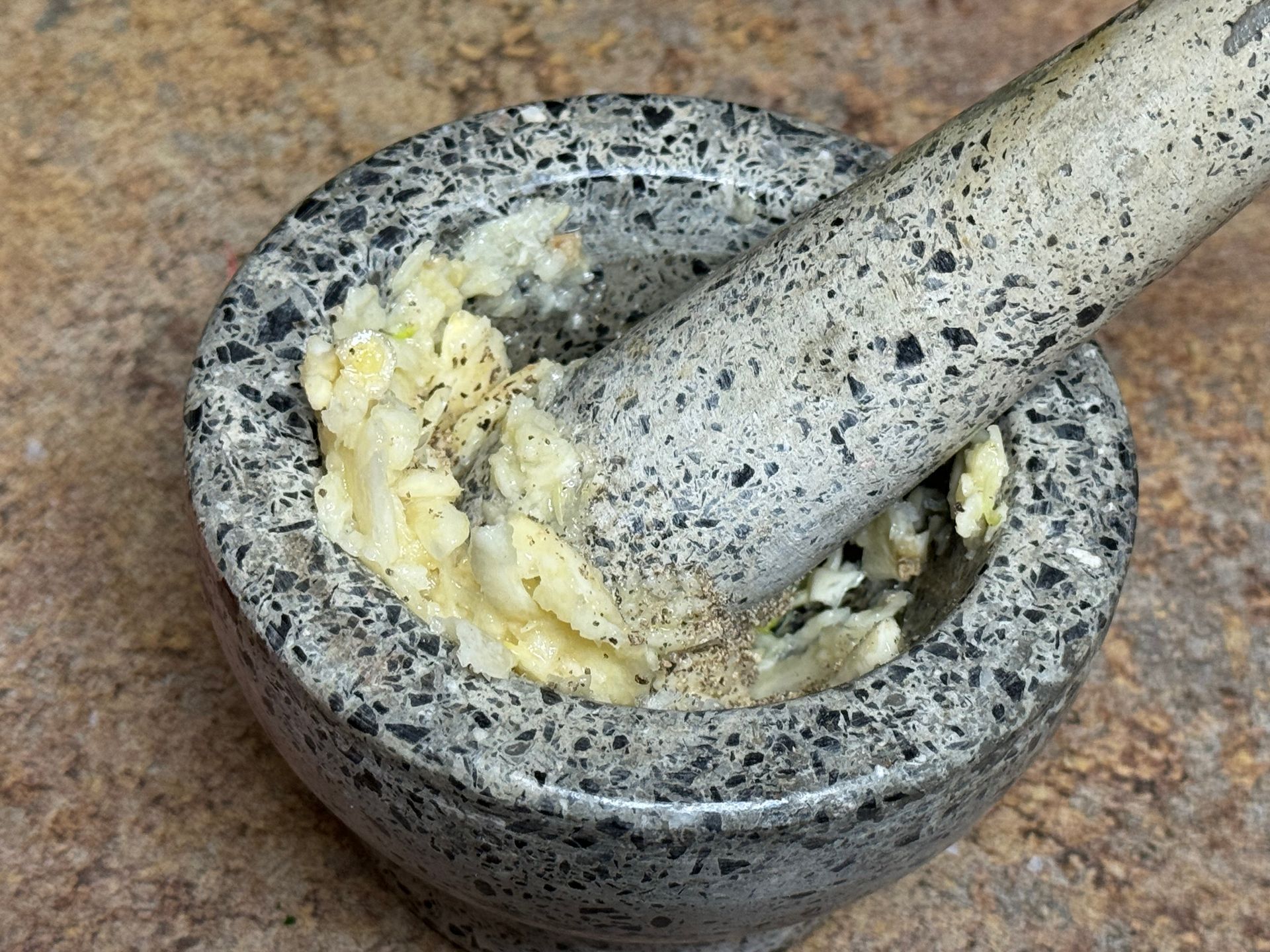
Begin by adding garlic to the mortar. Add a little salt and 1/3 of the basil; begin to slowly crush the basil with the pestle in a grinding method.


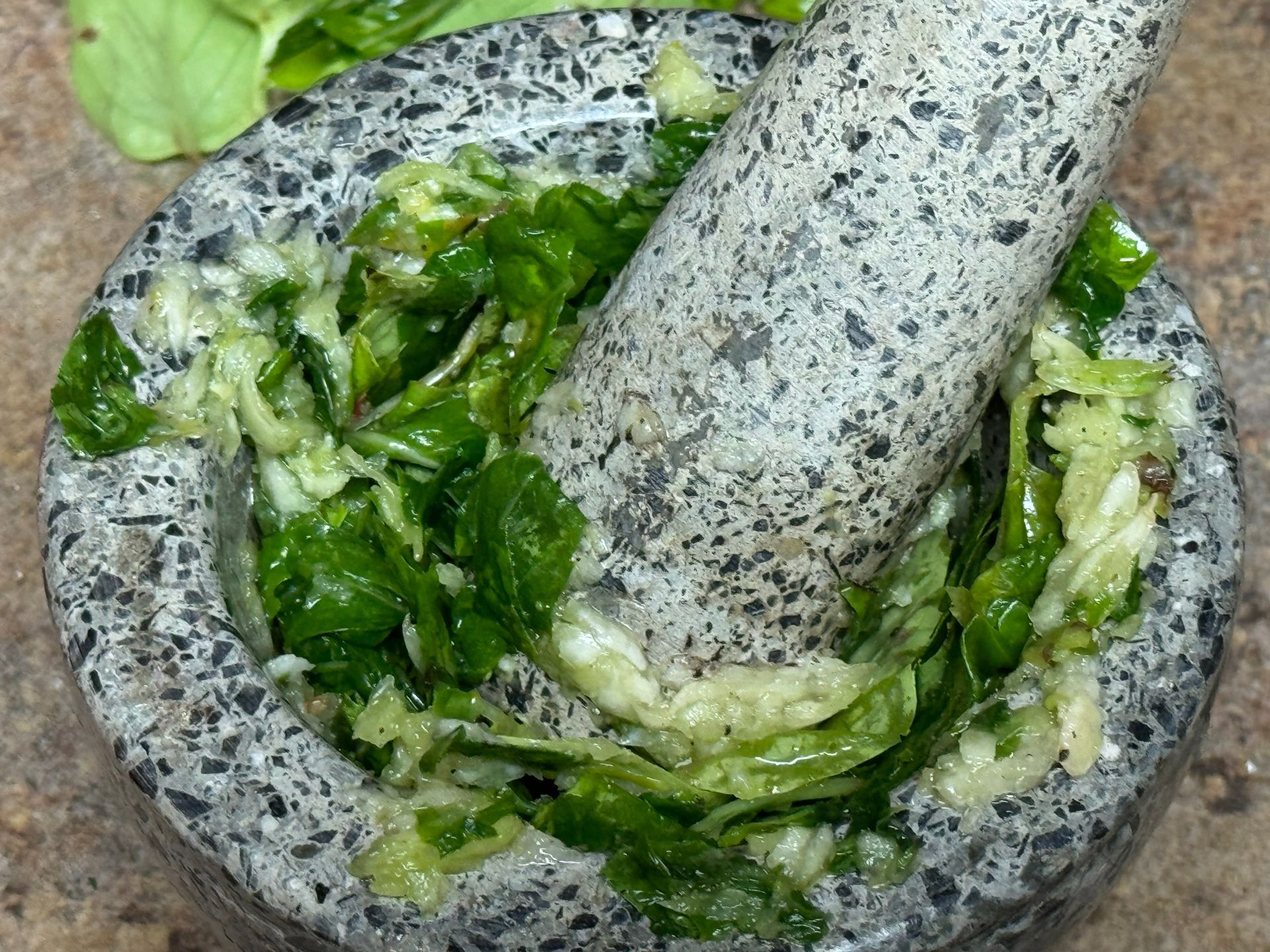
Add some of the walnuts and parmesan cheese and a little more basil and continue to grind. The basil may spill out a little so simple add it back into the mortar.


Continue adding walnuts, parmesan cheese, basil, greens and herbs, slowly drizzling in the EVOO as needed to help with the blending.

When all of ingredients have been ground to a beautiful, green, smooth paste, season to taste with salt and pepper.


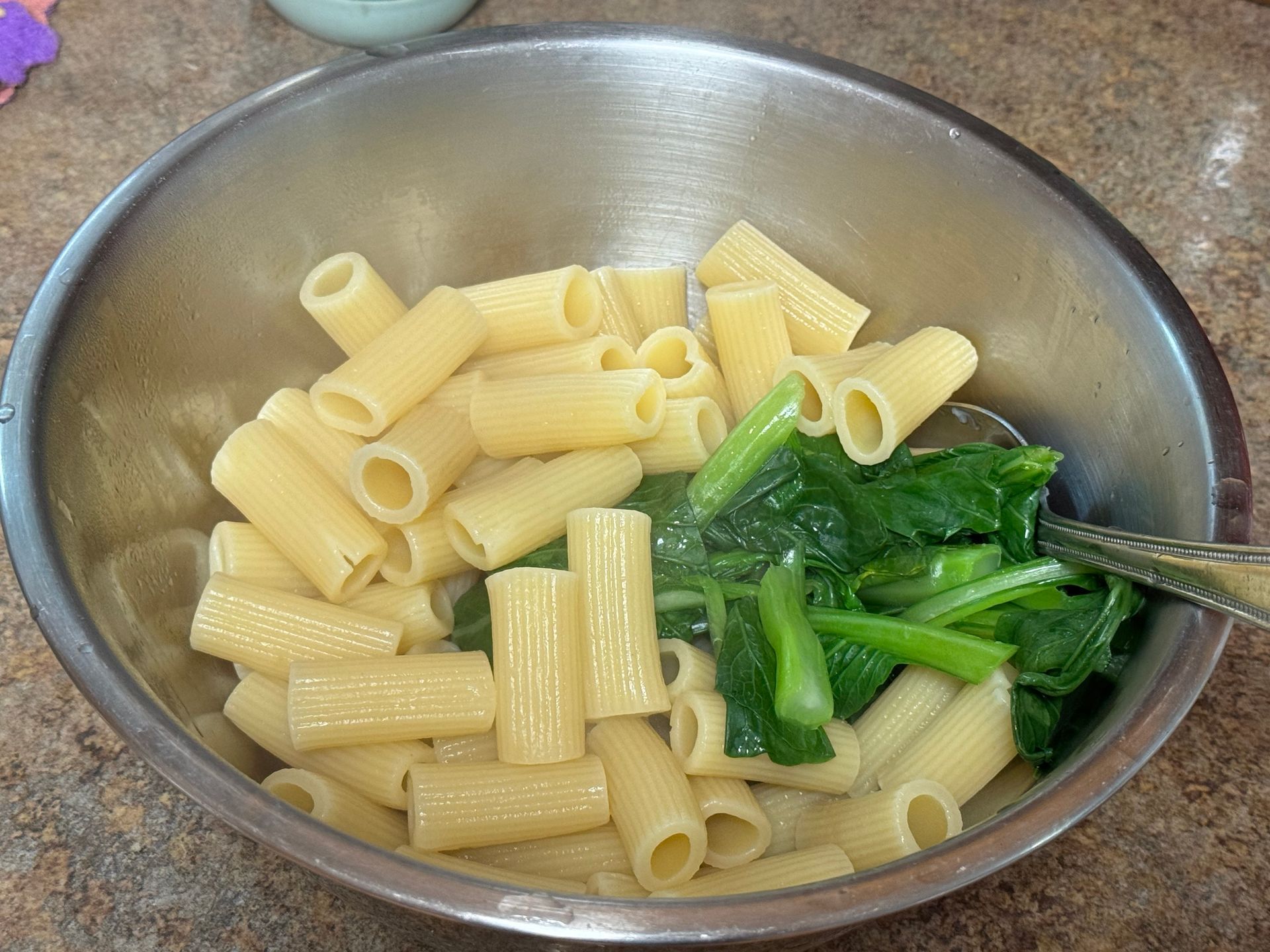
Place cooked, hot rigatoni with a tablespoon of the warm pasta water into a bowl. Add the hot, cooked greens.


I recommend cooking the rigatoni and greens a few minutes before you plan to eat so you don't have to cool and reheat.

You can cook the rigatoni and greens, shock in cold water and then reheat if prefer.


Add 2 Tbsp of pesto per person to start and fold into the hot rigatoni and greens-add a little more if you like. 

Season to taste-I like adding grated cheese and spicy Calabrian chili oil or red pepper flakes.


It's best not to heat the pesto, just toss onto warm, freshly cooked macaroni and enjoy.

You can store pesto in the refrigerator or freezer in an air tight container with a little EVOO on the top to stop oxidation.
By Tom Griffiths May 13, 2026
As chefs, we spend years mastering sauté work. I remember my early days working the sauté station for lunch in a French restaurant in NYC. We served over one hundred guests in an hour-and the food was excellent — a dozen hot pans on the flat top, stocks simmering, mise en place of freshly chopped herbs, minced shallots, butter for mounting into sauces à la minute. There is rhythm to good sauté cooking. You learn quickly that great sauté work is not about rushing — it is about organization and control .
By Tom Griffiths April 23, 2026
Beyond Sweet Basil: An Herb with History, Health, and Global Range 
By Tom Griffiths April 11, 2026
Our Easter and Christmas meals were feasts... my mother's family all met at Aunt Flora's home in Jersey City to enjoy and celebrate the holidays. Dinner began with platters of fresh mozzarella, roasted peppers, olives, Italian bread, then a pasta course (manicotti or lasagna for the religious holidays), a roast or sausages with plenty of vegetables and traditional Italian desserts with dark coffee.We ate Italian Easter Wheat Pie one day each year—and it was never store-bought. My Aunts brought Easter cookies and baked goods-the wheat pie was my favorite. I loved the slight 'bite' of the wheat and flavors of cinnamon, vanilla and citrus. My father sometimes let me have a sip of his espresso with the dessert. I'm not sure if my mother used lard for the pie crust-she was a fan of butter and Crisco but the crust was always flaky.
By Tom Griffiths April 8, 2026
There are certain dishes that stay with you—not just for their flavor, but for what they represent. For me, roasting a leg of lamb over Pommes boulangère is one of those meals. I don't recall having lamb at any occasions growing up so this was a dish that I proudly introduced to our family. As a young cook, it was something I could prepare with limited experience, and it provided deeply satisfying results. The lamb roasts in the oven over a bed of potatoes, onions, and garlic, allowing its natural juices and fat to baste the vegetables below. It's actually a simple preparation but becomes a complete, delicious meal—the potatoes absorbing flavor and becoming just as important as the roast itself. These days I'm developing delicious recipes using spice blends such as Ras el hanout, Baharat, Za'atar, Togarashi and even Harissa. I also love roasting leg of lamb outdoors on a grill or rotisserie. I like the subtle smokiness from applewood or dried herbs when I'm roasting lamb outdoors.
By Tom Griffiths April 8, 2026
There are certain dishes that stay with you—not just for their flavor, but for what they represent. For me, Pommes boulangère is one of those dishes. As a young cook, it was a delicious meal I could prepare for my family with my limited culinary experience. I often return to this preparation when roasting whole chicken, pork, or lamb—letting the potatoes, onions, and garlic absorb the natural juices from the protein as it cooks. The potatoes becomes more than a side dish; it’s the foundation of the meal.
By Tom Griffiths April 7, 2026
There are countless versions of Potatoes au gratin , many of them heavy with cheese. I prefer a more restrained approach—using little or no cheese—so the flavor of the potatoes remains the focus rather than being masked. Milk produces a lighter, more delicate gratin, while light or heavy cream creates a richer, more structured dish. Both are valid—it simply depends on the desired outcome. One constant, however, is nutmeg. Used sparingly, it acts as a quiet “secret weapon,” adding depth without calling attention to itself. This recipe is inspired by Xavier LeRoux, one of the finest chefs I’ve had the privilege to work with. His method includes an extra step—gently simmering the potatoes in cream before baking—which yields a noticeably superior result. The potatoes begin to release their starch into the cream early, ensuring a more uniform texture and a fully integrated dish from the first bite to the last.
By Tom Griffiths March 19, 2026
There are plenty of brownie recipes—and then there is the one that lives in memory. This is the only brownie recipe I bake, from Julia Child, whose influence reached far beyond French cuisine and into the home kitchens of passionate bakers like my mother. A devoted admirer, she baked these brownies often—usually for the dessert trolley at my restaurant. We featured a brownie freeze... brownie cubes with homemade vanilla ice cream, warm melted chocolate and freshly whipped cream-amazing! For me, this recipe is more than a classic—it’s a reflection of how great cooking is passed down: through admiration, repetition, and a deep love of craft.
By Tom Griffiths March 19, 2026
I taught garde manager for many years at the CIA and this is one of my favorite recipes from class. I actually developed this recipe with one of my students, inspired by a recipe he had learned on his externship.
By Tom Griffiths March 17, 2026
We ate Irish soda bread one day each year—and it was never store-bought. Soda bread wasn’t part of our cultural lineage, but it earned its place through something more universal: respect for tradition. My mother was not an occasional baker— growing up, her baking centered on Italian traditions: special Christmas cookies, the Vigna family birthday cake, and beautifully braided Easter breads that reflected heritage. Later, like many serious home bakers of her generation, she was influenced by Julia Child . That influence expanded her repertoire into classic European pastry—Paris-Brest, pound cakes, even German chocolate cake. The iconic cross cut into the top of the loaf is often said to “let the fairies out,” though in professional kitchens we recognize its functional role: allowing heat to penetrate and the loaf to expand evenly during baking.
By Tom Griffiths February 26, 2026
Authentic Guacamole, Hospitality, and the Responsibility of Feeding People