Chef Tom's Cooking Class Minute: Week 2
Cooking Rice: creating socarrat—
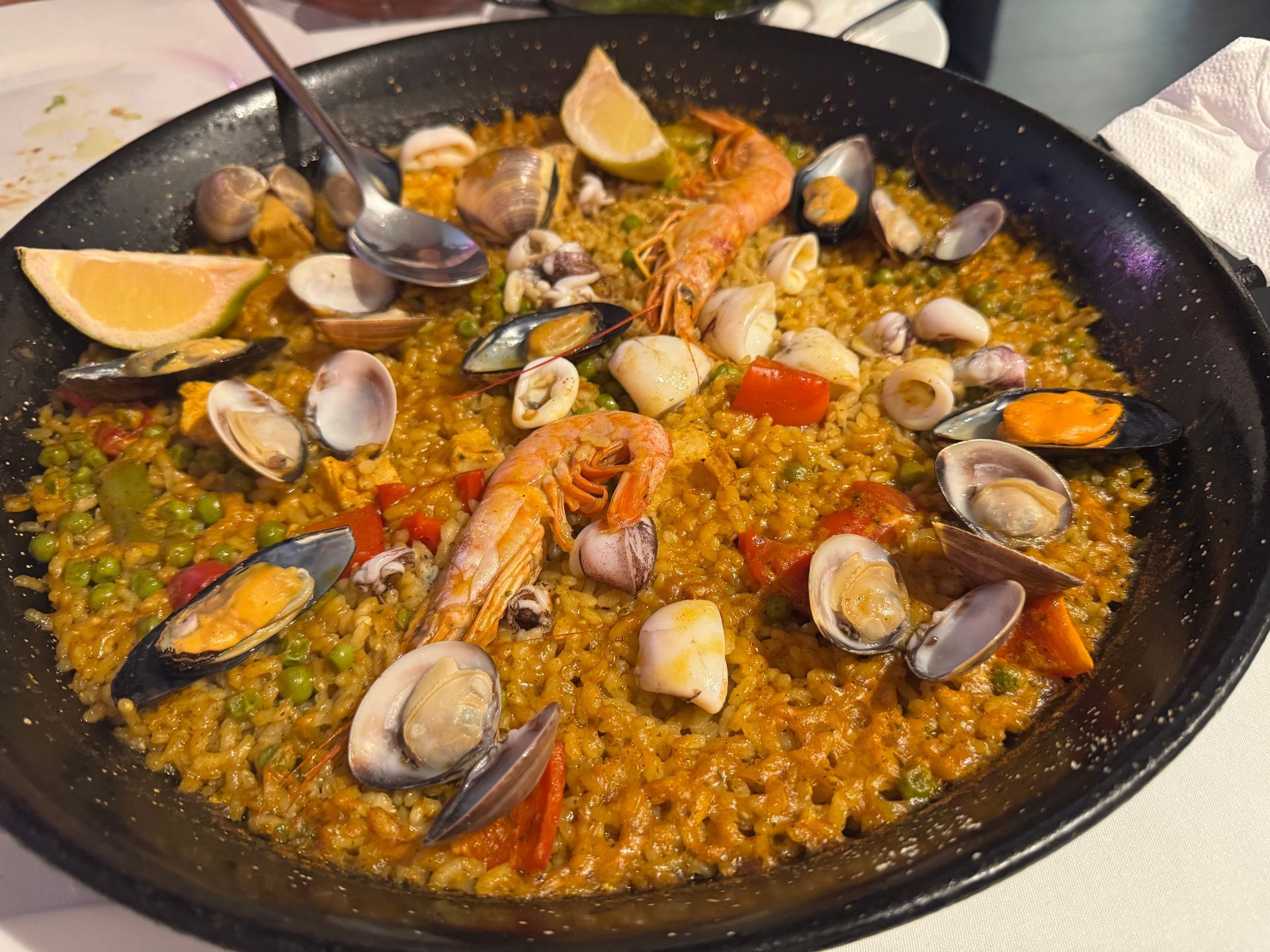
One of the joys of teaching is I'm constantly learning. When Chef Katherine Polenz asked if I would discuss creating socarrat—the irresistible golden crust on the bottom of a great paella—I knew it would make a wonderful Cooking Class Minute. I also knew Chef Polenz is an expert in rice cookery... ❤️
In recent years I’ve traveled in Spain researching local paellas. My favorite was seafood paella in Alicante. The paella was brought to our table so we could enjoy the socarrat (the delicious, crispy golden brown rice at the bottom of the pan)
Several years ago, while consulting in Riyadh, Saudi Arabia, I watched chefs prepare a variety of rice dishes in pans nearly four feet across. They were preparing hundreds of portions of various rice dishes for home meal delivery customers. It was hot and very busy yet there wasn't a hint of panic in the kitchen. After the chef created the sofrito base with olive oil, garlic, onions and peppers, and parched the rice, he began adding delicious, hot stock. What caught my attention wasn't the expensive seafood & saffron being added —it was what the chef didn't do.
After adding the hot stock, he never stirred the rice again.
As the rice absorbed the stock, the simmering stock literally stirred the rice with the agitation; the kitchen filled with the amazing aroma. The chef listened more than he looked, waiting for the faint crackle that signaled the rice had begun caramelizing against the bottom of the large pan.
He smiled and said, “the rice is talking to me~"
The final minutes of cooking the rice dish produced what chefs treasure most: socarrat—the thin, golden layer of toasted rice on the bottom of the pan. As the final liquid is absorbed, you'll hear a gentle crackling sound as the bottom layer begins to caramelize. Raise the heat slightly for the final minute or two. Do not stir. That's the sound you're waiting for. The rice should be tender with just a slight bite.
The flavor and texture of soccorat is amazing. It isn't burned rice. It's the reward for experience, patience, proper technique, and knowing when to leave the pan alone. Let the rice rest and then enjoy.
Later that day, the Egyptian chefs prepared a family meal for us featuring Hekaka, their version of the delicious toasted rice scraped from the bottom of the pot. The name itself comes from the Arabic word meaning "to scrape." It reminded me that many cultures celebrate those caramelized bits that so many people mistakenly think are burned.
Let's Keep Learning Together
What topic would you like me to cover in a future Cooking Class Minute? I'm always looking for ideas from fellow cooks, chefs, and food enthusiasts.
Chef Tom Griffiths, Certified Master Chef
Former CIA Instructor • R&D • Mentor
"Helping chefs, entrepreneurs, and food companies create exceptional food products."