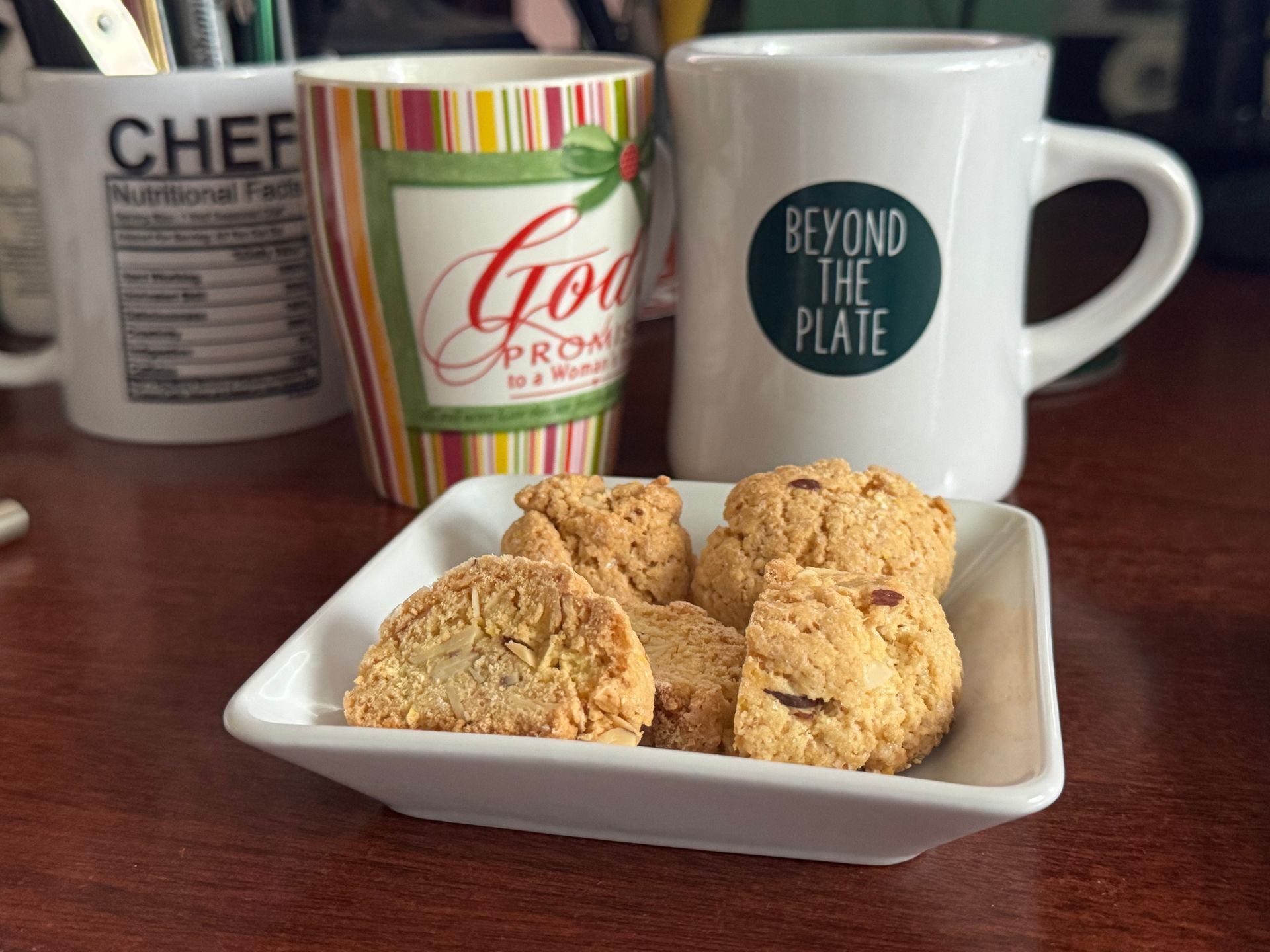
Three desserts are sitting on a table with a measuring cup in the background.

Biscotti translates to 'twice baked' and apparently was a popular snack for Roman soldiers since the biscotti lasted for days without getting stale.

I read Christopher Columbus had biscotti stored away on his voyage to America...

In Tuscany, biscotti and vin santo is considered by many to be a perfect pairing. I enjoyed this combination at a cafe in Florence years ago...
I love dipping crunchy biscotti into a cup of strong black coffee.


Almond Biscotti

We baked a large variety of Italian cookies at Christmas time but I don't recall biscotti being in the mix.  Now it's one of my favorite cookies.


Growing up, my mother always had Stella D'oro anisette toast coffee treats (our version of biscotti) for a snack when friends came over. They played scrabble or Yahtzee in the evenings and liked to dip the anise flavored biscotti in tea.
I've researched and baked dozens of biscotti recipes with varied results. I prefer very crunchy biscotti with seeds or nuts. I'm not a fan of adding dried fruits but that is certainly an option.
I also prefer biscotti with less baking powder to avoid the sodium bicarbonate flavor.

This is an easy recipe I've worked on, various flavors or particulates can be folded into the dough. The recipe can also be doubled easily.
 

Prep Time: 15 min

Cooking Time: 60 min

Yield: 20 small biscotti


Ingredients

2 cups        AP flour
1/2 cup      granulated sugar

1/4 cup      almond meal
3 Tbsp       cornmeal
1 1/2 tsp    baking powder
1/4 tsp       salt               
2 ea            eggs
1/2 tsp       vanilla (I like Tahitian)
2 Tbsp.     melted butter (I use lightly salted butter)
2 Tbsp      olive oil         
3/4 cup     almonds       

How to Prepare Biscotti
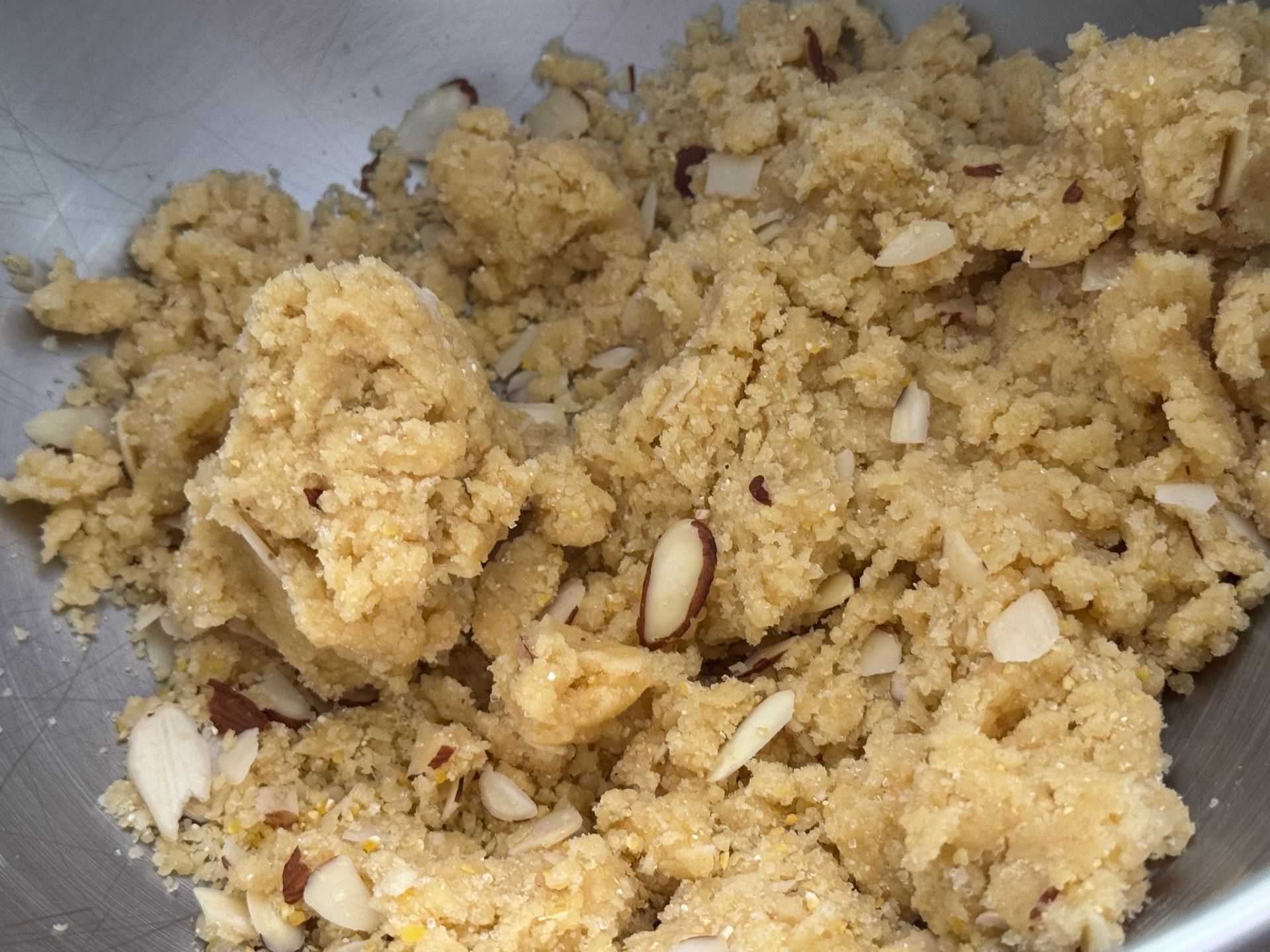
Step 1

Blend the flour,  sugar, almond meal, cornmeal, baking powder and salt together in a bowl.

Whisk the eggs in a separate bowl, add the vanilla, melted butter and oil. Add the wet ingredients to the dry and blend until homogenous-don't overmix.

Fold in the almonds.


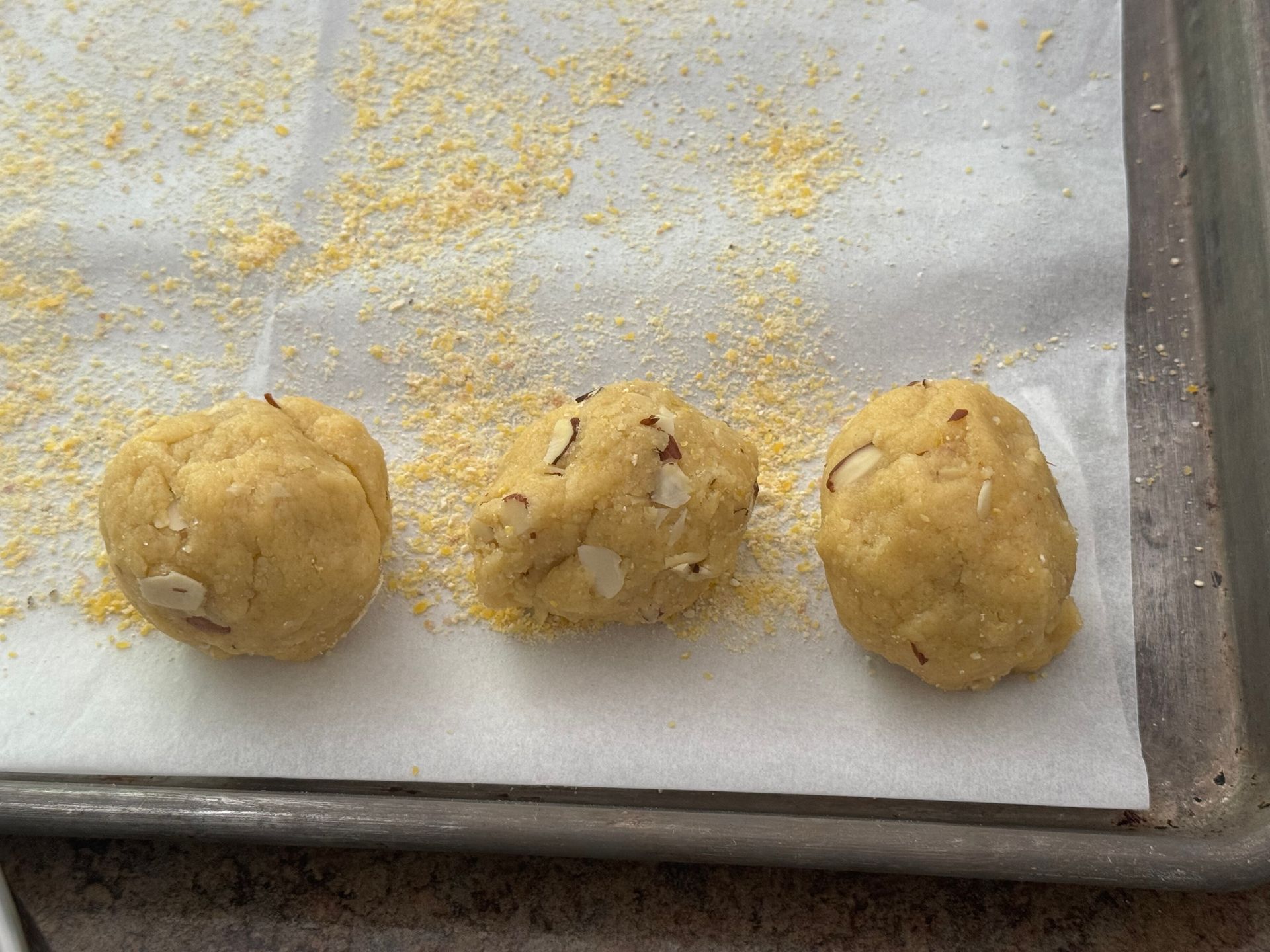
Form the dough into balls and place onto a sheetpan with parchment. I like to sprinkle cornmeal for texture-optional.


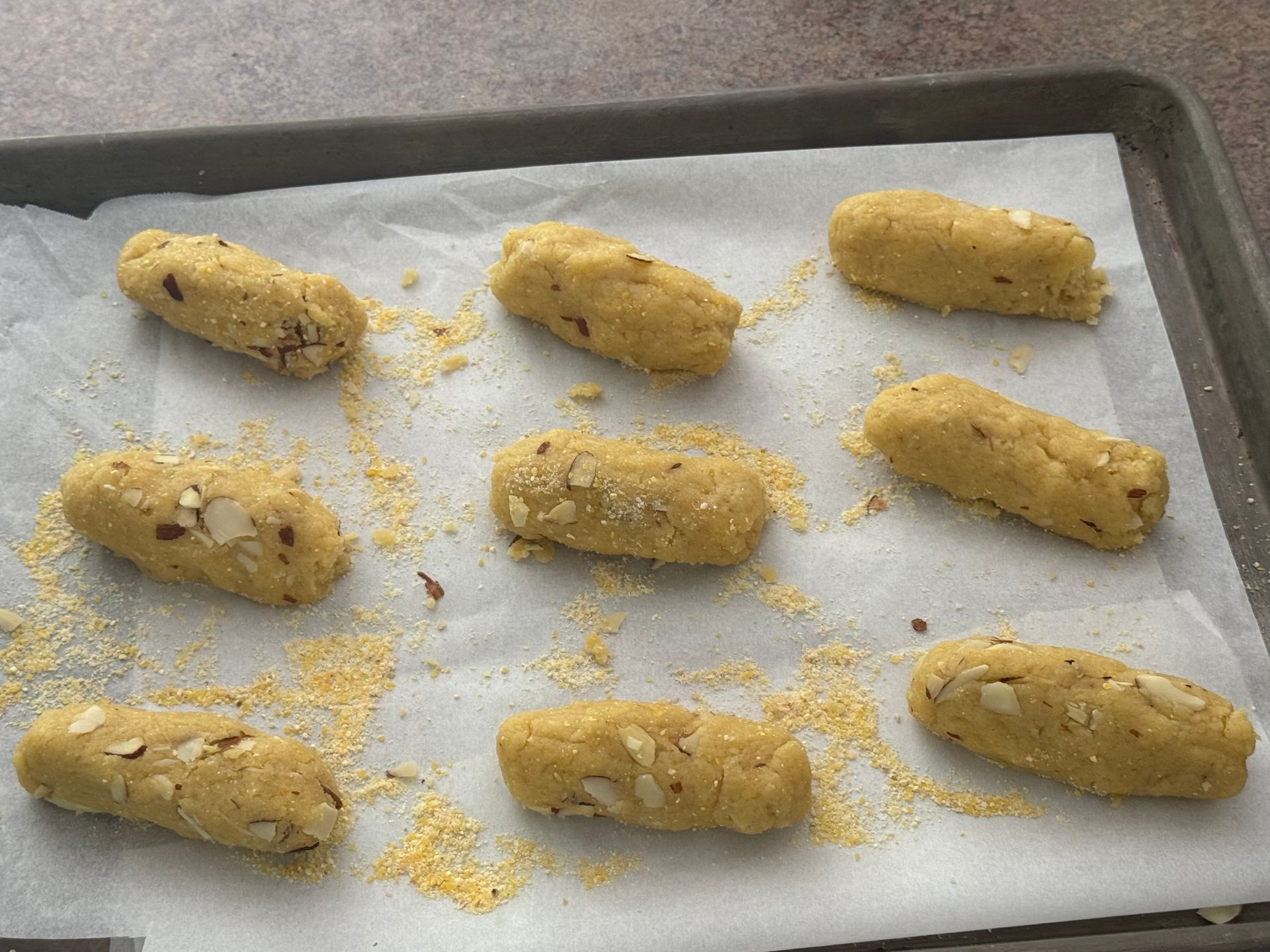
Mold the dough balls into logs-I make more, smaller logs so I get more crunchy ends-you can simply make two, longer logs as well.


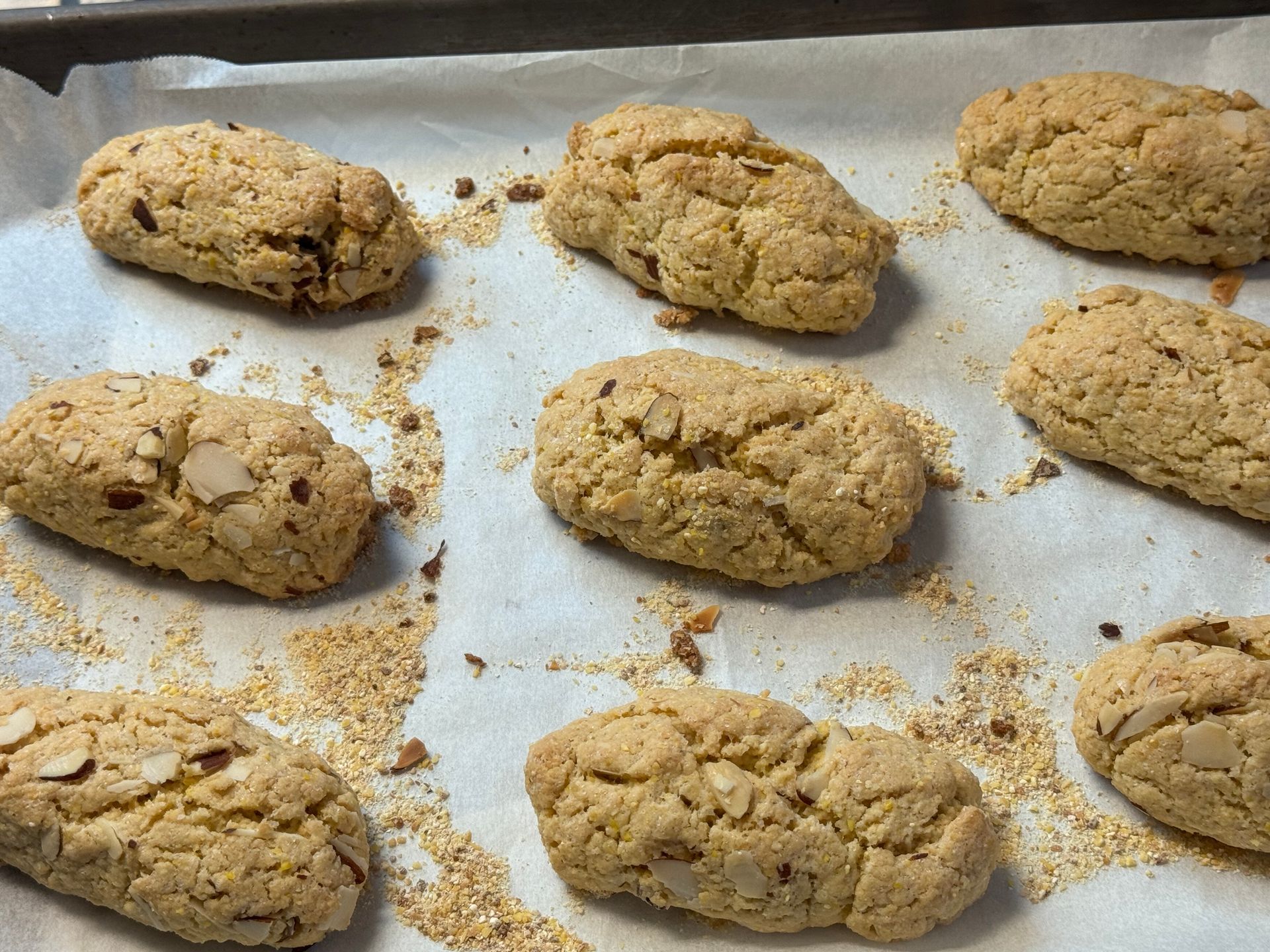
Bake in a preheated oven at 350°F until firm (not hard) (about 20 minutes) and then place on a counter to cool. (30 minutes is fine but sometimes I let set overnight and I think it's a little easier to slice)
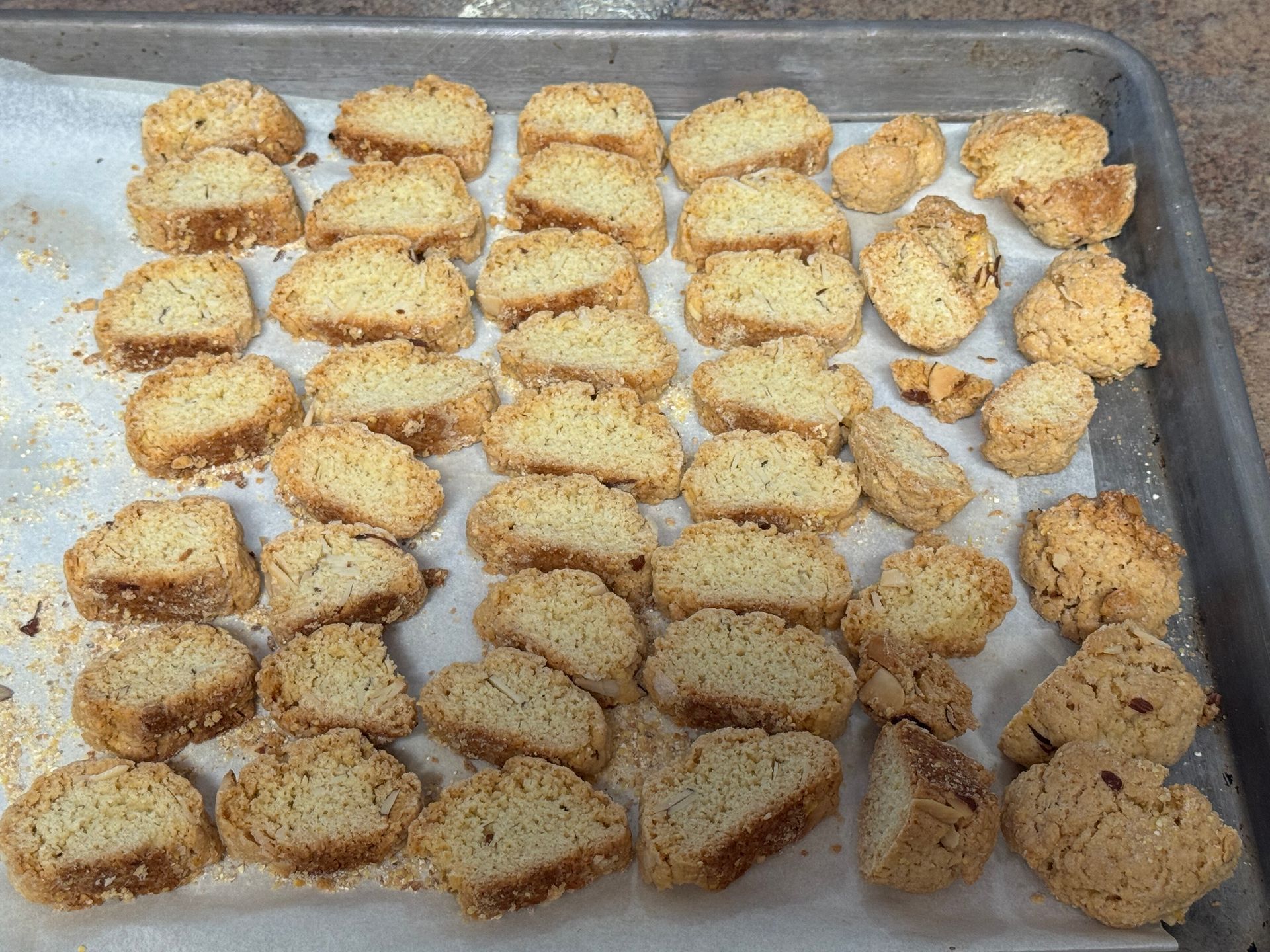
Step 2

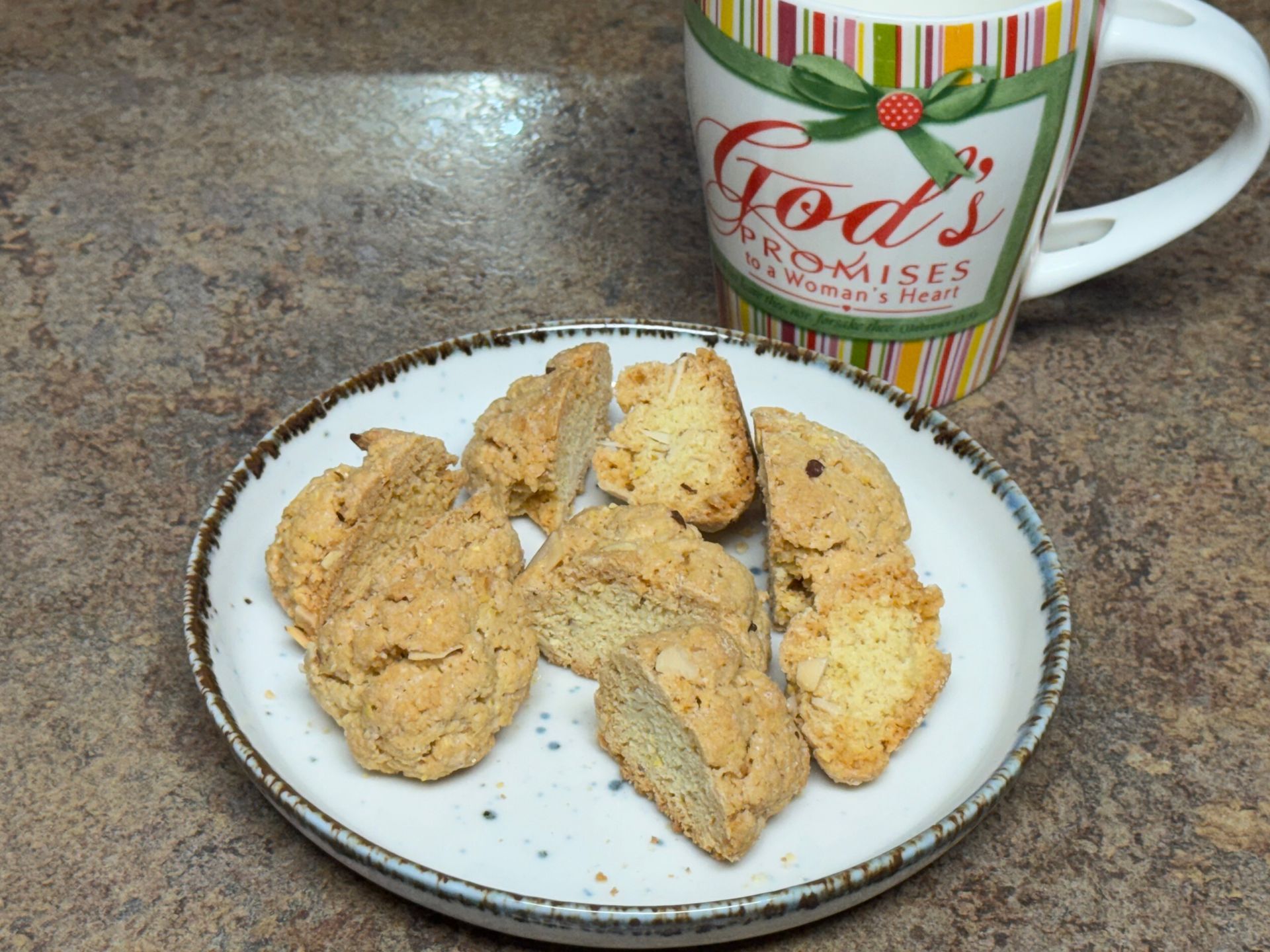
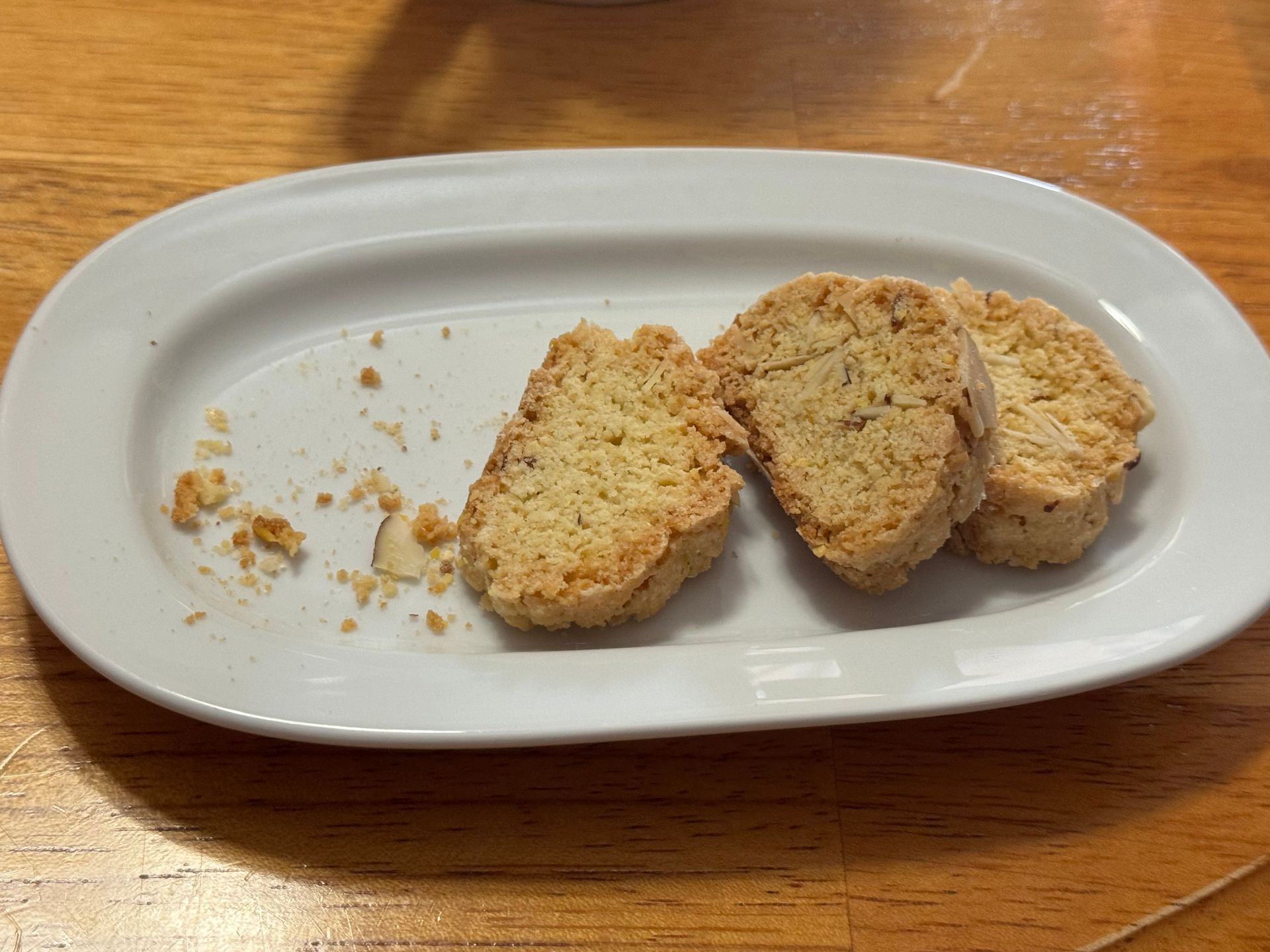
Carefully slice the biscotti (a serrated knife works well) and lay them on their sides in rows. Bake in the oven at 350°F until crunchy, approximately 10-12 minutes.


I like to store the biscotti in a tupperware type container.


Slices


Crunchy Ends


By Tom Griffiths January 16, 2026
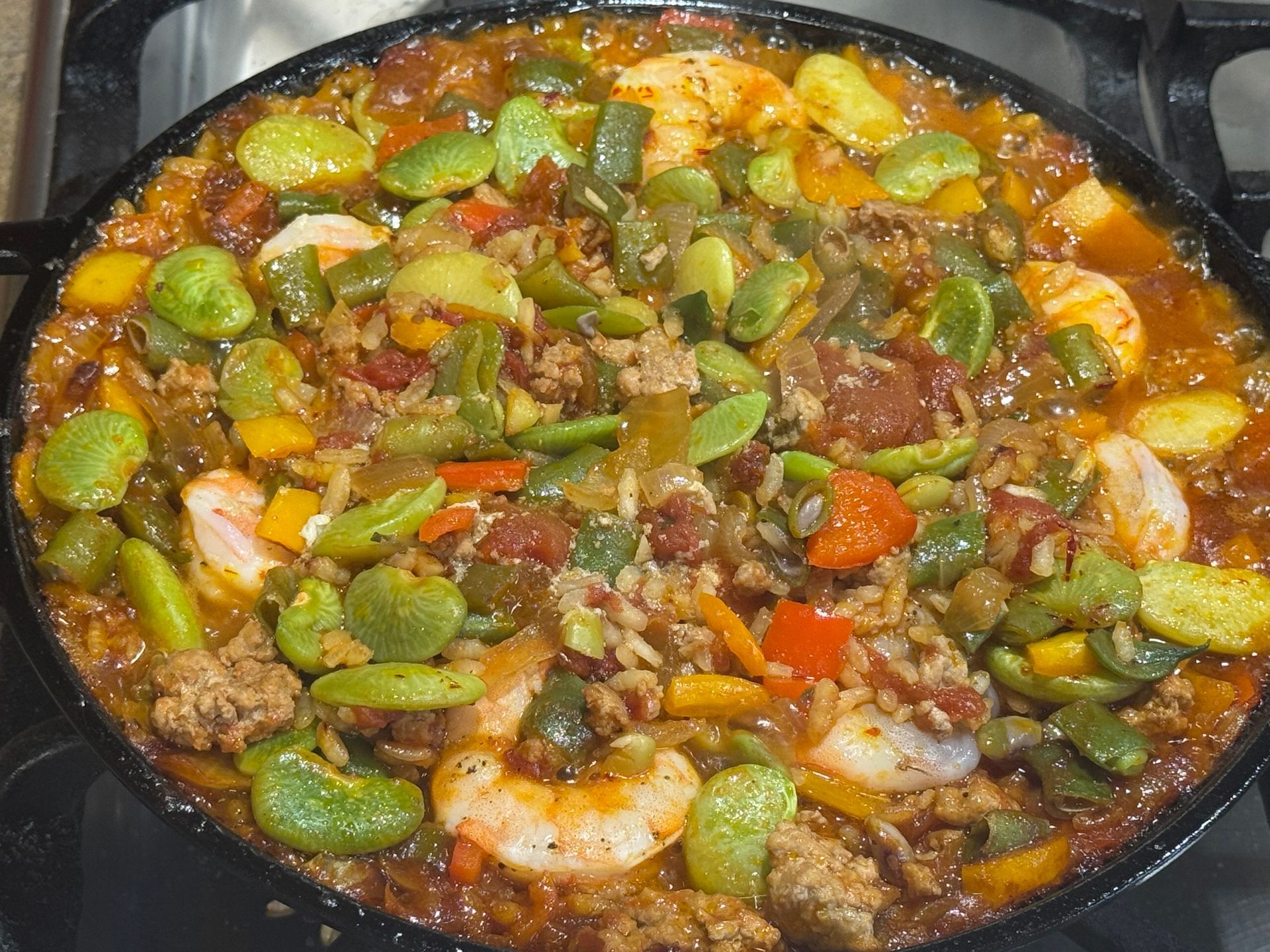
I recently volunteered to prepare vegetable paella for a church Bible group potluck. I was very excited to develop a delicious, new paella recipe and spent time preparing fresh vegetable stock with flavors of the Mediterranean. I always prepare vegetable and fish stocks fresh, as I intend to use them. I’m not a fan of bases or frozen stocks but I sometimes add a small amount of quality base to my stocks.  A vegetable stock with mirepoix, cabbage, mushrooms makes sense in certain applications, for certain recipes—but why would we use a mushroom or cabbage-forward stock in a paella? It doesn’t make culinary sense. Paella is a Mediterranean dish originating in the Valencia region of Spain as a humble meal cooked on an open fire. I’ve enjoyed wonderful paella meals in Valencia prepared with water-not stock, prepared with rabbit, snails and local beans. While traveling through Spain this spring I researched and sampled many styles of paella… no mushrooms, no carrots, no celery and no cabbage.
By Tom Griffiths January 16, 2026
I still remember cooking breakfast burritos with my son Daniel, for volunteer workers at church events—simple, hearty, and made to fuel a long day of service. The workers were always so appreciative. Years later, I served a crowd favorite, nicknamed “The Bacon-ator,” a breakfast superstar inspired by the over-the-top spirit of fast-food indulgence. We had a popular food booth at the local country fair, where we cooked hundreds of breakfast burritos each day-stuffed with Mexican cheeses, extra bacon, fluffy scrambled eggs, and fresh salsa—nothing pre-made, nothing rushed. Every burrito was warm, fresh, and full of flavor. When food is made with love, even the most straightforward breakfast is memorable.
By Tom Griffiths January 15, 2026
Chefs often share a bond that transcends politics, religion, and borders. While working in Saudi Arabia with a diverse group of chefs, I experienced this firsthand on my final day. To mark the occasion, they prepared special dishes representing their home countries—a generous feast rooted in tradition and pride. At the center of the table was a beautiful tray of stuffed peppers, zucchini, cabbages, squash, and other vegetables, each prepared with care and respect. As we shared the meal, the chefs beamed with pride, and the room filled with a sense of genuine camaraderie. It was a powerful reminder that food remains one of the most universal languages we have.
By Tom Griffiths January 15, 2026
I remember a chef teaching me to carefully slice the center seeds from a zucchini and then prepare beautiful dices for a ratatouilli. The seeds and center area get soft and mushy before the outer 'meaty' section of the squash cooks.
By Tom Griffiths January 15, 2026
Lobster macaroni and cheese is my all time favorite version of Mac and Cheese... I make it by preparing a classic lobster sauce, (flambé and all) and blending it with Béchamel sauce, macaroni and sweet, tender chunks of freshly poached lobster. Macaroni and cheese with pancetta
By Tom Griffiths January 13, 2026
Culinary Basics: The Art of preparing Stocks
By Tom Griffiths January 13, 2026
Paella is a Mediterranean dish originating in the Valencia region of Spain. It is a humble meal, originally cooked on an open fire. I’ve enjoyed many wonderful paella meals in Spain. In Valencia I had a local paella with rabbit, snails and local beans. Short-grained rice is always used to prepare Paella, there are several great Spanish varieties like Bomba and Calasparra , prized for absorbing the delicious, flavorful stock and flavors of the ingredients without getting mushy. This is important for creating the dish's signature, crusty bottom layer called the socarrat. Paella is all about the rice!
By Tom Griffiths January 7, 2026
I still remember cooking breakfast burritos with my son Daniel, for volunteer workers at church events—simple, hearty, and made to fuel a long day of service. The workers were always so appreciative. Years later, I served a crowd favorite, nicknamed “The Bacon-ator,” a breakfast superstar inspired by the over-the-top spirit of fast-food indulgence. We had a popular food booth at the local country fair, where we cooked hundreds of breakfast burritos each day-stuffed with Mexican cheeses, extra bacon, fluffy scrambled eggs, and fresh salsa—nothing pre-made, nothing rushed. Every burrito was warm, fresh, and full of flavor. When food is made with love, even the most straightforward breakfast is memorable. 
By Tom Griffiths January 6, 2026
Beef Wellington is a restaurant classic! Chefs prepare whole tenderloins, wrapped in pastry as well as individually portioned Wellingtons. Culinary historians widely agree that Beef Wellington evolved from French preparations such as filet de bœuf en croûte, which paired beef tenderloin with mushrooms and pastry—techniques well established in French haute cuisine.
By Tom Griffiths January 4, 2026
Oranges are fantastic in Baking & Pastry. I developed a delicious dessert for the CMC exam (Healthy Cooking) challenge featuring Orange Creamsicle Sorbet with Roasted, Candied Pineapple and Fruit Strudel... with plenty of guidance from the amazing CIA Pastry Instructors! Types of Oranges: There are several distinct varieties of oranges, each with unique characteristics and flavors. The most common type is the Navel orange , recognized for its seedless, sweet flesh and thick, easy-to-peel skin. Valencia oranges are another popular variety, primarily known for their juiciness and are often used for making orange juice. Other notable types include Blood oranges , which have a deep red interior and a distinct berry-like flavor, and Cara Cara oranges , characterized by their pinkish-red flesh and sweet taste. Additionally, Seville oranges , known for their bitterness, are mainly used in making marmalade and flavoring liqueurs.